A run that keeps feet moving and queues moving
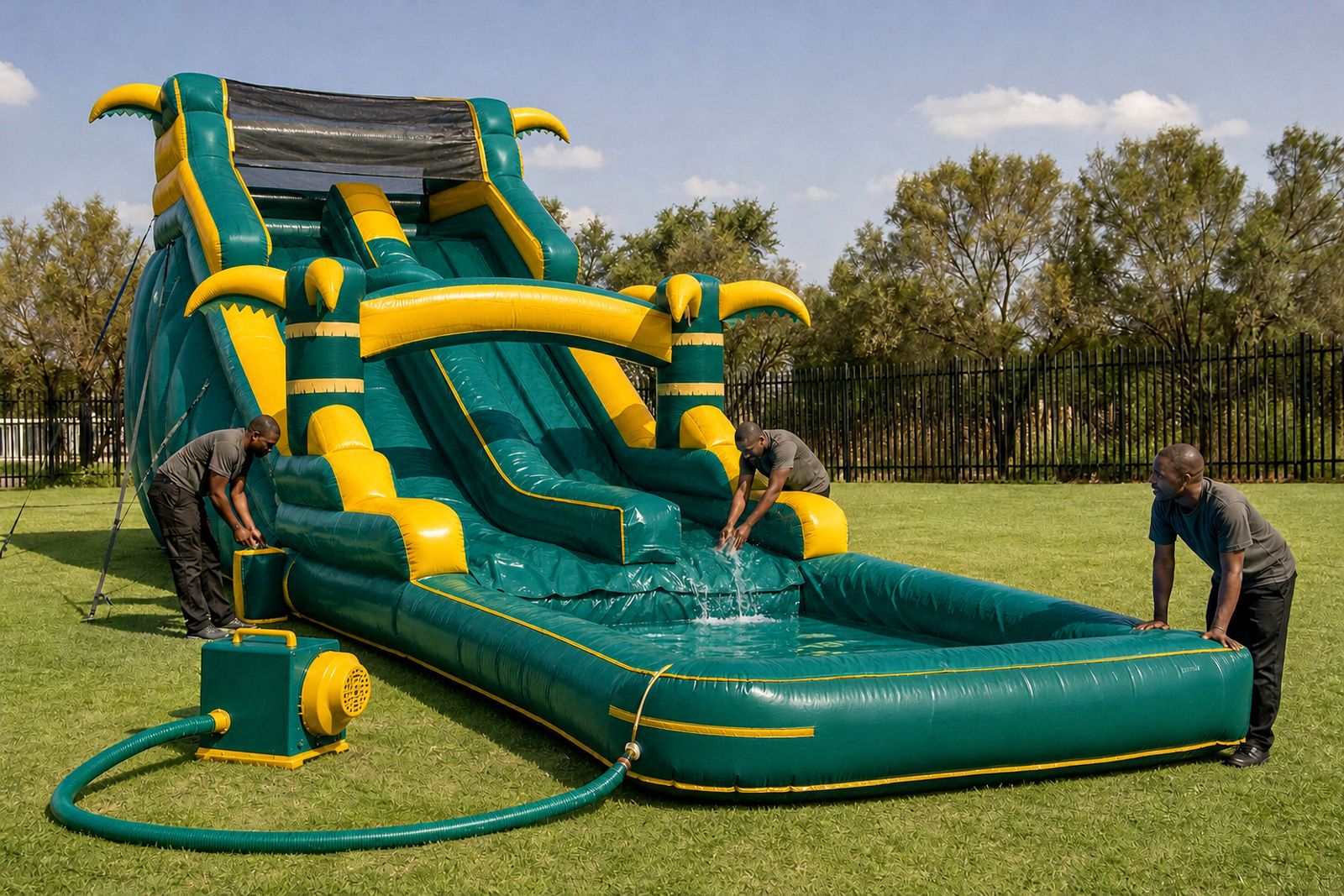
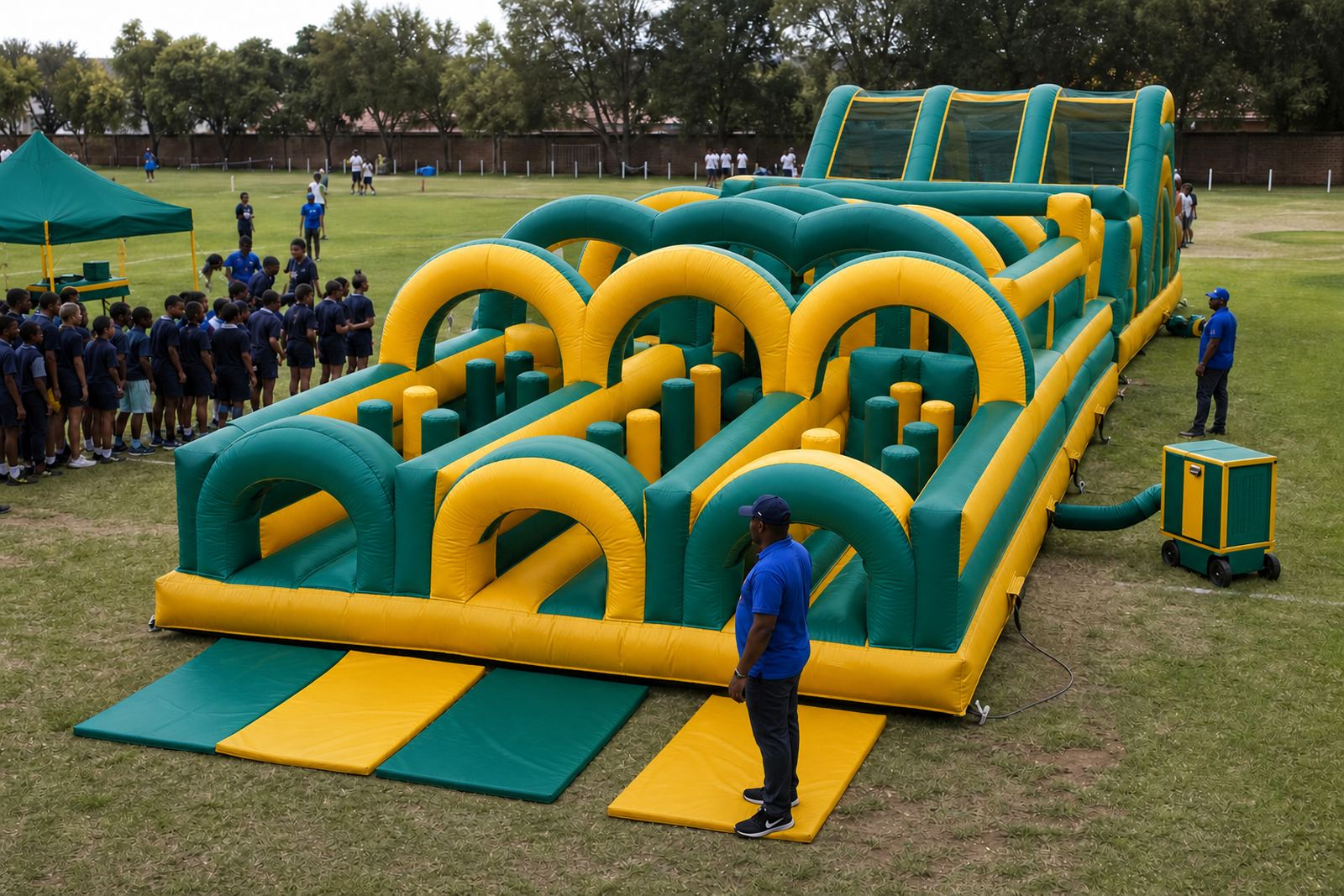
This product is a longer inflatable lane built for steady movement, not just bouncing. It usually combines upright pop-ups, crawl-through tunnels, sloped climbs, low barriers and a finish zone, so the flow suits relay races, timed runs and casual turn-taking. For most sites the course is best when there is a clear rectangle of level ground, with access for the crew to move the blower, mats and anchoring points into place.
In practical terms, the course is chosen for events where people want a bit of competition and a lot of movement. Schools use it for sports days and reward days, while corporate teams use it for family events, wellness days and year-end functions. The layout also works well where you need a visible attraction that keeps a crowd active without filling the whole venue.
Sizes, layouts and space to allow
Obstacle courses come in different lengths, with compact runs for tighter courtyards and longer layouts for open fields or large parking areas. A smaller course can fit into a space around 12 metres long, while larger runs may need 15 metres, 20 metres or more depending on the shape, entry point and exit lane. Width usually sits in the 3 metre to 5 metre range, and height varies with the climb sections and archways.
- Flat grass or hardstand with enough clearance for the full footprint
- Access for delivery vehicles close to the setup point
- Room for queues, parents and marshals beside the run
- A dry, level surface with no loose stones or sharp edges underneath
We also check where the queue will form, because a course needs more than the inflatable itself. If the event is busy, the waiting lane matters almost as much as the run, especially at school events where learners want another turn straight after finishing.
Power, anchoring and the crew on the ground
Inflatable obstacle courses run with continuous blower units, so a safe power point or generator supply is part of the setup. The crew positions blowers, routes the cables neatly and anchors the inflatable with pegs, ballast or other secure tie-down methods suited to the site. On hard surfaces, the team uses the right weighting and protection so the inflatable stays in place without marking the venue surface.
Safety mats are placed at entrances, exits and any points where runners step up or down. Where the course is tall or long, crew supervision helps manage turn-taking, keep the lane clear and remind users to remove shoes, sharp items and loose objects before entering. For school groups and younger users, age and height guidance is important, and we match the course to the crowd rather than pushing one layout onto every event.
Where this product fits best
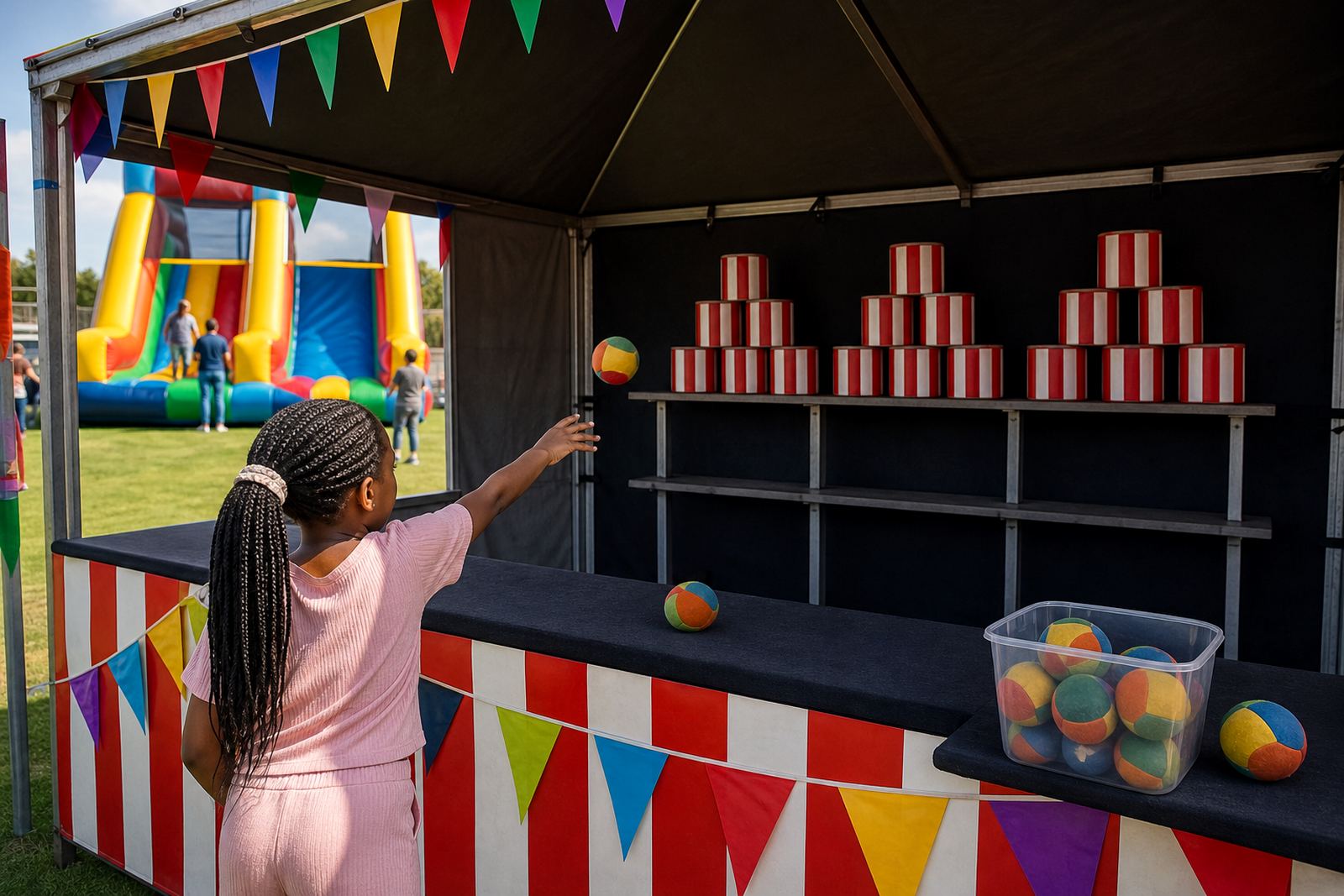
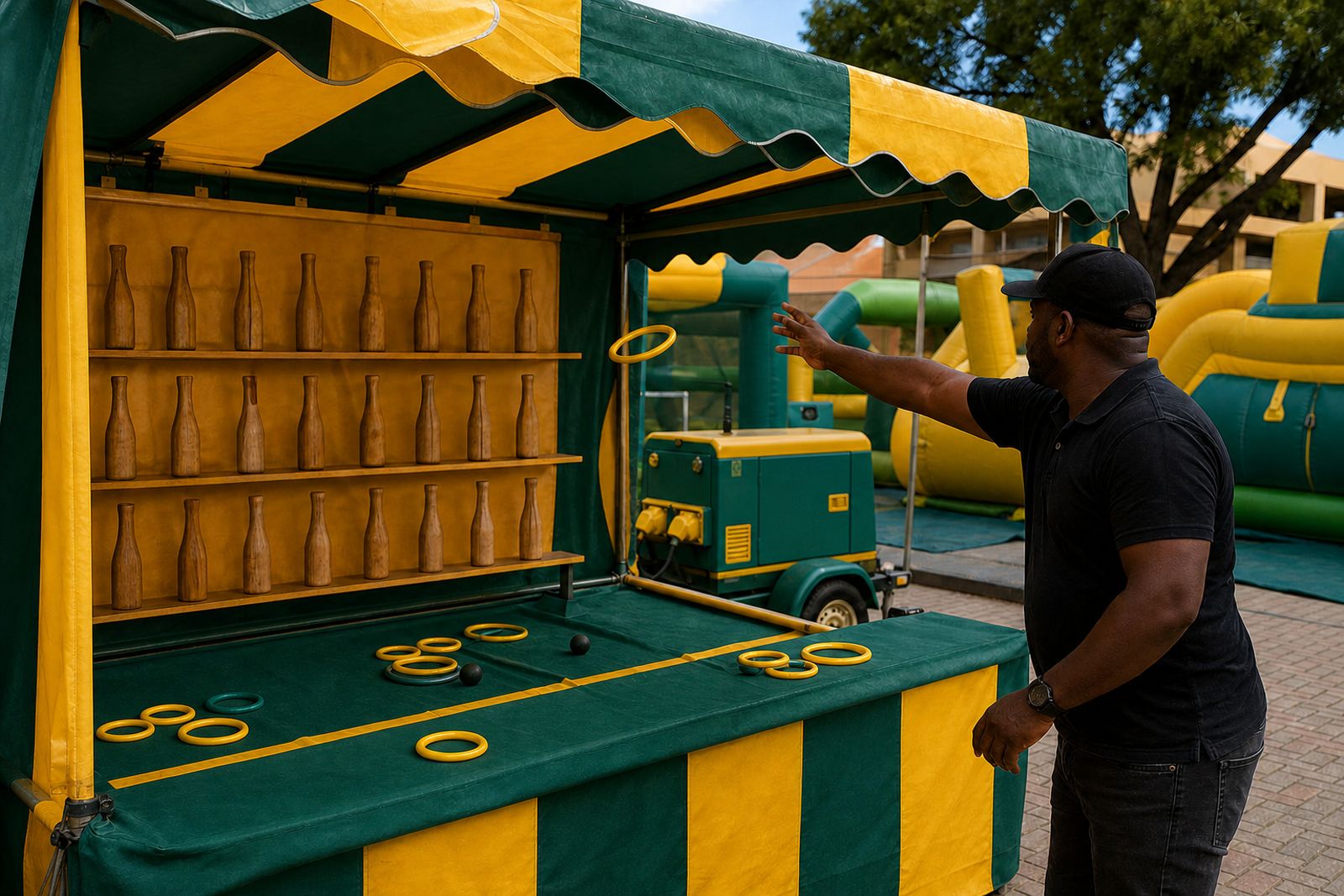
An inflatable obstacle course suits venues that can handle movement and noise without making the rest of the programme feel cramped. It works at school sports days, family fun days, church gatherings, mall promotions, community events and company picnics. The product also works well alongside carnival games, photo booths, snack carts and small rides when the brief needs more than one attraction.
- Schools needing a structured activity for classes or houses
- Malls planning a crowd-pulling weekend activation
- Corporate family days with mixed age groups on site
- Birthday events where older children want a challenge
For indoor or semi-covered venues, ceiling height and door access need checking before the booking is locked in. Outdoor venues need ground condition checks, especially after rain, because soft soil and standing water can change anchoring choices and affect the safe position of the course.
Care, safety checks and weather plans
Our crew checks seams, inflation points, mats and anchoring before use, then watches the run during the hire period. The inflatable is kept clean and dry at dispatch, and the surface is inspected once it is inflated so the event starts with a proper read on the condition. Shoes, sharp accessories, food and drink are kept away from the play area, because those are the usual causes of scuffs and stains.
Weather matters with this kind of hire. Wind, rain and lightning can change the plan for outdoor events, and the setup needs to be adjusted to suit the venue conditions on the day. If the ground is wet or the wind picks up, the crew may recommend a different position, an alternate layout, or a change in the activity order so the equipment stays stable and the crowd flow stays sensible.
Information we need to match the best course
When you are ordering, the most useful details are the venue type, the age group, the approximate number of participants and the space available for setup. It also helps to know whether the surface is grass, paving or concrete, whether power is available, and whether the event needs supervision, queue control or a marshalled race format.
- Event date and venue town or suburb
- Age range and expected number of users
- Available space, including width, length and height limits
- Surface type and access for delivery vehicles
- Need for generator supply, mats or extra supervision
- Whether the course is for free play or timed races
For school and corporate venues, the more exact the brief, the easier it is to place the right unit and the right crew. If your venue has a strict access gate, a narrow passage or a booking office with set arrival rules, that should be noted early so the team can plan the delivery path and setup window with less friction.
Key facts
| Product type | Inflatable obstacle course with pop-ups, tunnels and climb sections |
|---|---|
| Typical footprint | From about 12 metres long, with larger runs at 15 to 20+ metres |
| Width range | Usually 3 to 5 metres depending on layout |
| Power needs | Continuous blower power point or generator supply |
| Anchoring | Pegging, ballast or weighted tie-downs matched to the venue |
| Best use | Schools, malls, corporate family days and birthdays |