Picking the right attraction for the crowd
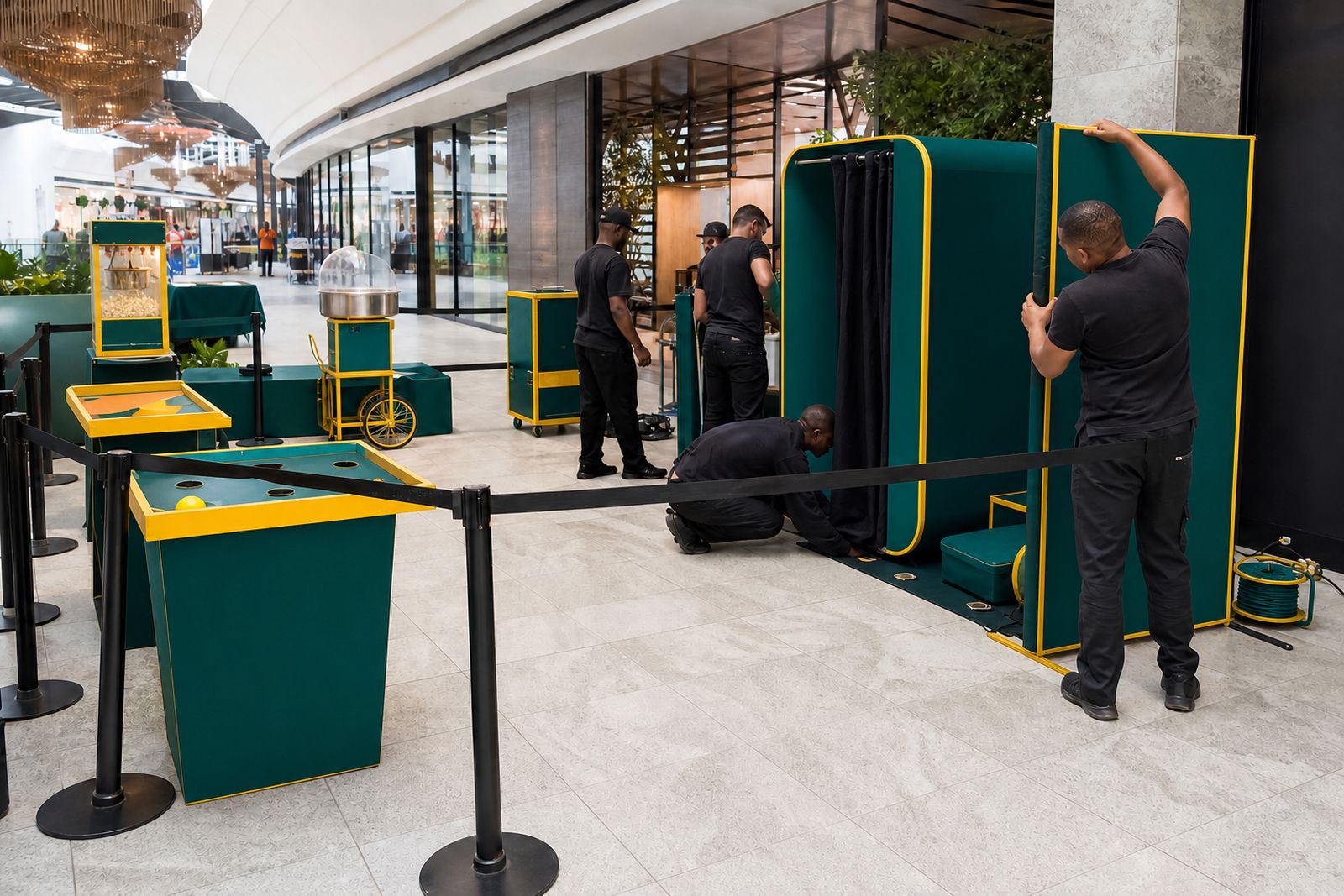
Different events need different pieces of kit. A school fun day often works better with a mix of movement, games and snack stations, while a birthday in a home garden may only need one inflatable, a photo booth and a candy floss cart. Mall activations usually need a tighter footprint, stronger crowd control and a clear queue pattern that does not block walkways.
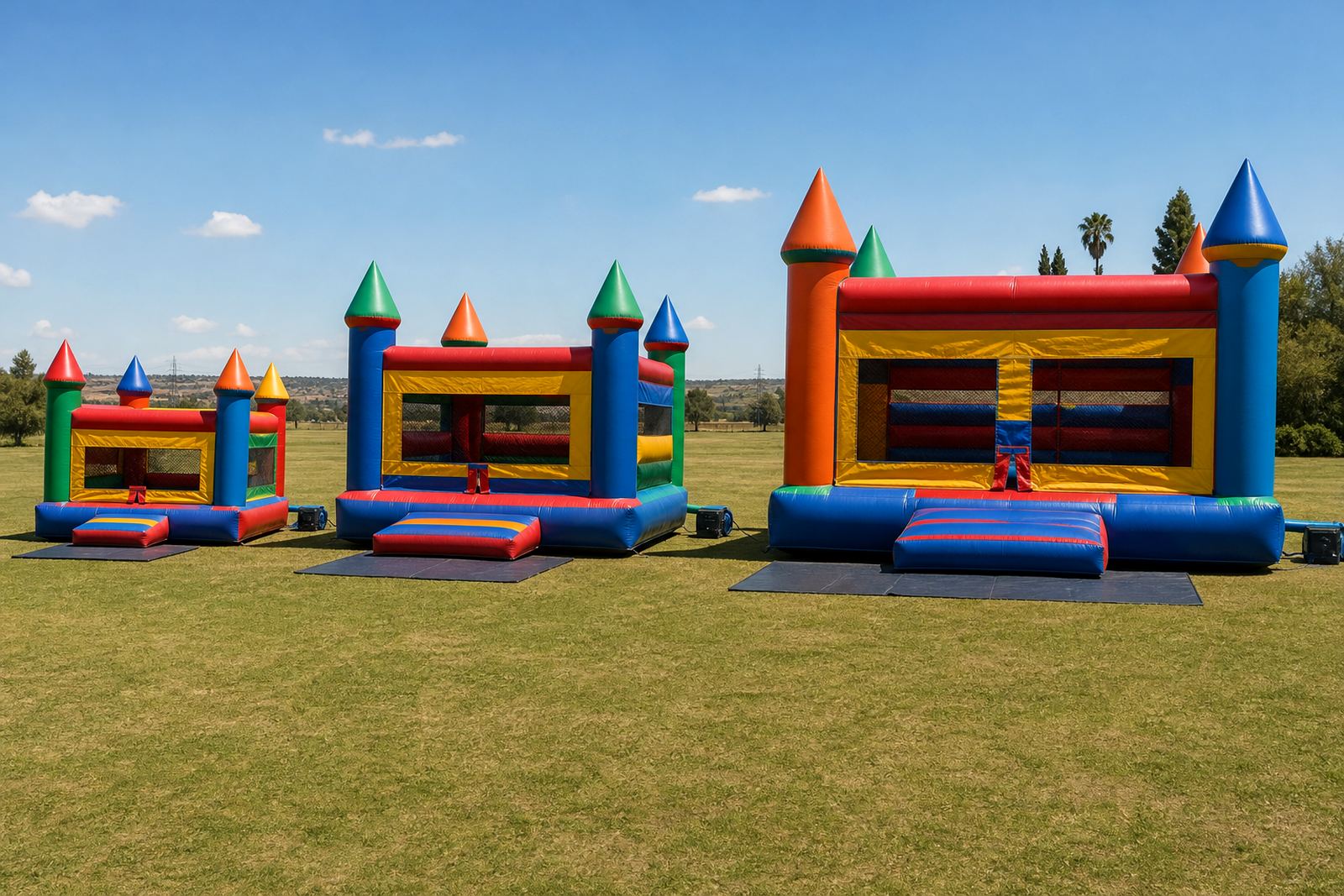
Age and height matter as much as the theme. Small children need lower platforms, gentler slides and safer entry points, while older children and teens usually want larger inflatables, obstacle runs or arcade-style play. For mixed ages, the best plan is often a split zone, with one area for active play and another for quieter stops like carnival games or photo prints.
- Match the attraction to the youngest likely users.
- Keep taller inflatables away from tight overhead cover.
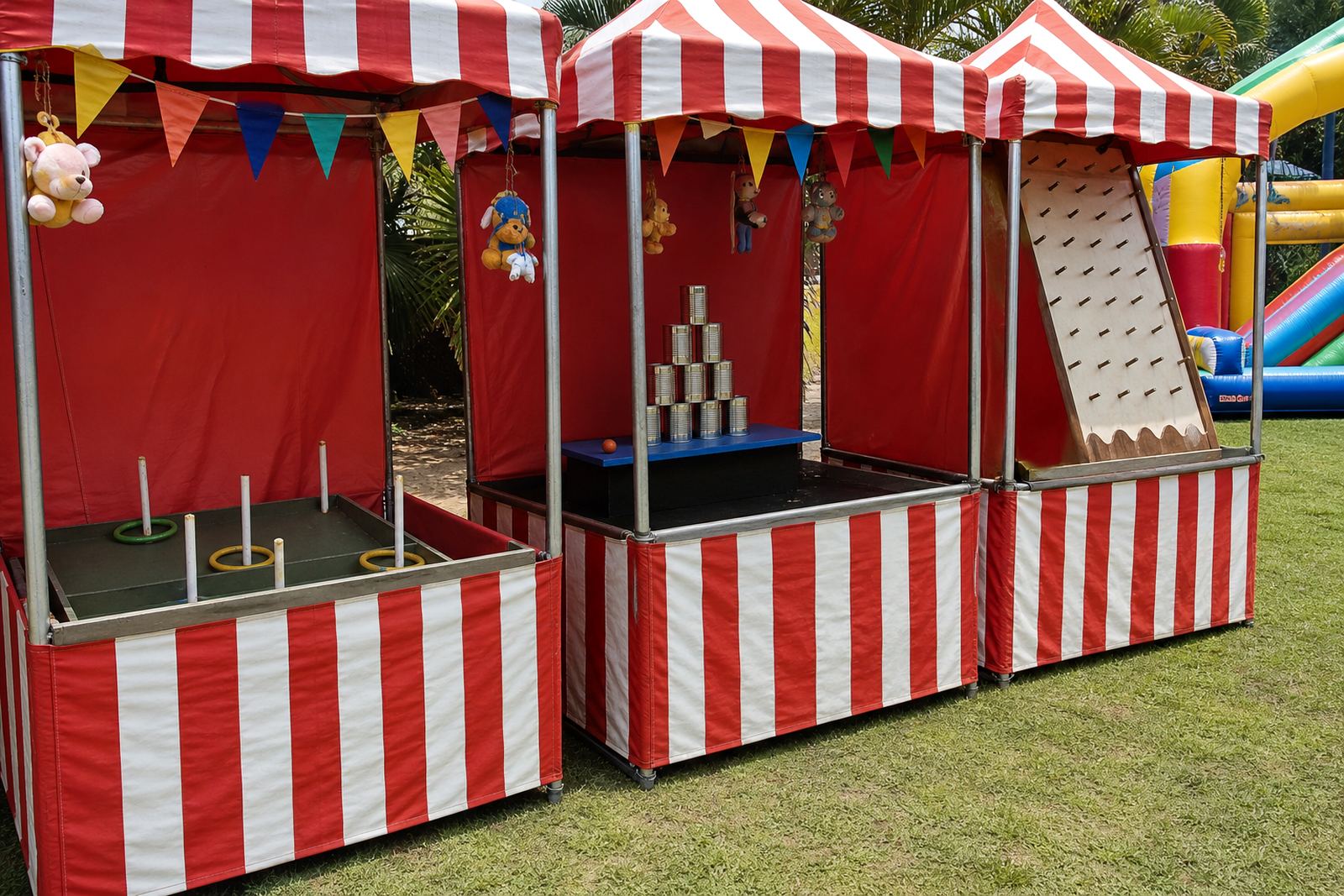
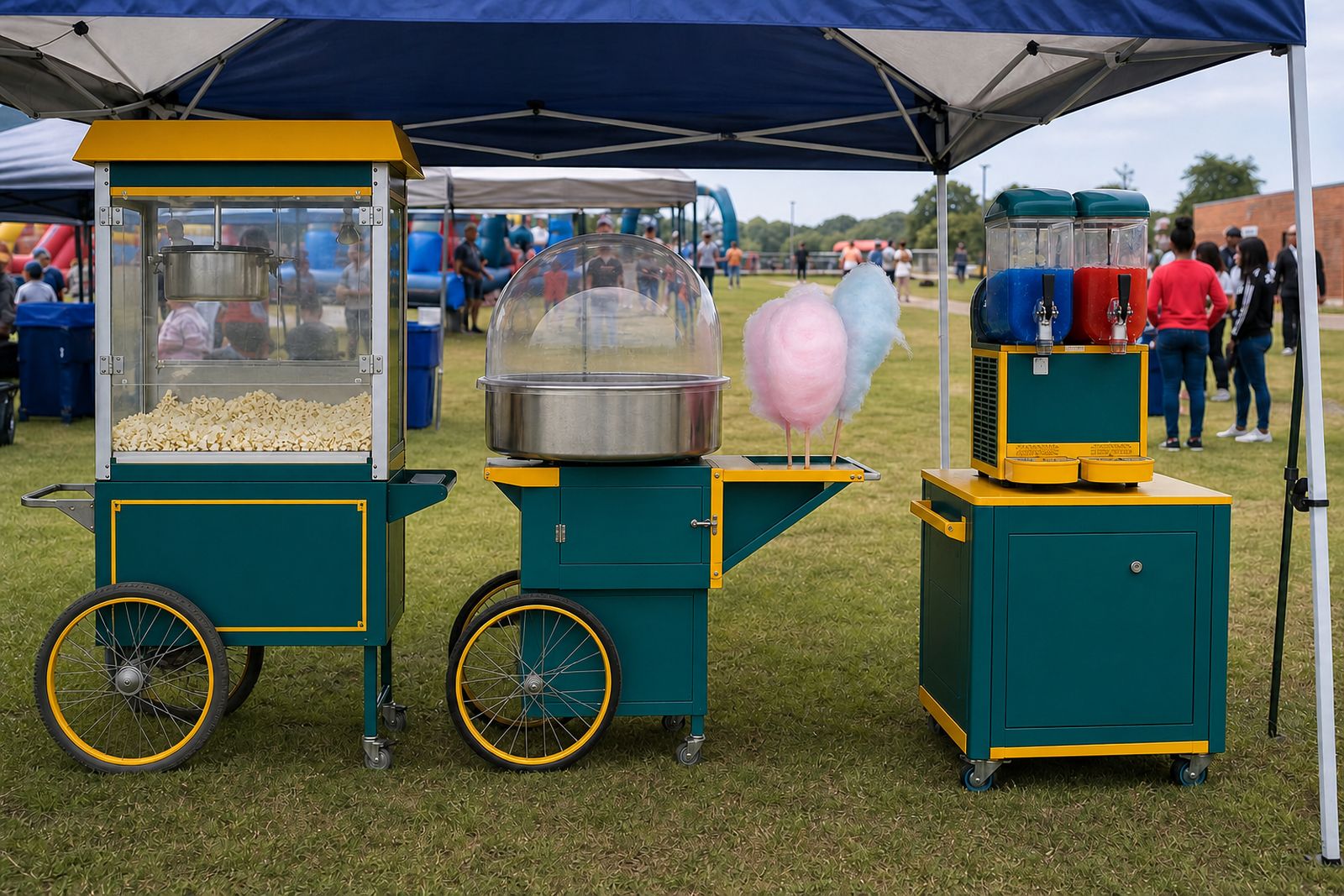
- Use game stalls and snack carts to balance active play.
- Separate fast-moving queues from seating and viewing areas.
Space, access and the real shape of the site
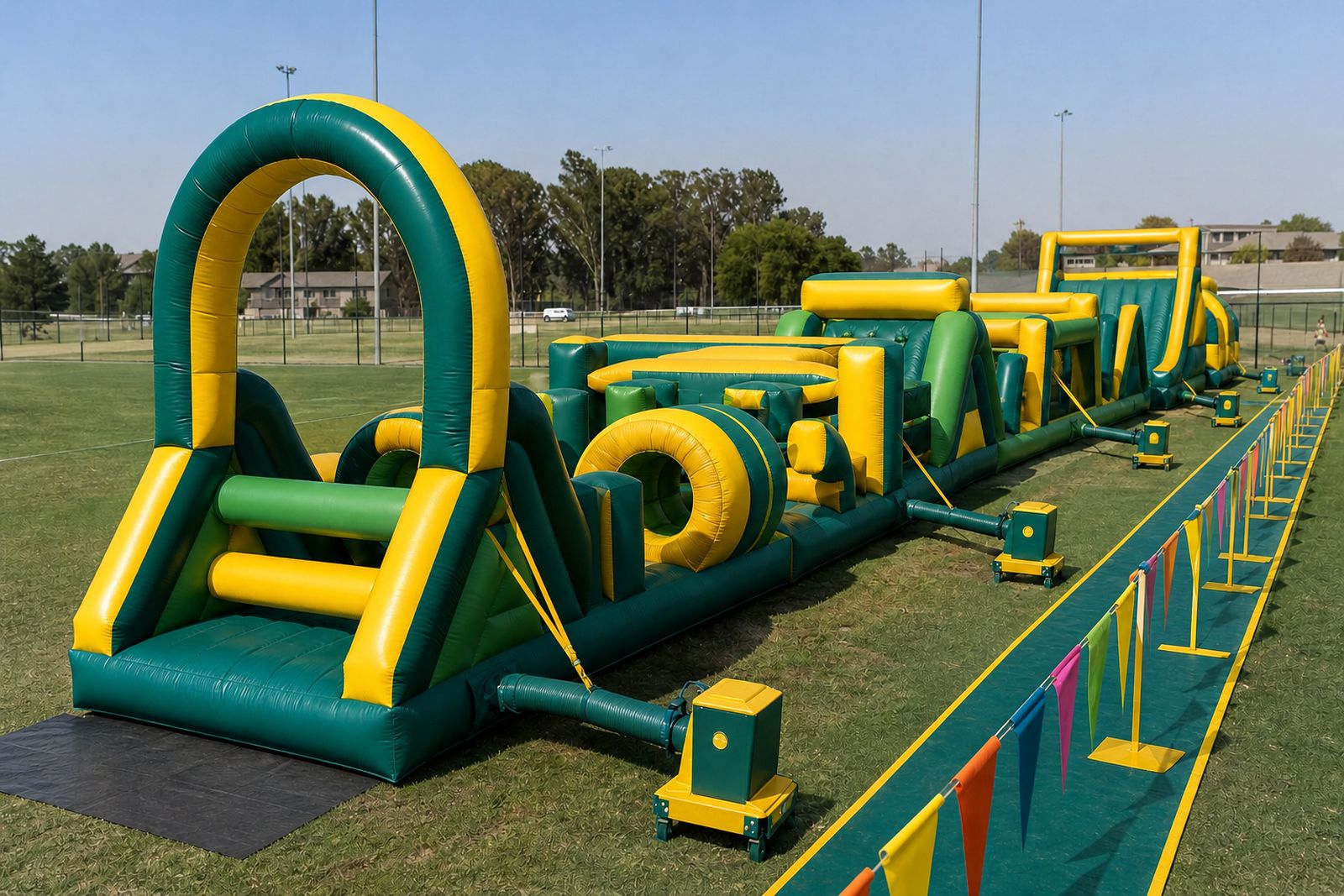
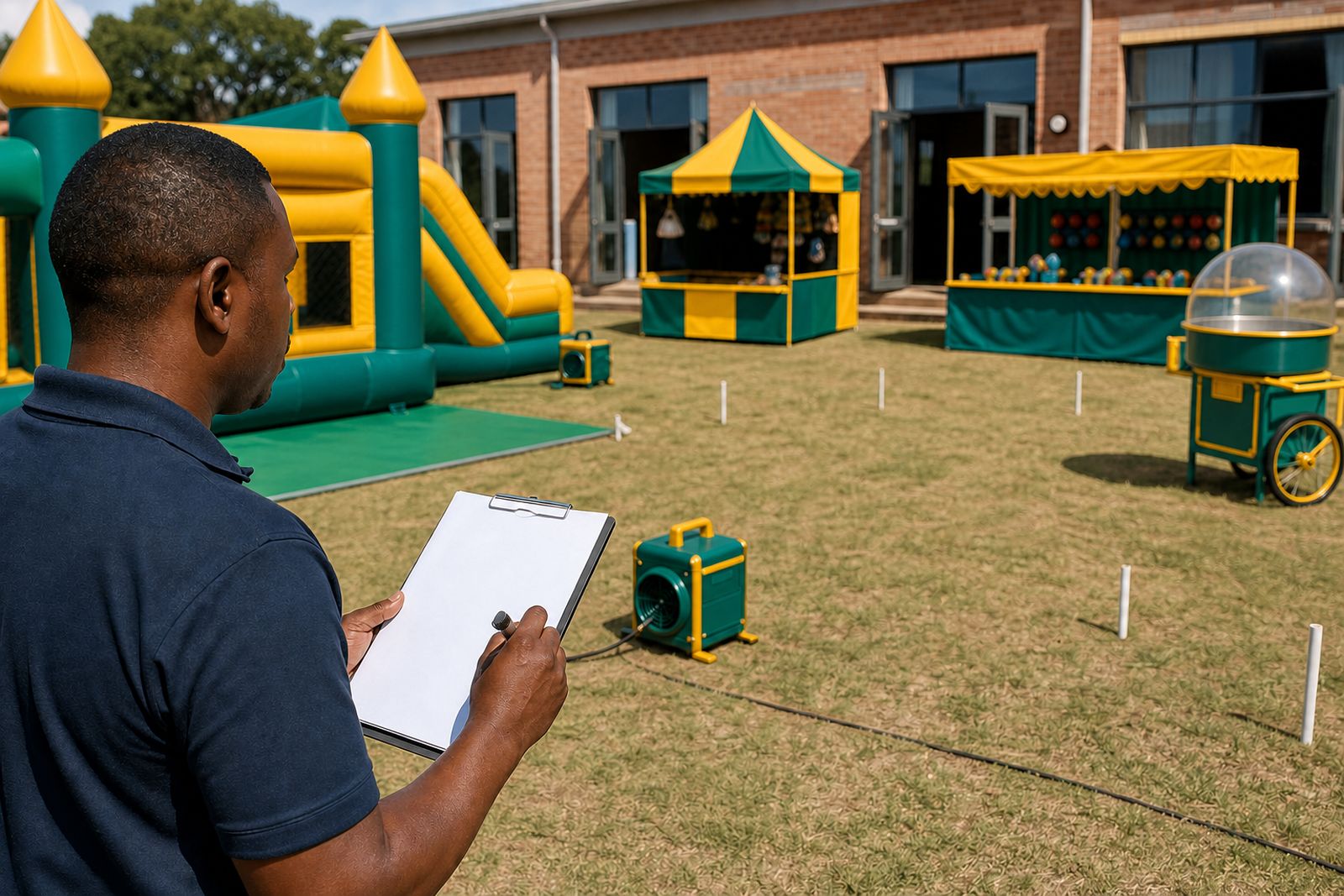
A taped-out field looks generous until the crew starts measuring the entry route, turning space and anchoring points. A jumping castle needs a flat area, room for the blower and clear access for fixing it down. An obstacle course needs extra length for entry, exit and safe circulation around the sides. In wetter weather, the ground can shift underfoot, so the surface under the unit matters almost as much as the footprint.
Access also changes the plan. A second-floor venue, a narrow school gate or a mall loading bay can affect where equipment is carried, wheeled or staged before setup. If the surface is hard, mats and sandbags may be used instead of pegs. If the venue has trees, low wires or awnings, those details need to be checked before anything is unloaded.
- Measure the play area and the access route.
- Check for slopes, loose stones, irrigation covers and low roofs.
- Leave room for crew movement around each attraction.
- Allow a clear path for collection after the event ends.
Power, blowers and the equipment behind the fun
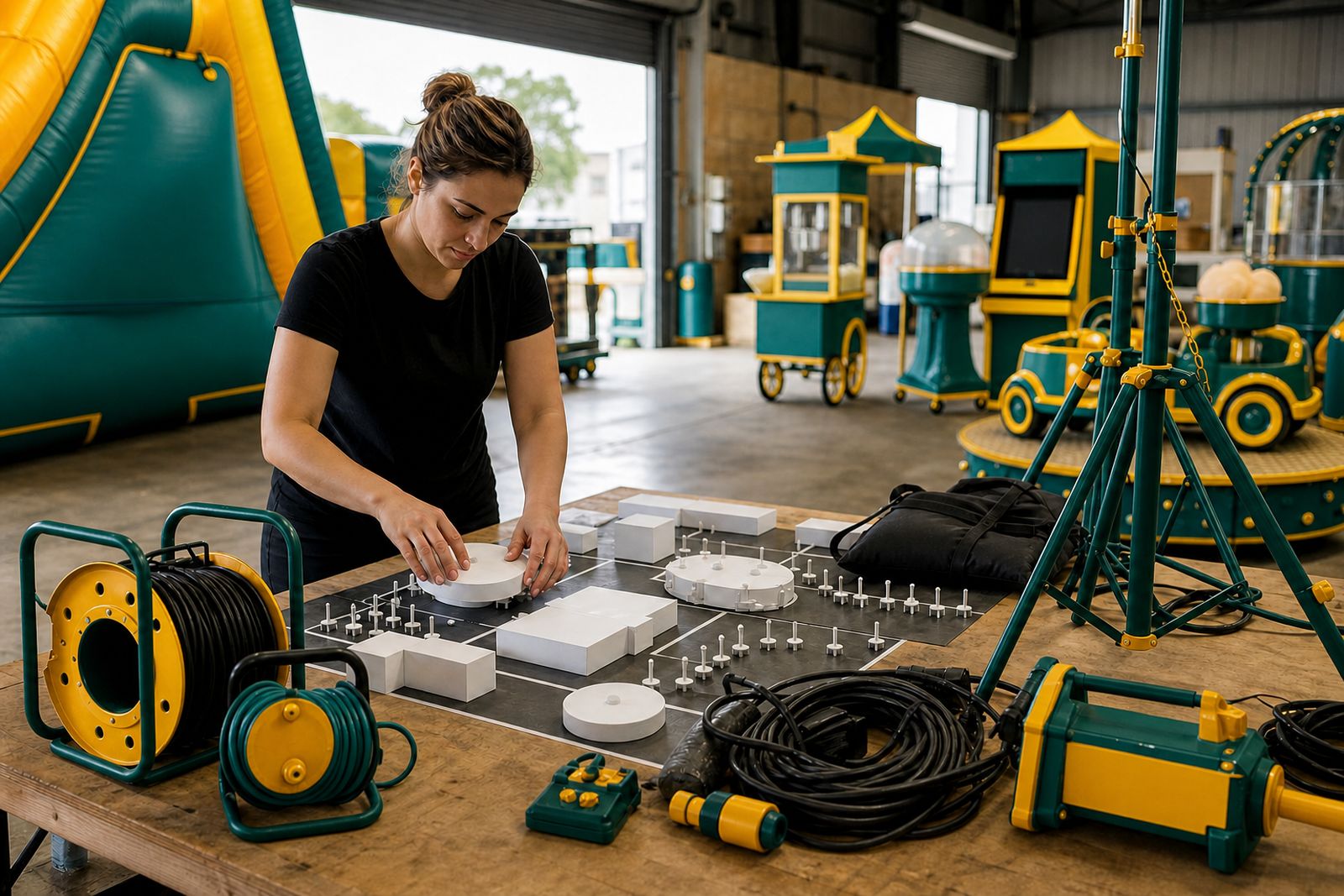
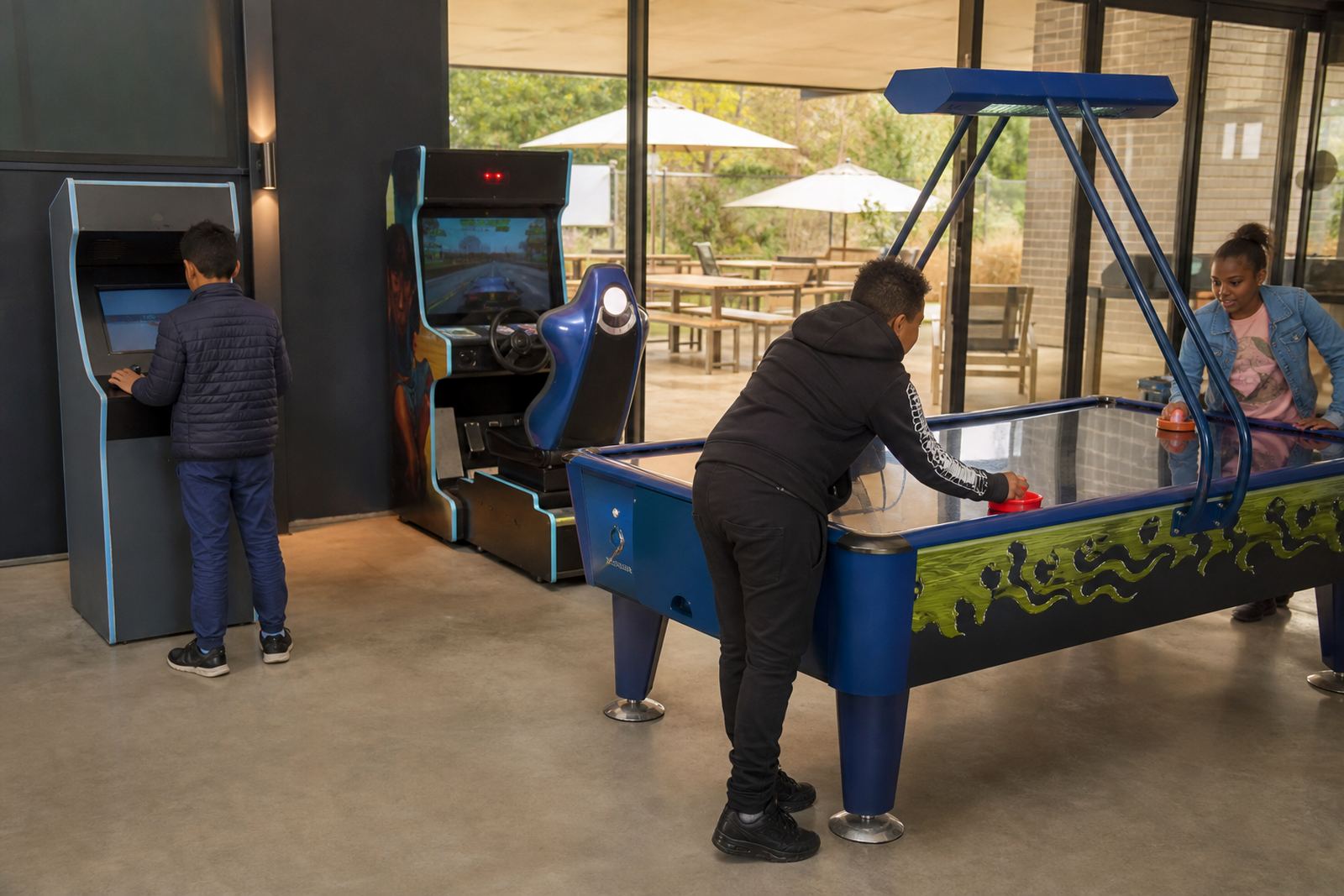
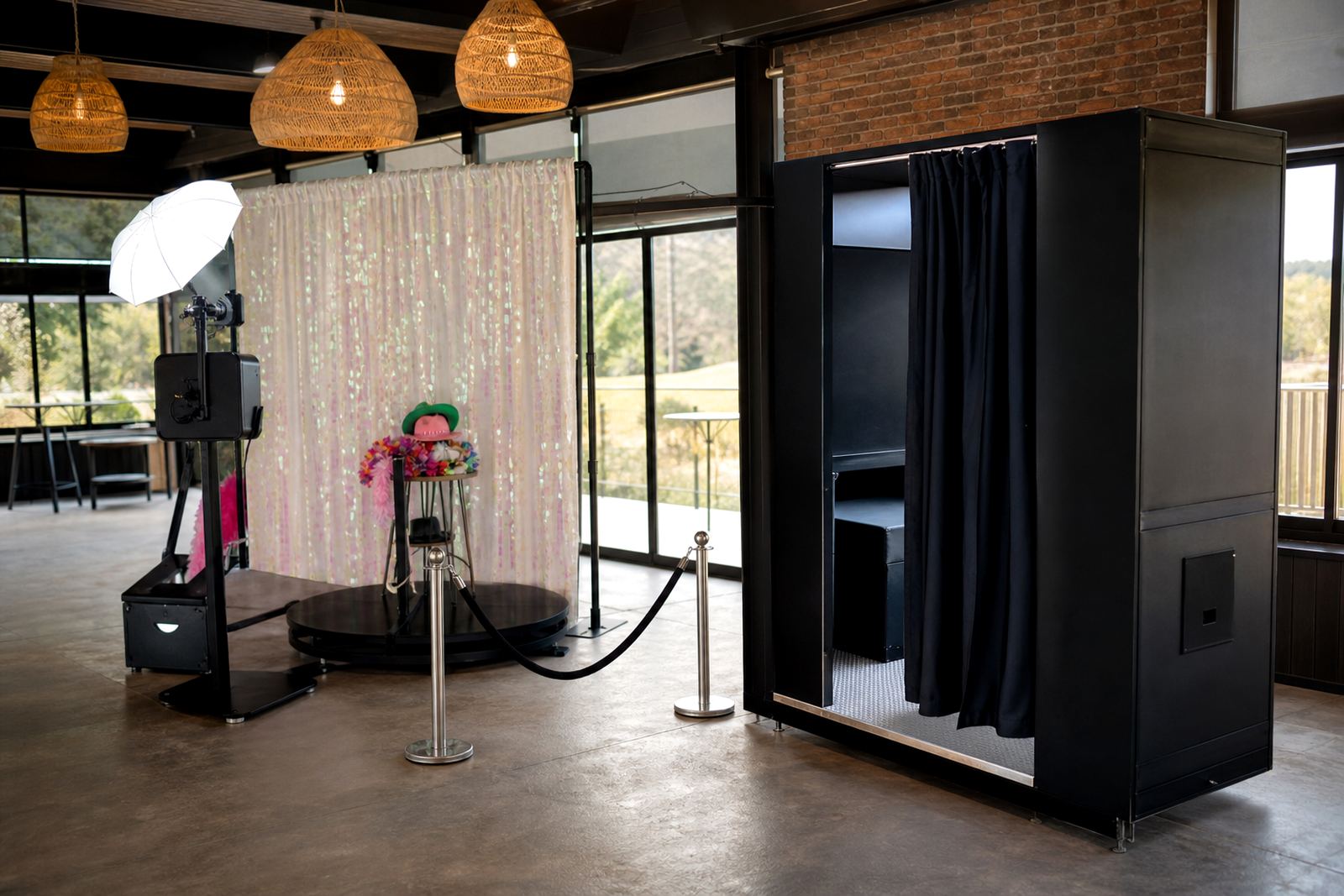
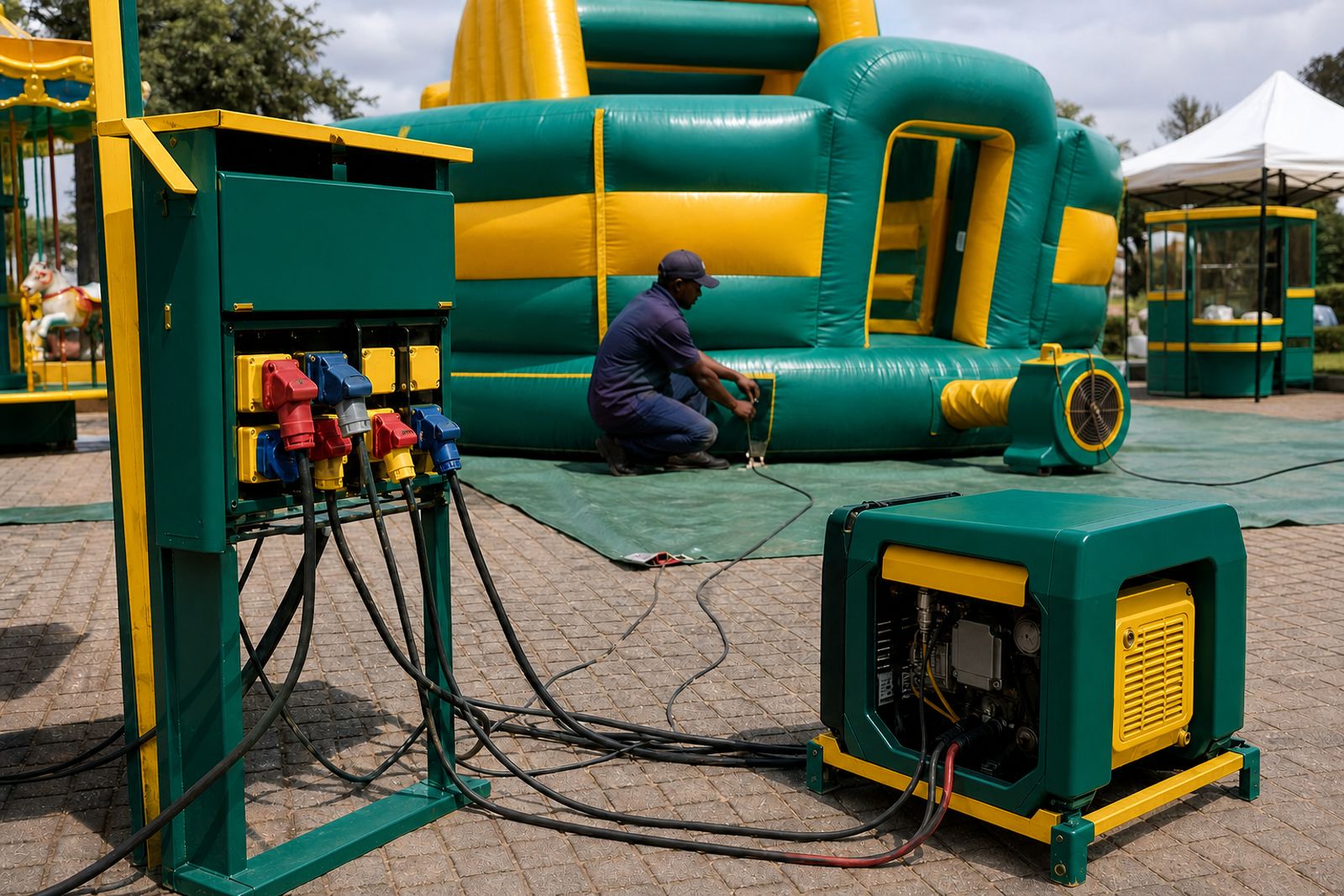
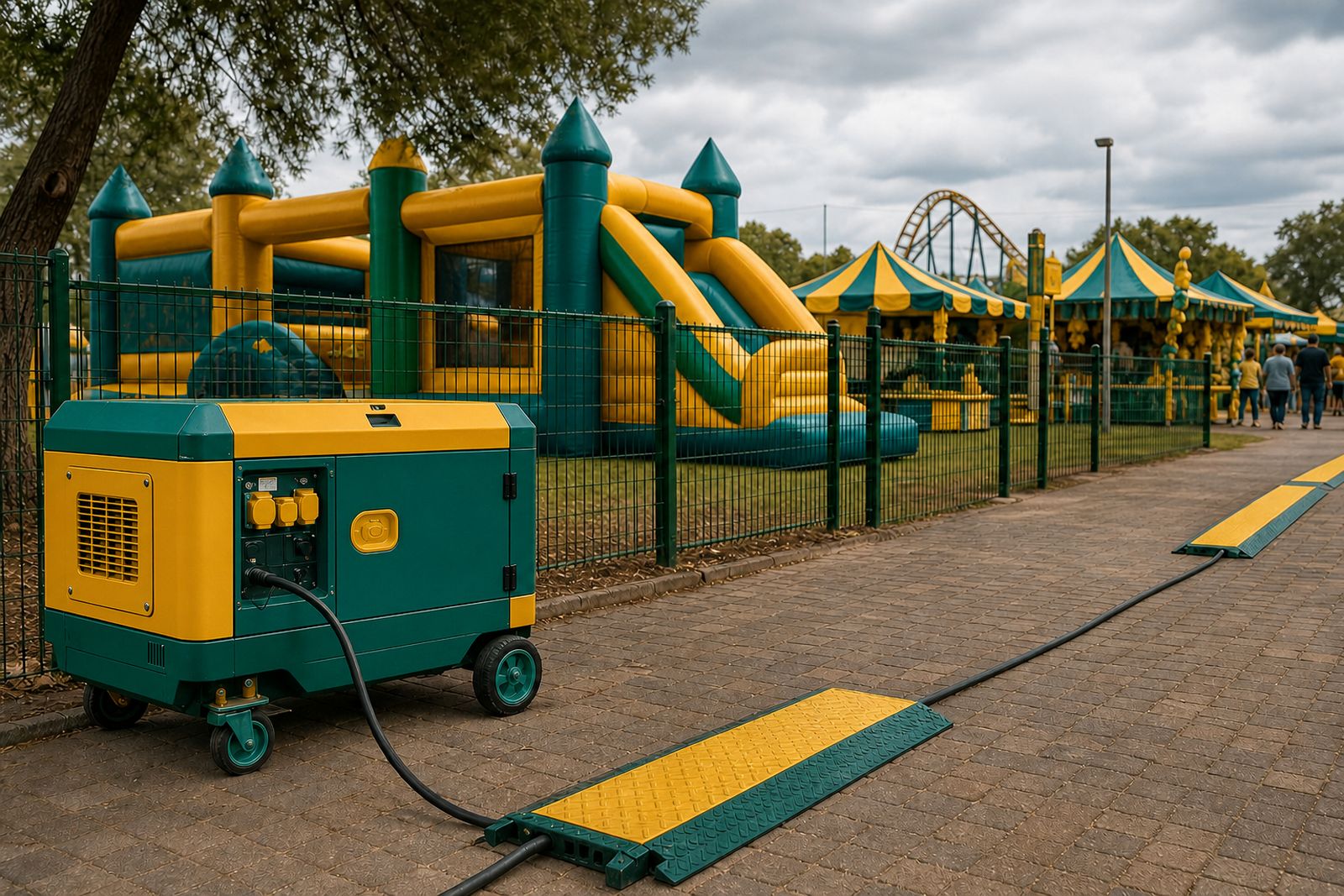
Many attractions run on mains power through blowers, lighting, or small motors. Photo booths, arcade cabinets and foam or bubble machines may need a steady supply, while snack carts can need separate circuits depending on the model in use. Where the venue has limited outlets, the plan may include generator supply and cable runs that stay out of guest paths.
Good planning also covers what happens if the weather changes. Blowers must stay secured, cables kept dry and any loose items weighted properly. Crew members usually check the pitch of the unit, the connection points and the matting before guests are let in. That sort of detail is ordinary on a busy setup, but it is the part that keeps the day organised.
Common power points to think through:
- How many plugs are available at the site.
- Whether the attraction needs continuous airflow.
- Whether snack carts share circuits with other equipment.
- Whether the venue allows a generator on the premises.
Weather plans for open lawns and covered venues
Outdoor hire in Gauteng, Durban or Cape Town can shift with wind, rain or heat. A wet lawn may call for more anchoring and extra mats. Strong wind can change what can safely stand in an open area, especially taller inflatables or large décor pieces. Heat affects guest comfort and queue flow, so shade and water points become part of the plan, not an afterthought.
Covered spaces have their own limits. Low roofs, slick floors and restricted exits can affect where a castle or booth can sit. Indoor halls also need clear rules on shoes, food, drink and supervision. If foam or bubble equipment is part of the day, the floor finish and drainage points need attention before the machine is switched on.
Crew levels, supervision and the movement of guests
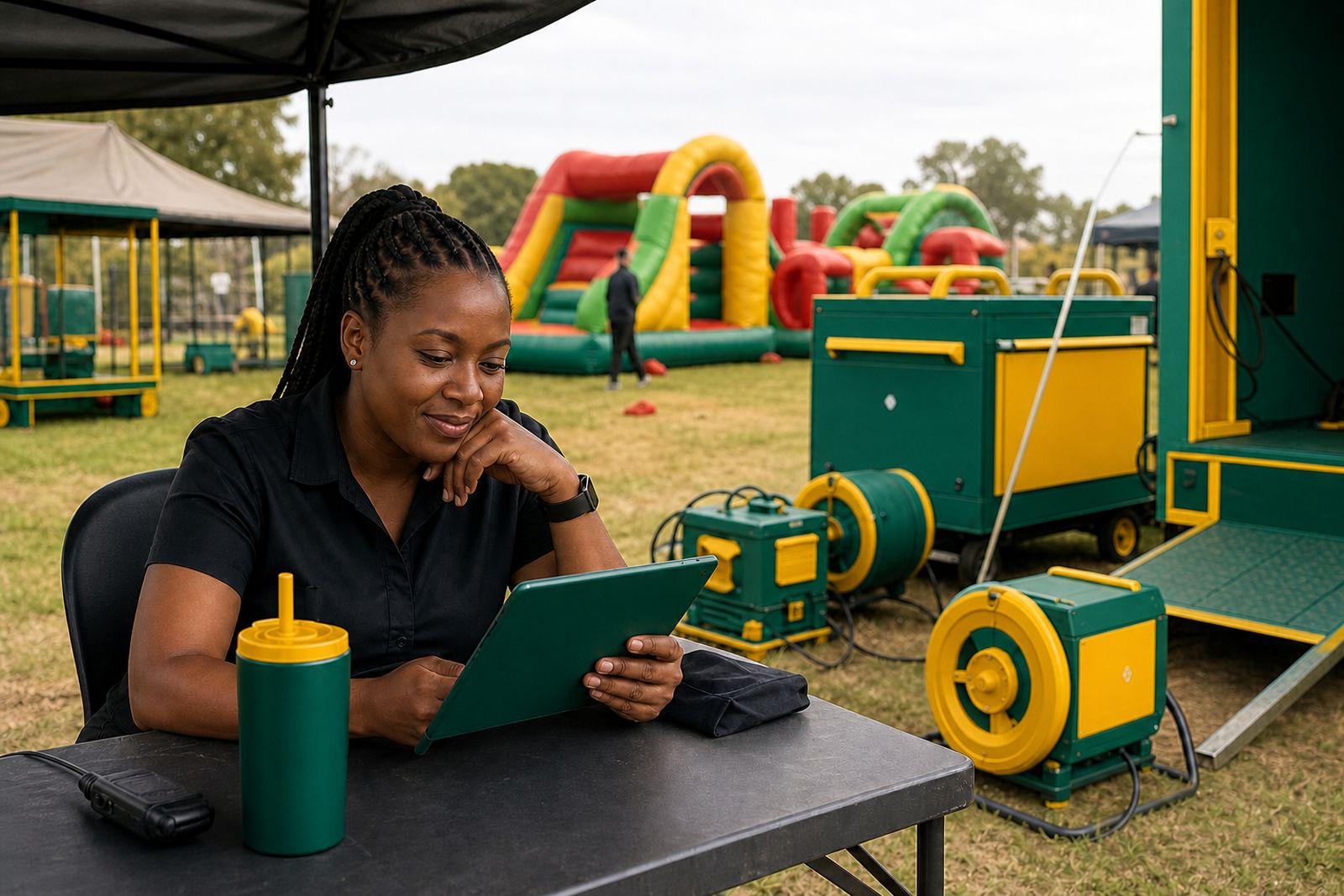
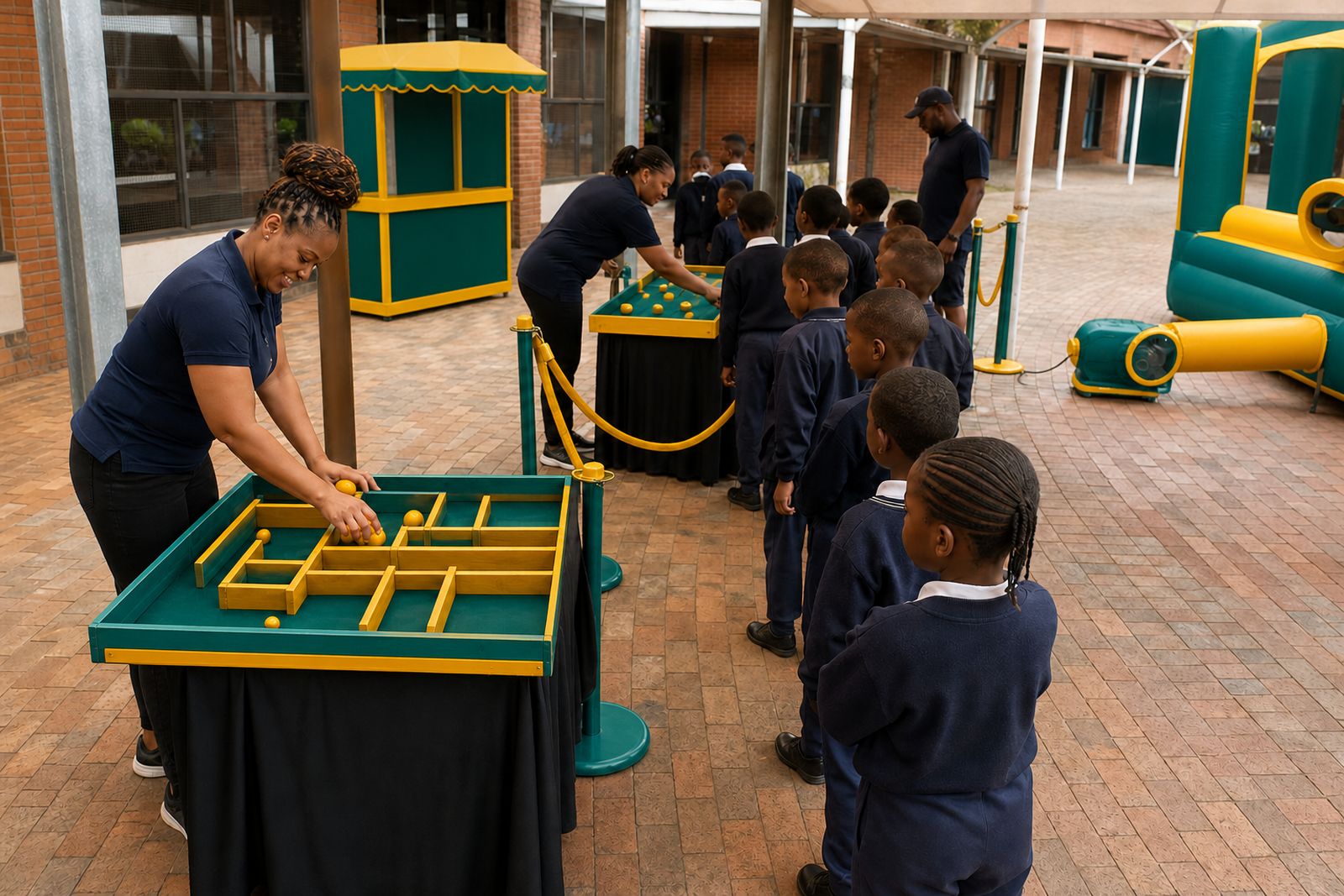
Some setups only need delivery and collection, while others need crew on site to run the queue, manage loading points and keep the attraction flowing. School events and corporate family days usually need more structure than a private garden party. A proper plan also decides who watches the entry point, who helps with height checks and who handles the handover between groups.
For larger events, supervision can be split between the play zone, snack point and photo area. That helps the queue stay steady and stops one section from becoming overcrowded. Mascots and ride operators also need room to move, especially where children gather quickly. The more varied the mix, the more important it is to map the order of use before the gates open.
- Set a clear entry and exit point for each attraction.
- Keep a visible queue line for busy items.
- Plan one adult or crew member per active zone.
- Allow space for breaks, collection and reset time.
Bookings, deposits and the order of the day
Most event hires work best when the booking details are handled in a fixed order. First the venue, date and guest profile are checked. Then the likely attractions, power access, weather backup and crew cover are matched to the site. After that, the schedule can be shaped around setup, guest arrival, peak play periods and strike and collection.
Deposits are often used to hold the booking and lock in the equipment list for the day. Changes are easier to handle when they are captured before the load leaves the base in Midrand. For national road shows, the route, storage stops and venue access windows also need to be part of the discussion, especially where multiple attractions are moving between cities.
Our planning guides are written for people comparing the choices, not just the catalogue. They help you look at the practical bits first, so the event runs in a neat order from the first crate on site to the last piece loaded out.