The first jobs were about making local events feel complete
The early work was straightforward and hands on. A school fete needed one or two pieces that children could use safely. A birthday in a backyard needed a jumping castle that could fit the space, hold steady in the wind and be packed away without leaving the garden in a mess. A shopping centre activation needed colour, clear queue control and equipment that could run for long periods without fuss.
Those first jobs taught the habits that still shape the business today. Every site has to be checked for access, surface type, overhead clearance and enough room for anchoring mats, tables or queue lines. The setup has to suit the ground, whether it is pavement, grass, school field or a tiled indoor area. Even now, the small details decide whether the day feels organised or chaotic.
From one castle to a fuller mix of amusements
As requests widened, so did the range. Inflatable obstacle courses brought more movement and more crowd control. Carnival games added a fairground feel for family days and fundraisers. Arcade cabinets and retro gaming machines gave older children and adults something to gather around while the younger ones used the softer pieces nearby.
Food carts, photo booths and small rides changed the shape of many bookings too. A candy floss cart or popcorn machine gives a steady stream of snacks and a clear point of interest. Photo booths create a place for groups to pause and capture the day. Foam and bubble machines can lift a casual event into something memorable, while mascots and attendants keep the mood light for younger guests.
- Jumping castles for compact yards, school fields and indoor halls
- Inflatable obstacle courses for older children and mixed-age groups
- Carnival stalls and games for family days, festivals and fundraisers
- Arcade and retro gaming machines for malls, offices and marquees
- Snack carts, photo booths, foam machines and bubble machines for added activity
The crew side of the business became part of the story
Amusement hire works best when the crew knows both the equipment and the event. Our team is set up with clear roles for everyone. Thabo Jantjies oversees the business as Managing Director, while Anele Ebrahim keeps operations organised and Johan Hlongwane handles fleet and logistics. Naledi Seabi manages bookings, Yusuf Masilela trains crews on safety and setup, and Candice Zungu leads client service.
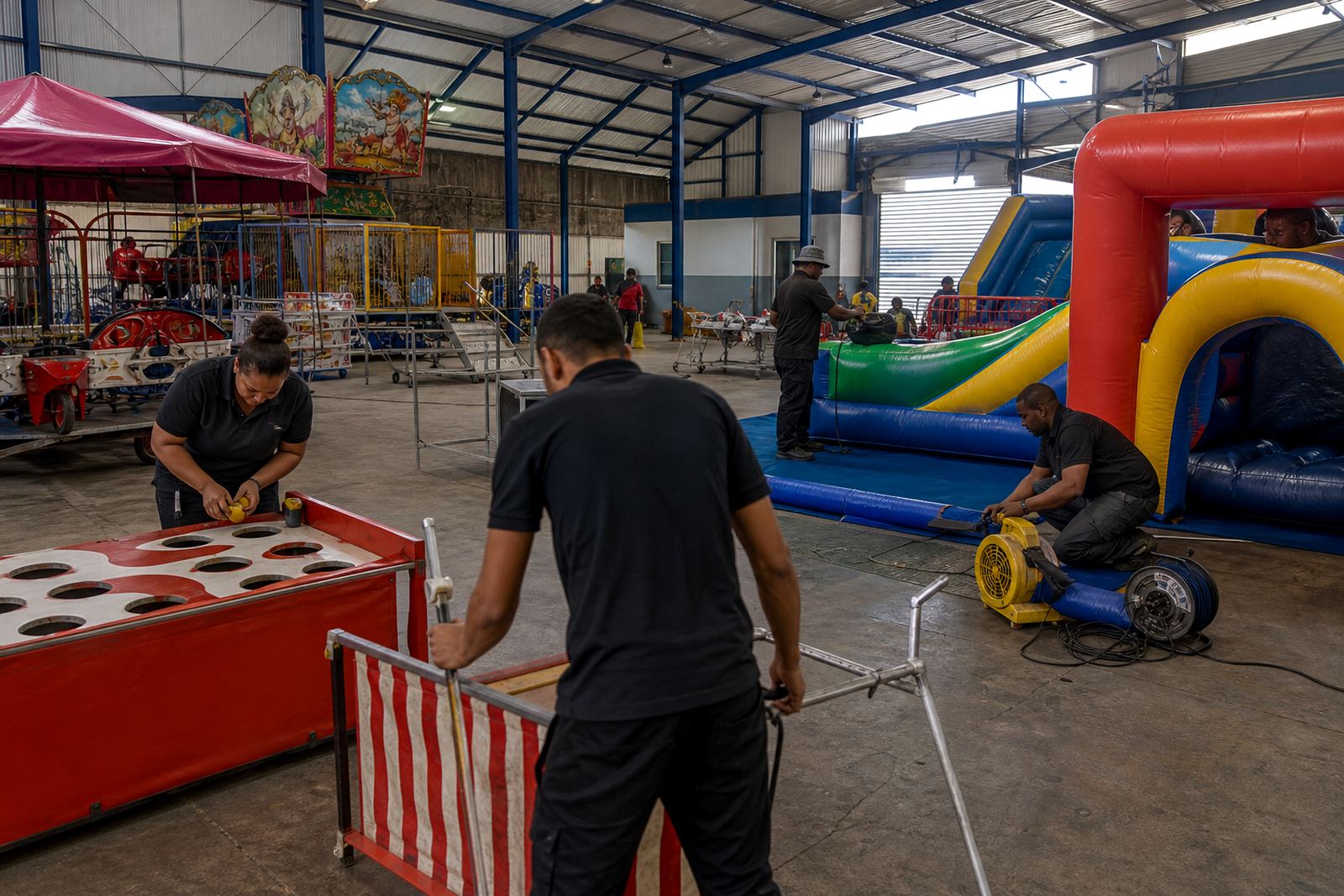
This structure matters on the ground. One crew might be loading an obstacle course in Midrand while another is setting up carnival games in Pretoria or a photo booth at a corporate site in Sandton. The work depends on proper loading, anchoring, mat placement and strike planning, because amusement hire is never just about dropping off equipment. We make sure the details are right before guests arrive.
- Delivery and setup are planned around access, venue rules and event flow
- Supervision can be added for rides, queues and active play areas
- Power planning covers mains supply, cable routing and generator use where needed
- Wet weather plans help protect equipment and keep the site orderly
Schools, malls and family days shaped the way we work
Different customers use amusements in different ways, and those patterns shaped the business. Schools want safe play, tidy access and equipment that works across a busy programme. Malls look for compact, visible attractions that draw attention without blocking walkways. Corporate family days need variety, clear supervision and enough choice for children of different ages.
Birthday bookings usually ask for something more personal. A castle, game stall or snack cart can fill a garden, clubhouse or home driveway without needing a huge footprint. The team learnt to work with tight turnarounds, sensitive neighbours and venue rules that differ from place to place. That practical approach still matters when the event is in Durban humidity, Pretoria heat or a Cape Town breeze, because the conditions can change how equipment is anchored and how crews manage the site.
How the setup standards settled into everyday practice
Over time, the business developed habits that sit behind every booking. Inflatables are checked for sensible space needs, with enough clear ground for blowers, mats and safe movement around the unit. Rides and larger pieces need more careful positioning, especially where the surface is uneven or the access is tight. Carnival games need orderly spacing so that queues do not spill into walkways or eating areas.
That practical thinking extends to the strike as well. Equipment has to be packed out cleanly, with cables, mats and loose items counted back in. Some events ask for early setup before guests arrive, while others need the site restored quickly after the programme ends. The history of the business is really a history of learning how to do those steps without drama.
- Clear height and width checks for each inflatable or ride
- Blower placement and anchoring suited to the ground surface
- Safety mats where children step on and off equipment
- Queue barriers or attendants where foot traffic becomes heavy
- Collection plans that fit the venue schedule and access rules
Midrand remains the base, but the work travels far
Midrand is still the centre of the operation, with Gauteng jobs flowing through Johannesburg Hire, Pretoria Hire, Centurion Hire and Sandton Hire. The same crews also travel for Durban Hire, Cape Town Hire and Bloemfontein Hire when national road shows, school programmes or brand events need a wider route. That wider reach grew from years of doing the work properly at a local level first.
The business today carries the same practical habits that it built in the beginning: careful booking notes, clear logistics, event-aware setups and equipment matched to the space. Amusements may change from one event to the next, but the standard stays grounded in the same job. Deliver the pieces, set them up correctly, keep them running as planned and leave the site in order when the event is over.