
Beachfront brief with salt air and moving feet
The organisers wanted a roadshow stop that felt open and lively, but still manageable on a public beachfront stretch in Durban. The crowd would be a mix of school groups, holiday families and passing visitors, so the layout had to work for different ages without turning the sand strip into a bottleneck.
The brief called for a mix of play, light competition and photo moments. We mapped the site for visible drawcards near the pedestrian flow, with quieter equipment set slightly back so queues did not cut across the open path. Coastal weather was part of the planning from the start, because wind off the sea changes how inflatables, signs and queue rails behave once the day gets busy.
- Location type: beachfront public event space in Durban
- Audience mix: families, pupils, holiday visitors and staff teams
- Activity style: active play, snacks, photos and short dwell-time attractions
- Main risk points: wind, shifting foot traffic and uneven holding space on sand edges
What we placed on the sand edge
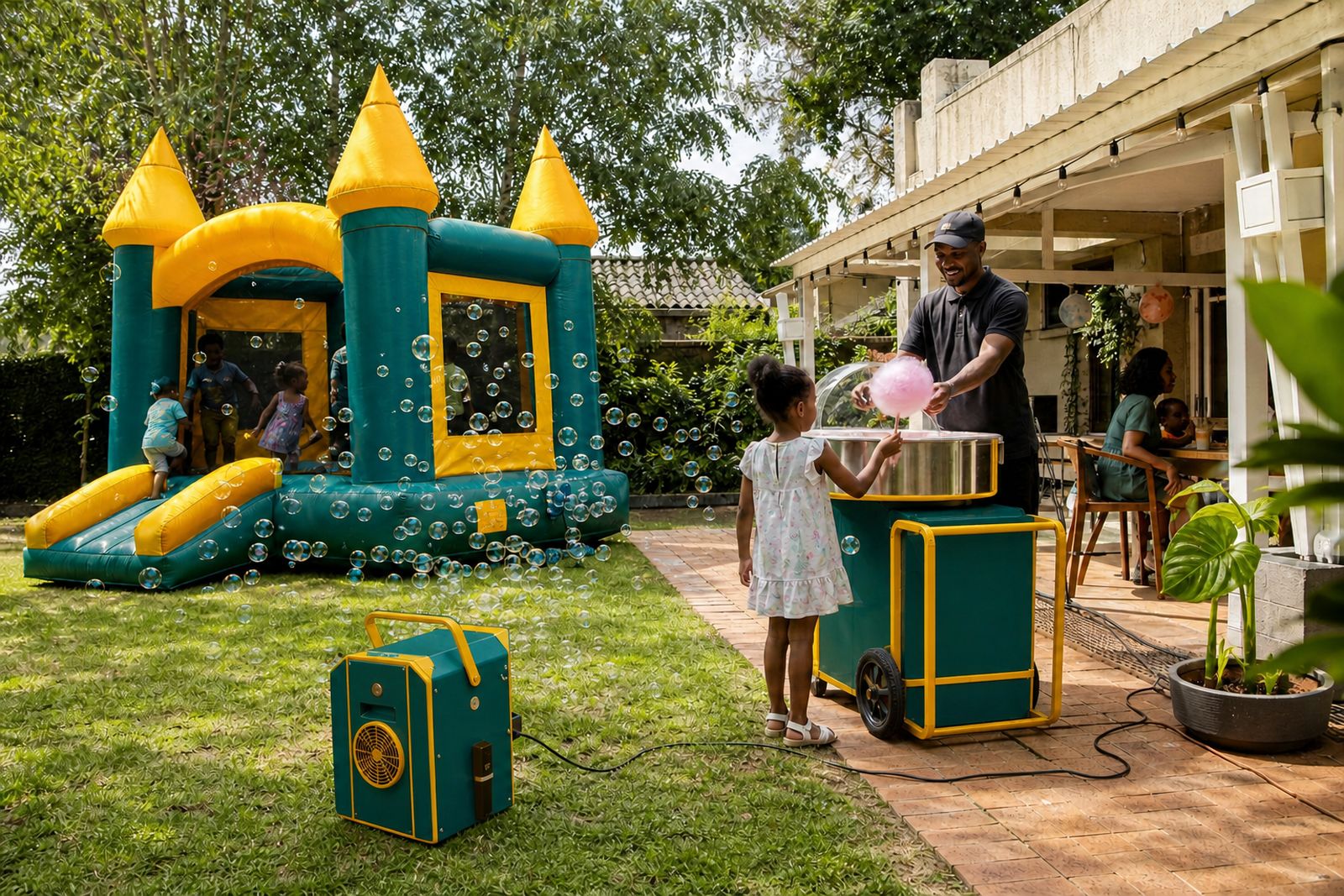
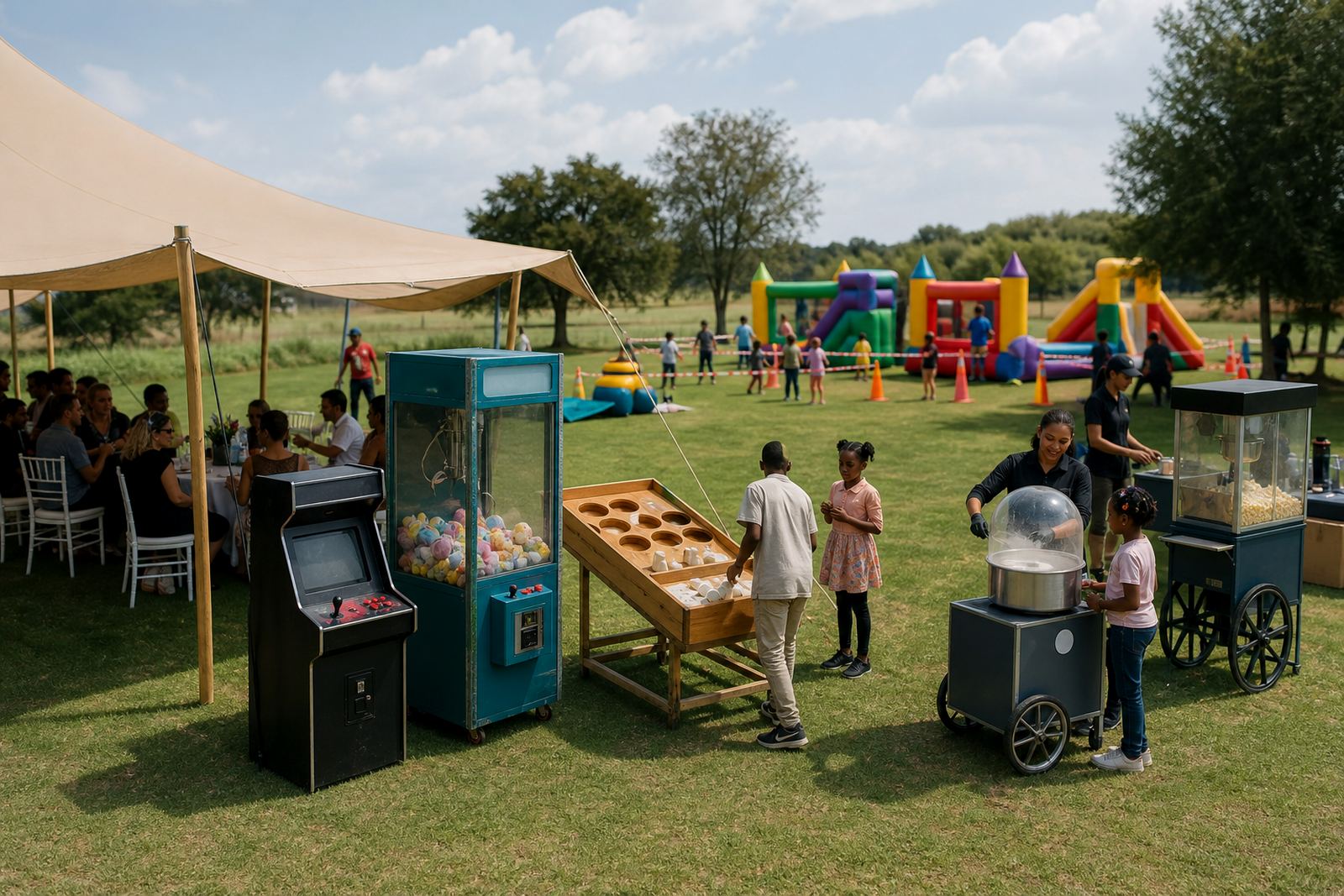
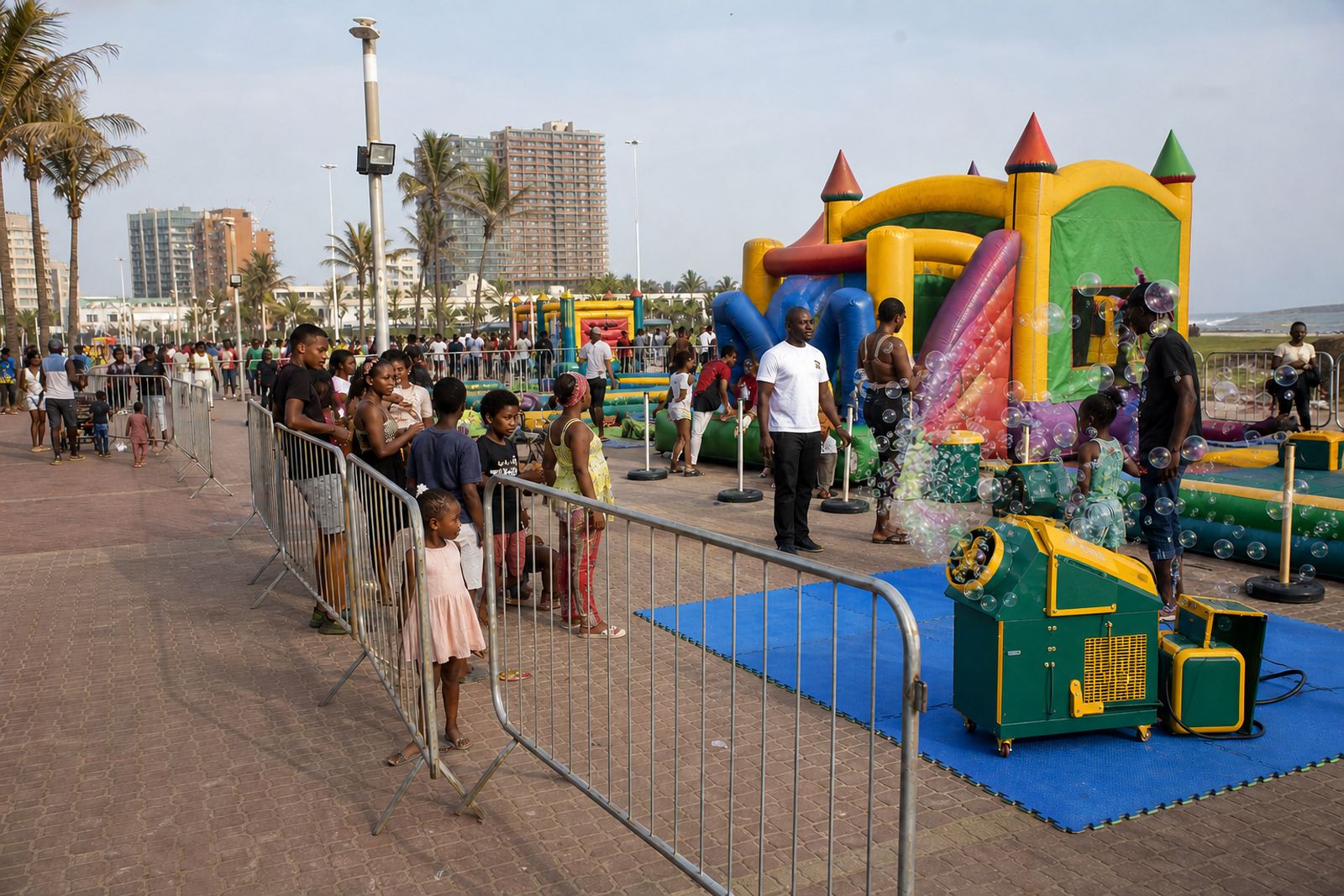
We supplied a compact jumping castle, a smaller inflatable obstacle course, two carnival game stalls, a candy floss cart, a popcorn machine, a photo booth, a foam machine and a pair of mascot appearances for planned intervals. The idea was not to overload the site with oversized pieces. It was to keep movement steady and give people several ways to join in without a long wait for one attraction.
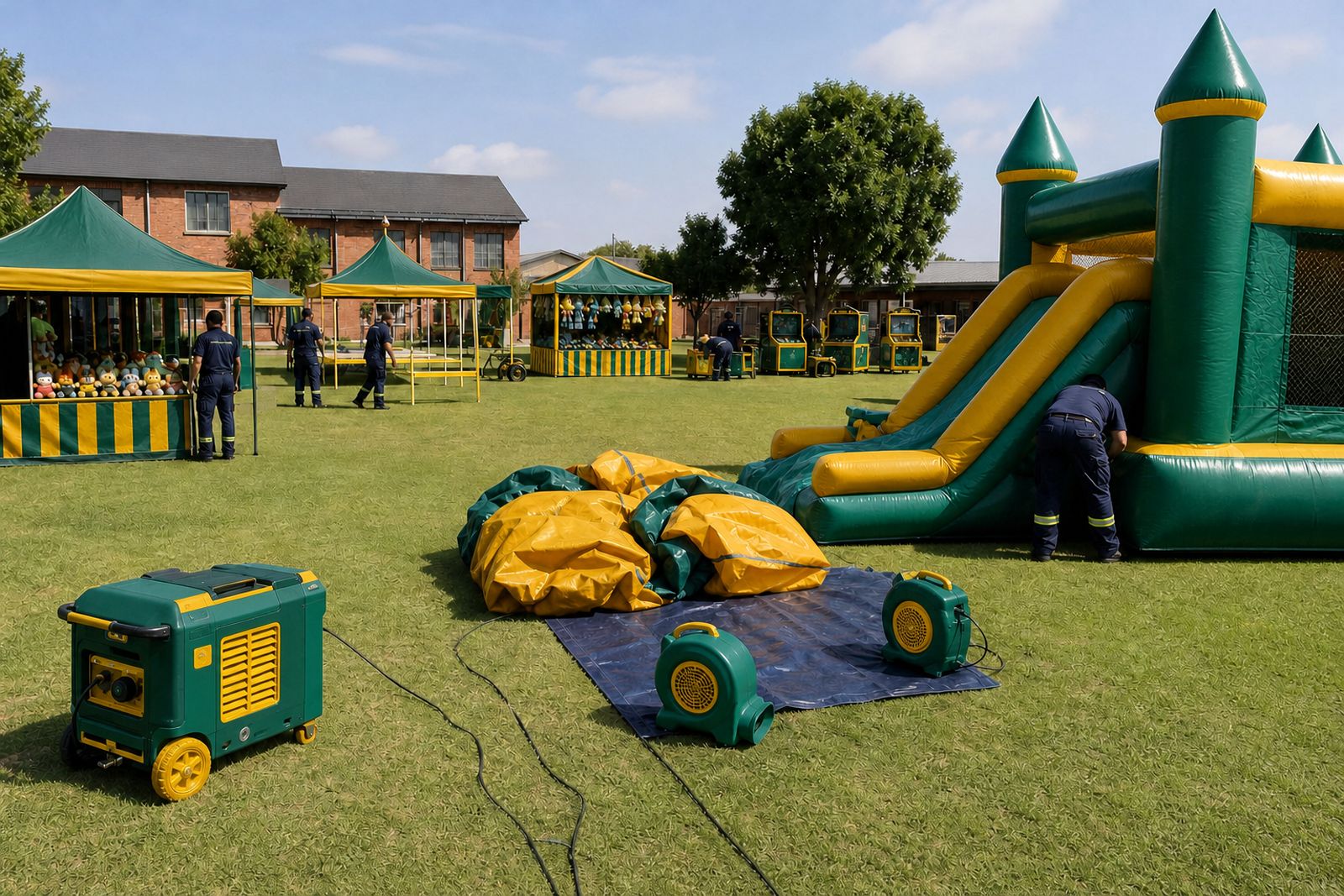
The inflatable units were chosen with footprint and height control in mind. Each one needed a clear landing area, blower placement and anchored corners that could be checked again after setup. Safety mats were set at the entries and exits, with crew members guiding children by size and activity rather than letting older and younger groups collide at the same opening. The photo booth sat close enough to the main path for quick use, while the snack carts were positioned where the smell of popcorn and candy floss could pull people in without blocking the queue lines.
- Jumping castle: compact footprint with entry mat and anchored corners
- Obstacle course: short-format inflatable with a clear run and return lane
- Carnival games: table and stand format for quick turnarounds
- Food carts: electric snack machines with covered service points
- Photo booth: enclosed frame, camera station and attendant position
Wind, anchoring and the coastal hold points
Durban beachfront work asks for more than a standard setup. We treated the anchoring plan as a key part of the build, not an afterthought. Sand alone does not tell the whole story, because the surface can look firm and still shift when groups gather around one side of an inflatable. The crew used secure tie-downs, weighted support points where needed and extra checks on all blower lines and mats.
We also adjusted the layout to leave clear wind paths between larger pieces. That gave the inflatables room to breathe and reduced strain around the sides. The game stalls and carts were placed where they could remain steady without needing constant re-positioning. The team checked the site before opening, after the first rush of visitors and again once the afternoon breeze picked up. On a coastal job, those rechecks matter as much as the first setup.
- Anchoring plan matched to wind direction and open beachfront exposure
- Blower cables kept tidy and away from crossing foot traffic
- Safety mats used at entries, exits and queue pinch points
- Game and snack units placed away from the main run line
- Crews monitored stability through the active part of the event
Three-week lead-up from booking to load out
We handled the booking during a planning period of three weeks. The first week was about site sizing, attraction mix and access points for delivery vehicles. The second week was used to finalise the sequence of setup, the position of each unit and the power plan for the machines that needed mains supply. The last week before the roadshow stop was reserved for transport checks, crew allocation and strike planning so the removal could happen without dragging through the public area.
Because this was a moving roadshow stop, timing mattered around arrival, build and the public opening. The inflatables were set first, then the snack and game points, and finally the photo booth and mascot schedule. The crew worked in a clear order so there was no crowding around the same patch of ground. That approach kept the beachfront clear while still giving the client a full entertainment line-up.
- Week 1: site measure, access review and attraction selection
- Week 2: layout confirmation, power mapping and queue planning
- Week 3: transport prep, crew plan and collection sequence
- Build order: inflatables first, then stalls, then photo and mascot points
Power, snacks and the moving parts that keep people waiting less
The snack carts and photo booth needed clean placement and organised access to power. We kept cables short where possible and used protected runs that did not cross the main visitor route. The candy floss and popcorn machines were run as attraction points as much as refreshment stops, so their positions had to support easy service and quick clearing of the serving counter between groups.
The photo booth was run by an attendant with a simple flow: step in, pose, exit, next group. That pace works better on a public beachfront than a slower session with too many props spread across the floor. The carnival games gave people a short challenge without tying up a large area, and the mascots were used at planned intervals to pull attention back toward the centre of the activation. It was a good fit for a coastal promo where visitors drift in and out rather than staying in one place for long.
Strike, collection and what held up well on the day
Once the activation closed, the crew moved through strike and collection in reverse order, starting with the smaller machines and ending with the inflatables. That sequence kept the site readable for pedestrians while equipment was being packed away. It also made it easier to check for sand build-up around mats, anchors and blower points before the vehicles left.
The main result was a busy but controlled beachfront stop that stayed visually strong without feeling overpacked. The mix of active play, snacks and quick photo use worked well for a public setting where people had different time windows. If we were repeating the same sort of Durban promo, we would keep the compact inflatable mix, maintain the wind-based spacing and use the same order of build so the site stays tidy from first arrival to final collection.
- Collection order reduced congestion near public walkways
- Sand checks were done around mats, anchors and cable runs
- Compact units kept the footprint suited to a beachfront stop
- Short-use attractions helped keep the crowd moving