
A Pretoria park run that had to suit mixed ages
The brief came from a workplace team in Pretoria planning a family day for staff and their children, with guests ranging from toddlers to teenagers and a fair number of adults who wanted to join in as well. The venue was an outdoor open space with flat ground, limited shade and a clear boundary for public access, so the layout had to hold together without crowding the play areas.
The client wanted action at one end of the field and calmer activity at the other. That meant a larger inflatable obstacle course for older children, a smaller jumping castle for younger guests, snack service points near the seating, and enough supervision to keep the flow steady when the gates opened.
- Client type: workplace family event
- Town: Pretoria
- Event mix: obstacle play, toddler zone and snacks
- Format: delivered, set up and crewed on site
Space, surface and access shaped the whole layout
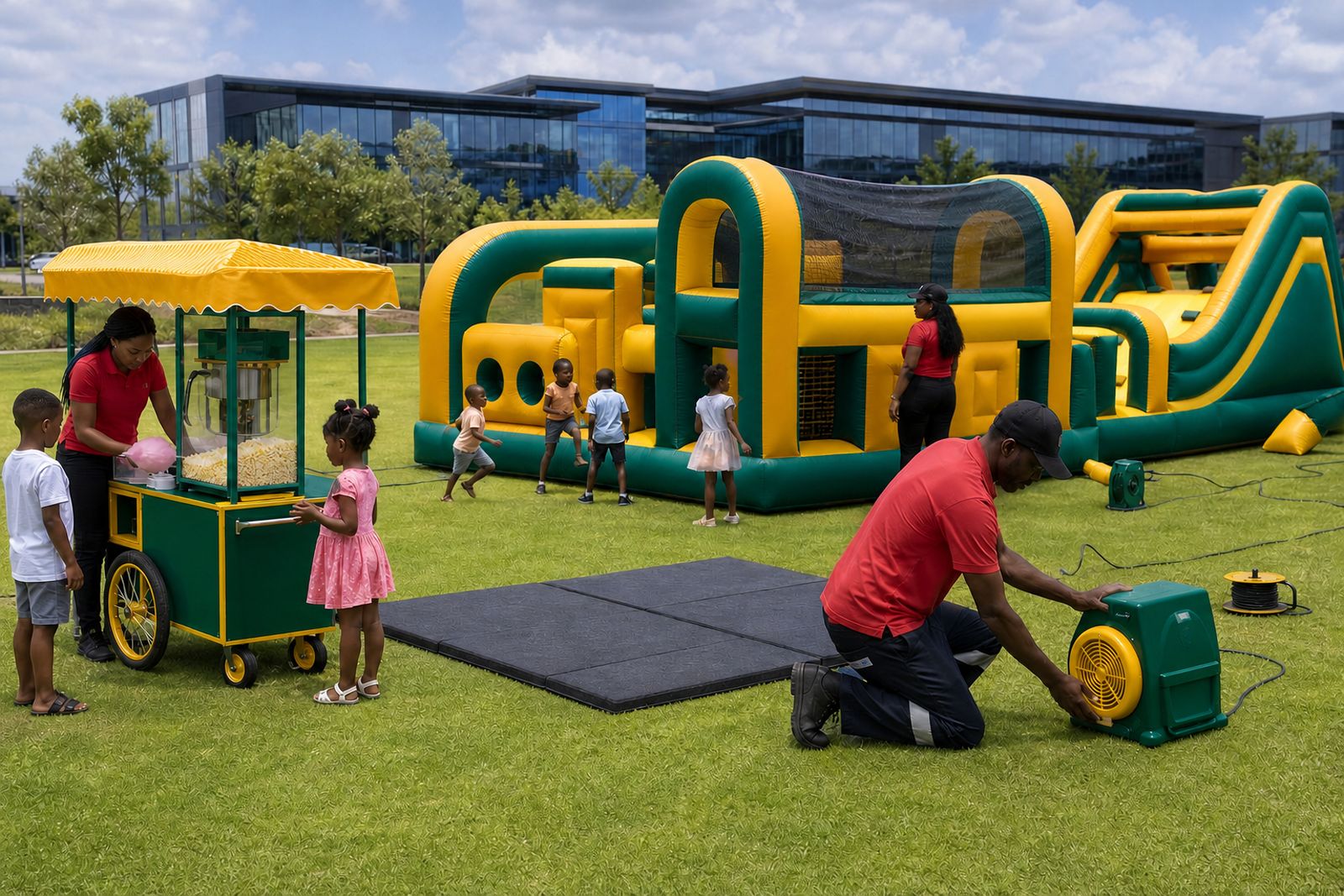
The site had firm grass with a few uneven patches, so we used safety mats at entry points and checked the anchor positions before the inflatables were handed over. The obstacle unit needed a clear run-up and a proper landing area, while the smaller castle needed softer spacing so younger children could enter without being pushed by the older crowd.
Access for vehicles was straightforward, but the drop-off point sat a short walk from the play field. That meant extra carting time for the crew and a tidy staging area for the blower units, queue markers and snack equipment. We also planned around the wind movement that often comes through open Pretoria sites in the afternoon, because loose gear and light banners can shift faster than people expect.
- Open grass site with mixed ground levels
- Inflatable anchors checked before play started
- Safety mats placed at entrances and exits
- Separate space kept for snacks and seating
What we supplied for the family flow
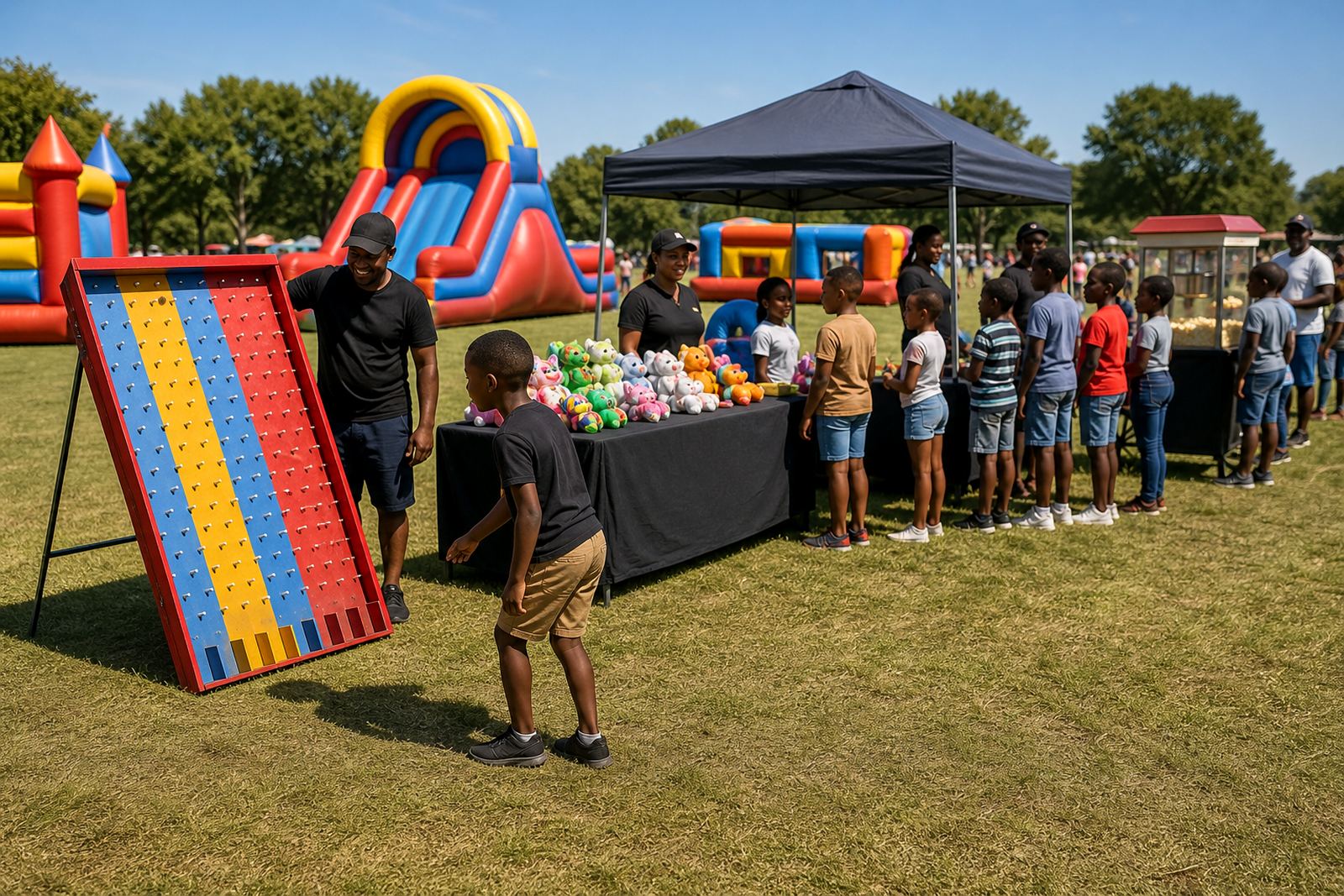
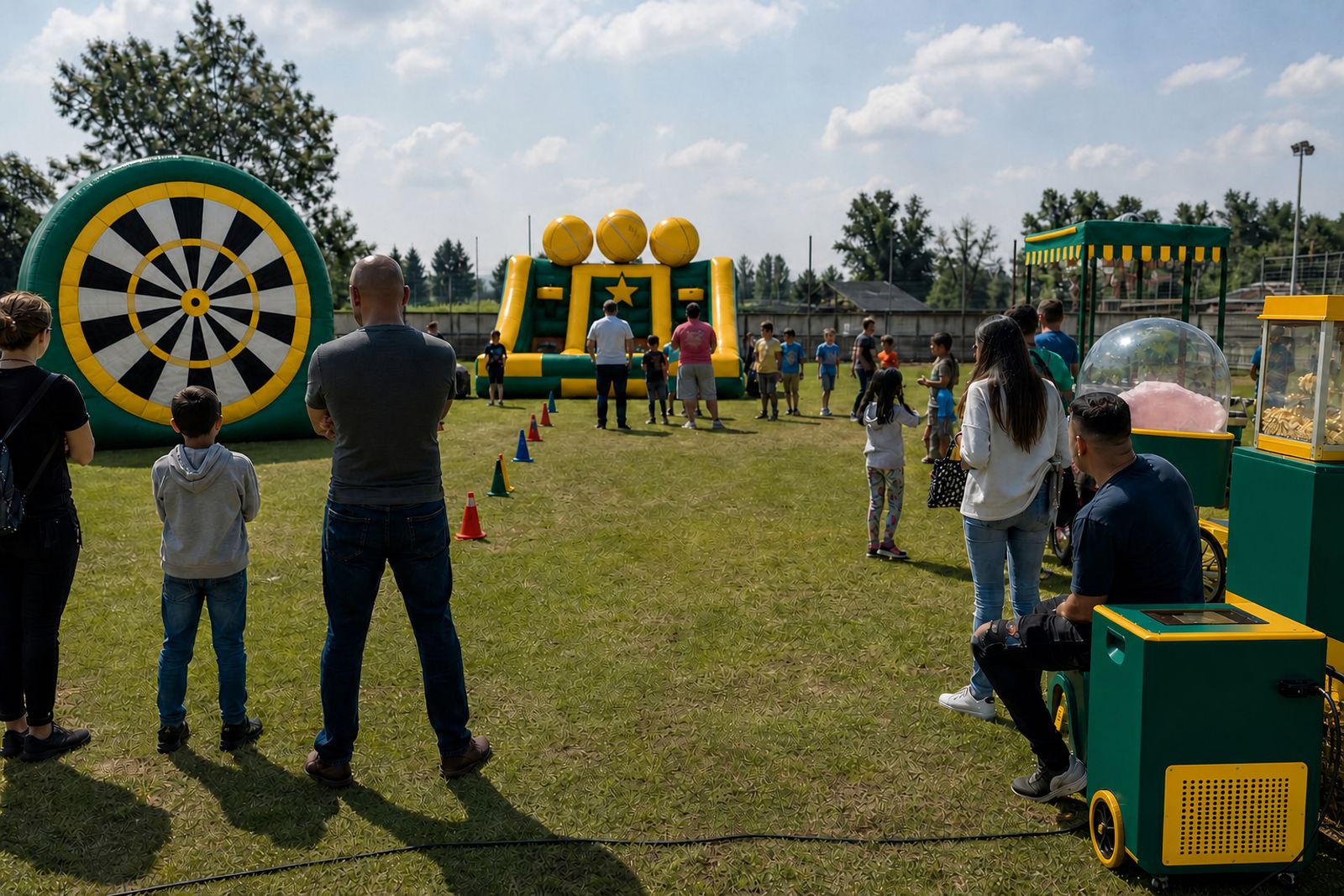
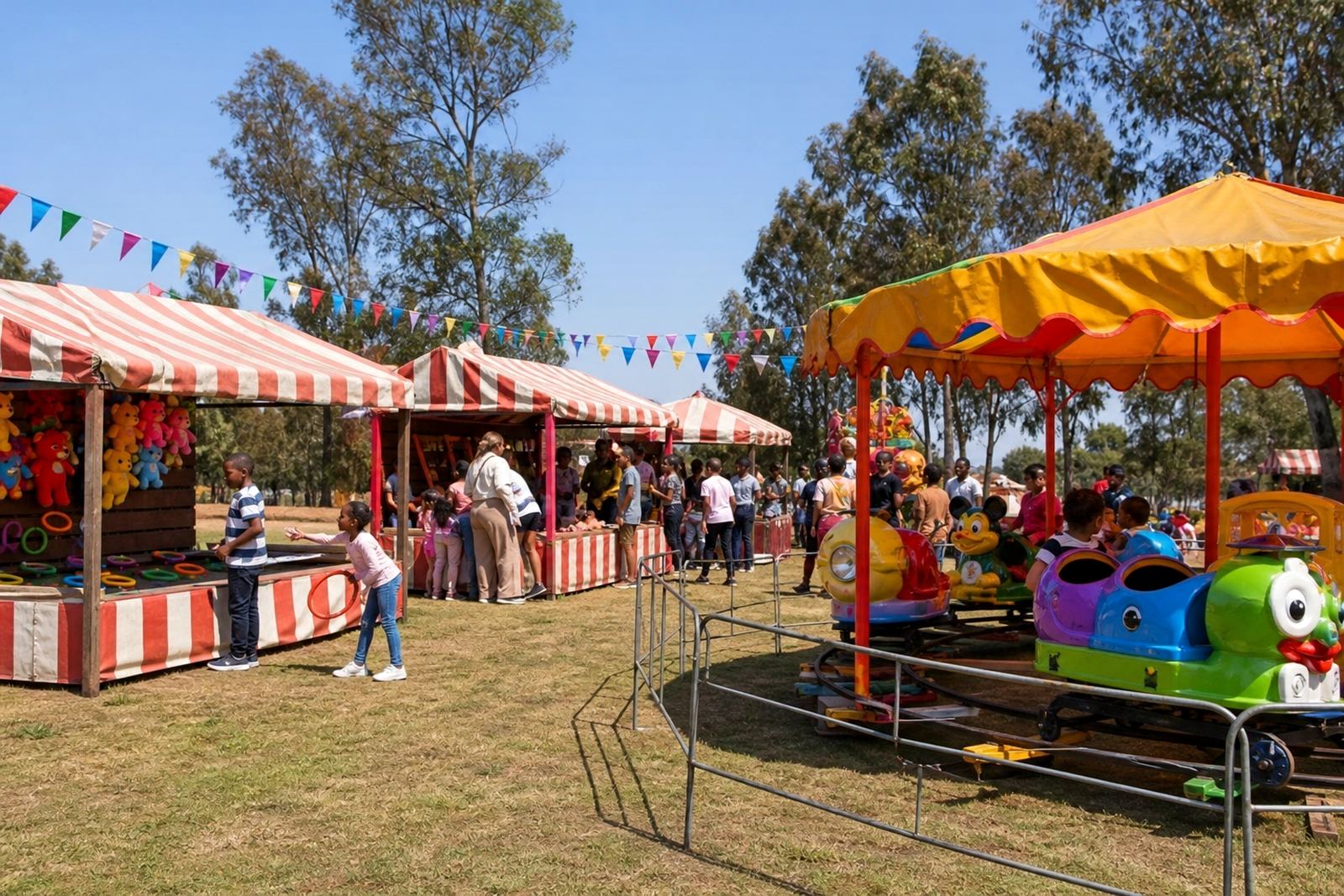
We supplied a large inflatable obstacle course, a smaller jumping castle for the younger group, carnival-style game stalls, a candy floss cart and a popcorn station. A photo booth was set up near the seating area so families could pause between turns, and a mascot appearance helped pull younger children away from the queue when the play cycle became busy.
The obstacle unit needed continuous blower power and careful supervision at the entry points, while the snack carts needed clean service space and a dry serving position. The game stalls were placed where parents could watch without blocking the path, and the photo booth needed a sheltered corner with enough room for backdrops, props and a short line of guests.
- Large inflatable obstacle course with blower support
- Smaller castle for toddler and early primary use
- Carnival game stalls for casual play
- Candy floss and popcorn service points
- Photo booth with attendant support
- Mascot visit for short crowd engagement windows
Two weeks of planning before the trucks rolled
The event sat on a two week planning window. During the first week, the site notes were checked, the play sequence was mapped out and the equipment list was tightened around the age groups expected on the day. The second week was used for transport planning, power review and crew allocation, with the load order set so the inflatables, carts and booth equipment could go down in the right sequence.
On the day itself, set-up ran in stages. The crew placed the larger inflatable first, then the smaller unit, then the snack and game stations. Supervision started before the first guests entered the play area and continued through the busy stretch around lunch. Strike and collection happened after the final round of photos and snack service, with the site cleared back to its original condition.
- Planning window: two weeks
- Set-up sequence: inflatables, then stations, then supervision points
- On-site operation: managed through the main guest period
- Strike: equipment removed after the final activities
Age bands, safety and queue control
The family day worked best because each activity had a clear age fit. The obstacle course suited older children who could manage the climb, crawl and slide sections, while the smaller castle gave younger guests a safer place to move without pressure from bigger players. Queue control mattered, because a mixed-age event can get messy if all the waiting happens in one line.
Our crew separated the entry points, kept an eye on the height and age use at each inflatable, and guided children away from the blowers and tether lines. The snack points were kept apart from the active play so food hands did not end up on the equipment. It sounds basic, but that kind of spacing is what keeps a family day workable when parents are trying to watch one child and find another at the same time.
- Separated entry points for different age groups
- Height and age guidance used at each attraction
- Queue lines managed to avoid crowd pressure
- Snack service kept clear of active play zones
What the day looked like once guests arrived
The obstacle course stayed busy for most of the event, with short bursts of high traffic and quieter gaps when children moved to the snack tables or photo booth. The younger play area held its own well, because toddlers needed a calmer rhythm and parents could stand nearby without losing sight of them. The carnival games worked as a useful bridge between active play and snack breaks.
By the middle of the day, the layout was doing the job it was meant to do: children had choices, adults had places to sit, and the event did not rely on one single attraction to carry the whole programme. The weather held long enough for the outdoor plan to stay intact, though the crew kept a wet weather option ready in case the sky changed. That kind of back-up matters in Pretoria where a clear morning can shift without much warning.
- Obstacle unit carried the main high-energy traffic
- Toddler zone gave younger children a calmer pace
- Snack stations kept families on site longer
- Photo booth and games filled the quieter gaps
What we would repeat for a similar Pretoria event
For a similar workplace family day, we would keep the split between active play and slower attractions. It gives the event a better rhythm and stops the younger children from being caught in the wrong queue. We would also keep the snack service close to the seating but not inside the play perimeter, because parents use that area as a base while watching the rest of the field.
We would use the same approach to power planning, especially where blowers, booth lights and snack equipment are all active at once. A clear power map, a clean anchor plan and a sensible strike order made the day easier to manage from start to finish. The result was a family event that felt organised without feeling stiff, which is usually what a workplace crowd wants when children are involved.
- Keep older children and toddlers on separate play tracks
- Place food service close to seating, not play lanes
- Plan power and equipment positions before arrival
- Use crew supervision at the entry and queue points
Key facts
| Project type | Workplace family day |
|---|---|
| Location | Pretoria, Gauteng |
| Core hire items | Obstacle course, jumping castle, game stalls, snack carts, photo booth |
| Power needs | Blowers plus service power for booth and snack equipment |
| Setup window | Two weeks planning, on-site staged set-up |
| Crew support | Delivery, anchoring, supervision, queue control and strike |