
Community fairground feel for a Soweto crowd
The organiser needed a broad family programme that would keep children busy, give teenagers a few high-energy options and still feel safe for parents moving between the stalls. The event area in Soweto had open grass, a few uneven patches and a steady stream of arrivals from late morning through the afternoon, so the layout had to work for mixed ages without bottlenecks.
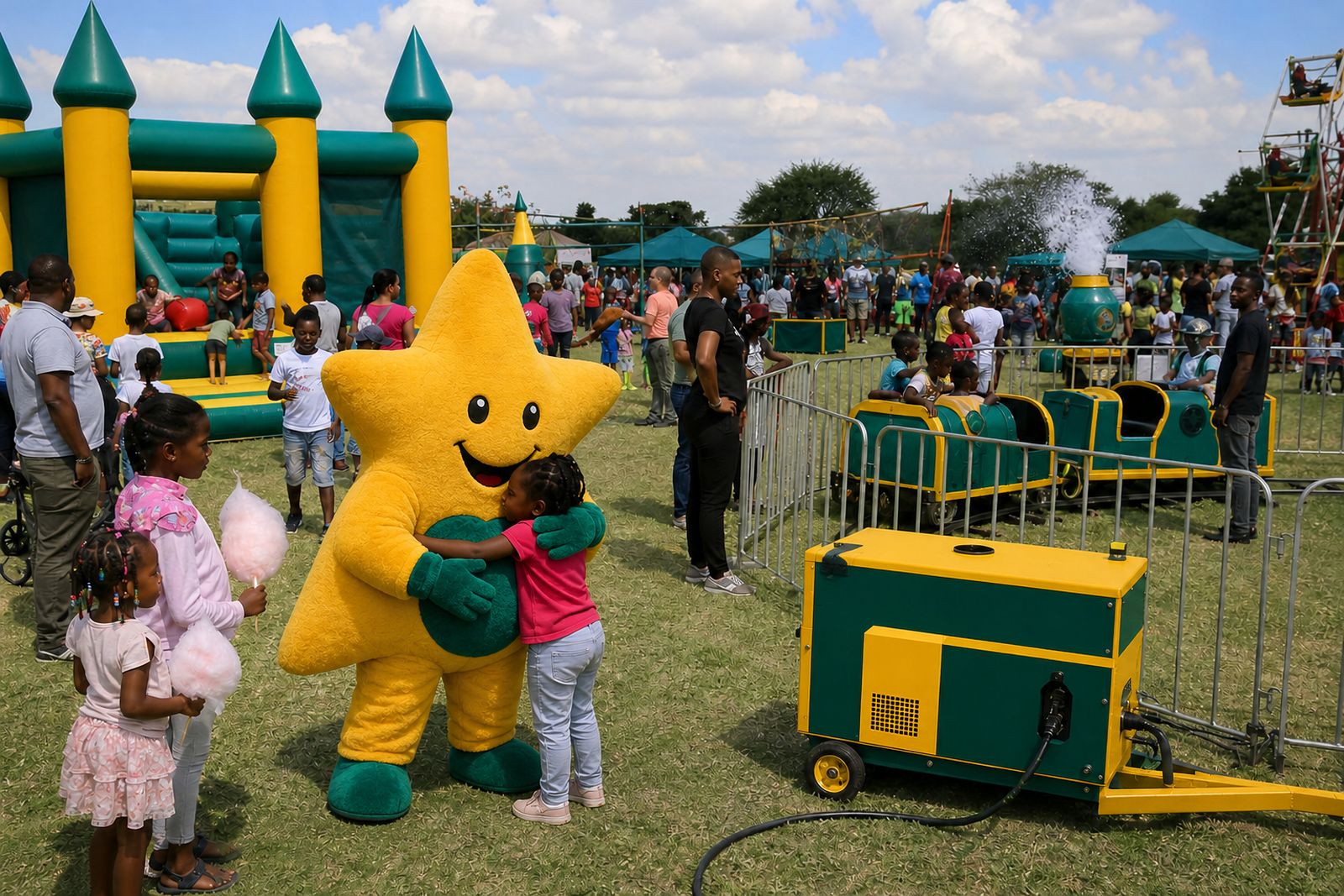
We shaped the hire around attractions that could take volume without losing control at the gates. That meant a compact cluster of jumping castles for younger children, a larger inflatable obstacle course for older age groups, a mascot route that could move through the crowd, and snack points placed away from the main entrances. It was a broad community fair rather than a single-activity booking, so spacing and traffic flow mattered as much as the equipment itself.
What we placed on the field and why it worked
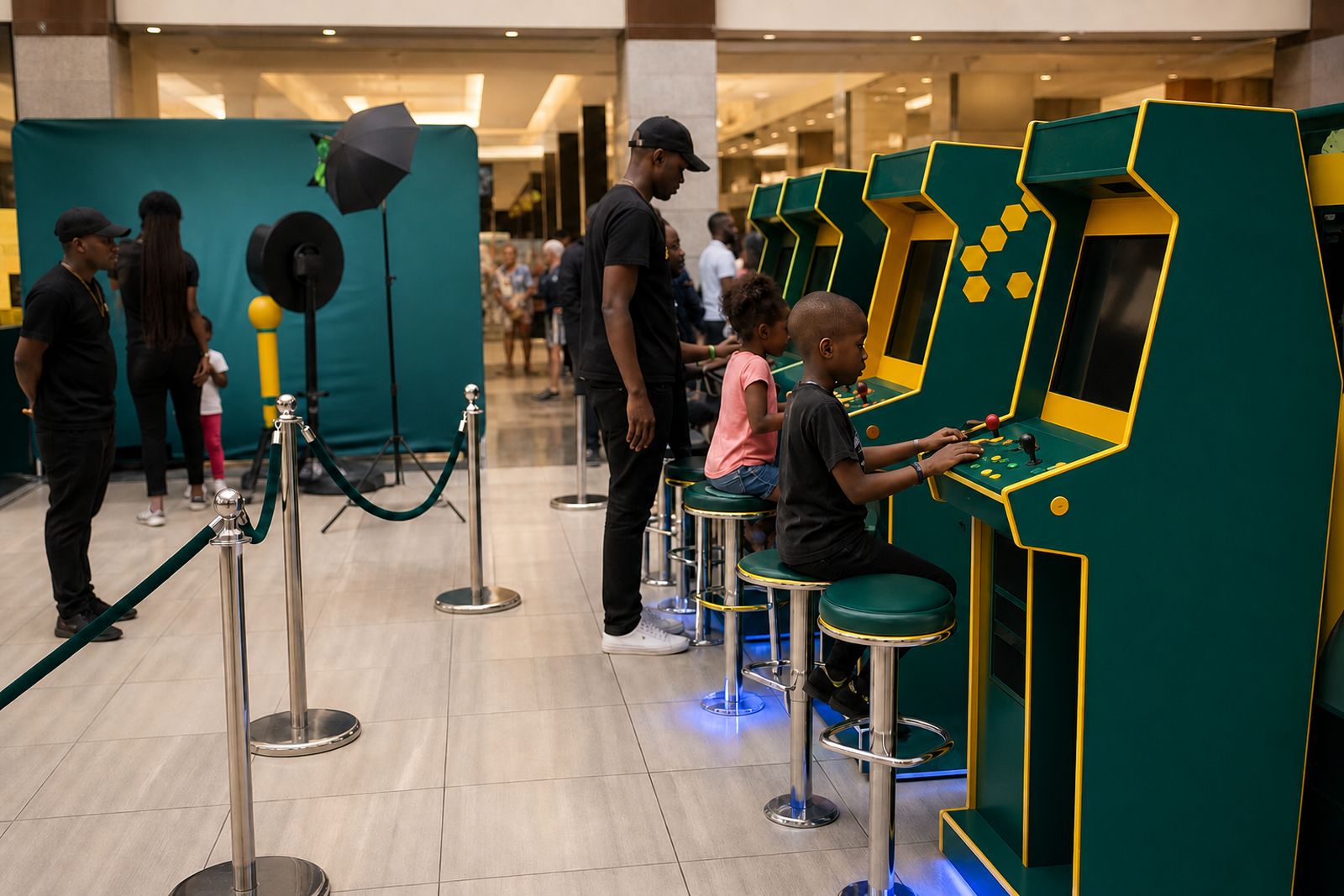
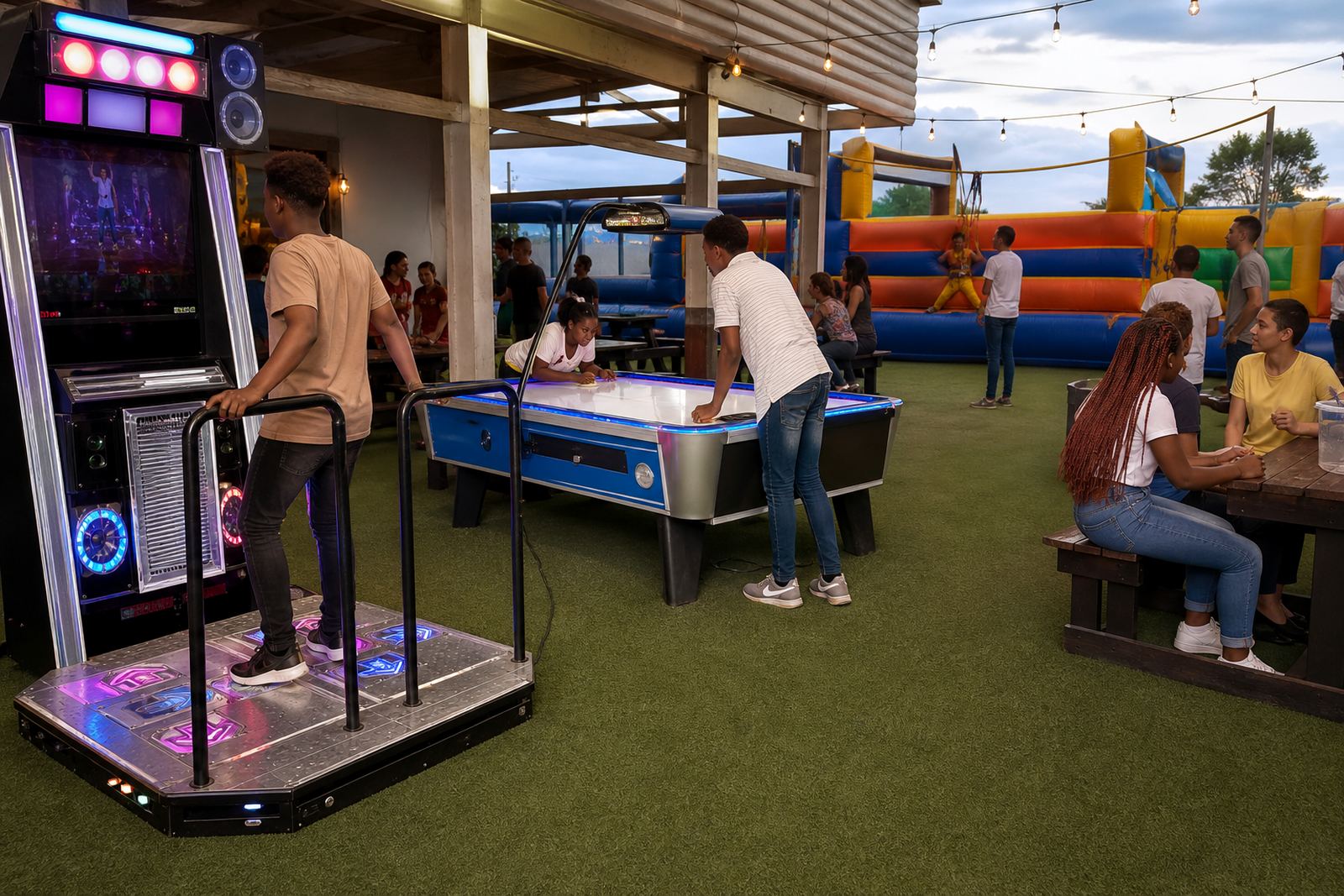
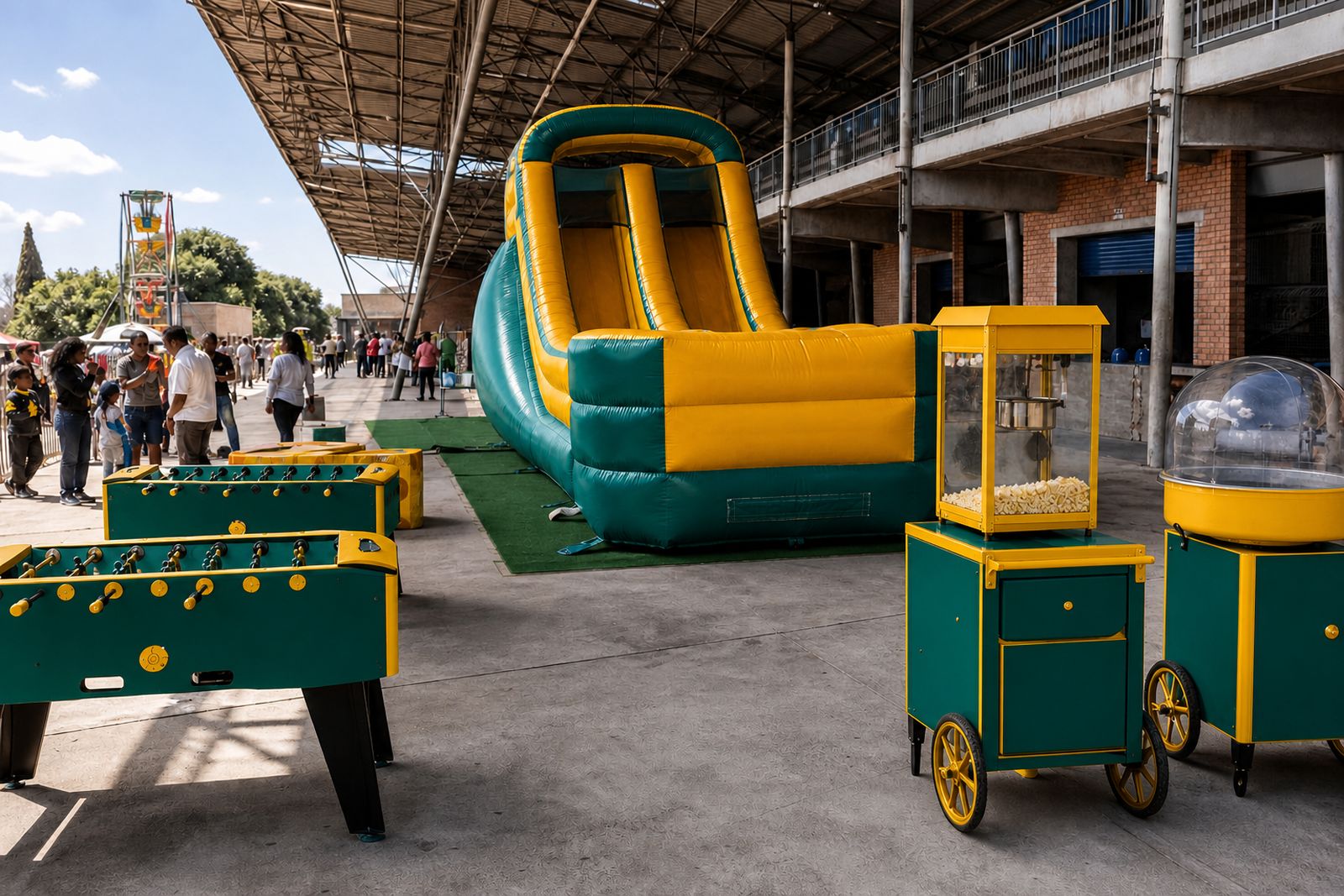
The equipment mix leaned into short queues and quick turnover. A pair of jumping castles handled the smaller children, while an inflatable obstacle course gave older kids a challenge that kept them active for longer runs. Carnival game stalls added a steady line of repeat play, and the arcade cabinets gave a sheltered option for a few groups that wanted a quieter break between turns on the inflatables.
- Jumping castles sized for younger age groups, with soft entry ramps and safety mats.
- One larger inflatable obstacle course with blower support and anchor points suited to grass.
- Carnival games with table-top or freestanding frames for quick round changes.
- Arcade and retro gaming machines placed under cover to protect screens and controls.
- Candy floss and popcorn carts for high-footfall snack service near the seating area.
- Mascot visits timed for crowd photos, stage pauses and general movement through the venue.
We also included a photo booth setup with a simple backdrop, props and attendant support. That gave families a place to pause, while the rest of the site kept moving. For a fair with children of different ages, the balance between active play and short rest points makes the day easier to manage.
Space, anchoring and the weather plan
The ground conditions needed proper attention before any inflatable went in. Grass can hold well, but only when the anchor lines are set correctly and the surface around each unit is kept clear of loose litter, uneven edges and puddle traps. We used safety mats at entry points, checked the slope of each area, and left enough clearance for crew movement during supervision and strike.
One of the main constraints was weather. A Soweto fair in an open field can move from bright sun to gusty wind, so the equipment plan had to allow for shutdown steps if conditions changed. We kept the smaller units in positions that were easier to secure, and placed the snack carts where they could keep trading even if part of the play area had to pause. That kind of layout is practical, because a fair does not stop all at once when weather shifts.
- Blowers were positioned with cable routes kept clear of foot traffic.
- Anchoring was adjusted for grass conditions and a few hard-packed patches.
- Safety mats stayed at entry and exit points on each inflatable.
- Covered points were reserved for machines, snacks and the photo booth.
Crew flow from setup to strike
The booking was planned over several weeks. First came the site check and layout discussion, then the equipment list was matched to the available footprint, power access and expected age groups. Delivery and setup took place before the crowd arrived, with the crew working in a staggered order so the inflatables, power lines and snack stations could be tested before opening.
During the event, our team managed supervision at the active zones, kept queues moving at the games and checked that children were using the right attractions for their height and age range. The mascot appearances were spaced through the day to keep attention high without crowding one spot for too long. At the end of the fair, we handled strike and collection in a controlled sequence so the site could clear without damage to the field or the equipment.
The setup and strike windows were shaped around a school-day style programme, with enough time for the physical work and the safety checks that sit around it. For an event of this size, that rhythm matters. It keeps the day orderly and lets the organisers focus on the programme rather than the gear.
Power, snacks and the busy-hour rhythm
Because the fair used a mix of inflatables, snack carts, arcade units and the photo booth, power planning had to be handled properly. We mapped the available supply against the load of each attraction, then added generator support where needed for the equipment that could not rely on the site feed alone. That kept the main activity zones stable when the crowd peaked.
The snack side did useful work too. Popcorn and candy floss drew families toward the seating area and spread the flow away from the gates, while the photo booth created a natural pause point for parents and children waiting for the next round on the rides. The result was not just a list of amusements but a working pattern for the day, where each part helped the next one breathe.
- Power planning covered inflatables, machines and covered entertainment points.
- Generator supply was used where the site feed was not enough for the full mix.
- Queue management kept the busiest attractions from backing up at once.
- Snack cart service worked as a crowd-shaping tool as well as a treat stop.
What the organiser got from the day
The fair gave Soweto families a spread of activities that covered younger children, older kids and the adults who supervised them. There was enough variety to keep the field busy without overloading any one section. More importantly, the crew-run format kept the inflatables and machines in order, which is what makes a mixed-age event feel under control rather than chaotic.
If we were repeating a similar fair, we would keep the same core shape: a few high-throughput inflatables, at least one strong snack point, a photo booth for family groups and mascots used in planned bursts rather than constant wandering. That balance works well for schools, malls and community days where foot traffic rises in waves and the organiser needs each area to earn its place.
For Soweto, the result was a full day that felt active from the first arrivals to the last collection. The site stayed usable, the children had options that suited different ages, and the organisers had a clear structure around the event instead of a pile of separate suppliers to coordinate.
Key facts
| Project type | Community family fair with mixed-age amusements |
|---|---|
| Town | Soweto, Gauteng |
| Core hire | Jumping castles, inflatable obstacle course, carnival games, arcade machines, snack carts, photo booth and mascot visits |
| Crew model | Delivered, set up, supervised and struck by trained crews |
| Space needs | Open grass areas with clear access routes, matting and anchor points |
| Support services | Site checks, power planning, generator supply, wet weather plans and queue management |