
Rows That Feel Like A Real Fairground
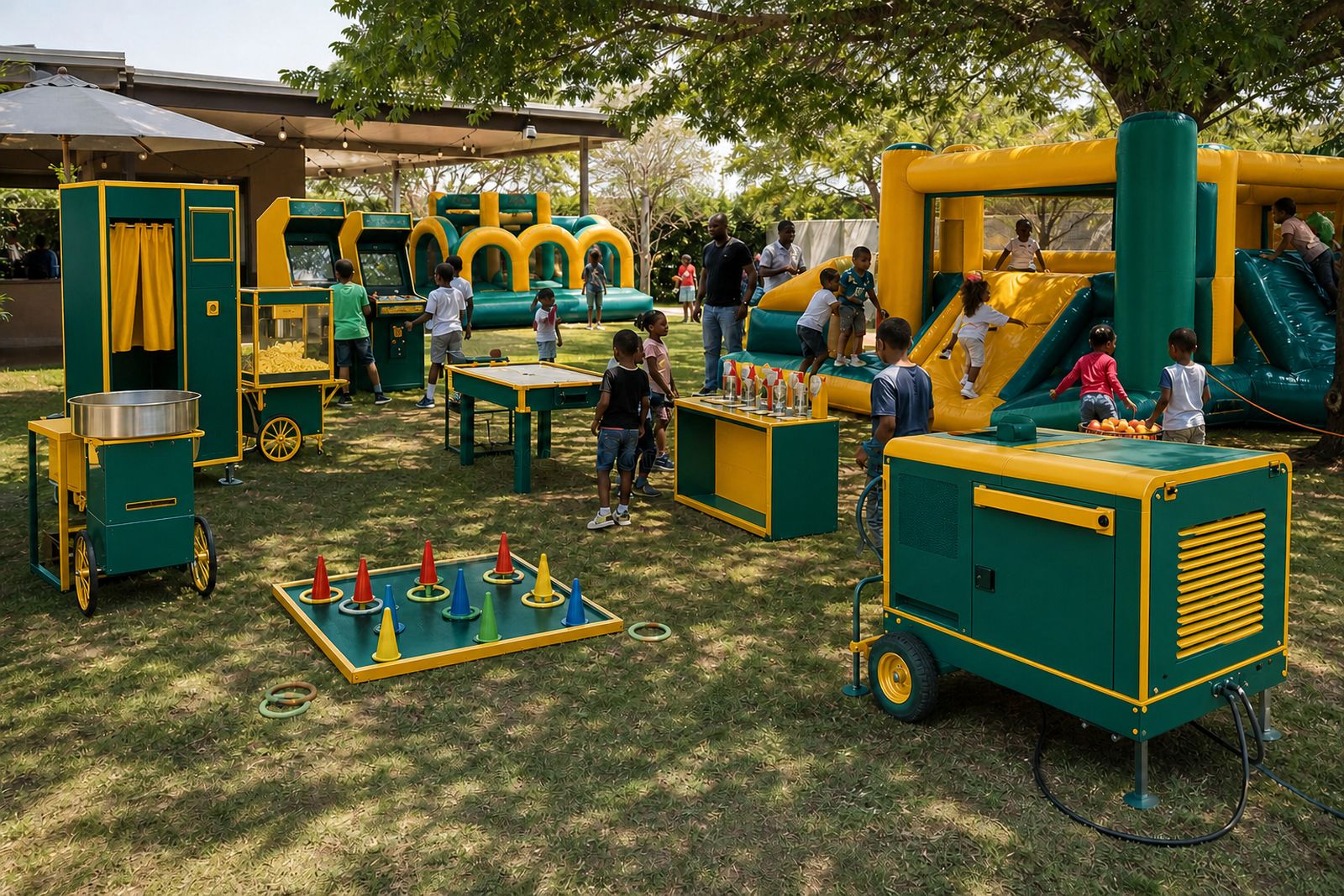
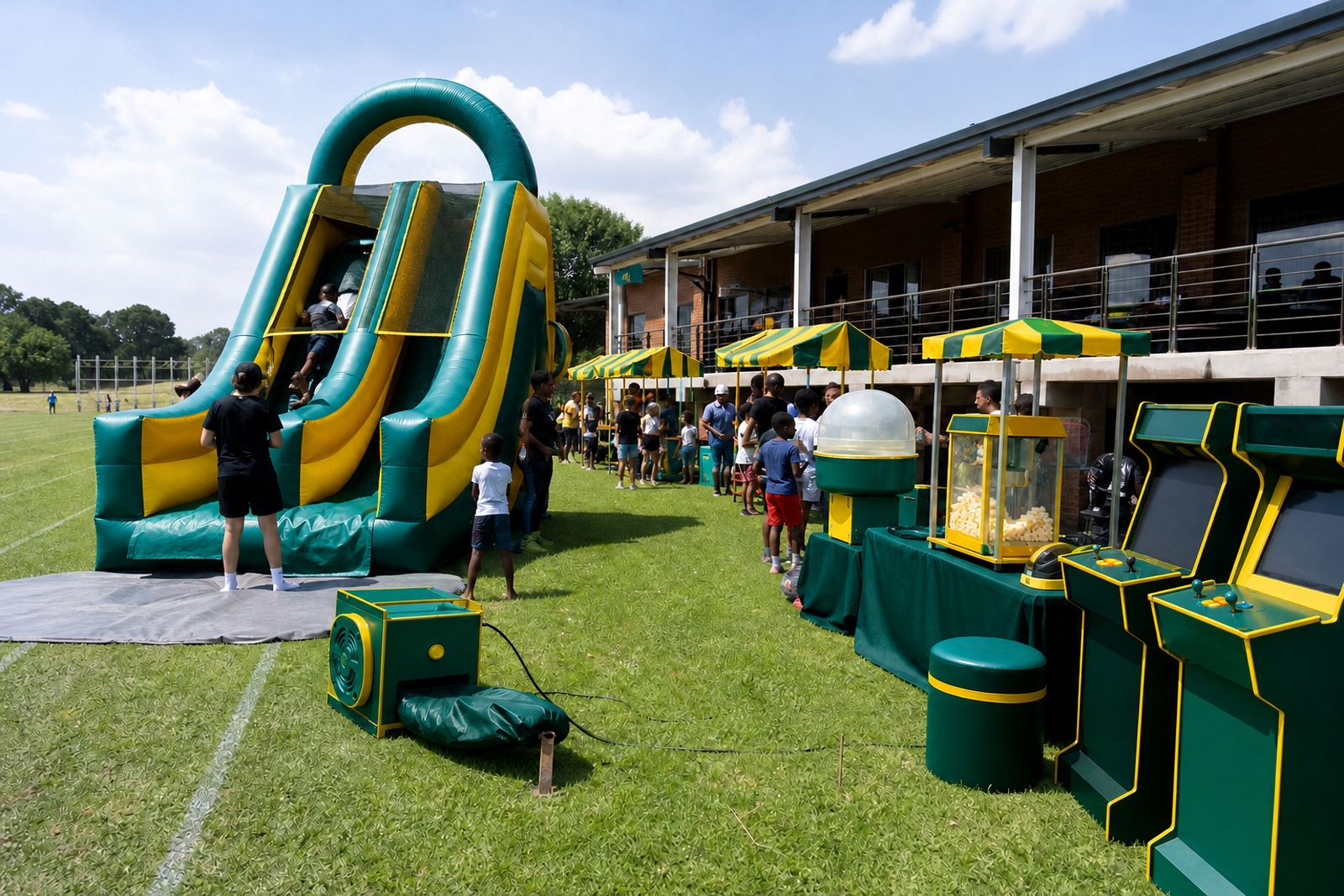
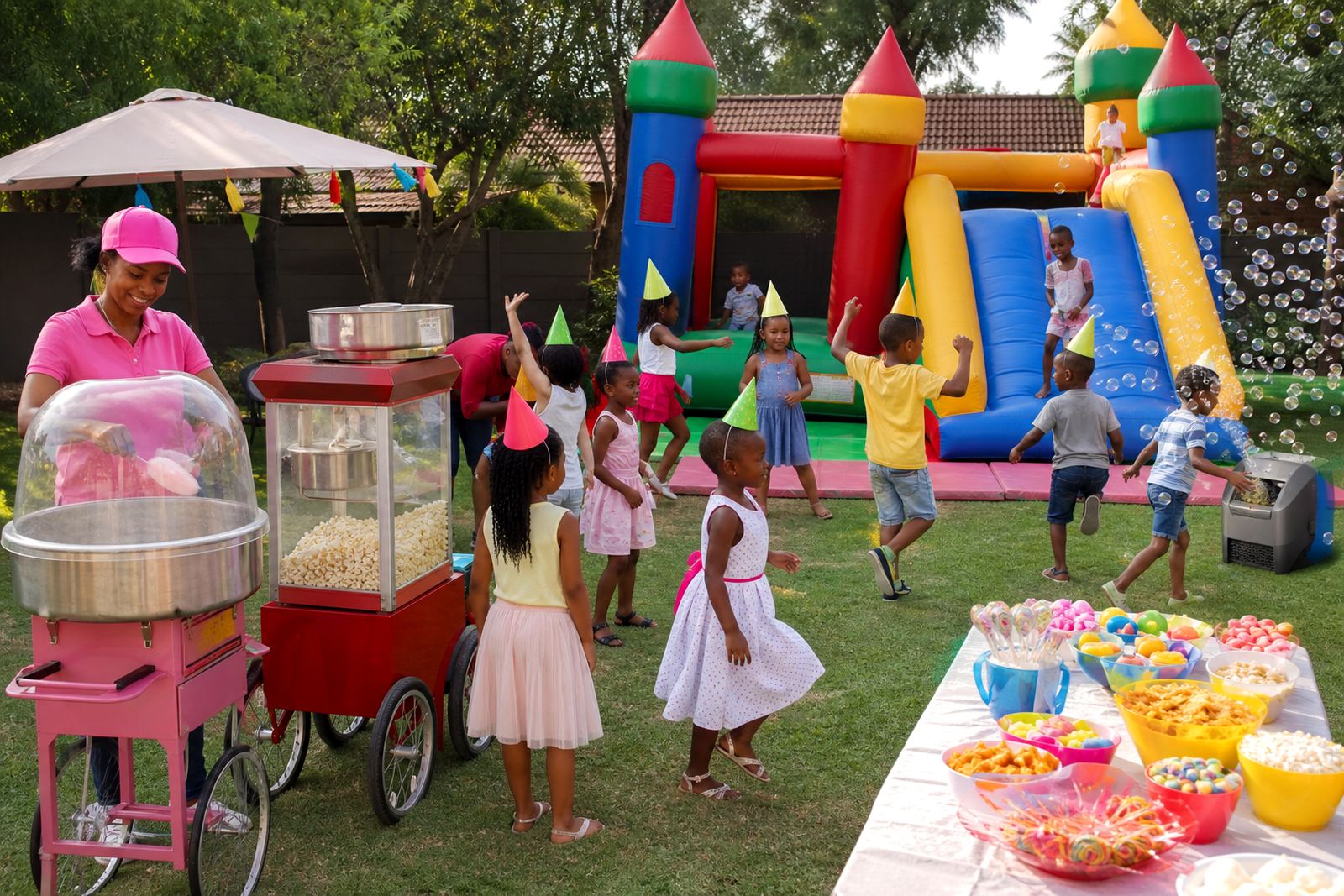
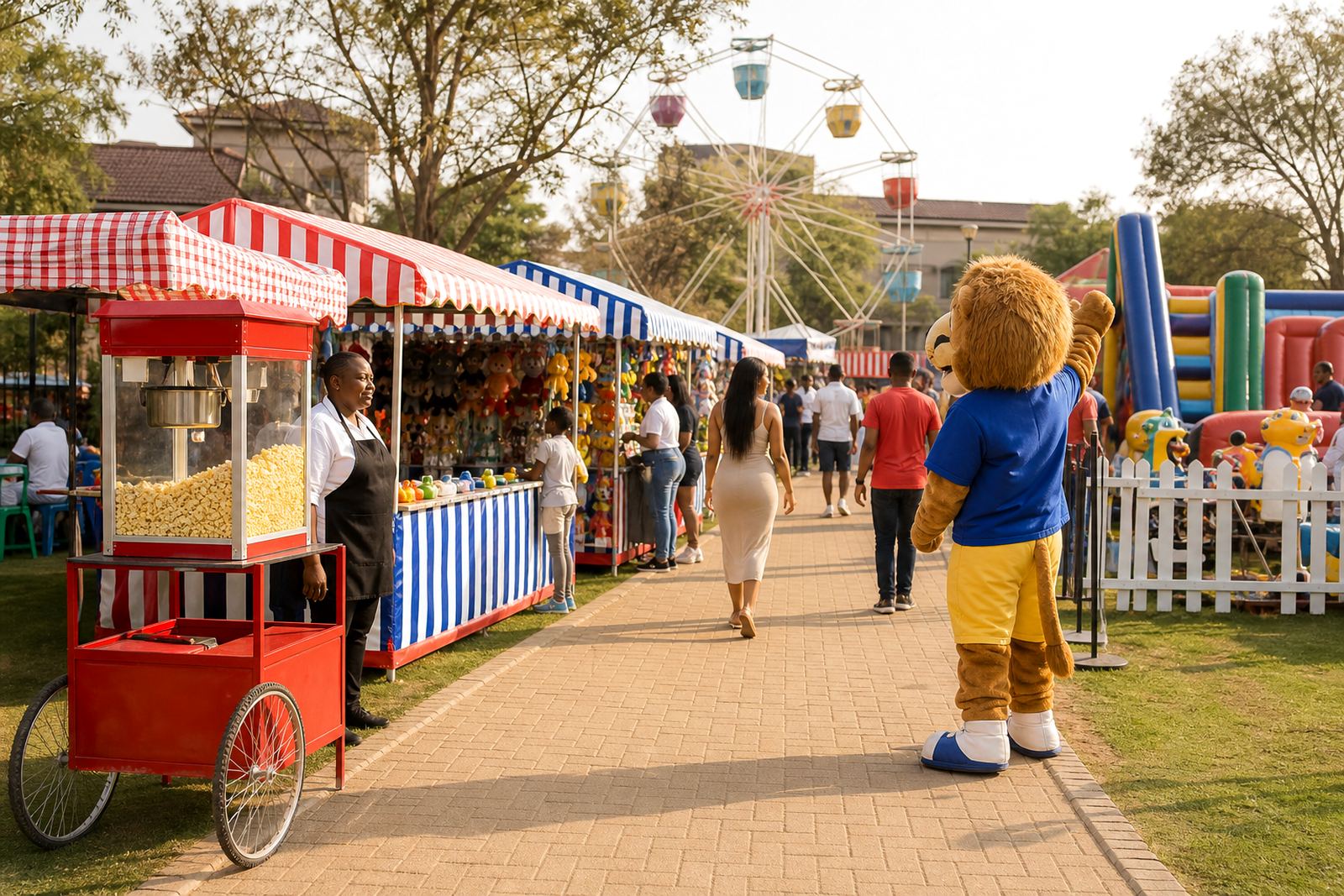
A good fete layout works in layers. One row can hold jumping castles and inflatable obstacle courses, another can carry carnival game stalls, while a calmer corner takes photo booths, candy floss carts and popcorn machines. That mix gives school fetes, public family days and mall activations a steady rhythm, with something for younger children, older learners and parents who want a short break between laps around the site.
For bigger grounds, we often split the footprint into activity zones so queues do not press into each other. Inflatable units need flat ground, clear headroom and enough space for blower hoses, safety mats and entry points. Carnival tables and arcade cabinets work better under shade or tents where guests can gather without blocking walkways. If the field is exposed to wind or uneven paving, the plan changes at ground level before anyone starts loading equipment off the truck.
The Mix That Keeps People Moving
The usual fete and fair set changes with the audience, but the best mix still follows the same logic: one high-energy feature, one steady crowd-puller, one food cart and one quieter stop for photos or a break. Small rides and mascot visits can add movement between the larger stops, while foam and bubble machines help when organisers want a more playful atmosphere for a short burst of time.
- Inflatable castles for younger children, often with height or age guidance at entry.
- Obstacle courses that need longer runways and a clear finish zone.
- Carnival game stalls for ring toss, hoops, target games and prize counters.
- Arcade and retro machines for indoor halls, covered walkways or marquee space.
- Popcorn and candy floss carts for steady foot traffic and easy serving.
- Photo booths with attendant support, props and a small waiting area.
- Foam, bubble and mascot features for short programme slots or stage breaks.
Space, Power And Safety Need To Match The Crowd
Fetes fail fast when the layout looks good on paper but not on the ground. A jumping castle that looks small on a quote sheet may still need a far bigger safety perimeter once the blower, anchor points and queue space are added. On hard surfaces, sandbags or weighted systems may be used where stakes are not possible. On grass, anchoring has to suit the surface and the weather, and mats should sit where children step in and out most often.
Power planning matters too. Arcade cabinets, photo booths, popcorn machines and candy floss carts can all draw from mains power, while some sites need generator supply for open fields or older venue services. Crew members should know where cables cross public routes, where to place barriers and how to keep serving points away from moving feet. For school fetes and mall family days, a site check is often the point where small changes save a lot of trouble later.
What Usually Trips Up The Event Plan
The common mistakes are rarely dramatic. Organisers sometimes book too many attractions for a tight site, or they place the food carts too close to the queue line. Another regular problem is choosing rides or inflatables without checking the age range, height limits or the surface underfoot. A unit that works on a school oval may not suit a paved courtyard without a different anchoring plan or floor protection.
- Leaving too little space for queues, especially near prize tables and snacks.
- Forgetting shade, which makes waiting areas uncomfortable in hot weather.
- Mixing young-child inflatables with older children on the same entrance flow.
- Putting power leads where delivery trolleys and strollers must cross.
- Skipping wet weather plans when the event has no indoor backup.
For public family events, supervision also needs to be part of the booking brief. Trained crews can run the set, but organisers still need to decide how access is managed, where tickets or tokens sit, and whether certain games are open to all ages or only to a set height band.
Budget Bands In Rand For Fetes And Fairs
The budget depends on how many stations you want and how long the event runs. A smaller school fete with one inflatable, one food cart and a few game stalls sits in a very different range from a full carnival line-up with arcade cabinets, a photo booth, mascots and a small ride. Delivery distance, crew count, setup time and generator needs also move the total.
As a rough planning guide, simple fete packages often begin in the low thousands of Rand for a short hire with basic crew support. Mid-size family day sets with several attractions, snack service and supervision usually move into the middle band of the budget. Larger public events with multiple inflatables, more than one food point, queue control and national road logistics can sit much higher, especially when the site needs extra power planning or a longer strike window after closing.
It helps to think of it in blocks instead of one large figure. The attraction cost, the crew load, the transport line and any venue specific conditions should all be considered before the booking is confirmed.
How Schools, Malls And Community Groups Usually Book
Most fetes and fairs start with the event type, the venue surface and the guest age spread. From there, the layout can be shaped around movement rather than just around the catalogue. Schools often want active play, a food corner and a few calmer attractions. Malls and community groups often need stronger crowd flow, branded touchpoints and clear supervision at each stop.
A clear brief should mention whether the site is grass, paving or indoor, whether there is power available, and whether rain cover or a backup layout is required. Midrand base, Gauteng routes and national road shows all call for the same practical detail: enough space, enough time, and the right mix of attractions for the people walking through the gates.
Setup, Strike And The End Of The Day
Setup and strike need room, but they also need order. Crew members usually arrive early enough to unload, position units, test blowers or machines and check the route for guests. At pack-down, the flow is reversed, with equipment cleared in a sequence that keeps the site tidy and protects the surface. That matters at schools, on municipal ground and inside mall precincts where access windows are tight.
For fetes and fairs, the best events feel busy without feeling crowded. The right attraction row gives children a reason to keep moving, while adults can still read the space and find food, seating and shade without searching. When the plan is done properly, the field or forecourt feels like a fairground for the day and then returns to normal without fuss.