
Roadshow Stops That Need More Than a Banner Stand
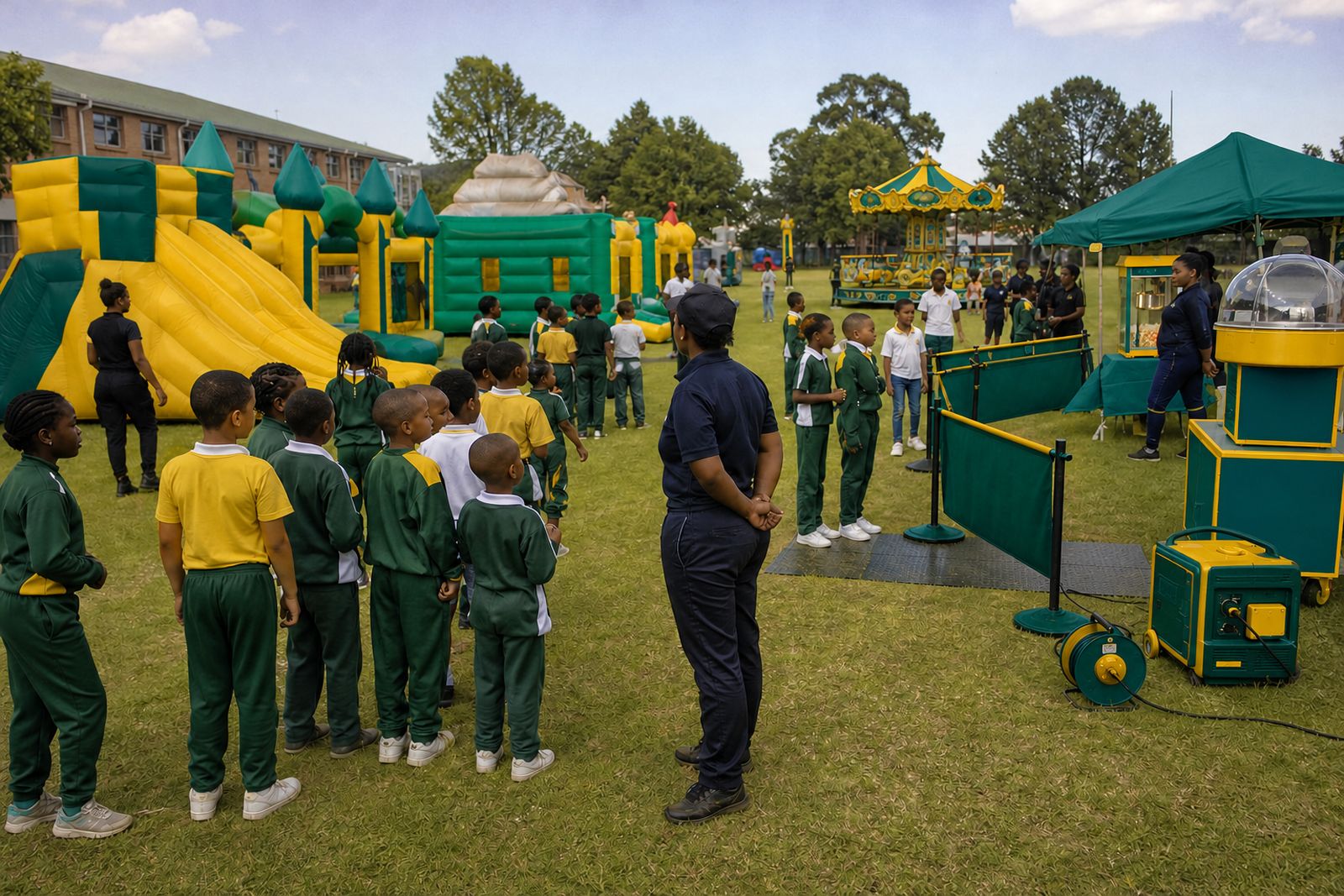
A roadshow stop has to do more than show a logo. It needs something people can walk toward, queue for, play on, and talk about after they leave. That is where portable amusements work well, because they give a brand a live point of contact at malls, school grounds, forecourts, office parks and public open spaces.
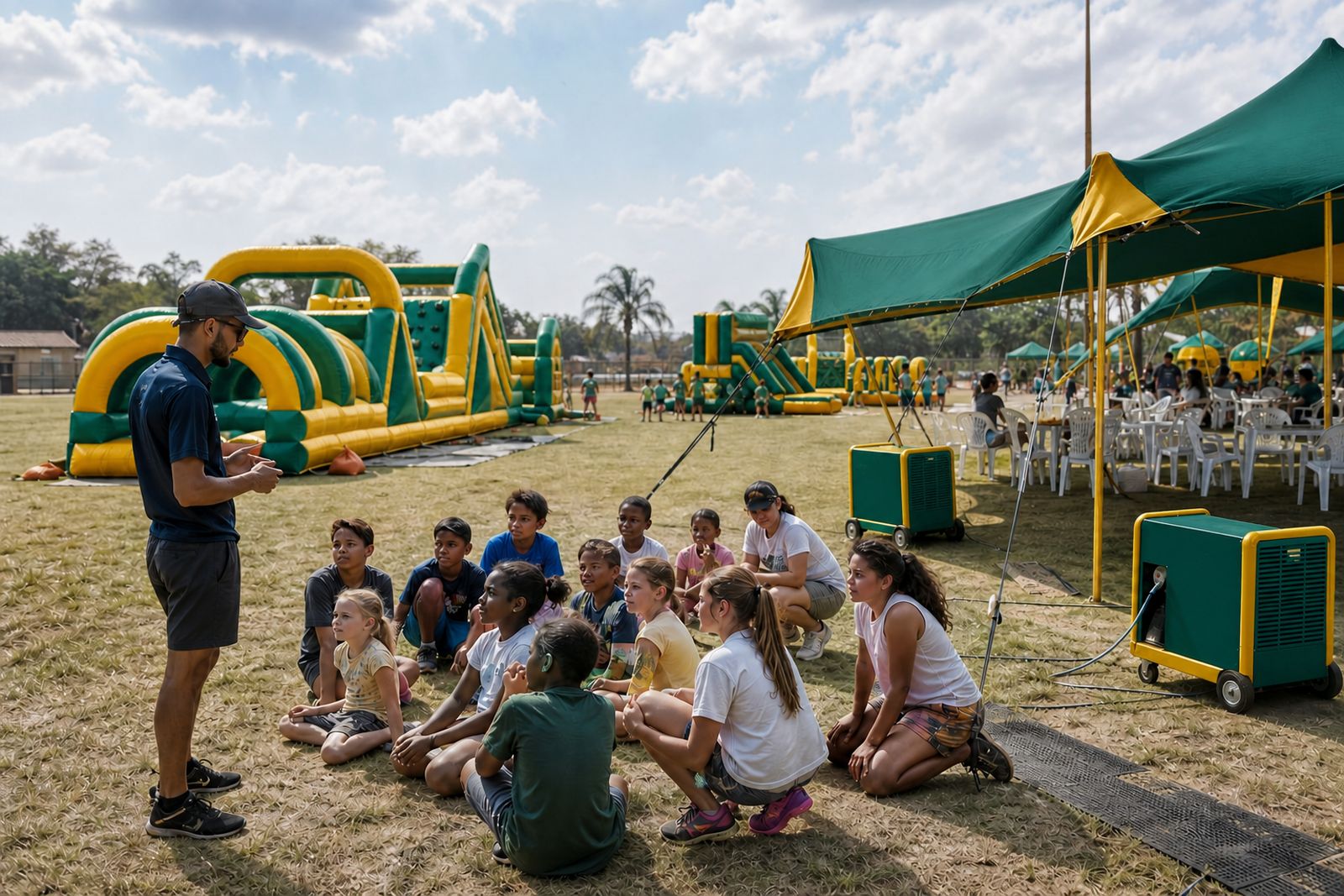
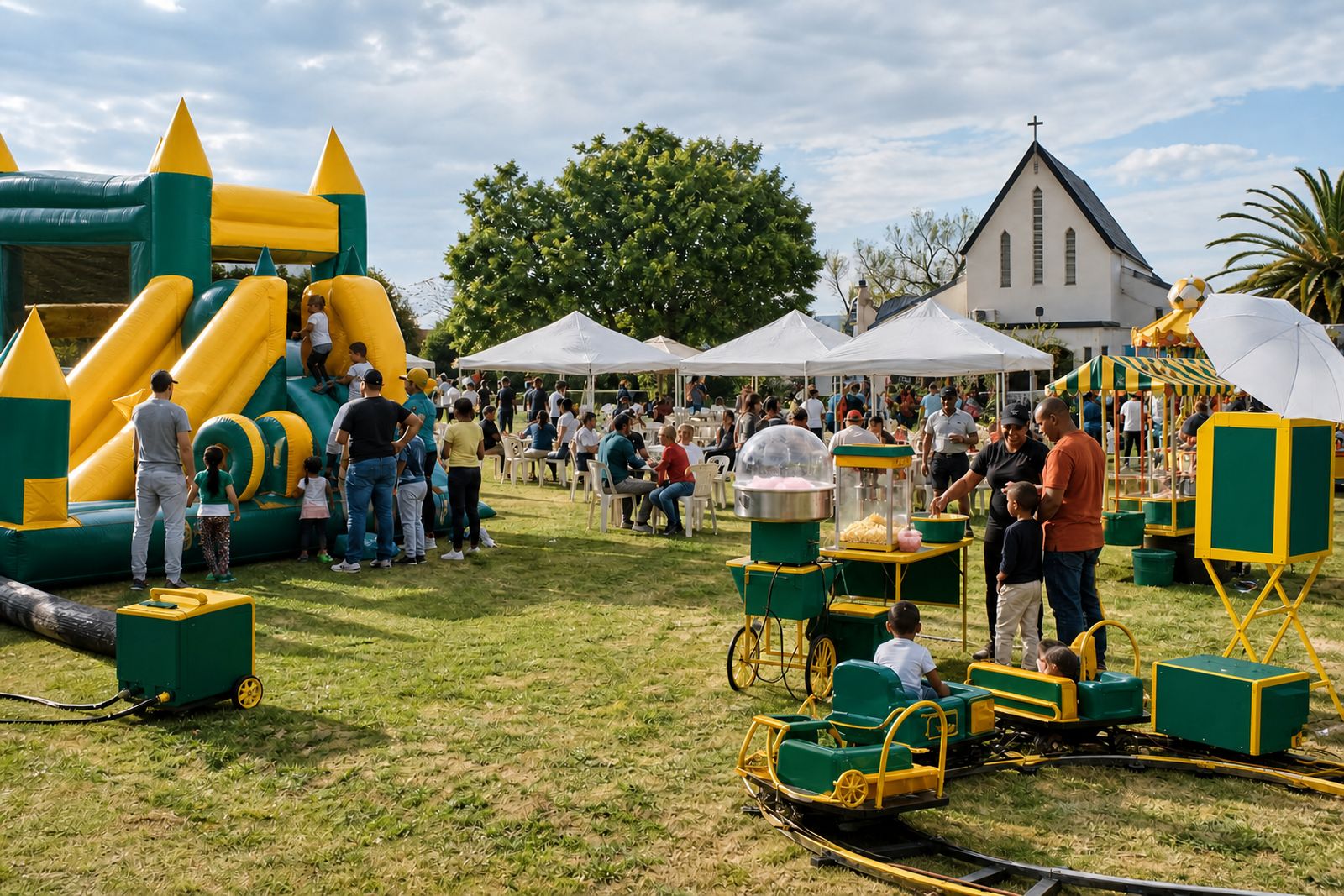
For promotional work, the best set-up usually mixes movement, sound and quick interaction. A small inflatable obstacle course draws a crowd from a distance. Carnival games keep families busy in short bursts. Arcade cabinets and retro gaming machines help with longer dwell time, while candy floss and popcorn carts add smell and movement around the stand. Photo booths, mascots and foam machines work well when the brief needs visible energy.
The main point is fit. A roadshow stop at a shopping centre entrance needs a different footprint from a school field or a corporate family day. We look at access routes, crowd flow, open ground, power points and where the queue will sit without blocking foot traffic.
Equipment Mixes That Travel Well Between Stops
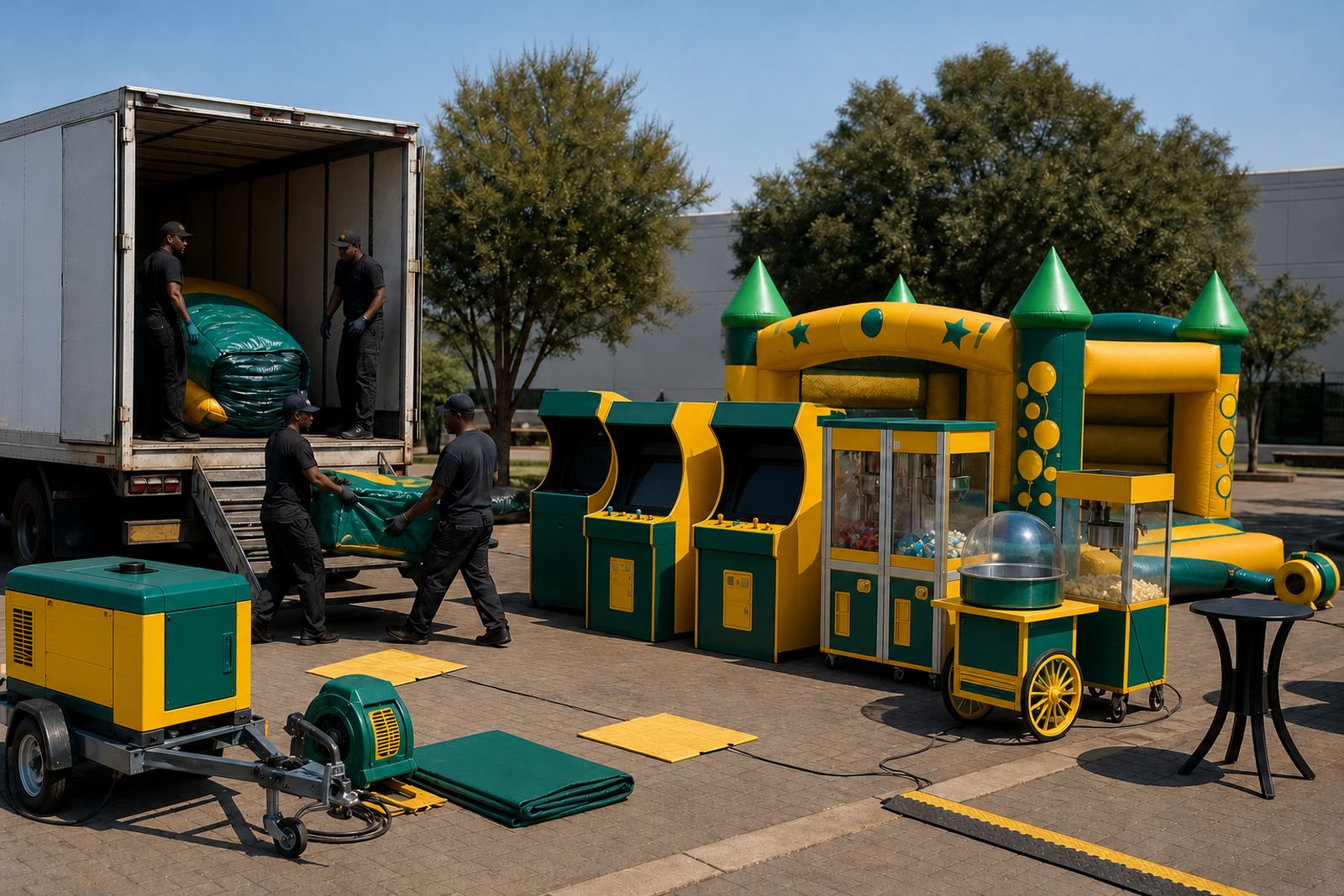
Promotional roadshows usually work best with a compact mix rather than a full fairground feel. The aim is to keep the load practical, keep the setup repeatable, and make each stop recognisable without taking over the whole site.
- Jumping castles and smaller inflatables for younger children and general foot traffic
- Inflatable obstacle sections for timed play, school groups or family challenges
- Carnival game stalls with ring toss, ball throw and similar skill games
- Arcade cabinets and retro gaming machines for indoor or shaded sites
- Candy floss carts and popcorn carts for food theatre and walk-up traffic
- Photo booths with props, a backdrop and an attendant
- Mascots, foam machines, bubble machines and small ride features for high visibility
Inflatables need enough clear ground for the unit, blower line, mats and anchor points. A medium piece can need several metres all round, while larger obstacle sections may need a much wider span for entry, exit and queue control. Grass sites often suit pegging and anchoring, while hard surfaces need weights or other fixing methods approved for the ground.
Power matters as well. Many roadshow elements run from standard mains supply, but a full site may need generator planning when the venue has limited outlets or when the attraction sits away from the building. Cables must be kept neat and covered where foot traffic crosses.
Layouts That Keep People Moving Without Cluttering the Site
A good roadshow layout should read clearly from a distance. People should see the attraction, understand where to join, and know where to leave without drifting into the wrong line. That is especially important at malls and schools where other traffic is already moving through the area.
We usually split the site into zones: arrival, play, queue, prize or photo point, and service space behind the scenes. If a candy floss or popcorn cart is part of the brief, it helps to place it near the entrance or exit so the smell carries through the space. Photo booths work better where there is room for waiting guests and a little privacy from passers-by.
For branded roadshows, the display area should not fight with the activity area. A banner wall, branded table cloths or simple signage can sit close to the attraction without blocking the crew. If the event runs for several stops in one week, the setup should be repeatable enough that each site feels consistent even when the ground changes.
Wet weather planning matters too. A roadshow may need an indoor fallback, a sheltered queue line, or a reduced equipment list if wind or rain makes outdoor operation unsafe. Foam and bubble features need careful placement around drains, slick paving and nearby electrical points.
Crewed Promos Need Rules Before The First Crowd Arrives
Roadshows go smoother when the event rules are set before equipment is loaded. That includes age bands, height limits, supervision lines and whether the client wants open play or timed sessions. Younger children need closer monitoring and softer play options, while older groups can handle more active inflatables and timed competitions.
Our crews handle delivery, setup, operation and strike. Practical details carry the same weight as the attraction itself. Units must be anchored properly, mats placed where feet land, and entry points kept clear. For ride features and high-use games, the operator also needs a simple flow for handovers, cleaning, queuing and short resets.
- Space checks for each stop, including access gates and vehicle loading space
- Power checks for inflatables, gaming units, carts and booth lighting
- Ground checks for grass, concrete, paving or uneven surfaces
- Supervision plans for children, mixed-age crowds and school groups
- Wet weather and wind plans for outdoor sites
A frequent mistake is hiring more equipment than the footprint can take. Another is leaving queue space as an afterthought, which makes the site feel cramped even when the attraction itself is working well. A third is forgetting the strike path at the end of the day. If the exit route is blocked by parked cars, prize tables or catering stock, the whole shutdown takes longer than it should.
Money Lines For A Multi-Stop Promotion
Budget depends on the number of stops, the size of each attraction, the crew needed, the travel spread and whether the brief needs generators, attendants or extra logistics. A single activation with one or two smaller items will sit in a different bracket from a touring roadshow with several equipment types and national routing.
For a modest promotional stop using one inflatable or a small mix of games and a cart, budgets often start in the lower Rand tens of thousands once delivery, setup and operator cover are included. A busier family-focused stop with multiple attractions, a photo booth, snacks and supervision can move into a higher bracket. National roadshows with several cities, overnight logistics and repeated setup and strike work need a broader budget plan again.
Think of it in blocks, not as one total number. Equipment hire, crew, transport, power planning, and site-specific extras all sit in separate parts of the budget. If a brand wants the same feel in Midrand, Johannesburg, Pretoria, Durban, Cape Town and Bloemfontein, the routing and freight detail matter almost as much as the amusement list.
Thabo Jantjies leads the business, with Anele Ebrahim, Johan Hlongwane, Naledi Seabi, Yusuf Masilela and Candice Zungu covering operations, logistics, bookings, safety and client service from the Midrand base.