Built for bigger crowds and longer play windows
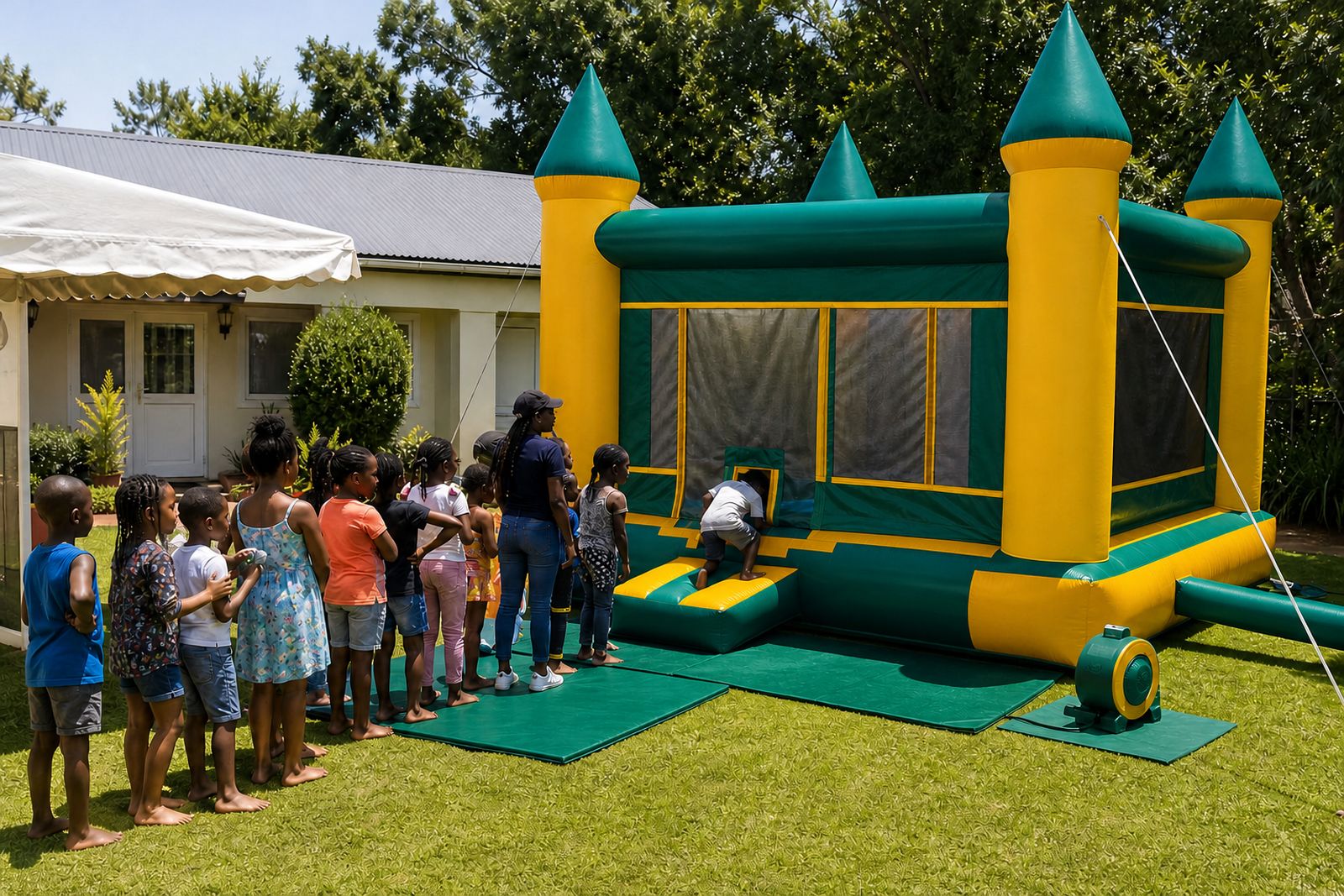
This larger bounce unit is the sort of hire that works when small castles start to feel tight. The inflated play area is made for fuller foot traffic, mixed age groups and event slots where children move through in waves rather than all at once.
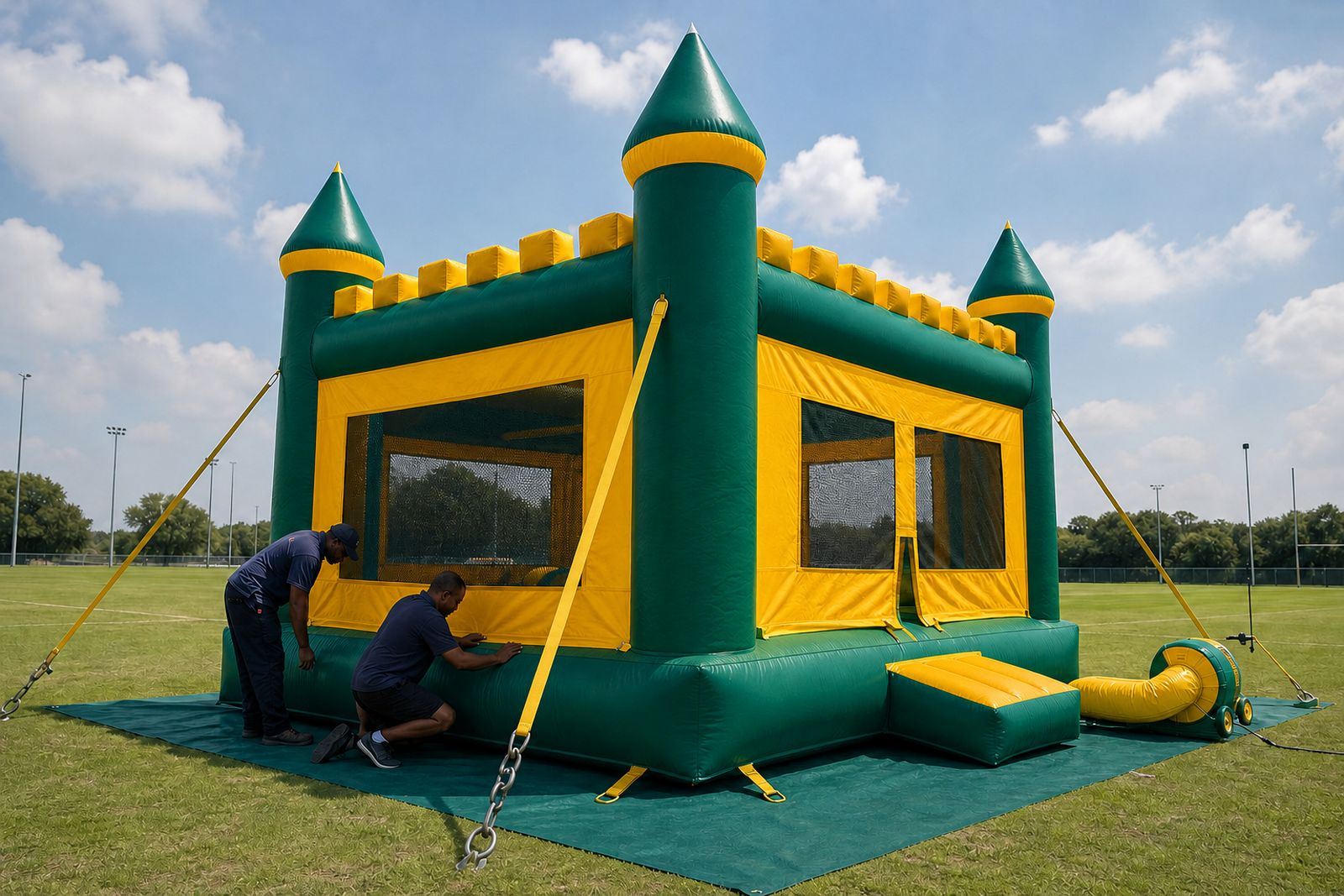
Most large jumping castles need a level patch of ground, open overhead clearance and a clean run around the sides for anchoring and monitoring. The footprint usually suits lawns, sports fields, paved courtyards and large indoor halls, provided the entrance, ceiling height and access route all make sense for the unit.
For schools and public venues, the extra space helps with queue control and keeps play organised. That matters when the event has a clear start and finish, or when the castle is one part of a larger amusement line-up.
Typical sizes, space and operating specs
Large jumping castles are commonly supplied in rectangular or square formats, often around 5 m x 5 m, 6 m x 6 m or a similar footprint, with height varying by model and theme. Clear space around the unit is needed for ropes, pegs or ballast points, plus a safe run-off area at the entrance and exit.
The blower is usually electric and sits outside the play zone, with cable routing kept neat and out of foot traffic. On hard surfaces, weights or approved anchoring methods may be used, while grassed areas normally allow pegging into firm ground. Where the site is uneven or exposed to wind, the crew may adjust placement or pause use until the unit is properly secured.
- Approximate footprint: 25 m² to 40 m², depending on model
- Clearance needed: extra space on all sides for anchoring and supervision
- Entry style: front ramp, low step or opening flap, model dependent
- Users: usually children, with age and height limits set for the unit
- Power: one standard power point for the blower, unless site planning calls for generator supply
Where this unit fits naturally on the event plan
Schools often place a large jumping castle near the sports field, stage edge or tuckshop side where there is room for orderly queues and adults can keep a clear line of sight. At malls, the unit works well in a court area or outdoor activation zone where families drift in and out through the day.
For corporate family days, the larger size helps when a single unit has to absorb a steady crowd. It also pairs neatly with carnival games, candy floss, popcorn, mascots and small rides, because children can move between activities without long dead time.
Birthday parties can use it as the main attraction when the yard or venue is large enough. A good rule is to think about access first, then crowd movement, then where parents or supervisors will stand. If the unit sits too close to walls, trees or parked vehicles, the play space feels tight very quickly.
- Best suited to schools, malls, company fun days and larger private celebrations
- Works on grass, hard court and selected indoor venues with enough height
- Useful where throughput matters and groups need to rotate through safely
- Can be booked with attendants, queue management and wet weather planning
Set-up, matting and supervision on the day
Delivery includes placing the unit, inflating it, checking the anchor points and laying safety mats where the entrance or landing zone needs them. The crew also looks at cable runs, blower position and the slope of the ground before play starts.
Supervision matters with any large bounce unit. Children need to be grouped by age and size where necessary, shoes removed, sharp items kept out and the number of users controlled so the floor does not become crowded. If the event wants an attendant, that can be arranged as part of the hire.
On a full programme, the setup sequence is normally planned around the rest of the site. That may include road access for the truck, a holding area for packaging, and enough room for strike and collection after the event closes. In a busy venue, neat spacing saves time and keeps the area tidy for the next activity.
Care, weather planning and practical use
Inflatable units need dry, clean surfaces and a steady eye on the weather. Strong wind, heavy rain or a soaked landing area can change how the castle is used, so the crew may adjust the plan if the site conditions shift. For outdoor events in Gauteng and coastal towns, that planning becomes even more useful when the day is hot, damp or unpredictable.
Users should stay off the walls, keep food and drinks out of the unit and step through the entrance instead of climbing. A clean bounce surface lasts better when it is treated as play equipment, not a seating area or storage space.
After use, the unit is deflated, packed and removed for cleaning and inspection. That process keeps the vinyl in good shape and makes the next installation cleaner. If the ground is dusty, sandy or uneven, a more careful strike is worthwhile because grit and drag marks shorten the life of the seams and floor panels.
Booking details that help the right castle land
When placing an order, it helps to confirm the venue type, the ground surface, access width and whether the site has power nearby. If the event needs generator supply, that is planned with the rest of the equipment so the blower and any related extras sit in the right place.
The booking team also needs the event date, the start and finish times, the age range of the children and whether the unit is for free play or managed sessions. If the castle is joining other hires such as photo booths, foam machines or carnival stalls, the floor plan can be set with enough room between each piece.
- Venue address and access notes, including stairs, gates or restricted entry points
- Available space in metres, plus any ceiling height limits for indoor halls
- Power availability and whether generator supply is needed
- Event type, expected age group and supervision arrangement
- Wet weather backup plan for outdoor bookings
- Hire duration, delivery window and collection access
Key facts
| Product type | Large jumping castle for group hire |
|---|---|
| Typical footprint | About 5 m x 5 m to 6 m x 6 m |
| Power requirement | Electric blower, with site planning for power or generator supply |
| Anchoring | Pegging, ballast or site-approved securing method |
| Recommended use | Schools, malls, corporate family days, birthdays |
| Support options | Delivery, setup, supervision, mats, strike and collection |