
A clean bounce space for busy event grounds
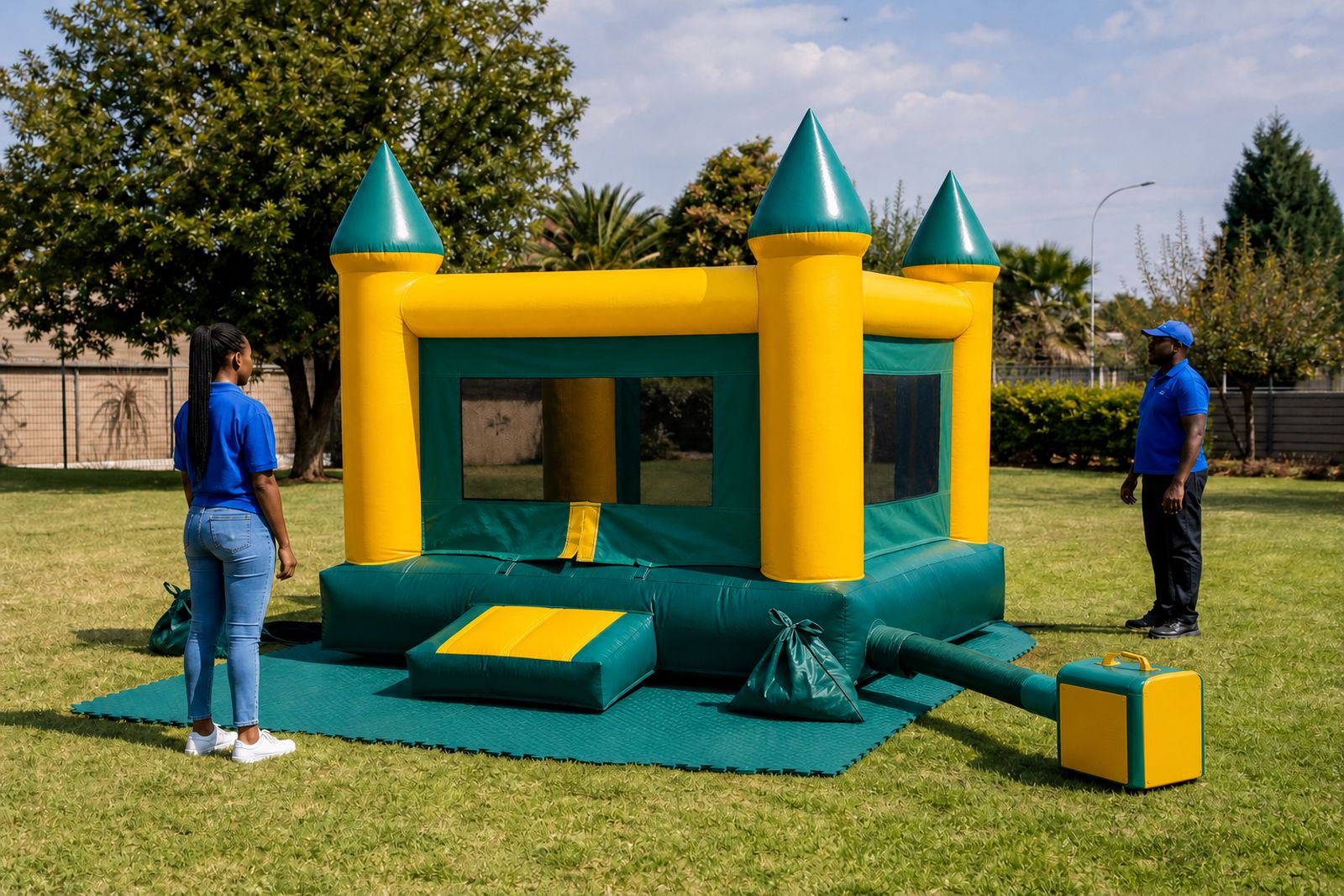
This inflatable is the sort of unit that works at a school sports field, a mall activation court or a garden birthday where the crowd keeps moving. It gives children one main play zone with a visible front opening, side walls that help contain the action, and a surface that can be checked before play starts.
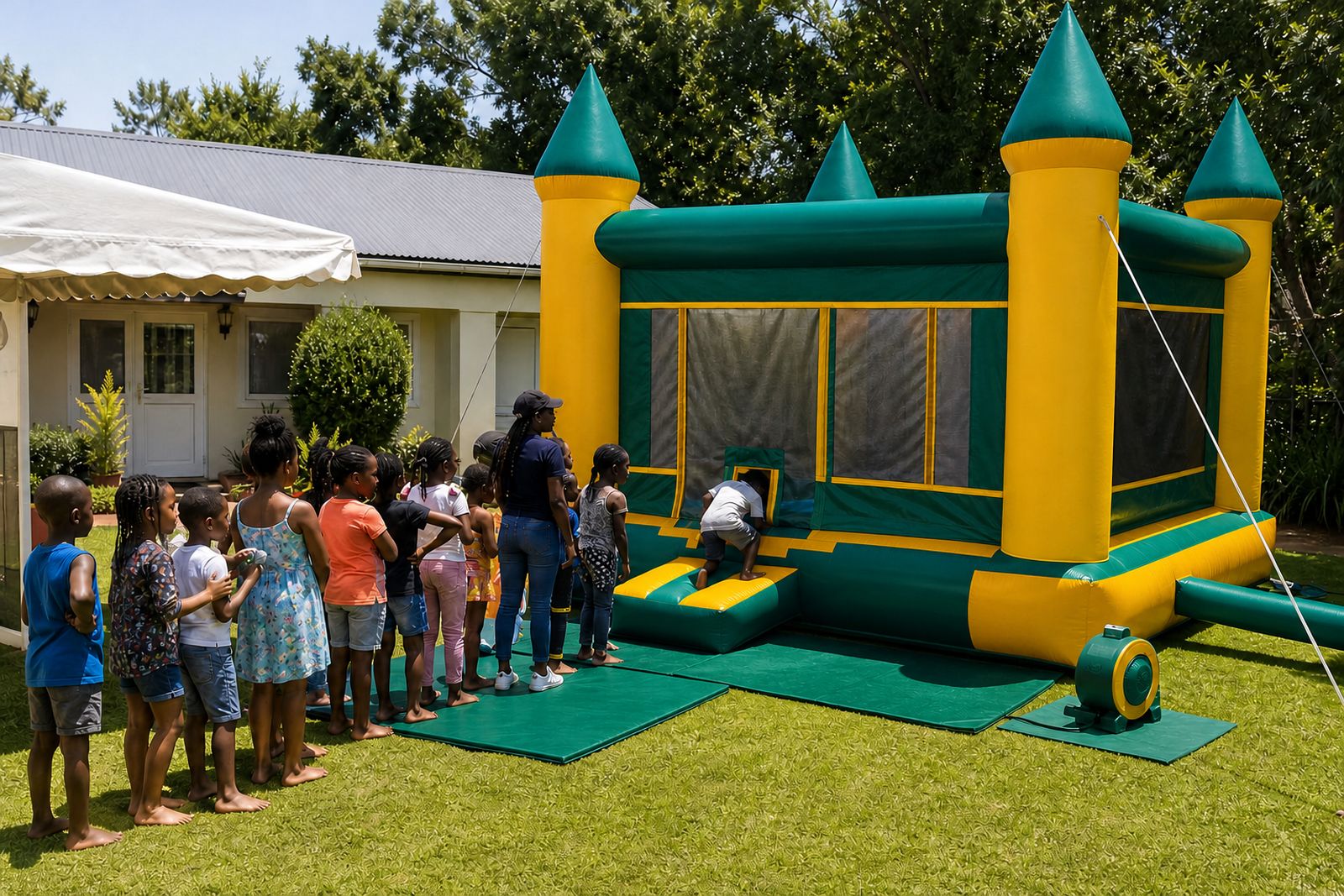
The standard format is often chosen when you need something easy to read from across the venue. Parents can see where children enter and exit, and crew members can guide the flow without pushing the unit into a tight corner. It fits the kind of event where there is a queue, a schedule and a mix of younger and older children sharing the same space.
Size choices and the footprint to allow
We supply standard jumping castles in sizes that suit smaller yards and larger open grounds, with the exact model matched to the site and the age group. A typical unit needs enough clear space for the inflatable itself, the blower path, anchoring points and a safe apron around the opening.
- Compact units suit tighter suburban lawns and enclosed school courts.
- Mid-size units work well for family days, church events and birthday setups.
- Larger standard models suit community events where traffic is steady all afternoon.
- Allow extra space for access, queue control and safe crew movement.
The crew also checks overhead clearance, nearby walls, trees and any slopes that could affect the finish of the install. A flat patch is easier to manage, but a slight natural gradient can sometimes be handled with careful positioning and the right anchoring method.
How the unit is installed and kept steady
The castle is delivered, placed and secured by trained crew using the correct tie points and anchoring method for the surface. On grass, that usually means pegs. On hardstanding or paved areas, weights are used instead, with safety mats laid at the entry and around the high-traffic side of the unit.
Blowers are fitted to keep the inflatable firm, and the power route is planned so cables do not cross active walkways. Where a venue relies on mains power, we plan the supply route, socket position and cable cover needs before the start of play. The goal is to keep the play area tidy and the edges easy to manage when the children are moving in and out.
Supervision matters as much as the structure itself. One crew member may remain close by to manage entry, watch numbers and keep the activity moving in an orderly way. If a venue wants a stricter flow, we can pair the castle with queue markers or timed turns.
Where it fits best at South African events
The standard model suits a wide spread of events because it is familiar, easy to understand and quick for children to join. It works well at school fêtes, mall promotions, company family days, birthday parties and community celebrations where the plan changes through the day.
- Schools use it for reward days, fundraisers and sports events.
- Malls place it near open courts for weekend family traffic.
- Corporate family days use it beside food stalls and seating.
- Private birthdays often place it near the main lawn or patio.
In coastal towns and humid weather, the crew keeps an eye on surface moisture and wind direction before opening the unit to the public. If the site is exposed, the setup may need a more sheltered position or a weather plan that protects both the equipment and the children waiting to play.
Care, cleaning and event-day use
Every inflatable is checked before loading and again on site once it is inflated. The surface is inspected for dirt, loose seams, damp patches and anything that could affect bounce comfort or safety. After the event, the unit is struck, folded and loaded with attention to keeping the material dry and free of grit.
Food, shoes and sharp objects are kept out of the play area. The crew normally asks that children remove hard items and that the unit is used in the age bands agreed for the booking. Mixed ages can work, but only when the group size is controlled and the stronger jumpers are not overloading the smaller ones.
It is also worth planning for the venue floor. Grass, paving, sand and concrete all need slightly different handling. A clean setup protects the inflatable and helps the day run in a calmer way, especially when the site is busy and the next activity is close beside it.
What to confirm before the booking is locked in
When ordering this castle, the main details are the venue surface, the available space, the event date and the age range of the children using it. The team will also want to know whether the site has mains power close by, whether there is a gate or access issue, and if the event needs a crew member to stay on station.
- Measure the open area where the castle will stand.
- Check whether the surface is grass, paving or another hard base.
- Confirm the age group and expected number of children.
- Note any steps, narrow access points or low branches.
- Tell us if the setup will be inside or outside.
- Say if the venue needs anchoring on grass or weighting on hardstanding.
Booking usually includes the delivery plan, setup order, supervision needs and collection details.
Key facts
| Product | Standard Jumping Castle |
|---|---|
| Type | General party inflatable |
| Typical footprint | Varies by model, with safe space around the unit |
| Power | Blower-powered, with cable planning required |
| Anchoring | Pegs on grass or weights on hardstanding |
| Best use | Birthdays, schools, malls and family days |