
Rolling targets that keep the queue moving
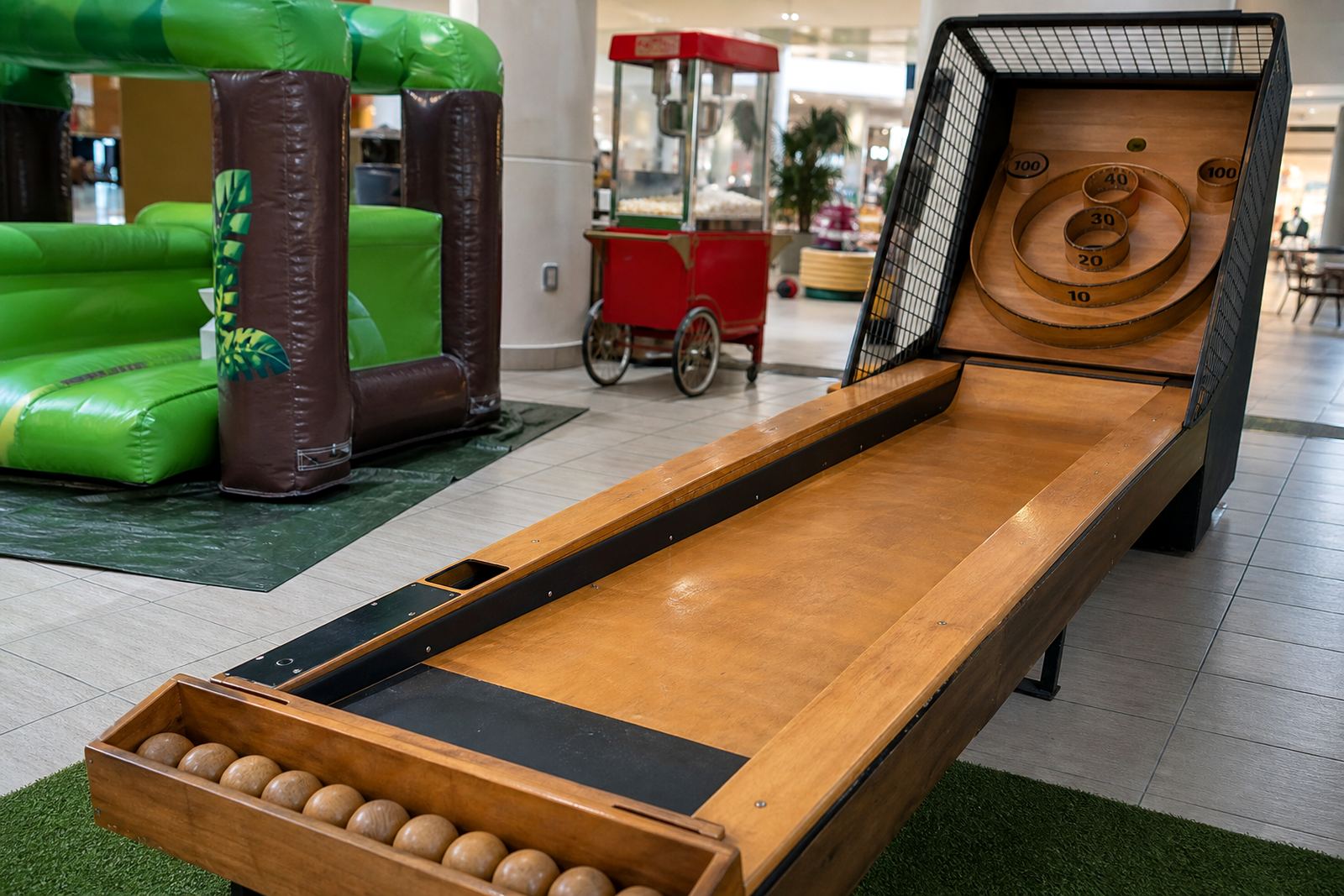
A skee ball lane is a long roll-and-score game with a raised ramp, target rings and a ball recovery system that sends the balls back after each throw. It suits short turns, clear scoring and enough pace to keep people moving without crowding the area. It fits indoor floors and covered spaces where the lane can sit level and the approach remains open.
Most hire setups use a sturdy framed lane with a smooth playing surface, side rails and a ball return tray or chute. The game is normally staffed by our crew so rules are clear, scores stay fair and the lane keeps its rhythm through the day. For schools, malls and family days, that steady format helps the attraction stay busy without needing complicated briefing.
Space, size and placement details
The lane length and footprint depend on the model selected, but a standard hire lane needs a straight run with room for the player, the ramp and safe movement beside it. As a guide, allow a clear area of about 6 to 8 metres long and 2.5 to 3 metres wide for comfortable use. Ceiling height matters in covered venues if signage, rigging or low roof lines are part of the site.
- Allow a level surface with firm footing under the lane.
- Keep walkways open on the side where players queue.
- Reserve space for a small prize table or score sheet if needed.
- Place the lane away from food spills, loose cables and sharp corners.
Where the event floor is polished, tiled or slightly uneven, mats or levelling pads may be used to keep the frame stable. In busy mall spaces, the lane is usually positioned where passers-by can see the scoring without blocking retail access or fire exits.
What the lane includes on hire
The hire package typically includes the lane frame, the target end, the balls or rolling pucks used for play, and the items needed to hold the unit steady in place. If the event needs branded score markers, rope barriers or queue control, those can be added to suit the layout. The play style is simple, but the details matter when the venue has tight access or a fixed install window.
- Lane structure with a smooth roll surface.
- Scoring targets with labelled zones.
- Return system for fast reset between turns.
- Safety mats or edge protection where needed.
- Barrier or queue setup for managed foot traffic.
For indoor venues, the lane is often placed against a wall or at the edge of a larger activation zone so players have a clear start point and spectators can watch without crossing the play line. That setup suits corporate family days, school fêtes and mall promotions where steady turnover is more useful than long play sessions.
Power, supervision and site support
Skee ball lanes are mechanical or low-power attractions depending on the model, so the site plan needs to account for the exact unit supplied. Where a powered return system, lighting or digital scoring is included, a safe plug point and tidy cable path are arranged before play begins. If the lane is part of a larger amusement line-up, the power plan can be grouped with other equipment to keep the floor neat and workable.
Our crew handles delivery, setup and strike, and can remain on site to supervise the game while guests are using it. That is useful at crowded events where children, teens and adults all want a turn and the lane needs consistent control. Where the venue has access limits, loading bay rules or floor protection requirements, those are built into the setup plan before the truck arrives.
Keeping the lane clean, true and safe
A skee ball lane needs regular wipe-downs, dry balls and a clean playing surface so the roll stays true and the scores feel fair. Indoor use is especially sensitive to dust, drink spills and sticky flooring, so the area should be kept clear of food service runoff and loose décor. If the event is in a humid coastal venue, the lane and balls need extra care during storage and transport to avoid damp marks and surface drag.
The play zone should stay supervised, with turns controlled so children do not climb the ramp or crowd the ball return. Safety mats help at the entry and exit points, especially where the lane sits on tile or concrete. If the event runs outdoors under cover, wind and rain plans should be checked against the venue layout so the attraction remains protected and stable throughout the hire.
Ordering details that shape the right lane
When booking a skee ball lane, it helps to confirm the venue type, the expected age group and the total floor area available for the setup. We also need to know whether the lane is for a school hall, mall court, conference side area or private birthday space, because each site handles queues and access in a different way. If the lane will sit with other amusements, tell us what else is on the floor so the spacing can be planned properly.
- Venue address and floor type.
- Indoor, covered outdoor or sheltered placement.
- Available length, width and ceiling clearance.
- Power access if the selected unit uses it.
- Arrival window, event start and strike timing.
- Any access rules for lifts, loading bays or security counters.
For larger road shows, it also helps to note whether the lane must move between zones during the day. That affects how the frame is placed, how the queue is directed and whether extra mats or stanchions are needed. Clear details upfront save time on site and help the game fit the floor without awkward adjustments.
Key facts
| Game type | Roll-and-score lane hire with target rings and ball return |
|---|---|
| Typical footprint | About 6 to 8 metres long by 2.5 to 3 metres wide |
| Venue fit | Indoor halls, malls, covered courtyards and dry sheltered spaces |
| Crew support | Delivery, setup, on site supervision and strike |
| Power requirement | Model dependent, confirm if powered scoring or return is included |
| Best for | Schools, corporate family days, mall activations and birthdays |