
Low-height play that suits smaller feet
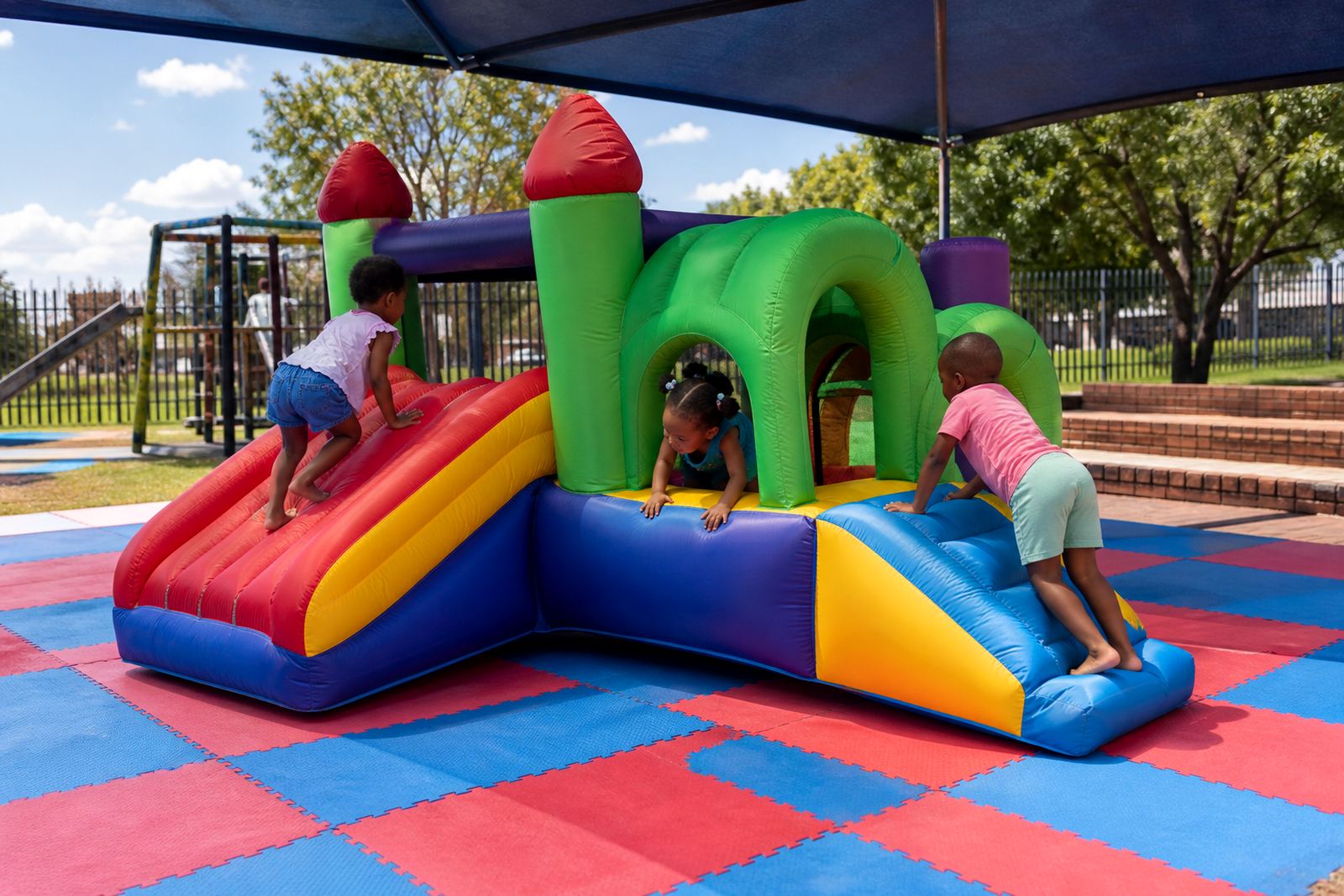
This unit is built for younger children who need a calmer activity zone at a school fair, mall activation, birthday or corporate family day. The play area sits low to the ground, with soft inflatable walls, gentle steps and open sections that make it easier for adults and crew to keep watch.
Most toddler inflatables are chosen for ages roughly 2 to 6 years, though the final fit depends on the model, the venue and the number of children expected at a time. The footprint is usually compact enough for courtyards, halls, under-cover areas and level lawns, but it still needs proper clearance around the sides and access for anchoring.
- Soft climbing and bouncing zones for younger children
- Low entry points and rounded edges for easier access
- Good visibility for caregivers, teachers and crew
- Suitable for short play turns and steady movement
Space, size and floor layout
Toddler units are available in a few layout styles, from compact square play pens to slightly larger multi-zone inflatables with mini slides, tunnels or ball-play sections. A common size range starts around 3 m x 3 m and can extend to larger family-friendly layouts near 5 m x 5 m, depending on the design. Height is kept lower than standard jumping castles so the space feels less intimidating for small children.
When we plan the fit, we look at the usable floor area, ceiling height for indoor venues and the route in for delivery. If the surface is grass, paving or a smooth indoor floor, the crew plans the anchoring method and safety mat placement to suit the site.
- Compact layouts for tighter event spaces
- Larger play zones for schools and malls with heavier foot traffic
- Indoor clearance checks for beams, lights and doors
- Outdoor anchoring planned for grass, paving or hardstand areas
Power, blowers and the working setup
These inflatables use electric blowers to keep the structure inflated during use, so a stable power point is part of the setup. Where the site layout calls for it, we plan cable runs to keep them tidy and away from play paths. If a generator is needed for a venue or open-air event, that forms part of the booking plan.
The crew arrives with the inflatable, blowers, safety mats and anchoring gear, then secures the unit before opening the play area. Setup time depends on access, floor level and how many other items are on site, but the process includes inflation, checking seams and gates, positioning mats and confirming the play zone is ready for supervision.
- Electric blower operation for continuous inflation
- Anchors, sandbags or venue-approved fixing methods as required
- Safety mats at entry and exit points
- Cable routing and power planning for the event layout
Where a toddler inflatable fits best
This product works well where younger children need their own space away from older kids and louder attractions. Schools often use it for fêtes, classroom celebrations and family mornings. Malls use it for holiday foot traffic and weekend activations. Corporate family days use it to give toddlers a calmer zone close to parents or caregivers.
It also suits birthdays where the guest list includes mixed ages and the younger children need something softer than a full-size castle. The lower profile makes it easier to place near seating areas, snack tables or shaded points, provided the venue leaves enough room for circulation and safe access.
- School events with mixed-age groups
- Mall activations and retail family days
- Corporate functions with children’s zones
- Birthday parties, church events and community fun days
Care, supervision and weather planning
Toddler play inflatables are best used on level ground with active supervision. The crew can manage entry, exits and queue flow where that is part of the brief, and the unit should be used in line with the age range and capacity set for the chosen model. Shoes, sharp objects and rough play are kept out of the area, and any spills or muddy ground need attention before children go in.
For outdoor bookings, weather planning matters. Heavy wind, rain or a soaked surface can affect use and anchoring, so a wet weather plan is part of the booking conversation. A covered venue, indoor hall or sheltered courtyard often gives more flexibility during uncertain weather in Gauteng and coastal cities alike.
- Adults must supervise at all times while it is in use
- Children grouped by age where practical
- Dry, level surfaces work best for stability
- Weather checks help protect the unit and the children
What to confirm when placing the booking
For a toddler play inflatable, the important details are the event date, venue, surface type, space available and the number of children expected to use it. It also helps to note whether the site has a standard power point close to the set-up area, whether a generator is needed, and whether the event will be indoors or outdoors.
We also need the age group, the access route for delivery and the time window for setup and collection. If there are stairs, narrow gates, loading bays or limited vehicle access, those details change the crew plan. For larger events, we can coordinate the inflatable with snack carts, photo booths, mascots or other amusement hire items so the layout stays workable.
- Event date and venue address
- Indoor or outdoor site details
- Available floor space and ceiling height where needed
- Age range and expected child numbers
- Power source or generator requirement
Key facts
| Product type | Toddler play inflatable |
|---|---|
| Typical age range | About 2 to 6 years, depending on model and event plan |
| Common size range | From about 3 m x 3 m to around 5 m x 5 m |
| Height profile | Low-height inflatable play area for smaller children |
| Setup needs | Blower, anchoring, safety mats and clear access |
| Power requirement | Electric power point or generator plan for blower operation |