
Ground Hold That Matches The Unit
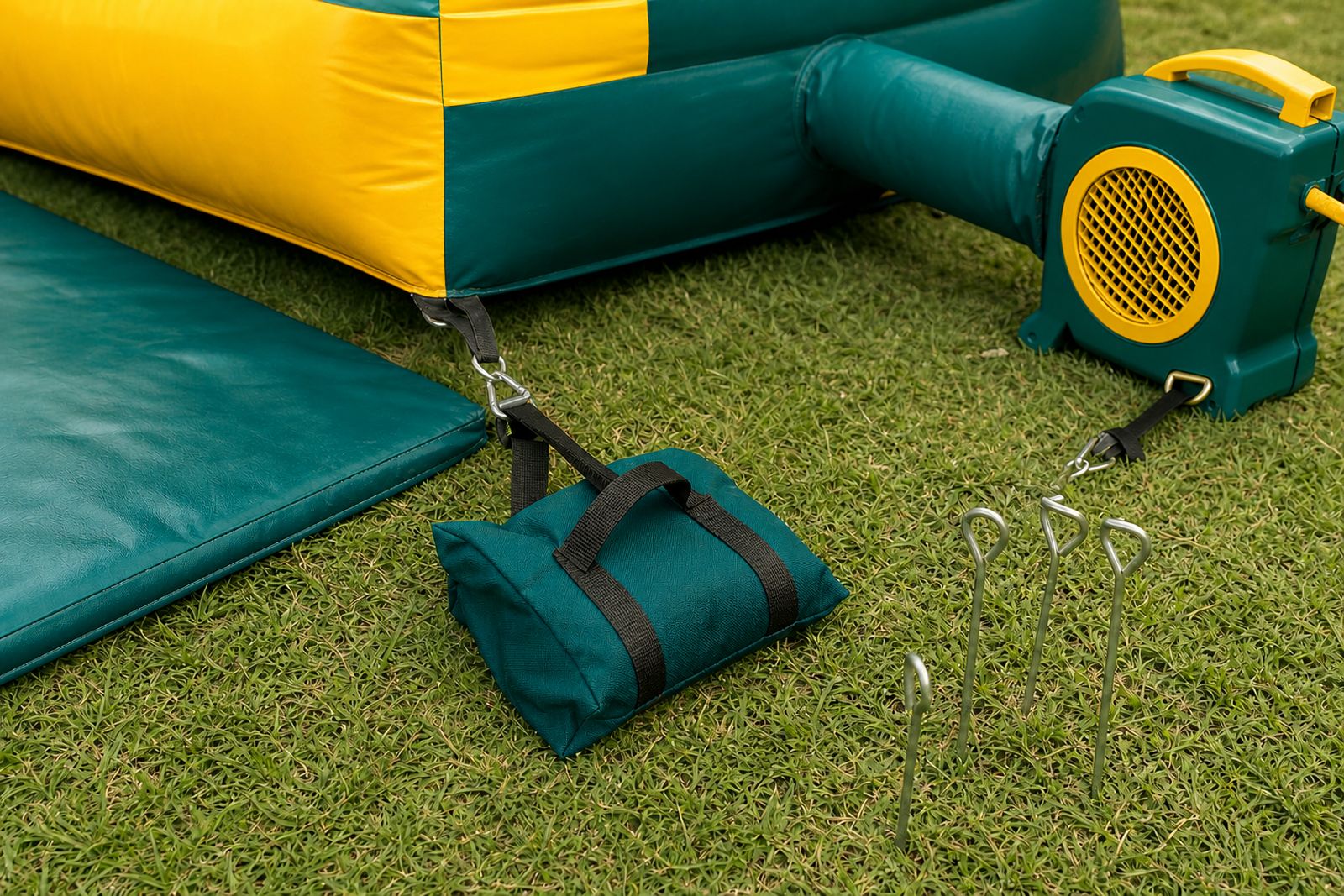
Every inflatable, ride or active game starts with a site check for the surface under it. Grass, paving, compacted gravel and indoor floors all call for different anchoring choices, and the crew matches the fixings to the ground rather than forcing one method across every site. On grass, pegs are driven into firm soil where allowed, while hard surfaces rely on ballast, sandbags or weighted blocks placed at the correct points. That keeps the unit planted through movement, wind gusts and busy sessions.
Most smaller castles need only a modest footprint, while obstacle courses and larger inflatables may need wider clear zones for ropes, blower points and exit lanes. The crew also looks at slope, drainage and overhead clearance before the first anchor is fitted. If the ground is soft after rain, the layout may need a different anchor pattern or extra ballast so the setup stays steady through the day.
Safety Mats Around Entrances And Busy Edges
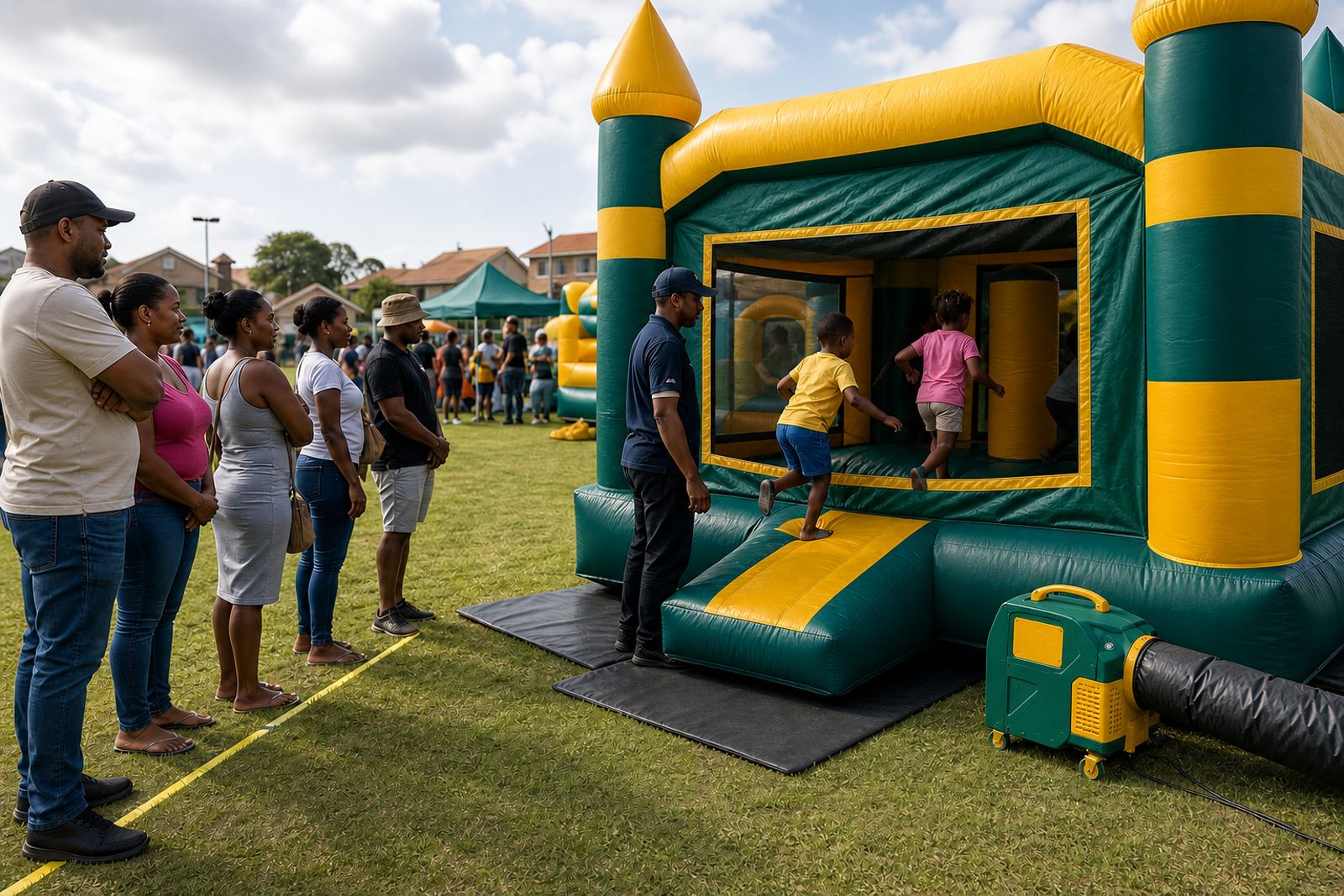
Mats are placed where feet land, where children step in and out, and where staff need a clean path beside the unit. Foam mats, heavy duty rubber mats and padded landing strips all have their place, depending on the surface and the equipment. At entry points, mats help reduce slip risk on wet grass, polished concrete or dusty paving. Around queues and game lanes, they also mark the working area clearly, which helps with crowd flow.
For events in Johannesburg, Pretoria, Durban, Cape Town and Bloemfontein, weather and surface conditions can shift quickly. Morning dew, coastal damp air, heat on blacktop or a windy open field can all affect how mats sit. Crews check that the mat edges lie flat and that guests do not catch a toe on a curled corner. If a unit has stairs or a raised step, the mat line is set a little wider to give children a more comfortable landing zone.
- Entrance mats for stable step-in and step-out points
- Landing mats for slides, small drops and game exits
- Queue mats where children wait near moving equipment
- Edge mats to protect high contact corners and access paths
How The Crew Sets The Site
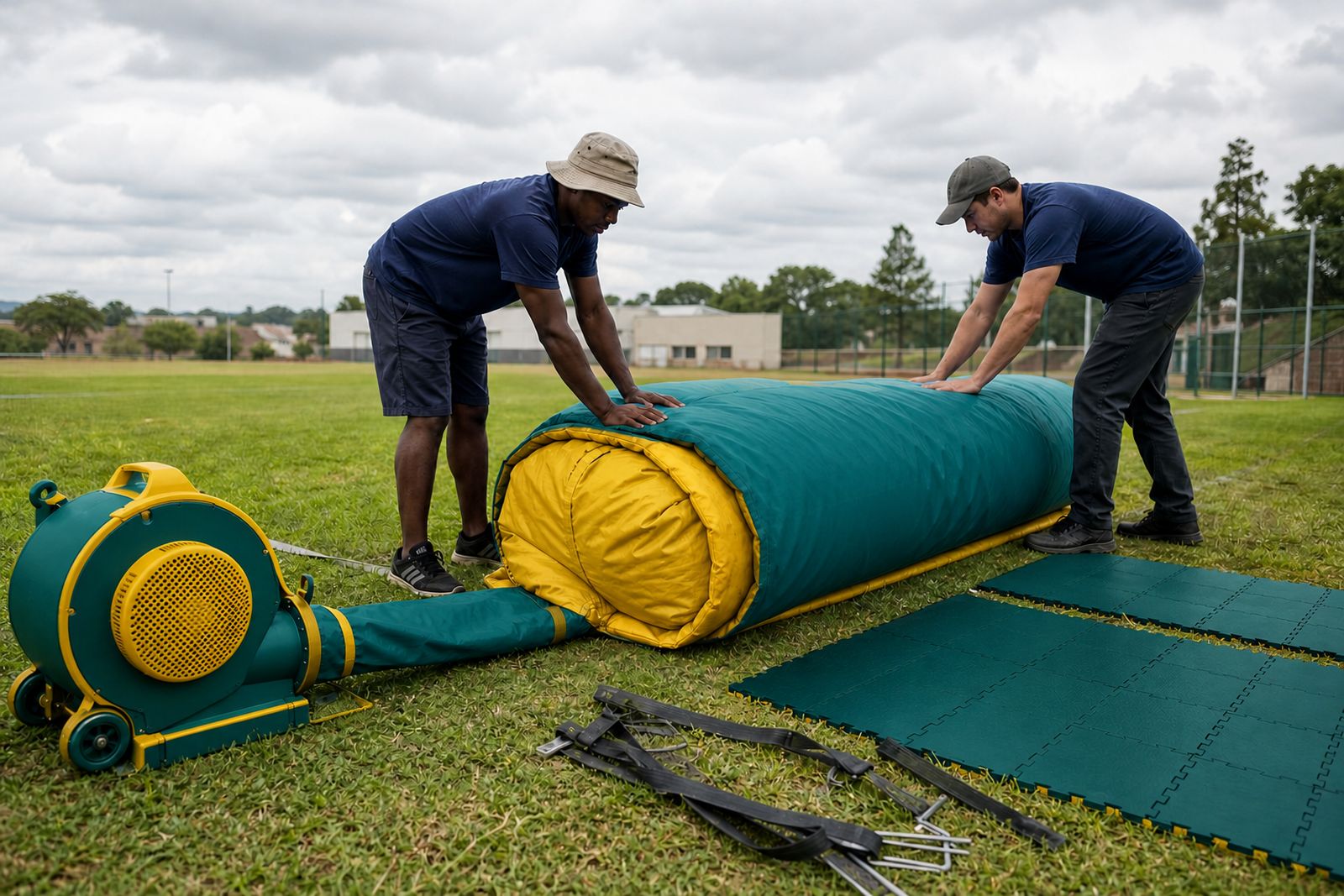
Anchoring and mat placement is folded into delivery setup, not treated as a loose extra. The crew arrives with pegs, straps, ballast, tiedown gear and mats sized for the booked equipment. Before anything goes up, they mark out the working area, confirm access for the blower hose or power lead, and check that the chosen position leaves enough room for supervision and strike-out later. On larger bookings, the crew may stage the anchors first, then set the inflatable, then fit the final mat positions once the unit is standing square.
For school fun days and mall activations, the layout often needs crowd lanes as well as play space. That means the team leaves room for stanchions, queue channels or barrier lines where needed. The same approach helps for birthday gardens where the lawn is uneven, or for corporate family days where guests move between several amusements. The work is practical: measure, anchor, level, mat, test, then hand over the area with the hazards reduced as far as the site allows.
- Site marking and surface assessment before setup
- Anchors, straps or ballast fitted to the unit type
- Mats placed at entrances, exits and landing points
- Final walk-through with the event lead or venue contact
Power, Wind And Weather Notes That Matter
Many inflatables and carnival pieces need continuous blower power, so the anchor plan has to work together with cable routing and generator placement. A blower can shift a light unit if the tethering is not correct, which is why crews keep the hose line clear and the power lead protected under mats or cable covers where needed. For outdoor events, the wind plan matters just as much. If weather changes, the crew may lower use, reset anchor points or pause operation until the surface and wind pressure are suitable again.
Wet weather can change the whole feel of a site. A mat that works on dry grass may need a different position after rain, and a paved area can become slick if the event runs into drizzle. Our team also watches for pooling water near entrances, since standing water under a mat can create a soft or uneven patch. For fairground-style rides and larger activations, ballast and footprint spacing are checked with extra care because the movement and guest flow are heavier than on a single castle.
Pricing Is Built Around The Site And The Load
Pricing for anchoring and mats is usually shaped by three things: the size of the unit, the surface under it and the amount of crew handling needed on site. A grass setup with straightforward pegging is simpler than a multi-unit layout on paving with ballast, cable covers and wider mat coverage. Larger obstacle courses, arcade clusters, snack carts and ride areas may need more labour, more matting and more time in the setup and strike window.
For school events, mall activations and road-show style bookings, the quote normally reflects the actual footprint rather than a flat guess. If the booking needs extra ballast, added mats, specific access routes or more than one safety zone, those parts are listed clearly. Deposits and final confirmation steps are handled through the normal booking flow, with the site notes folded into the event plan so there are no loose pieces on the day.
What Happens After The Crowd Clears
After the event, the crew removes anchors carefully so the ground is left in better shape and the equipment can be packed without damage. Mats are lifted, shaken down and stacked for transport. Where pegs were used, the holes are checked and the site is left tidy. On hard surfaces, ballast is removed in sequence so the unit does not shift while being collapsed. That order matters, especially when the amusement has been busy and the surface under it has warmed up or shifted during the day.
Clients often ask for a short handover note after the strike phase, especially for venues with shared lawns, paved courtyards or municipal control. The note may mention any surface marks, wet spots or areas that need a little extra care before the next function. For schools and malls, that makes planning the next booking easier because the site team knows what the ground looked like after use.
- Careful unpegging or ballast removal in reverse order
- Mats collected, checked and stacked for return transport
- Surface left clear of rope ends, pegs and loose debris
- Site notes shared where a venue needs a record of conditions
Key facts
| Anchoring methods | Ground pegs, ballast, tiedown straps and weighted blocks |
|---|---|
| Mat types | Foam mats, rubber mats, landing mats and edge mats |
| Typical footprint support | Entry points, exits, queue lines and landing zones |
| Surface suitability | Grass, paving, concrete, compacted gravel and indoor floors |
| Crew handling | Delivery setup, on site supervision, strike and collection |
| Event use | Jumping castles, obstacle courses, games, carts, booths and small rides |