
Reading the ground before the first blower goes on
A wet weather plan starts with the surface, not the attraction. Grass, paving, packed soil and indoor floors all behave differently when rain rolls through Midrand, Pretoria, Johannesburg or the coast, and each one changes how we anchor, where we place mats, and what we can safely keep in service.
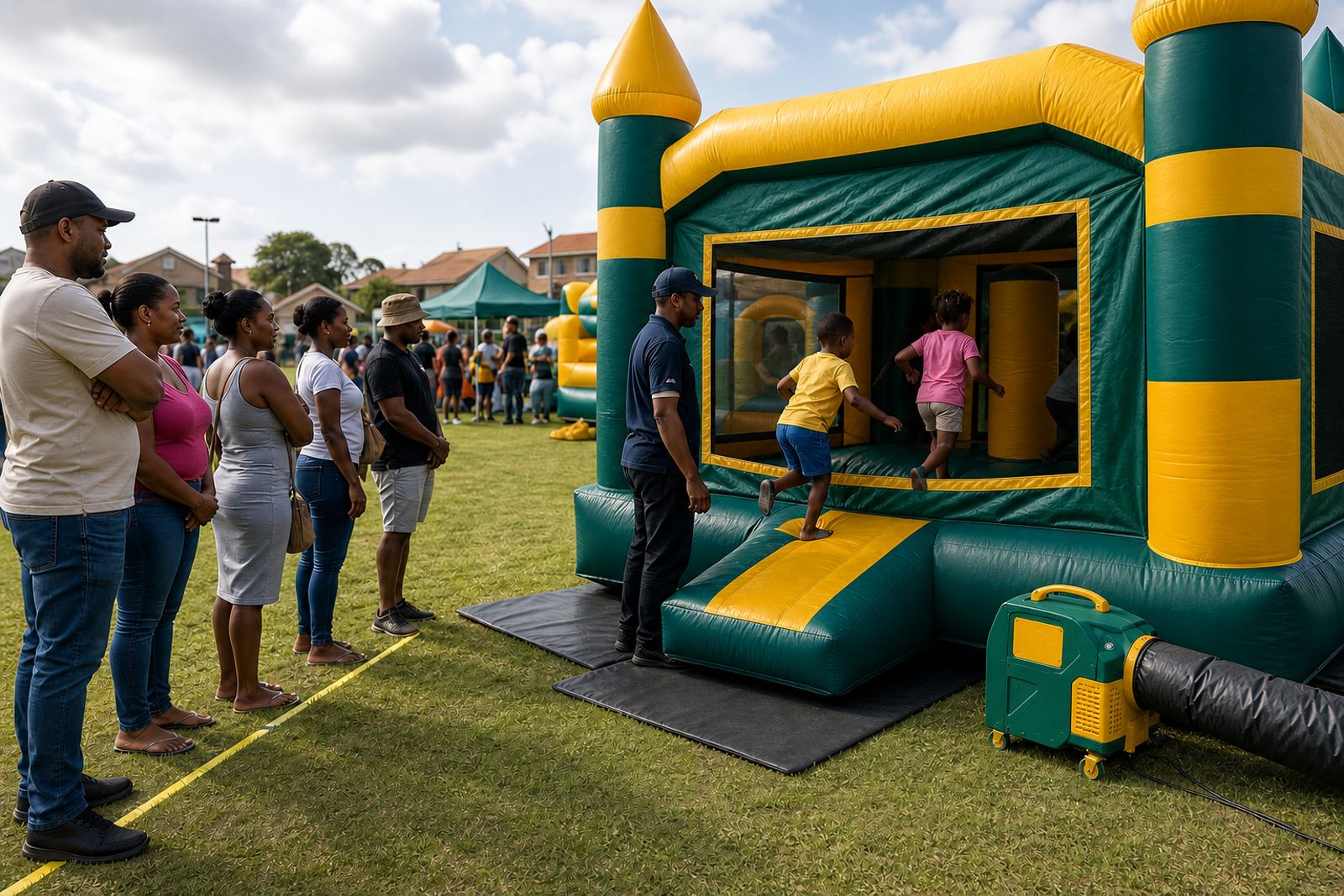
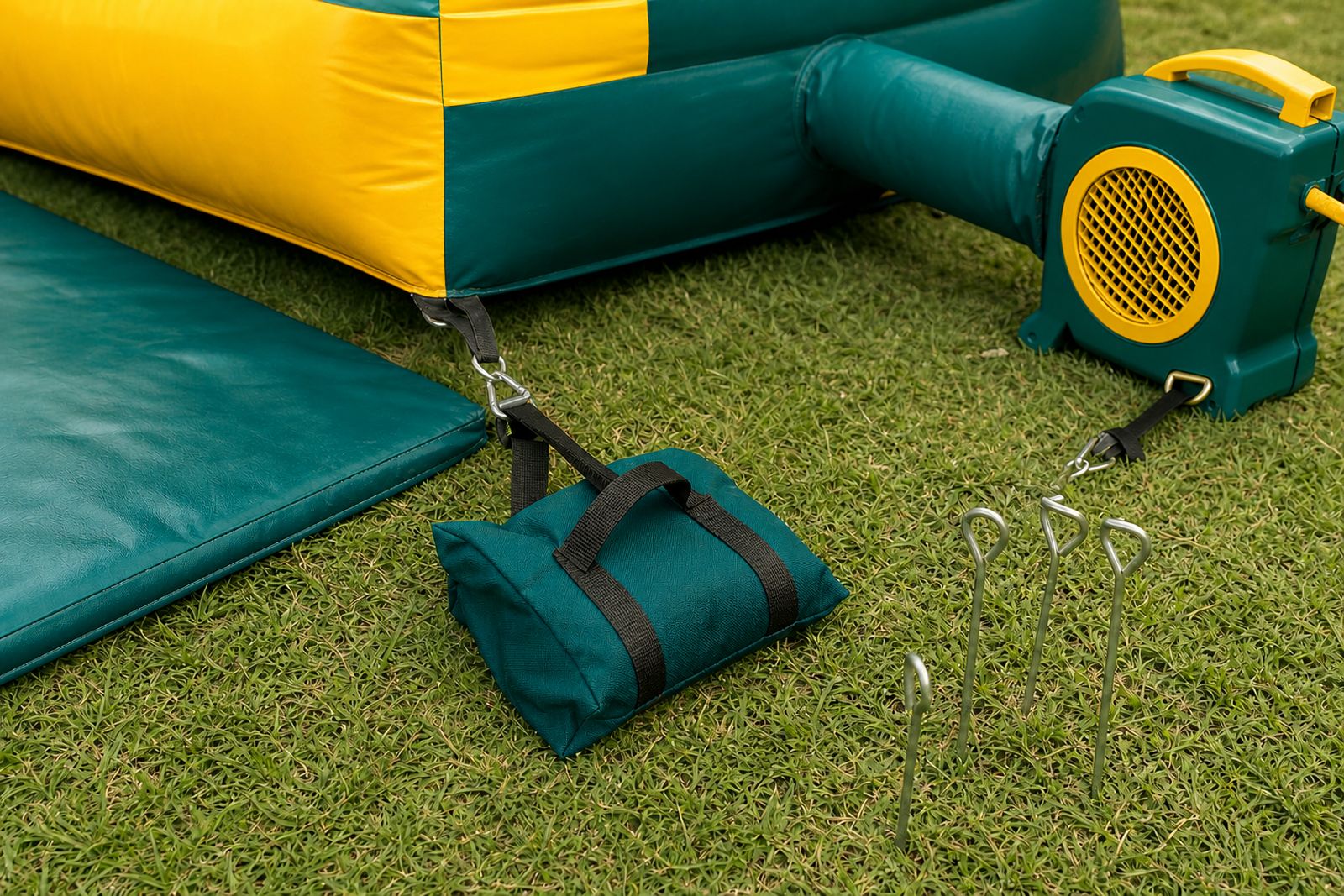
For inflatable units we look at the footprint, blower position, anchoring points and drainage around the setup. A medium castle may need several metres of clear space all round, while an obstacle course needs a longer strip, firm tie-down points and room for safe entry and exit. If the ground turns soft, we may shift to a harder standing area, reduce the footprint, or swap to a stall, game or indoor-friendly option.
- Surface checks for grass, paving, turf and polished indoor floors
- Anchoring with pegs, ballast or a mixed hold-down plan
- Safety mats at entrances, exits and queue points
- Clear changeover notes for wet grass, slick tiles and pooling water
What happens when the forecast turns
We keep the plan flexible enough for real weather, not just a neat forecast. Light rain may mean covered queues, extra mats and better cable routing. Strong wind can shut down taller inflatables, foam setups and some marquees or open rigs, especially on exposed school fields or rooftop venues.
When conditions move past safe operating limits, we look at postponement, a shorter programme, or a swap to lower-profile attractions that sit better in the weather. Carnival games, arcade cabinets, photo booths under cover, mascots, candy floss carts and popcorn service can keep an event moving while the heavier gear stays off the field.
- Rain cover options for queues, payment points and service counters
- Wind limits for tall inflatables and loose display items
- Attraction swaps for indoor halls, foyers and covered courtyards
- Clear plan for pause, restart or removal when conditions shift
Dry gear, wet grass and the crew around it
Wet weather work is about more than keeping the unit inflated. Crew members manage the route in, wipe down contact points, protect electrical runs, and watch that water does not collect near blowers or cable joins. On event lawns the ground can look fine from a distance, then sink under the first row of feet, so the team keeps a close eye on compaction and traffic flow.
For snack carts, photo booths and arcade machines, we plan for cover, dry access and stable footing. A popcorn machine or candy floss cart needs a flat stand and a dry service zone. Photo booth gear works best with a tented edge or indoor stand, and arcade cabinets need clean power and a floor that is not shifting underfoot.
- Dry staging zones for equipment and stock
- Cable routes kept clear of puddles and foot traffic
- Indoor alternatives for machines that must stay dry
- Trained crew on hand for supervision and stop-start calls
How the booking changes when rain is possible
Wet weather planning begins with the event details, the site type and the attractions you want on the day. We check space, access gates, loading routes, floor type and whether the venue has cover nearby. A school field in Gauteng, a mall forecourt in Durban or a birthday in Cape Town all need different call points when the weather shifts.
The booking notes then carry the rain plan, the wind plan and the swap list. That can include a backup indoor attraction, a shorter setup list, a revised queue layout or a hold position for gear that should not go out in drizzle. Deposits and final booking steps stay tied to the confirmed scope, with wet weather arrangements written into the event plan before the truck rolls.
- Site notes for grass, concrete, halls and mixed-use venues
- Backup attraction list for indoor or covered spaces
- Queue, entry and exit changes for rain conditions
- Clear handover notes for the event-day team
Timing around setup, strike and weather windows
Setup timing matters more when weather is uncertain. Crews often stage the attraction, mats and cover gear first, then complete the rest once the site is stable. If rain is close, we may shift the order so that the safest items go in first and the weather-sensitive items wait under cover.
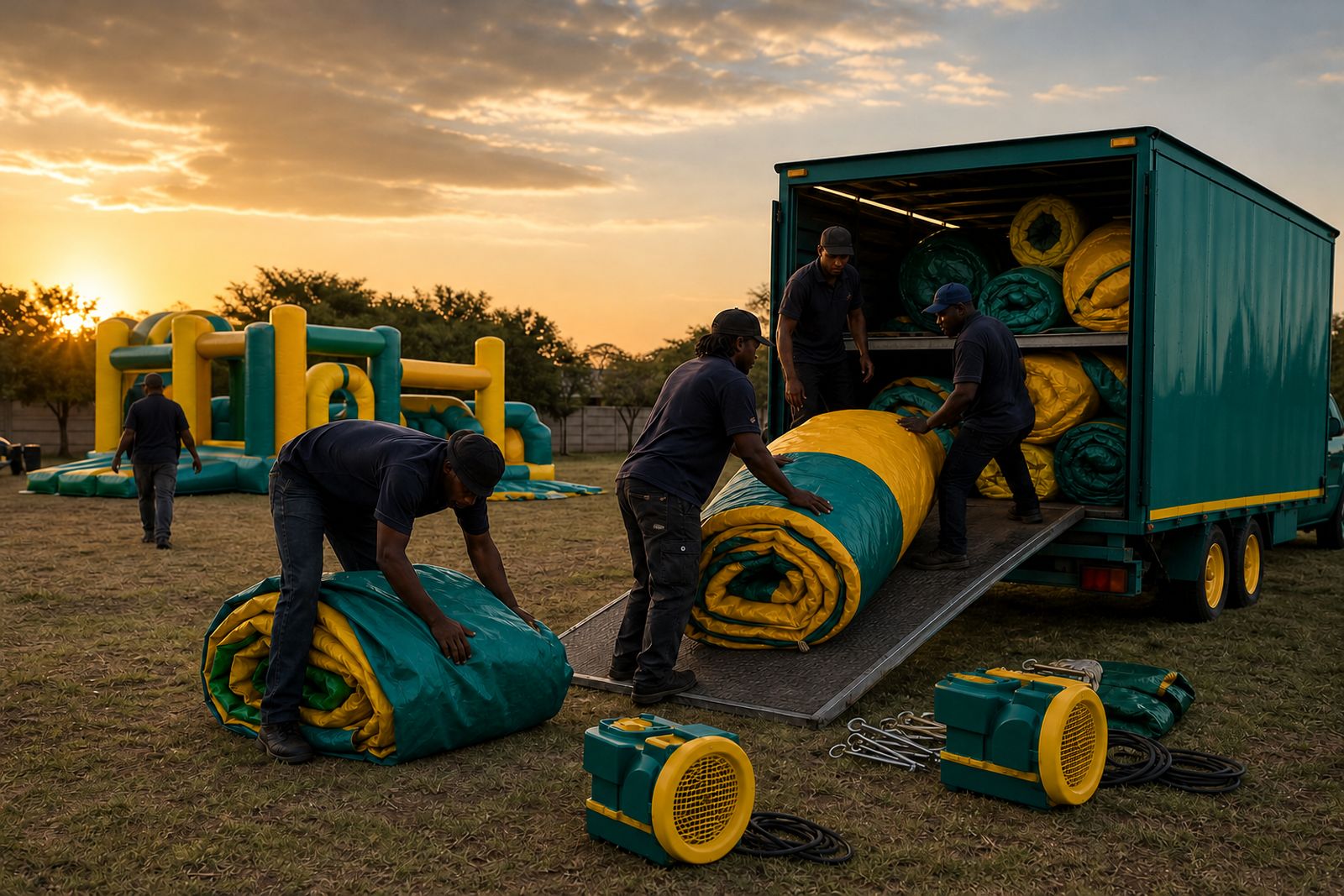
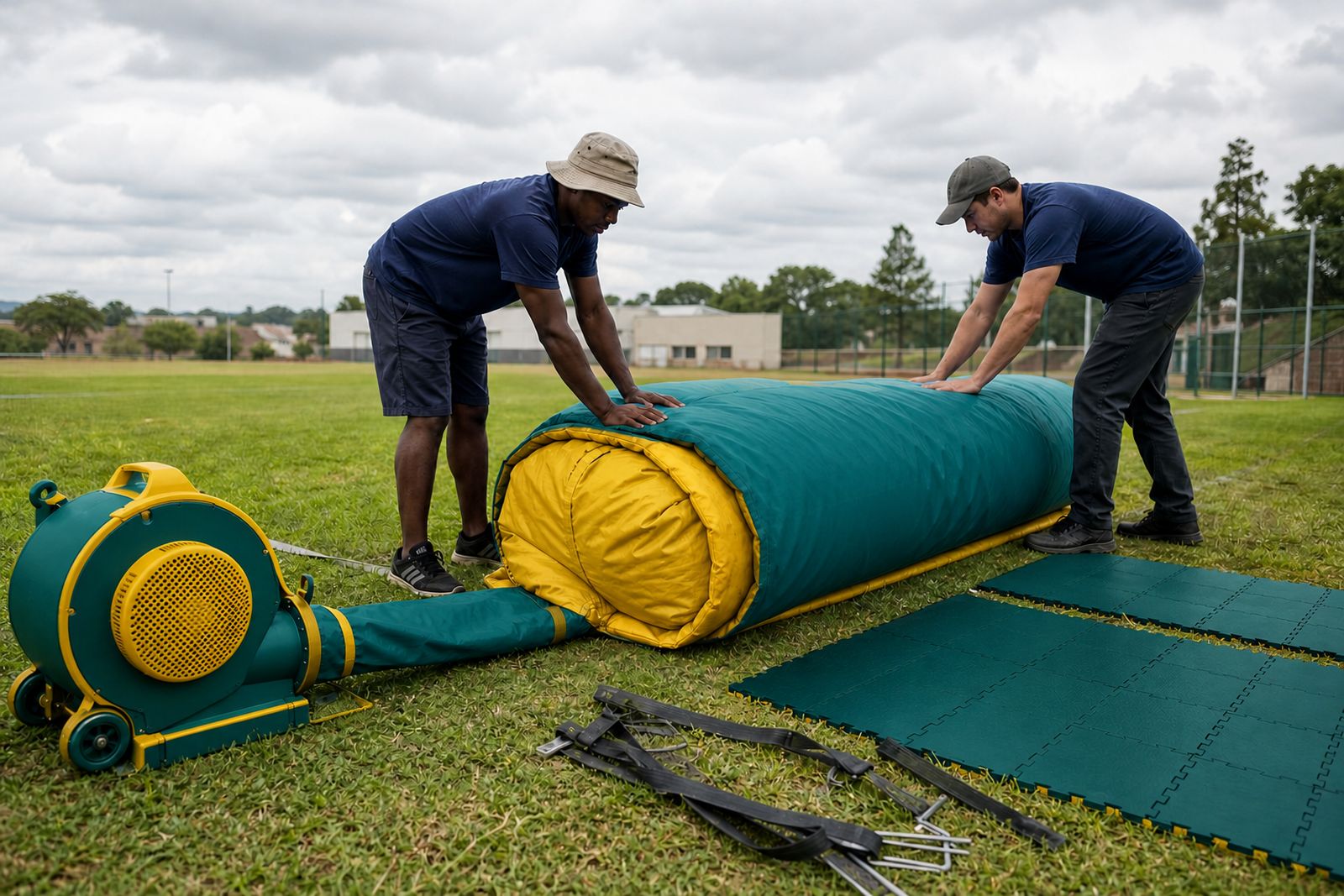
Strike and collection also need a weather eye. Wet vinyl, damp mats and muddy anchoring points take extra care, so collection can be slower on open ground than on a dry hardstand. That is normal for outdoor hire and part of keeping the equipment in good order after the event.
- Staged setup for fast changes in conditions
- Covered holding points for items not yet in use
- Slower strike on muddy or waterlogged sites
- Cleaning and drying routines after collection
Pricing the wet weather layer without guesswork
Wet weather planning is priced by the event scope, the number of attractions, the site conditions and the level of cover or swap support needed. A simple birthday in Midrand with one inflatable and a covered patio has a different cost structure from a national road show with several zones, crew rotations and backup attractions in reserve.
We quote the work in practical parts: delivery, setup, supervision, anchors, mats, power planning, generator supply where needed, and any extra weather cover or swap option. That keeps the numbers tied to the event itself, not to a generic package. If the site has hard flooring, exposed wind or a wet lawn, the pricing reflects the extra handling and the extra crew time on site.
- Costs tied to equipment, access and cover requirements
- Separate allowance for supervision and queue control
- Optional generator planning for power-sensitive gear
- Weather swaps quoted against the confirmed event plan
After the last guest leaves
Once the event ends, the crew clears down the site, packs wet items separately, and checks which mats, inflatables and cables need drying or inspection before the next hire. If the weather changed during the day, the crew records what was used, what stayed packed, and what should be moved first off the truck for airing.
Clients also get practical aftercare on site conditions, especially where rain softened the ground or left marks on grass and paving. That helps with the venue handover and keeps the next function at the same site easier to plan. A wet weather plan is not only about surviving the rain, it is about leaving the space neat enough for the next booking and the next crew.
- Post-event pack down with wet and dry gear separated
- Site notes for venue handover and clean exit paths
- Checks on mats, anchors, cables and inflated items
- Guidance on what stays and what to remove first
Key facts
| Service area | Midrand, Gauteng and national road shows across South Africa |
|---|---|
| Event types | Schools, malls, corporate family days and birthdays |
| Weather cover | Rain, wind, surface changes and covered swap options |
| Attraction types | Inflatables, games, arcade units, snack carts, photo booths and small rides |
| Crew support | Delivery, setup, supervision, queue control and strike |
| Power planning | Mains planning or generator supply where the attraction needs it |