
What arrives on the truck and what the crew handles
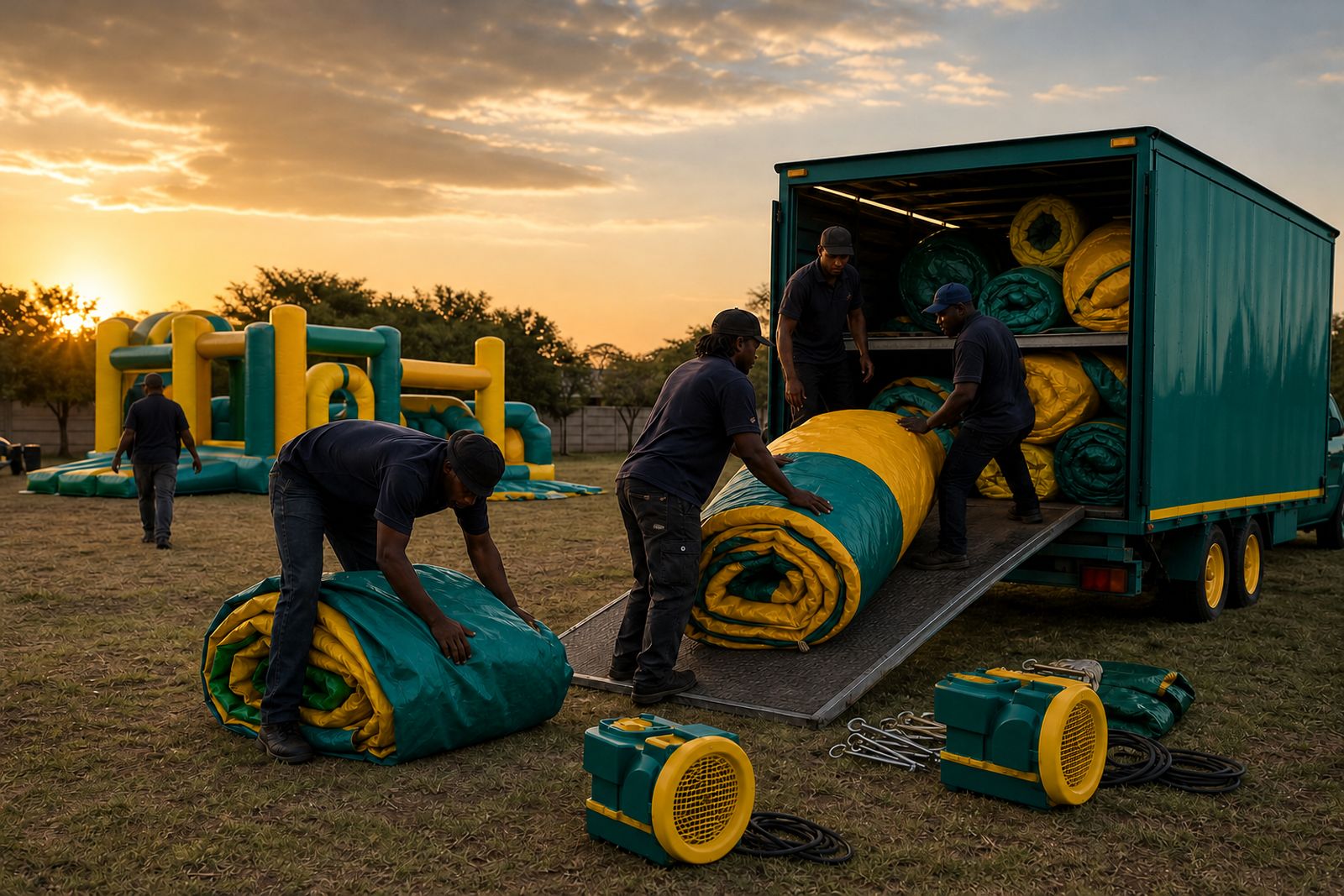
Delivery setup covers the full handover on site, not just a drop off at the gate. The crew brings the booked attraction, the safety mats, blowers, extension leads where needed, anchor gear, queue barriers if required, and the items needed to open the station in a clean working order.
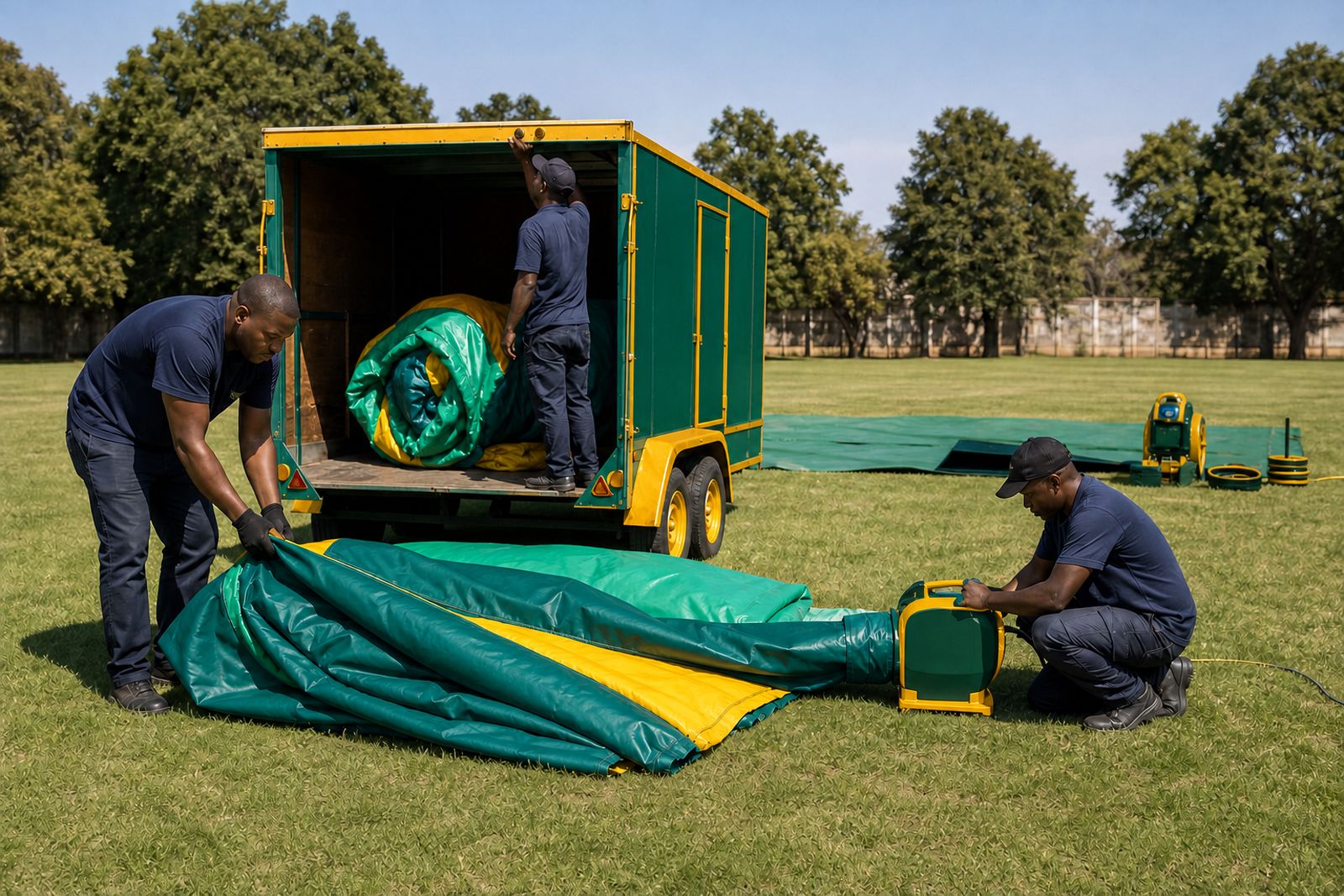
For inflatable units, that usually means unloading, laying out the vinyl, checking the surface, placing mats at the entrance and exit, then inflating to the correct shape before final inspection. Smaller carnival games, arcade cabinets, candy floss carts, popcorn machines, mascots and booth gear are positioned with clear walkways so guests and staff can move around them without clutter. If a site needs a better entrance point or extra spacing, the crew adjusts before the public arrives.
Schools, malls and corporate family days often need more than one item in a row. In those cases the layout is planned so traffic flows without bottlenecks, and the crew keeps the active zones separate from waiting lines and viewing areas.
From gate access to first play
Good setup starts before the van stops. Access routes, parking space, lift requirements, stairs and the nearest point for loading are checked in advance so the team can work without guesswork on arrival. This matters on busy sites in Midrand, Sandton, Pretoria and inner city venues where loading bays and public access can be tight.
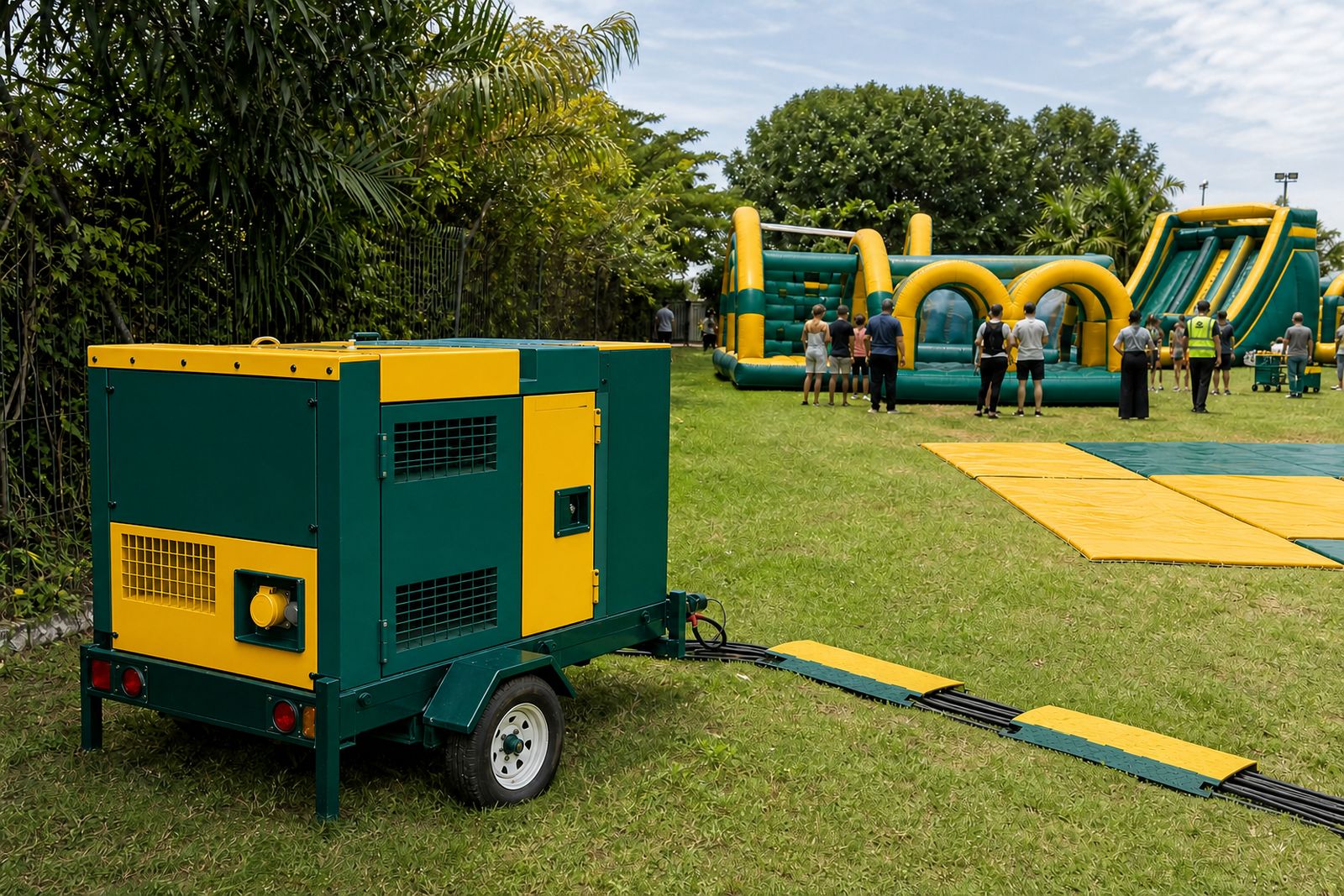
The crew then marks the footprint, places the attraction, secures it and tests the operating side. On inflatable pieces that includes blower placement, air flow checks and anchor points. On electrical items the cable run is kept tidy, dry and away from foot traffic. Where a generator is needed, it is placed for practical distance and safe operation, with fuel and ventilation handled on site.
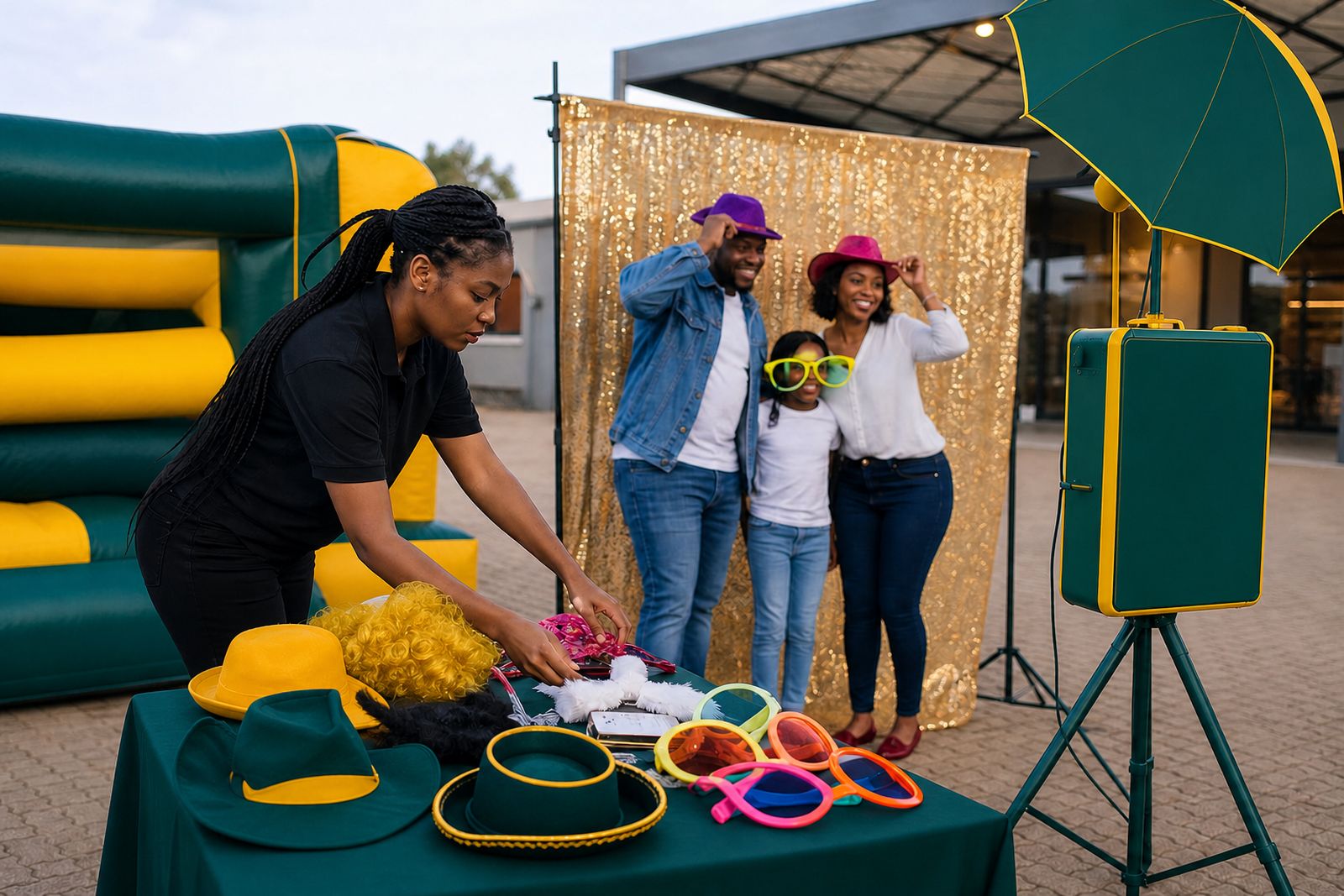
Opening procedures depend on the item. A jumping castle needs inflation and surface inspection. A photo booth needs the camera, lighting and print or digital flow checked. A foam or bubble machine needs a safe test run and a clear play zone. Arcade and retro gaming cabinets are tested for controls, display and coin or play logic where applicable. Nothing is left half ready.
- Clear unloading point marked before arrival
- Inflation and anchoring for suitable inflatable units
- Mat placement at entrances, exits and busy edges
- Power run or generator position set before opening
- Initial test of all moving, lighting or audio elements
Space, height and safety needs on the ground
Each attraction needs its own footprint and overhead clearance. A small jumping castle may fit a modest lawn or paved court, while an obstacle course needs a much longer run and more room around the sides for access and supervision. Height matters too, especially under trees, covered walkways, carports and mall canopies where roof lines and branches can interfere with inflation.
Anchoring and mats are included in the service. On grass the crew uses stakes or equivalent anchor methods suited to the surface. On hard ground, the securing method changes and extra weight or approved tie-off points may be used where appropriate. Mats reduce hard contact at entrances, landing points and other busy edges, and they help keep shoes, dust and moisture under control.
Age and height limits vary by attraction. Some units are made for younger children only, while others suit mixed age groups with supervision. That is why the setup team checks the booked item against the site and the guest profile before opening the attraction to play. If the weather turns windy or wet, the crew follows the wet weather plan and protects the equipment and users first.
- Footprint matched to the available site
- Roof and tree clearance checked before inflation
- Anchoring suited to grass or hard surface
- Safety mats placed at key contact points
- Age and height suitability confirmed on site
Power, water and working noise on event day
Many amusement items rely on mains power or generator supply. Blowers, lighting, cooling fans, booth lights, arcade cabinets and some snack machines all need clean power routing. The crew keeps cables organised and avoids crossovers through public paths, which is especially important at school fairs, mall activations and family days with constant foot traffic.
Foam and bubble machines need careful placement so the play area does not become slippery in the wrong place. Candy floss and popcorn carts need a clean service zone and enough elbow room for the operator and guests. Photo booths need stable power, a level setup and clear space for queuing. Mascots and mobile entertainment pieces also need arrival and changeover space so they can move without disturbing the rest of the site.
When a generator is part of the booking, the setup includes position, cable length and load planning in general terms, with the crew matching the power needs of the hired items to the event layout. For outdoor venues in summer humidity or coastal air, the team allows for weather exposure and keeps electrics protected where practical.
Setup timing, opening order and strike planning
Delivery setup is timed around the event programme, venue access rules and the order in which attractions must open. Some schools want the inflatables ready before learners arrive. Malls may need a staged build before the public floor opens. Corporate family days often need the busiest attractions to go live first, with snack carts and photo booths opening in sequence as the crowd grows.
Strike and collection planning starts at setup, because clear exit routes matter just as much as arrival routes. The crew needs time to deflate, pack, coil cables, collect loose items and remove mats without pushing through guest flow. On larger bookings, the same logic applies to both loading in and loading out.
That timing is shaped by the number of items, site access, ground surface and whether the event is indoors, outdoors or spread across multiple points. For national road shows the planning also covers travel distance, overnight staging where needed and the order of stops across cities such as Johannesburg, Durban, Cape Town and Bloemfontein.
- Setup order follows the event programme
- Opening sequence matched to crowd flow
- Strike begins with clear access routes
- Packing and collection handled in site order
- Multi city work planned around travel distance
Pricing is shaped by the site, the kit and the crew
Pricing for delivery setup depends on the number of attractions, the distance to the venue, the complexity of access and whether extra crew, supervision or power support is needed. A single small inflatable on an open lawn asks for a different setup than a mixed carnival layout with games, snack carts, arcade machines and a photo booth inside a busy public venue.
Venue rules can also affect the price approach. Some sites need a loading permit, extra crew for tight access, or longer set windows because of shared gates and public traffic. Wet weather plans, generator supply and on site supervision are treated as separate planning items when they apply, so the quote reflects the real work rather than a flat guess.
After booking, the setup brief is matched to the attraction list and the venue notes. If the site changes, the crew adjusts the plan around the practical limits of space, power and access. The aim is a clean opening with equipment in place, tested and ready for guests to use.
After the gates open and the day winds down
Aftercare on this service covers the handover after opening and the return to site order later in the day. The crew checks that the attraction is working as expected, that the operating area stays clear, and that any small site issues are noted while the event is running. For items with attendants, the setup team ensures the operator has the right station and access to the equipment.
At the end of the hire, strike and collection reverse the process in a controlled way. Inflatable units are deflated, folded and packed. Machines are switched off, cleaned as required and loaded. Mats, anchor gear and booth items are counted before departure. That close-down stage matters because schools, malls and private venues often need the floor left tidy for normal use.
For repeat dates, the same setup record lets the next event run more cleanly. Measurements, access notes and power points are kept with the hire record so the next delivery can be matched to the same site without extra guesswork.
Key facts
| Delivery scope | Timed delivery, unloading, setup, testing and opening procedures |
|---|---|
| Inflatable footprint | Small castles to larger obstacle courses, sized to the booked site |
| Safety gear | Blowers, anchoring, mats and site separation where needed |
| Power needs | Mains power or generator supply for suitable items and carts |
| Typical crew tasks | Positioning, cable routing, checks, opening support and strike |
| Service areas | Midrand, Gauteng and national bookings across major South African cities |