
What strike and collection covers at the end of your hire
Strike and collection is the controlled close of an event hire job. Our crew removes hired amusements in a planned order, starting with guest-facing items and moving through inflatables, machines, props, queue barriers and small ride components. The aim is to keep foot traffic clear, protect venue finishes and avoid rushed handling near exits, cables or loading bays.
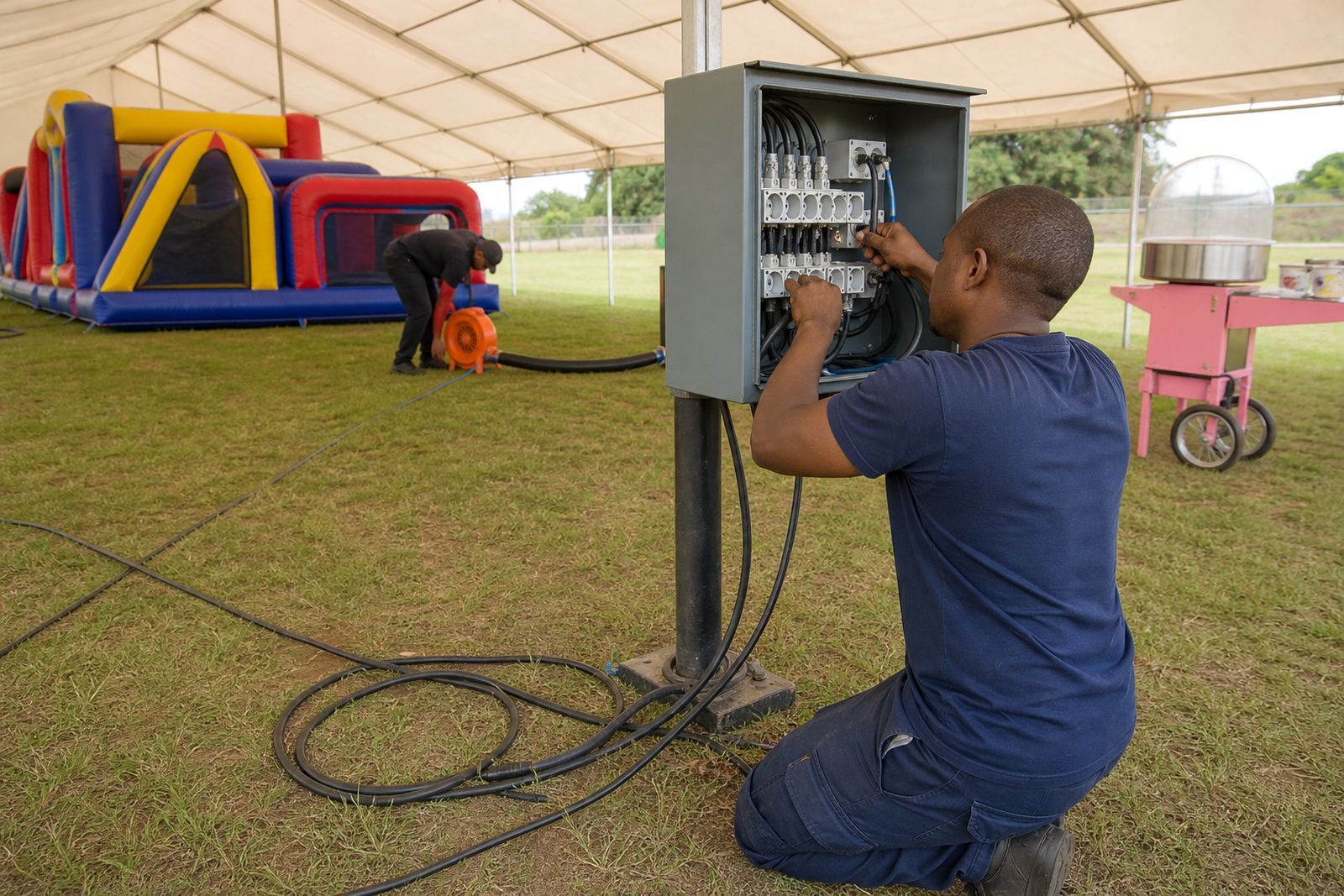
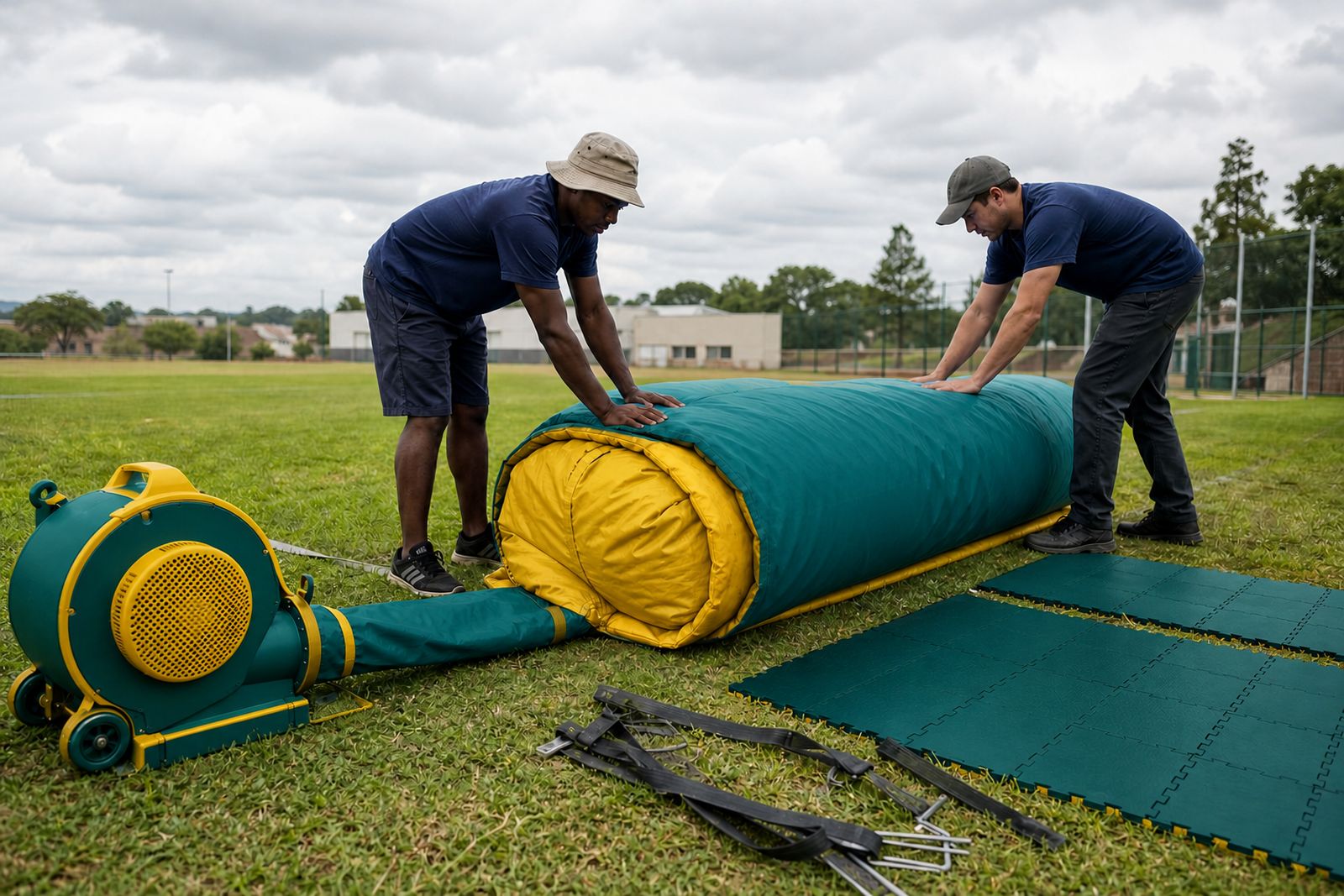
For jumping castles and inflatable obstacle courses, strike begins with power isolation, blower shutdown and a careful deflation sequence. Anchors, sandbags, pegs or ballast points are removed once the unit is soft and safe to fold. Safety mats, loose signage, extension leads and entrance pieces are checked off, bundled and loaded with the unit so nothing is left behind at the site.
- Deflation and folding of inflatables
- Removal of mats, anchors and cable runs
- Pack-down of games, carts and photo booth parts
- Clearance of debris, tape and light packaging
How the crew works during the close of the event
Every strike is managed in stages so the venue stays orderly while guests are still moving through the final part of the programme. Where needed, the crew works around speeches, prize giving or a staged exit. In schools, malls and corporate family days, that means keeping one route open for guests and another for equipment out of the site.
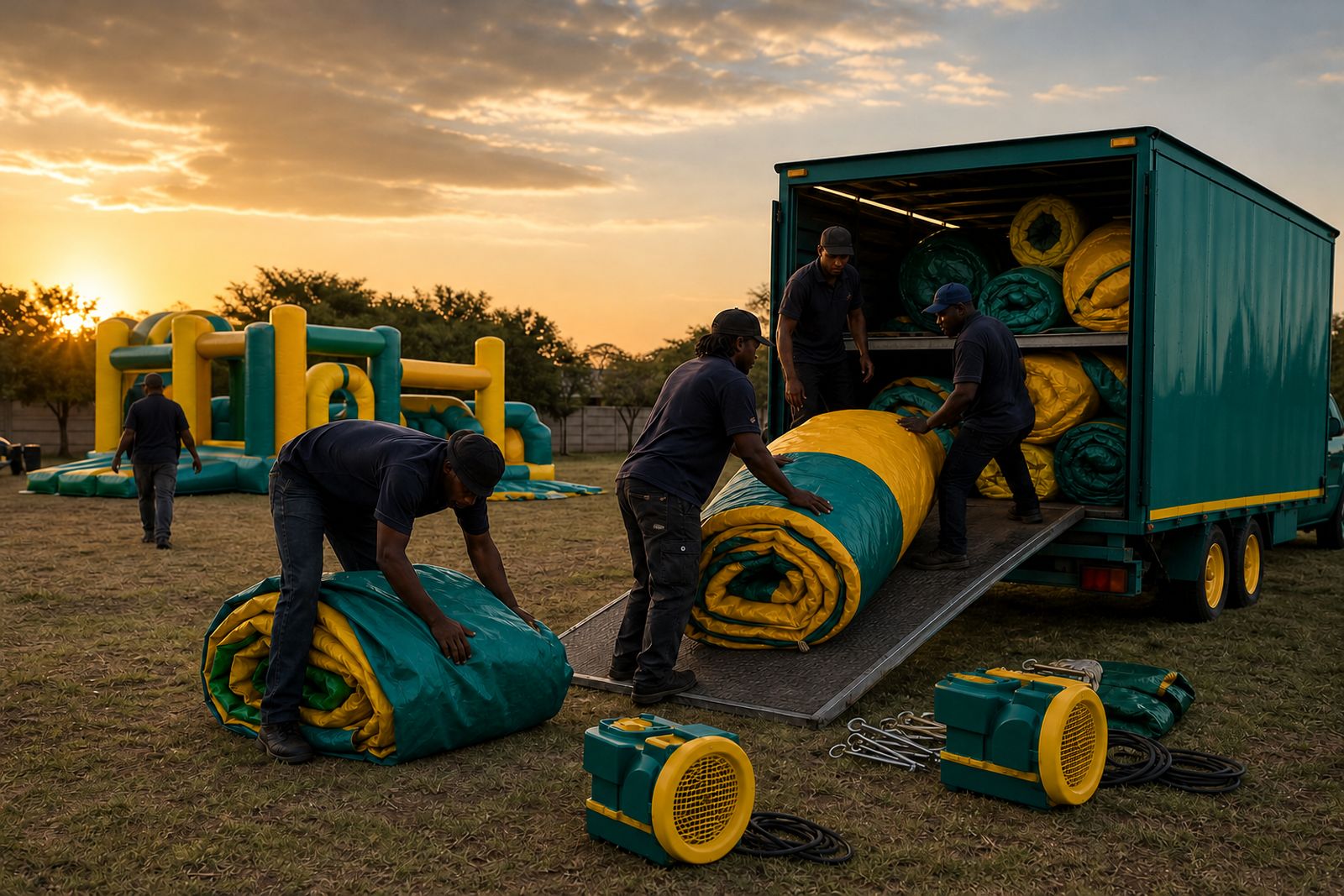
Trained crew members lead the shutdown of each item, then hand parts through a loading line. Arcade cabinets are unplugged, checked for loose accessories and wrapped for transport. Candy floss carts, popcorn machines and smaller service units are emptied, cleaned down and secured so sticky residue does not travel into the vehicle. Foam and bubble machines are drained, wiped and packed with hoses and fittings kept together.
- Power-down and cable recovery
- Disassembly of carts, booths and game stalls
- Load sequencing for easier venue access
- Final sweep of the hire zone before departure
Timing, access and the space we need for collection
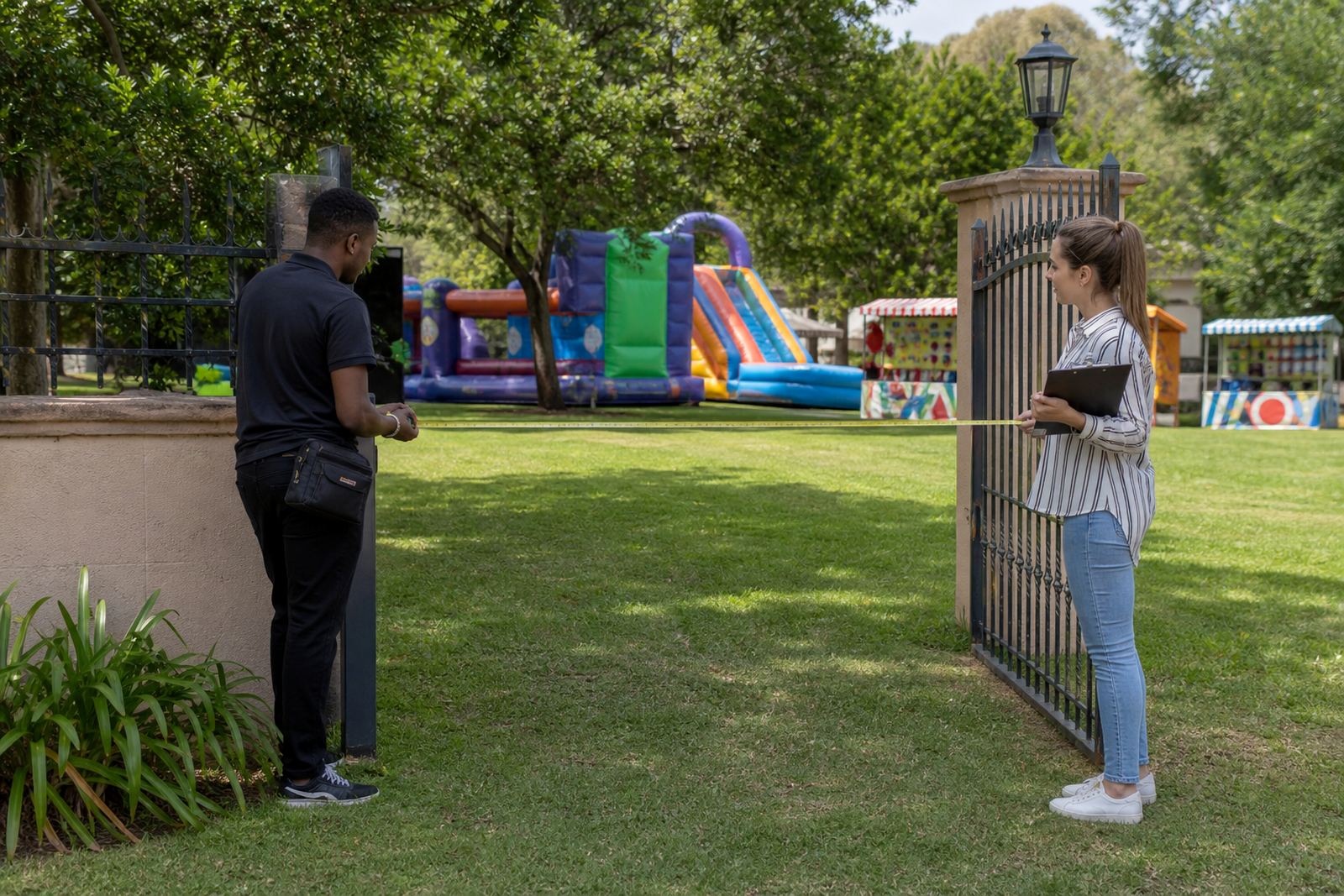
Strike time depends on the size of the hire list, the number of vehicles on site and how easy it is to reach the setup area. A single castle on open ground is different from a full fairground mix with gaming units, snack carts and a photo booth in a shopping centre forecourt. The crew needs space to move folded stock, trays, signs and accessories without blocking guests or venue staff.
For a medium inflatable, allow enough clear ground for a folded bundle, the blower and the safety mat stack. Larger obstacle courses need extra room because side panels, lane sections and entrance ramps are handled as separate pieces. If the site is tight, we plan a staggered exit so the last part of the attraction is not boxed in by tables, marquees or parked cars.
At indoor venues and paved outdoor sites, the collection route should stay open to the loading point. In wetter weather, mats and vinyl surfaces may need extra wipe-down before folding. That keeps water and grit from being trapped inside the bundle during transport, which matters on long road moves between Gauteng, Durban, Cape Town or Bloemfontein.
What we remove and how different items are packed
Not every amusement packs the same way, and our team treats each category on its own terms. Inflatable items are deflated, rolled or folded, then strapped for loading. Carnival games are separated into frames, counters and loose props. Photo booth setups are broken down into stands, backdrops, lights and camera housing. Mascot costumes are bagged and kept dry so the fabric and head pieces do not take on moisture or smell after a wet day.
Smaller ride items and novelty units are checked for moving parts before they leave the site. Any coins, tokens, batteries or accessories supplied with a game are counted against the handover list. Where a generator was used, fuel levels, cable condition and load points are checked before departure. That attention to the close-out matters when the hire list is spread across a school field, a mall court or a company family day lawn.
- Inflatables: deflate, fold, strap and load
- Games: separate frames, signs and loose pieces
- Booths: pack lights, camera parts and backdrops
- Snack carts: empty, clean and secure fittings
Pricing approach for strike and collection jobs
Pricing is usually shaped by the mix of items, the venue layout, access distance, event end time and whether the collection is local or part of a national road move. A single inflatable at a Midrand school field is not billed the same way as a multi-item close-out from a Cape Town corporate family day. The number of crew members needed also affects the plan, especially where large units, ride pieces or several food carts must be handled together.
We quote for the full close-down task, not just the lift-out. That can include controlled deflation, packing materials, labour, vehicle loading and final area clearing. If the event has a wet-weather adjustment, a late programme change or a staged handover with venue security, those details are built into the scope so there are no loose assumptions on the day.
A deposit may form part of the booking process, with the balance linked to the agreed hire scope and collection plan. When the schedule changes, the crew lead adjusts the strike order to keep the operation practical and the venue safe.
Aftercare, handover notes and the next booking step
After collection, the team checks that all hired items are accounted for and that nothing small has been left at the site. If a venue manager needs a handover note for lost items, access concerns or a loading issue, that can be captured as part of the close-out record. For repeat seasonal events, schools and malls often keep the same site layout notes on file so the next setup and strike are easier to plan.
That lets us plan crew numbers, vehicle space and packing order around the event rather than treating strike as an afterthought. If the hire includes food carts, foam units, gaming machines or a photo booth, it helps to mention what was used and where it stood on site.
- Venue handback with areas left clear
- Item counts checked against the hire list
- Site notes captured for future events
- Packing order matched to the hire mix
Key facts
| Service area | Midrand, Gauteng and national event routes |
|---|---|
| Typical hire types | Inflatables, games, arcade units, carts, booths and small rides |
| Collection method | Crew-led deflation, disassembly, loading and venue clear-out |
| Power considerations | Blowers, lights and machines isolated before pack-down |
| Space needed | Clear access for folded items, equipment and loading vehicles |
| Close-out options | Standard strike, wet-weather pack-down and staged venue handover |