
What changes before the first blower starts
A jumping castle that sits neatly on a lawn can behave very differently on a paved forecourt or a polished hall floor. The surface decides how the unit is anchored, where safety mats go, how the blower is secured and whether the crew can use pegs, sandbags or a weighted frame system.
Grass usually gives the easiest footing for outdoor amusements, but the crew still checks for soft patches, sprinkler heads, rocks and low branches. Paving and tar need a clean level area, because any slope or ridge changes the way children move through an entrance or queue. Indoor floors bring another layer of care, especially where tile, wood or epoxy finishes can mark easily if the base is not protected.
The same setup can be safe on all four surfaces, but the method changes. That is why the site check matters before a school fair in Midrand, a mall activation in Sandton or a birthday in Pretoria East.
Grass: the friendliest surface, with a few catches
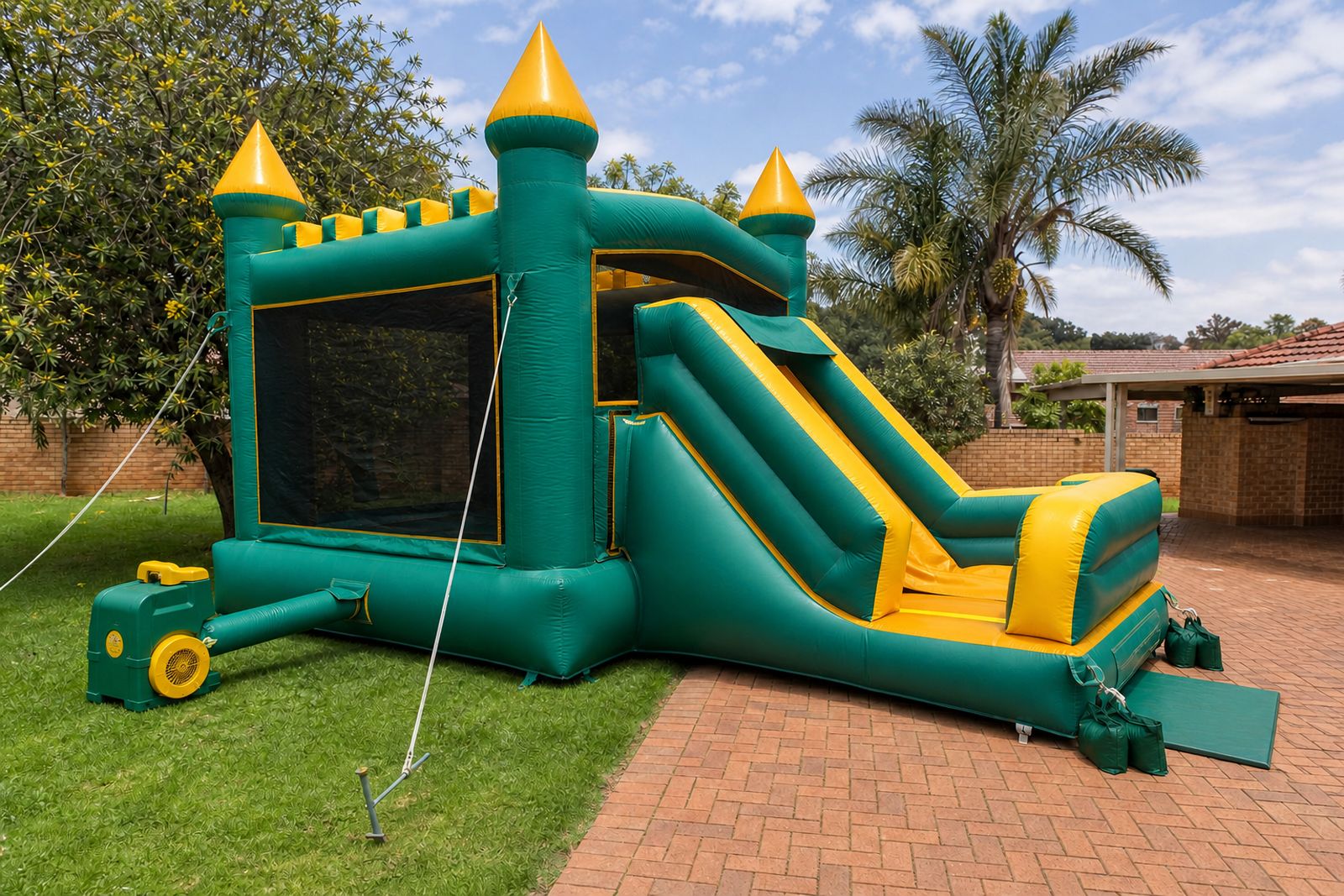
Grass is often the most forgiving surface for inflatable hire. Pegs hold well in firm ground and the mats sit naturally at the entrance, exit and around any obstacle course. On a school field or sports oval, crews can usually work with a larger footprint and leave neat approach lanes for children and teachers.
The catch is moisture and softness. After rain, wet grass can turn slick underfoot and the base can sink unevenly. In winter, compacted turf at a sports ground may look firm but still need extra padding near the landing zone. Crews also watch for underground irrigation lines and ask where vehicles may park for loading.
For grass setups, the practical checks tend to be:
- Enough clear space for the full footprint, plus a buffer around the unit
- Firm anchoring points for pegs or weighted tie-downs
- Dry access for trolleys, boxes and snack carts
- Shade or cover if the programme runs through a hot Gauteng afternoon
Where the lawn is uneven, the team may move the unit a little to find a flatter patch rather than forcing the layout into place.
Paving and tar: neat, fast and not forgiving
Paving and tar are common at malls, office parks and municipal venues. They make for fast trolley movement and clean queue lines, but they need more planning than grass. Anchoring changes immediately, because pegs are usually out and the crew relies on ballast, sandbags or fixed tie points instead.
Heat can matter too. Dark tar in Durban or Johannesburg can warm up quickly, so crews watch where children will wait and where a photo booth or candy floss cart will stand. The surface itself is not the only issue, because sharp edges at drainage covers, ramps and kerbs can affect both safety and the speed of setup.
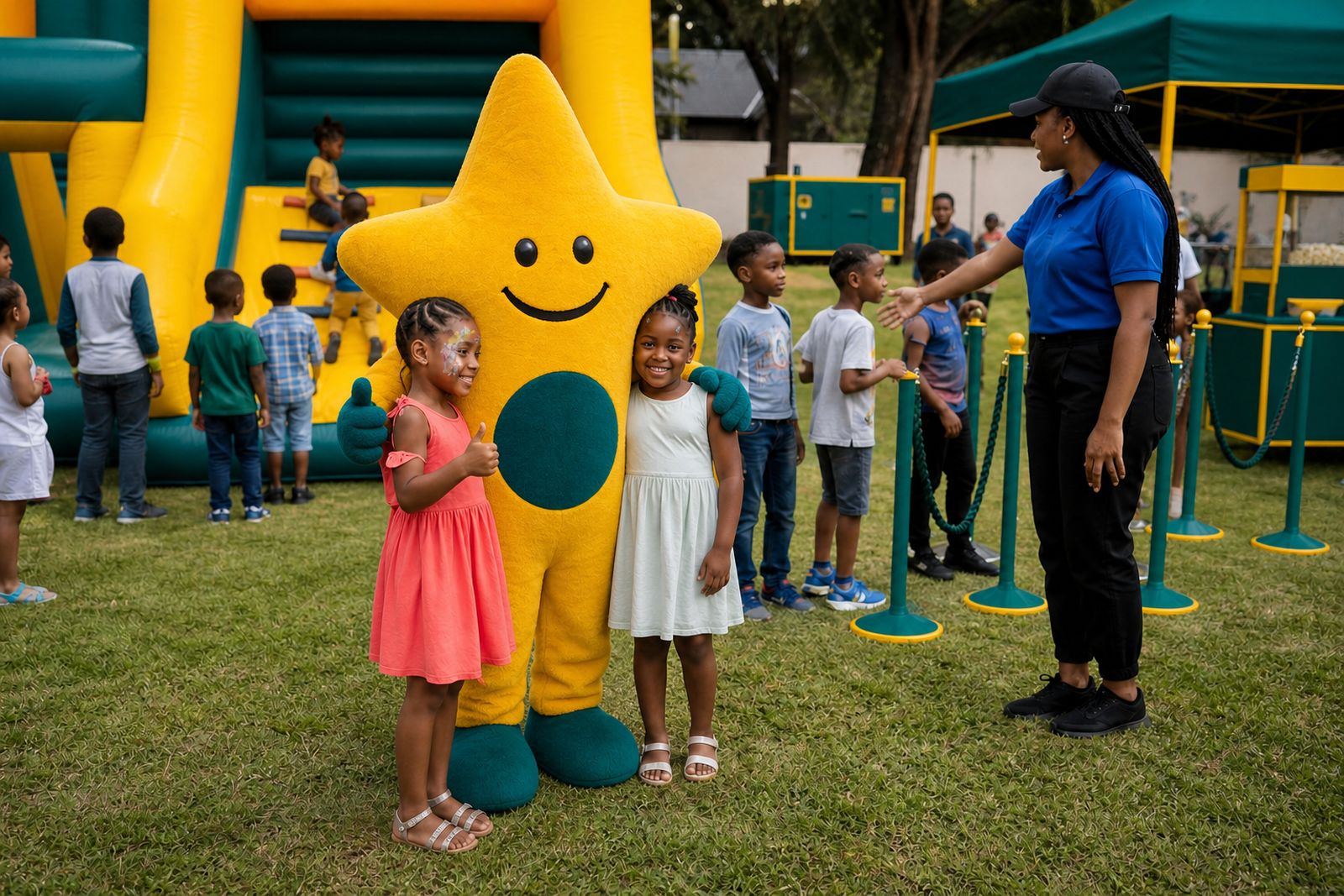
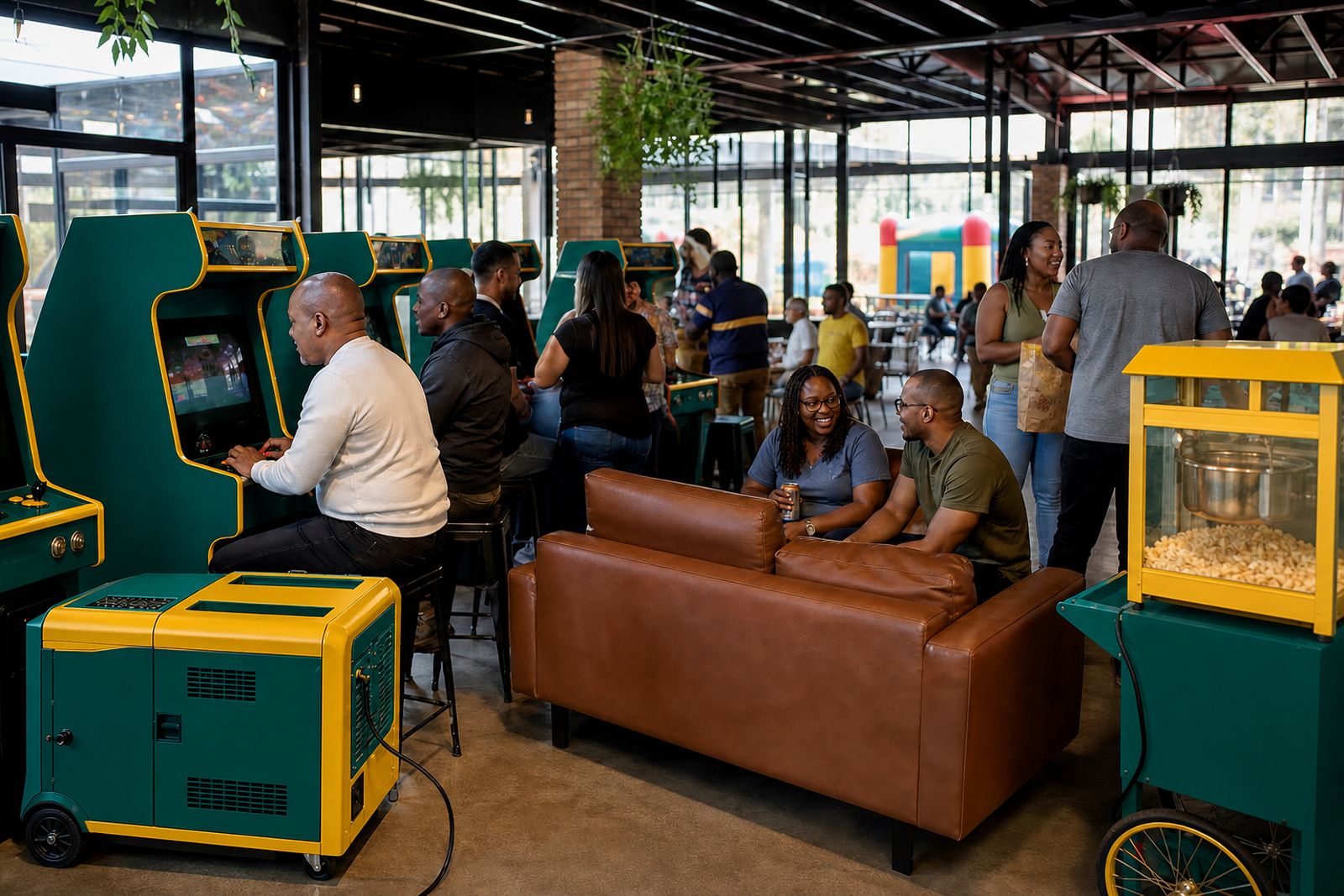
Paving works well for carnival games, arcade cabinets, mascots and small snack stations when there is a clean level pad nearby. For larger inflatables, the team checks the slope, the turning space for trailers and the route from the vehicle to the marked area. A site that looks open from a distance can still be awkward if there is a low wall, planter or parking bollard in the wrong place.
Indoor floors need care, not guesswork
Indoor events in halls, gyms, multipurpose rooms and atriums bring a different set of rules. The floor finish can mark if mats are too thin, and the ceiling height may rule out taller units even before the crew starts unpacking. A foam machine, bubble machine or photo booth can suit an indoor space well, but a full inflatable obstacle run may need more headroom and more room to ventilate the blower outlet.
Power also matters indoors. Some attractions need a stable mains point close by, while others only need a small load for lights, sound or a printer. If the room has limited sockets, the crew plans cable paths so they do not cross guest lanes or create a trip point. Where the venue has strict rules, the team may also need to fit the setup around fire exits, emergency signage and the venue manager’s access points.
For school halls and corporate foyers, the safest approach is usually to measure twice and leave clear edges around every active zone. That gives room for supervision, queue control and easy strike at the end of the event.
How the crew handles mats, power and anchor points
A solid setup calls for less fuss and more attention to detail. The team lays safety mats where children enter and exit, checks blower positions so they do not block movement, and keeps cables away from wet grass or busy walkways. When an attraction sits on paving or tar, the anchor system changes; when it sits indoors, the floor protection changes as well.
For mixed programmes, one site might use several methods at once. A jumping castle may sit on the lawn, a popcorn cart may stand on paving near the queue, and a photo booth may go inside a foyer with controlled lighting. That mix works only when the footprint for each item is measured separately, not guessed from the car park view.
- Blowers need open airflow and a sensible cable route
- Inflatables need clear height, width and landing space
- Carts and arcade units need level placement for steady use
- Queue barriers help when guests arrive in bursts
- Weather covers or alternate placement may be needed if the forecast shifts
A Midrand school field, a mall forecourt and a hall in one weekend
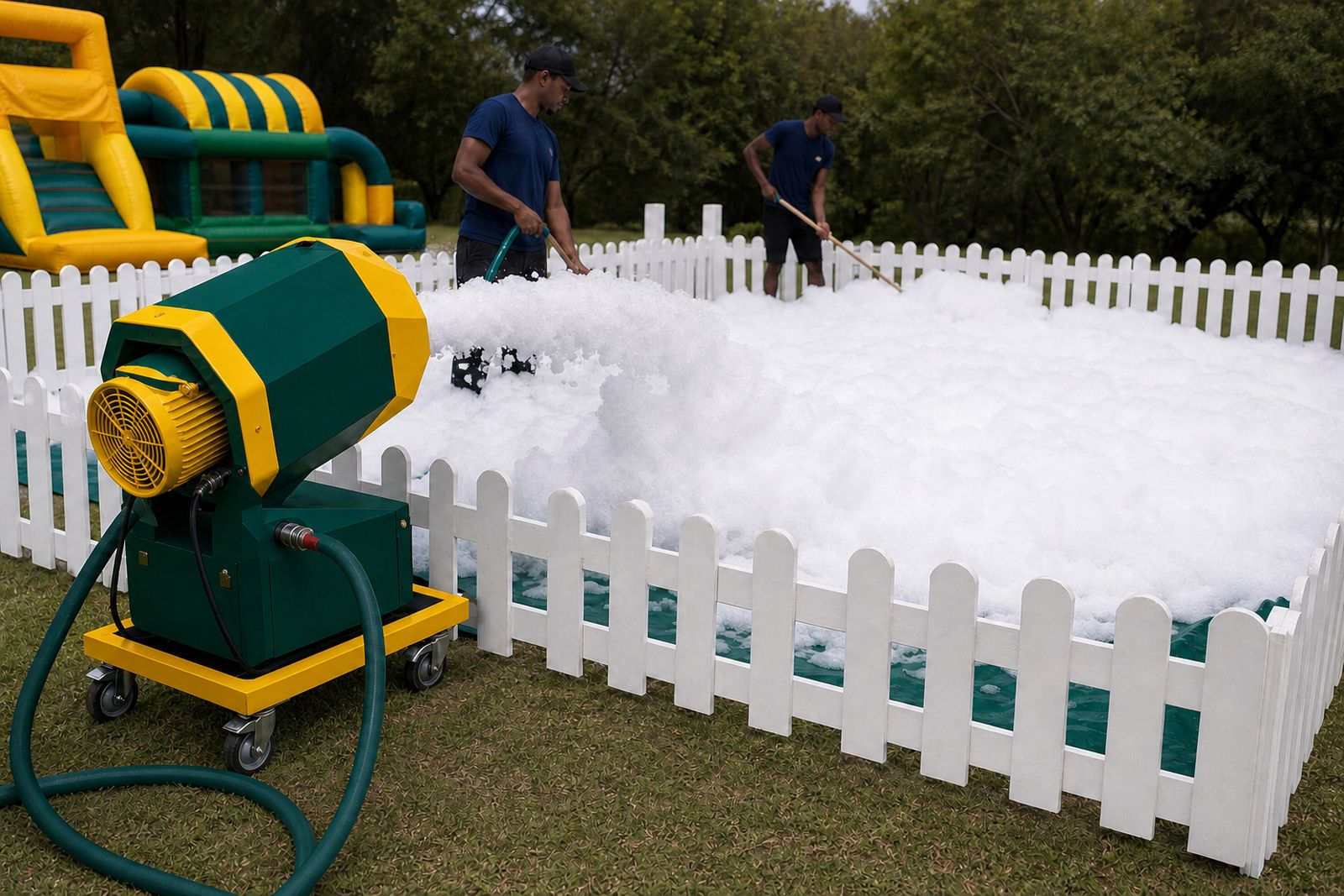
A practical example helps. A Midrand school may book a jumping castle on grass for the sports field, with a foam machine and candy floss cart close by. The field gives space, but the crew still checks drainage after rain and keeps an eye on wet shoes during arrivals. On the same weekend, a mall activation on paving in Johannesburg may use carnival games, a retro gaming cabinet and mascots, with weighted anchoring and tidy queue lines because pegs are not an option.
Then there is the indoor side. A birthday in Pretoria could use a photo booth and popcorn cart in a function room, with floor mats under every item and a cable path that stays out of the way of guests. The right layout depends on the surface, the room height and how many children or adults will move through the space at the same time.
That is why the same hire list can look different from one venue to the next. The ground changes the plan, and the plan changes how the day feels.
What to send with the site details
When the surface is grass, paving, tar or an indoor floor, the useful details are simple but specific. Measurements, surface type, nearest access point and whether the area is level all help the crew plan the correct setup. If a venue has height limits, loading rules or wet weather restrictions, those matter too.
For a larger programme, the team will also want to know if guests will be spread across several zones or gathered in one place. That affects queue management, supervision points and where snack carts or ride attendants should stand. The more accurate the site notes, the easier it is to match the right equipment to the ground under it.
A clean site note saves a lot of guesswork when the surface is doing half the planning.