
What a foam zone needs before the first bubble lands
A foam area is about more than the machine itself. The ground beneath it matters just as much, because foam will always spread, settle and run toward the lowest point. A level lawn, paved court or hard floor with a sensible drain path is usually easier to manage than a dip where water sits for hours. On school grounds and at mall events, the site should also leave space for a safe entry point, a clear exit and a dry strip where children can pause before going back in.
Most setups work best when the zone is laid out away from power boxes, loose décor and anything that can be made slippery. If the event is outdoors, grass that can take water is a practical choice, though very soft soil can turn muddy fast after a long run time. Indoors, the floor needs protective covering and a plan for cleanup, because foam residue can make tiles and polished concrete slick if it is left to sit. In many cases the crew also checks where the nearest tap, drain or wash-down point is, so the area can be cleared properly after use.
- Flat ground helps the foam spread evenly.
- Drainage matters more than people expect at first glance.
- Dry holding space keeps the entrance from getting crowded.
- Nearby power or water points should not block foot traffic.
Clothing that works in foam, not against it
Foam play is happiest when children are dressed for getting damp. Light T-shirts, shorts, leggings and quick-dry clothing are far easier to manage than heavy cotton or long skirts that hold water. Closed shoes with grip are usually safer than sandals, because wet floors can be slippery and loose shoes are easily lost in the bubble mass. It is also worth sending along a towel and a dry change of clothes if the children will move on to another activity afterwards.
For school groups and birthday parties, age matters as much as the outfit. Smaller children often need a calmer corner and closer supervision, while older children tend to want more height in the foam and more movement through the play area. A good crew will separate age groups where needed, keep a clear view of the entire zone and stop the crowd from pushing toward the machine. That is not over-cautious, it is what keeps the session moving without panic or slips.
- Quick-dry clothes work better than heavy fabrics.
- Closed shoes reduce slipping on wet surfaces.
- A dry towel and spare clothing make the day easier.
- Age grouping helps younger children feel less overwhelmed.
How crews manage the foam, the floor and the flow
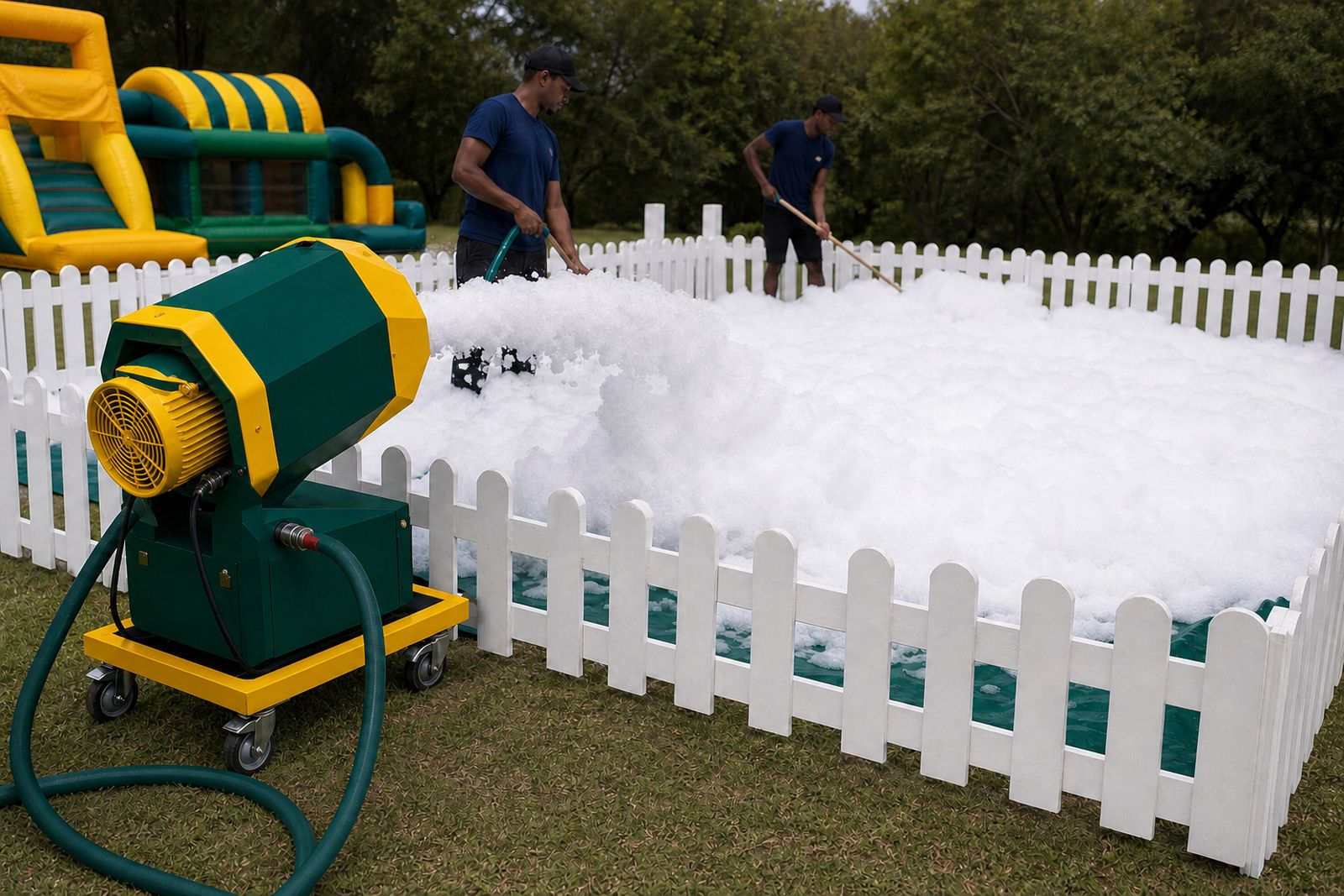
The setup needs more than a foam machine. Crews also manage the hose route, the power supply, the output rate and the way children enter and leave the play zone. If the machine is fed too hard, the area can fill faster than staff can guide the children. If the output is too low, the play looks thin and uneven. Getting the balance right means the foam stays lively without turning the whole space into a slippery flood.
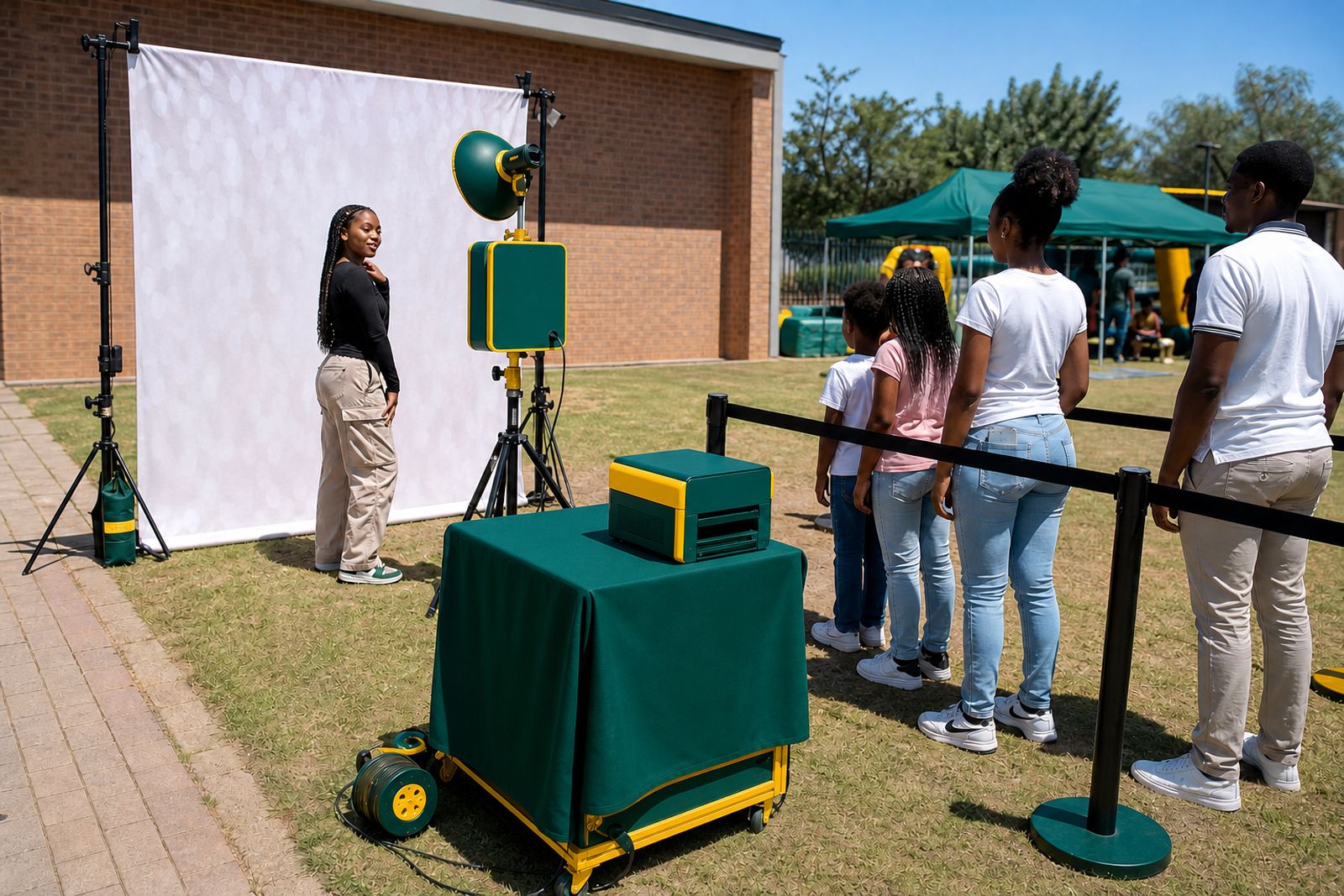
Setup usually starts with anchoring, safety mats and a clear boundary. Where the event site allows it, the team marks a play ring or lane so children know where the active area begins and ends. Supervision then stays constant while the machine runs. At larger events, especially school fun days or mall activations, the crew may also manage a queue so children take turns without pushing forward. That kind of control may seem plain, but it stops the first ten minutes from becoming a rush.
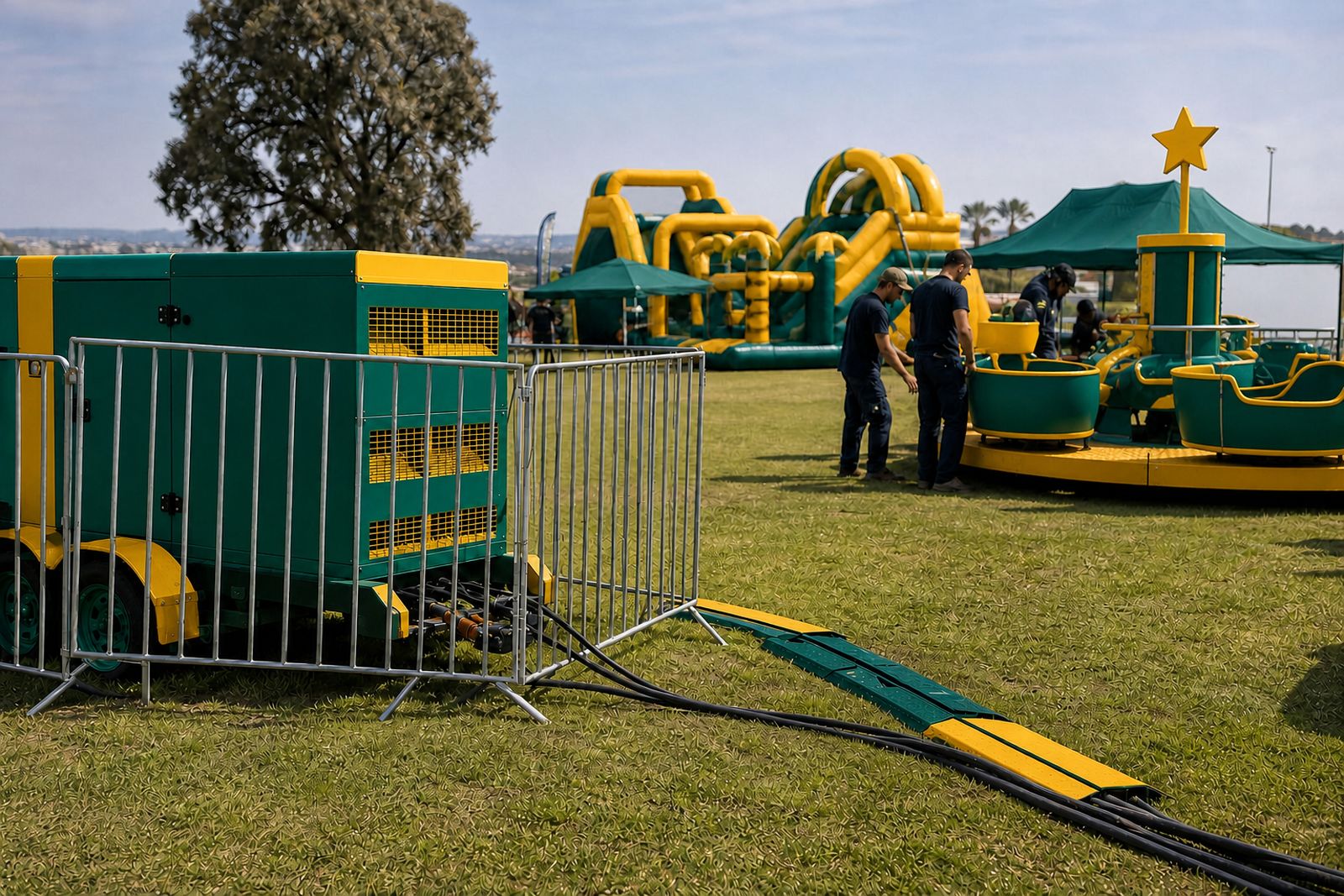
Power needs vary by machine size and by how long the foam is expected to run. Some venues can take the load directly, while others work better with a generator placed in a safe, screened position. A practical crew checks cable runs, keeps connectors dry and keeps any backup kit out of the walking line. If weather changes or wind starts carrying foam sideways, the crew may alter the direction of the output or pause the session for a bit, which is often the safer call.
A Midrand setup that shows the small details
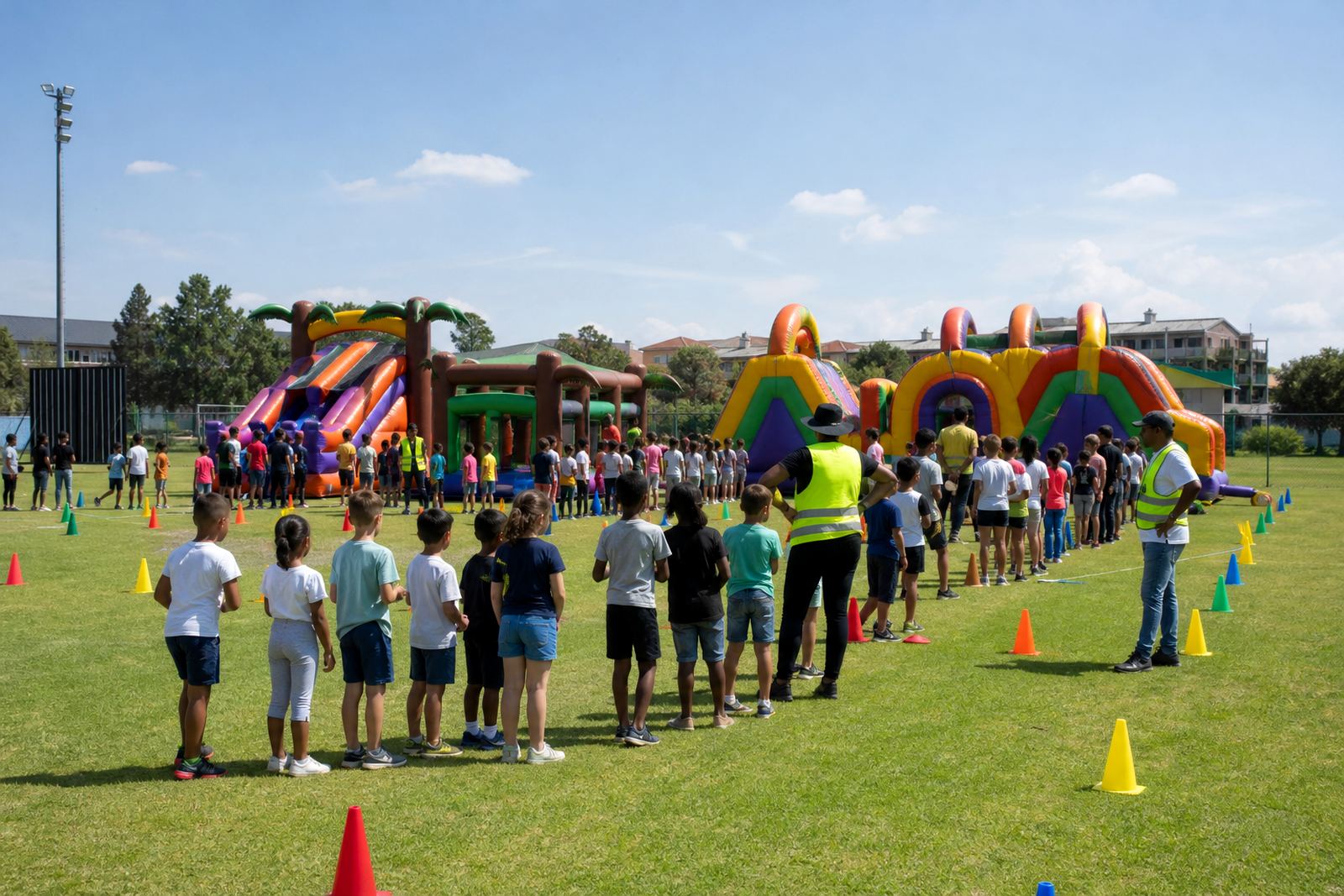
On a Midrand school fun day, a foam zone may sit beside jumping castles, a popcorn cart and a simple seating patch for parents. The foam area then becomes one part of a wider event, not the whole event. That matters, because children often move between activities in bursts. A tidy path from one zone to the next keeps wet footprints off the rest of the site, and it gives staff a way to move children out without crossing snack tables or queue lines.
In that kind of setting, the crew will usually work to the site’s layout rather than force a standard pattern on every venue. A sports field gives more room for runoff, while a paved courtyard needs stricter control and more careful cleanup. If the surface slopes toward a doorway or corridor, extra mats and boundary checks become important. The best foam sessions are the ones where the layout feels ordinary to the organisers and easy to read for the children, not crowded with equipment or unclear routes.
For corporate family days, the same logic applies, though the children may range more widely in age. A smaller play pocket for toddlers and a more active zone for older children often makes the whole area easier to supervise. The adults can see where children are meant to go, and the crew can keep an eye on the safest movement patterns without calling the whole thing off for tiny mistakes.
Weather, washing down and the bits people forget
Foam looks carefree from the edge of the zone, but the clean-up side still needs a plan. The crew should know where water can run, where the floor can be rinsed and where wet mats can dry without blocking the next activity. On grass, the foam can usually settle into the lawn with less fuss. On smooth paving, it can collect along edges and in low points, so a squeegee, hose and clear runoff line make a real difference. If the venue has a strict clean-up rule, that should be checked before the event begins, not after the last child leaves.
Weather also changes how the session feels. Light wind can carry foam beyond the play boundary and make the zone messy. Strong rain can turn a good site into a slippery one very fast. When the forecast is unreliable, a backup plan matters more than optimism. Covered areas, alternate ground and a shorter run window can save the day, especially for schools and malls that need the space to look tidy for the next group of users.
- Check drainage so foam and rinse water do not pool.
- Keep walkways outside the play zone dry where possible.
- Plan for wind, rain and surface changes before the first run.
- Make sure cleanup access is wide enough for crew movement.
Keeping the fun controlled from first burst to pack-down
Good foam play is not about making the biggest cloud possible. It is about keeping the area lively enough for children to enjoy, while still leaving room for supervision, footing and a clean exit. That is why trained crews matter. They watch the zone, keep the machine working at a sensible rate and step in when the crowd starts getting too close to the source. They also manage the strike and collection side, which is often the part that organisers least want to think about after a long event day.
Amused works from Midrand across Gauteng and on national road shows, with foam play often booked alongside other party hire items for birthdays, schools and family days. The team handles delivery, setup, supervision and collection, with the layout matched to the venue rather than squeezed into it. Thabo Jantjies leads the business, with Anele Ebrahim on operations, Johan Hlongwane on fleet and logistics, Naledi Seabi on bookings, Yusuf Masilela on safety and crew training, and Candice Zungu on client service. For organisers, that means the same event can be planned around the foam zone, the snack cart, the games and the rest of the day without guesswork.