
1. Send the event facts that shape the quote
Share the date, venue name, town, guest age group, expected numbers and the type of amusements you have in mind. A school fun day in Pretoria needs a different layout from a birthday in Sandton or a mall activation in Durban, so the more detail you give, the easier it is to map the job properly.
It helps to include notes about indoor or outdoor space, whether the surface is grass, paving or a hall floor, and whether vehicles can reach the drop off point. If the event has a programme, send the times for arrival, setup, opening, peak use and strike. That gives us a full picture before equipment is reserved.
- Date and venue location
- Guest ages and expected numbers
- Preferred amusements or activity mix
- Access notes for trucks, gates and stairs
- Any rules from the school, mall or estate
2. We match the hire list to the space on site
Space matters with almost every item. A small jumping castle may fit neatly into a courtyard, while an obstacle course needs a much wider run area, clear side clearance and a safe landing zone. Carnival stalls need enough room for queues, and photo booths work best where people can step in and out without blocking foot traffic.
We also look at height, access and ground conditions. Low tree branches, sloping grass, wet paving and tight loading areas can affect the final layout. If the event is at a school in Bloemfontein or a corporate family day in Midrand, the plan may include mats, anchoring points and a buffer around moving equipment. The aim is to keep the footprint sensible and the movement around it easy.
- Inflatables need clear ground and safe anchor points
- Stalls and arcade cabinets need level placement
- Photo booths need a dry, sheltered position where possible
- Foam and bubble equipment needs a suitable spill area
- Small rides need controlled entry and exit paths
3. Power, water and weather are part of the booking
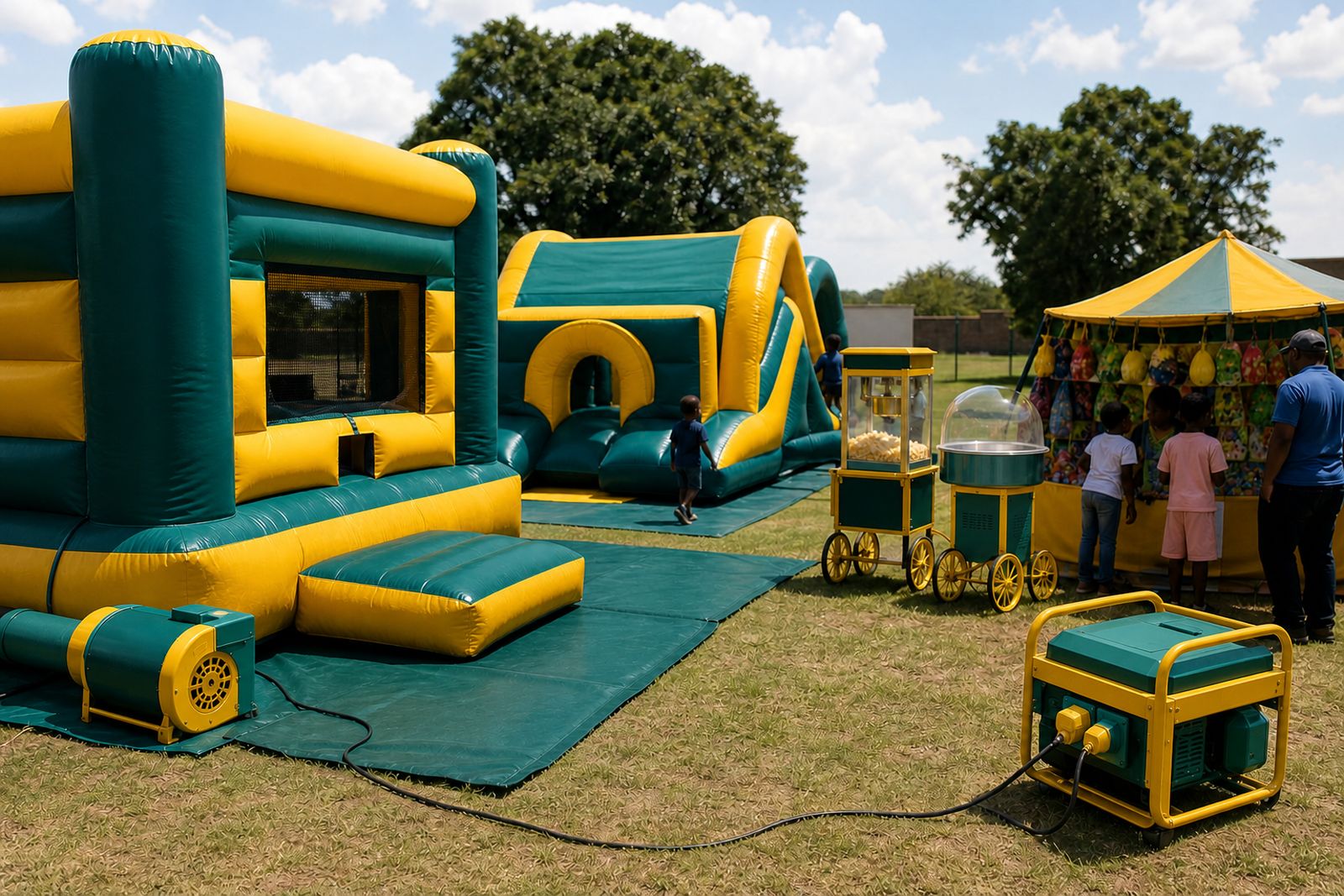
Many amusements use blowers, lights, motors or warming units, so power planning comes early in the process. Some setups need household power, while larger combinations may need generator supply. We also check cable routes, breaker access and where cords can be kept away from queue lines and wet areas.
Weather is another practical layer. Wind, rain and heat all affect how a job is run. In windy conditions, inflatables must be anchored correctly and may need adjusted operation. For wet weather, we plan whether the activity can move under cover or whether collection, delay or reworking the layout is the safer option. Where snacks are involved, such as candy floss or popcorn carts, the setup has to stay clean and dry enough for service.
- Power needs are checked for each machine or ride
- Generator supply can be arranged where needed
- Wet weather plans are set before the event day
- Queue control is planned around safe cable routes
4. Dates get held once the booking is confirmed
When the mix of equipment is agreed, the booking is held against the date and the event details are locked in. That stage usually includes the selected amusements, the venue, the planned time window and any special site notes. Schools and malls often need extra coordination, while birthdays may only need a single delivery window and a simpler setup.
A deposit is normally part of the process to secure the reservation. The booking file then stays tied to the agreed equipment and site plan, so the crew arrives with the right items, mats, blowers, signage, attendant notes and collection list. If the event changes after booking, such as a guest count change or a revised venue layout, those details are added to the plan before the truck leaves the base.
- Equipment is reserved for the confirmed date
- Deposit and booking terms are handled up front
- Venue notes stay attached to the job file
- Any later changes are recorded before dispatch
5. Setup day covers delivery, anchoring and testing
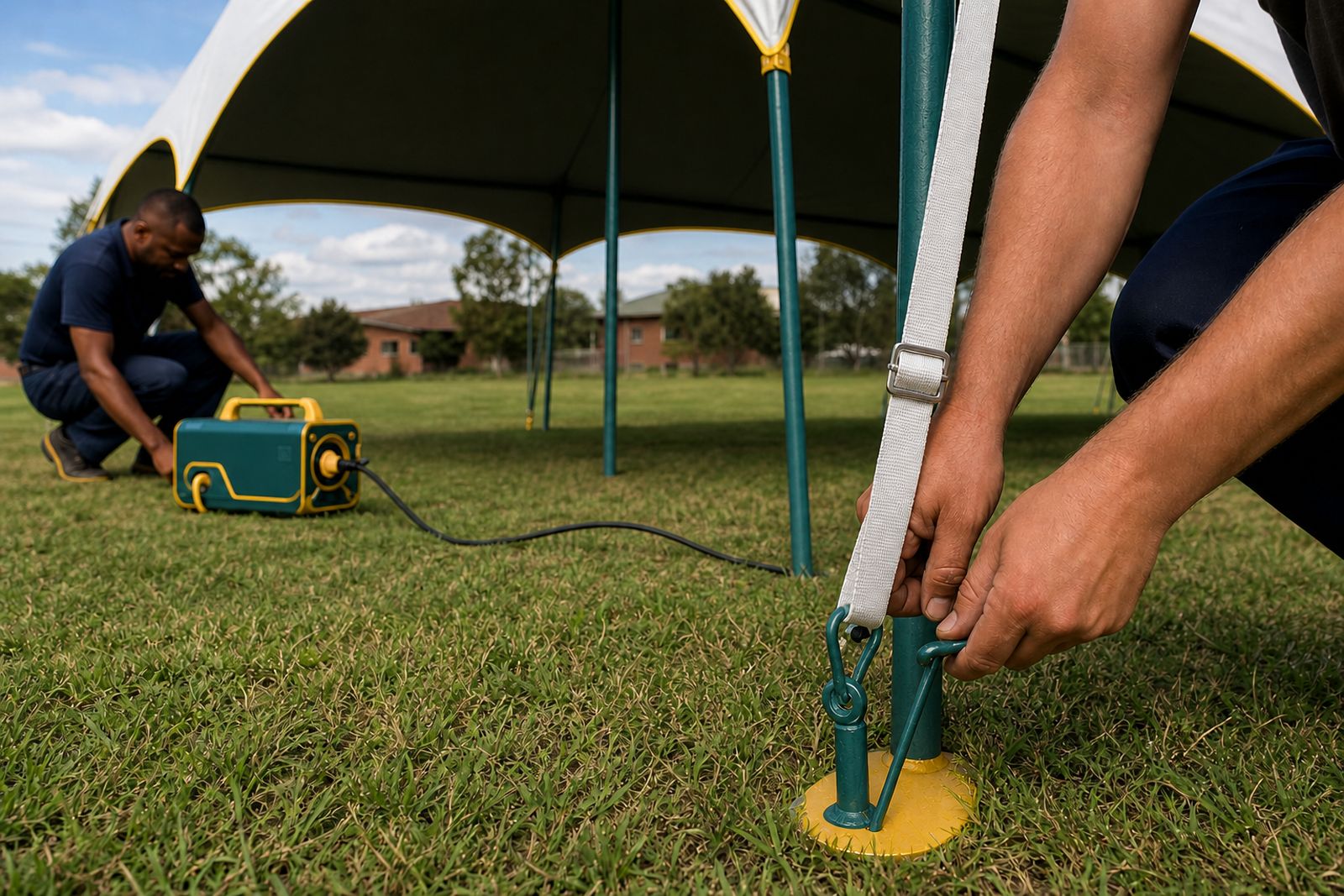
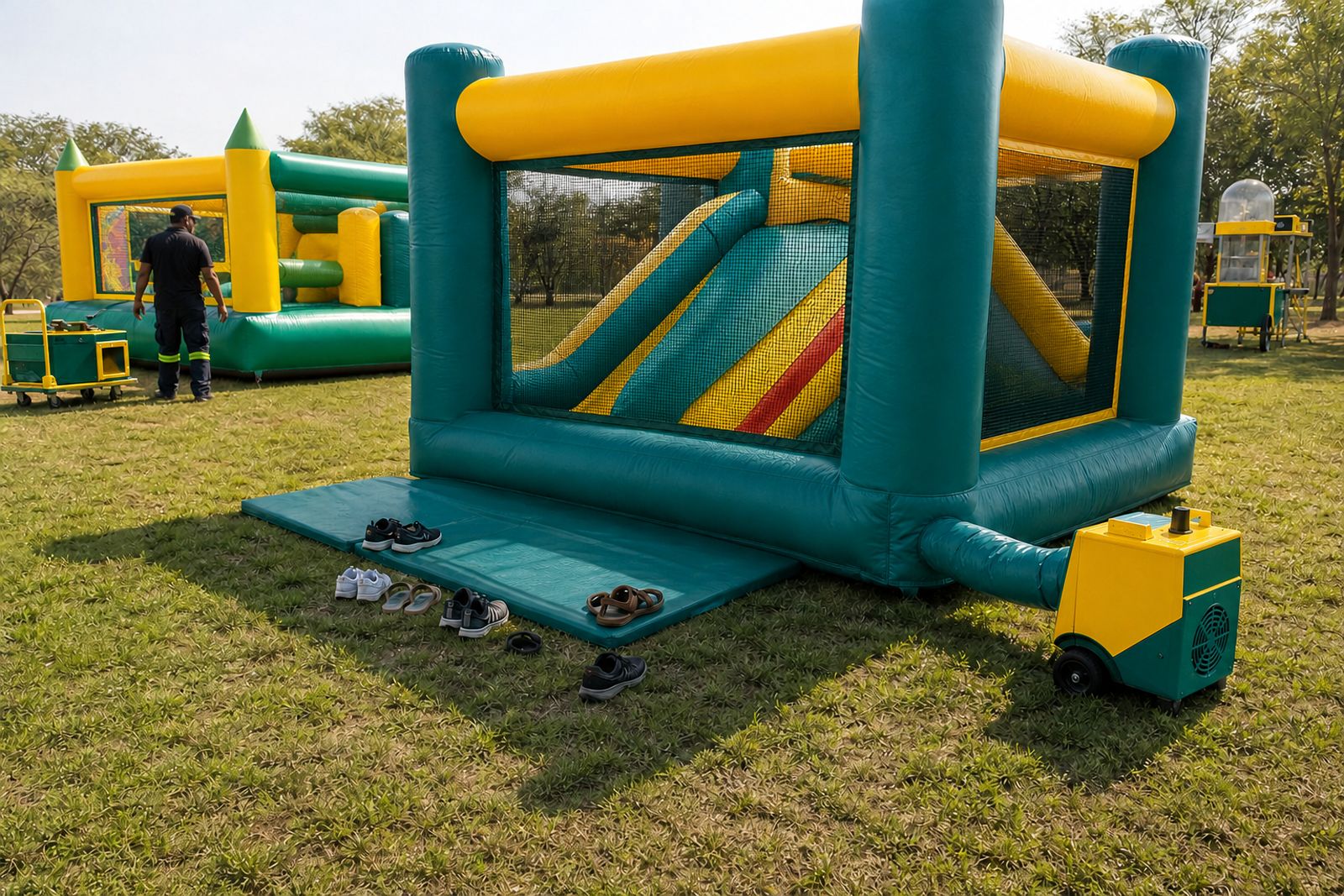
On the day of the event, the crew arrives with the booked items, checks the access route and places equipment in the agreed positions. Inflatables are spread out, anchored and fitted with mats where required. Arcade machines, carnival games and snack carts are positioned so guests can move through the area without bottlenecks.
Testing follows setup. Blowers are checked, lights and motors are switched on, and the crew confirms that each activity is ready for use. If the event includes supervision, mascots, photo booth attendants or queue management, those roles are assigned before guests arrive. At a school in Johannesburg or a family day in Cape Town, that final walk through matters because it sets the tone for the rest of the event.
Most of the heavy lifting is done before the first guest steps in. That includes safety mats, marked zones, cord control and a check that all hired items sit securely on the surface provided.
- Delivery is followed by setup and equipment testing
- Anchors, mats and clear walkways are checked
- Attendant roles are assigned where needed
- Final safety checks happen before guest access
6. Collection is planned around the event close
When the entertainment window ends, the crew returns to strike the equipment and load it out. The area is cleared, mats are lifted, blowers are packed, and any snack or foam equipment is cleaned down before removal. If the venue has access rules or a closing time, collection is timed to fit those limits.
At bigger events, the exit plan matters almost as much as the setup plan. Cars may still be moving, children may still be nearby and venue staff may need the area cleared for the next use. A tidy strike keeps the site workable for the people taking over after the event. For road shows across Gauteng and other provinces, the same process helps keep the schedule orderly from one location to the next.
If your booking includes multiple days, the handover notes for the next setup are kept with the same file so the crew knows what was on site, what stayed overnight and what must be removed first.
- Strike starts once the hire window ends
- Equipment is packed, cleaned and checked off
- Venue rules on access and closing times are followed
- Multi-day events use handover notes for each shift
7. The people behind the booking keep the moving parts aligned
Amused bookings are handled by a small team that deals with planning, routing, safety and client communication. Thabo Jantjies oversees the business. Anele Ebrahim manages operations, Johan Hlongwane handles fleet and logistics, Naledi Seabi coordinates bookings, Yusuf Masilela trains the crew on safety, and Candice Zungu leads client service.
That structure helps when a booking involves several items at once, such as a jumping castle, carnival games, a foam machine and a photo booth. It also helps with national event logistics for schools, malls and corporate family days across Midrand, Johannesburg, Pretoria, Durban, Cape Town and Bloemfontein. The paperwork, the truck load and the site plan all need to agree before the event starts.
- One team manages planning, loading and supervision
- Different equipment types are matched to the venue
- Local and national jobs follow the same booking flow
- Safety notes stay with the file from start to finish