
Gateways, parking and the path in
Before any jumping castle or ride lands on site, the crew needs a clear route from the vehicle to the setup point. Think about gate width, loading bay rules, stairs, tight corners and whether a trailer can sit close enough for safe unloading. In Midrand, some venues have fast-moving parking areas and security controls, so it helps to know the entry point, the correct contact person and where the trucks may stand.
If the site sits inside a mall courtyard, school field or office park, share the exact drop-off point and any time limits for vehicle access. Long walks with heavy gear slow the setup and make queue flow harder later. It also helps to note if the venue needs wheelchairs paths kept open or if certain roads are one-way on event day.
- Confirm the main entrance, not just the street address.
- Check if the truck can park near the play area.
- Note staircases, lifts, boom gates or narrow passages.
- Tell the team about access control, security counters and permit rules.
Ground that keeps the kit steady
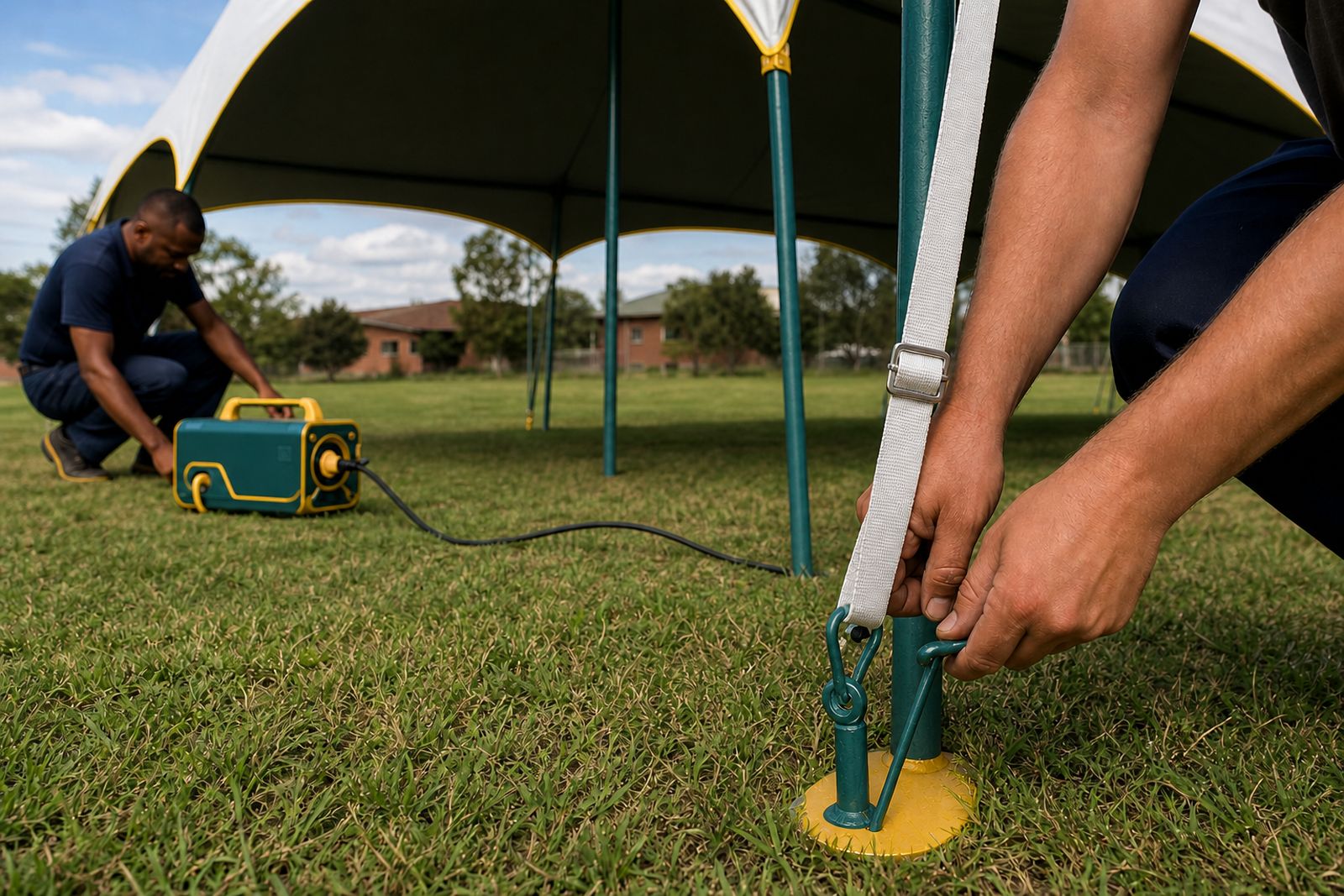
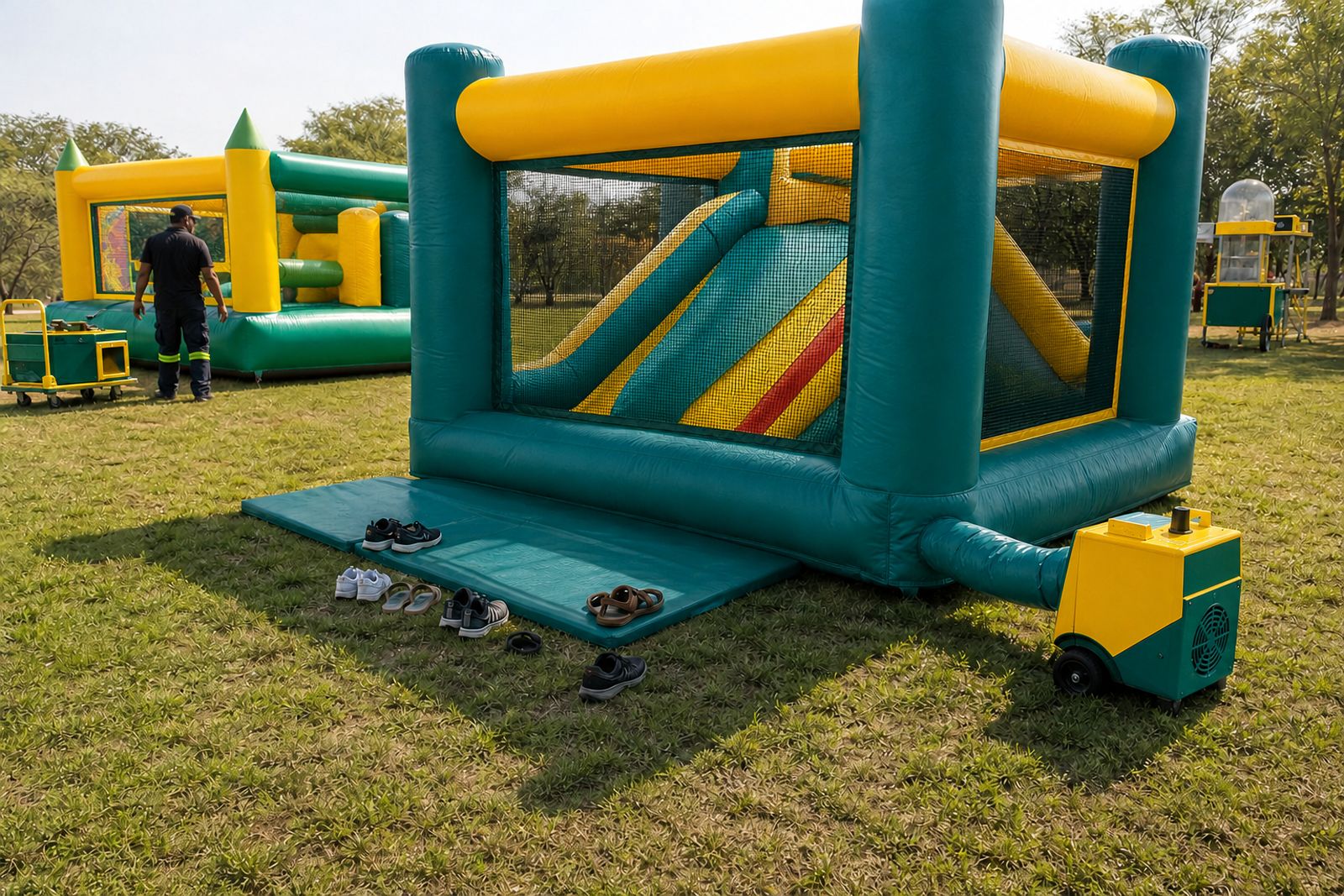
Most inflatables need level ground, enough open space and a surface that can take anchoring. Grass is often workable, but it should be dry enough for pegs or sandbag anchoring, and free of hidden irrigation heads, sharp stones or exposed roots. Indoor halls need extra thought around floor protection, ceiling height and whether the surface can handle the weight of a filled unit.
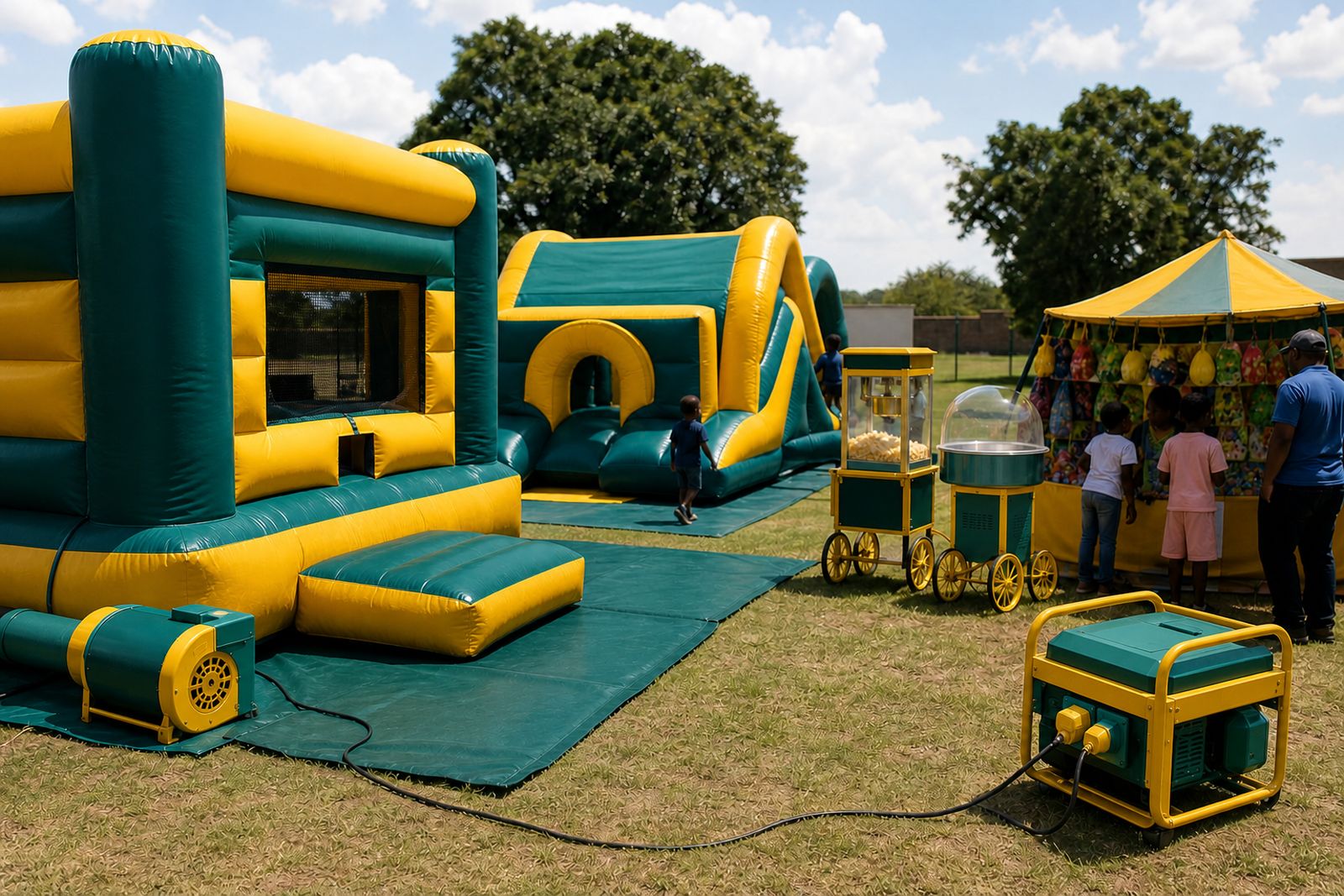
Hard paving can work for some setups, though it may call for mats, weights and a firmer layout plan. Loose sand, steep slopes and muddy patches usually need a different arrangement or a smaller activity. The same applies to carnival stalls, arcade machines and snack carts, which need a flat base so they do not wobble during trading or play.
- Measure the open area, then leave a safety buffer around it.
- Look out for slopes, drains, sprinklers and sharp edging.
- Tell the crew about grass, paving, concrete or indoor flooring.
- Check where mats, barriers and queue lines can fit cleanly.
Power points, blowers and clean running space
Many amusements need mains power for blowers, lighting, arcade cabinets, photo booths, popcorn units or foam equipment. It helps to know where the sockets sit, whether they are on a dedicated circuit and how far they are from the event area. Where the distance is long, extra cabling or a generator plan may be needed, especially on larger sites around Gauteng and the coastal cities.
For outdoor events, the crew usually wants sockets in a dry position with space to run cables safely out of foot traffic. Generators need a sensible place to stand, away from guests but still close enough for the load. If the venue uses strict power rules, mention that early so the layout can allow for it.
- Show the crew every usable socket, not just one main point.
- Check whether the venue allows generator use on site.
- Keep cable routes away from crossings and damp patches.
- Point out any lights, sound gear or extra equipment sharing power.
Shade, heat and weather backup
South African weather can change a setup quickly, especially on open school fields, rooftop spaces or exposed courtyards. Shade matters for children waiting in line, crew members working near hot equipment and guests using snack carts or photo booth areas. If the venue has trees, canopies or covered walkways, note where they sit and whether they can help with shelter or crowd flow.
A wet weather plan is worth sorting before the event day. Some units can move to a firmer patch, while others need an indoor fallback or a smaller footprint. Wind, rain and hard sun affect safety, comfort and the way queues move, so it is better to map the option before guests arrive.
- Mark shaded spots, covered walkways and indoor backup space.
- Ask whether the venue has a rain plan or a wet floor rule.
- Think about wind exposure on open sports fields.
- Leave room for umbrellas, tents or shade sails if needed.
Supervision lines, age limits and queue control
Different amusements suit different age groups, and some rides have height limits or rider count limits. That matters for schools, family days and birthday parties, where younger children may need separate play times from older guests. The layout should make supervision easy, with clear entry and exit points and enough room for parents, teachers or marshals to see what is happening.
Carnival games, mascot visits, snack carts and photo booths each need a little space to manage flow. A good venue plan keeps queues from crossing the main walking path and avoids putting a busy stall too close to a bounce area. If the site expects mixed ages, a crew member can often help guide the movement, but the space still needs to make sense first.
- Match each activity to the right age or height band.
- Keep queues separate from entrances and exits.
- Leave a clear view for teachers, parents or marshals.
- Allow room for mats, barriers and waiting guests.
Collection timing and the final handover
Strike and collection need just as much planning as setup. Ask the venue when vehicles may return, whether the site closes at a fixed time and if there are security gates that lock early. If the event ends late, the crew may need a clear route and a lighting plan for the packing stage. That keeps the last part of the day calm instead of rushed.
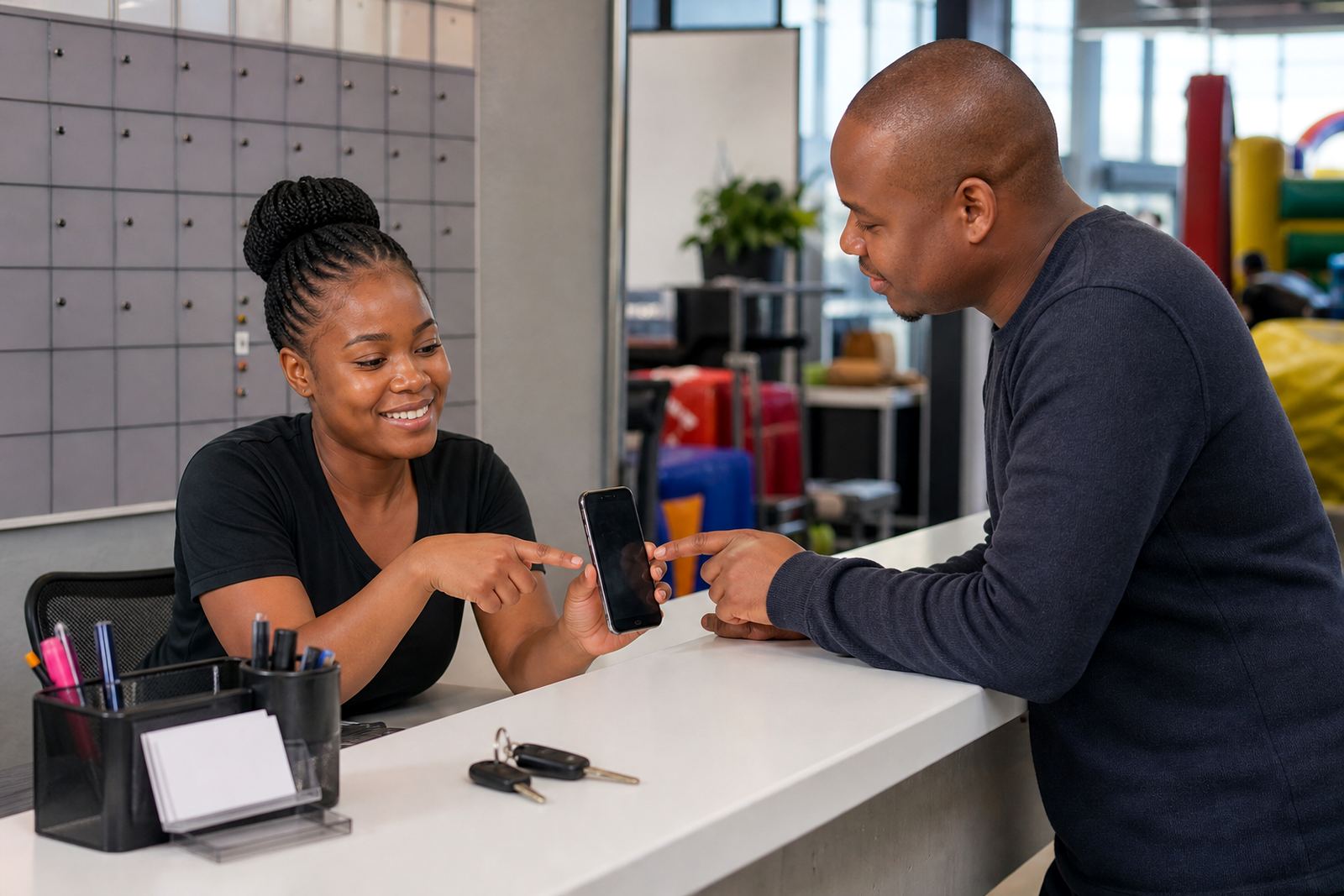
It also helps to know if the venue expects rubbish bagged, tables wiped or floor areas swept before the truck leaves. For sites in Johannesburg, Pretoria, Durban, Cape Town or Bloemfontein, clear collection instructions save time and keep the last handover neat. A deposit and booking step may also depend on the approved layout, access notes and the final selection of items.
- Confirm when the crew may pack down and exit.
- Note any keys, passes or security sign-out steps.
- Set aside a tidy area for collected gear.
- Check if waste removal or cleaning sits with the venue.