
Reading the sky before the first truck rolls in
Weather planning starts with the site, the season and the type of amusement on the booking. A school field in Midrand behaves differently from a paved mall forecourt in Durban, and a garden birthday in Cape Town needs another approach again. Ground condition matters as much as rain itself. Soft grass, pooled water, exposed cables and loose sand can change where a castle, ride or game stall can sit.
For inflatable units, the crew looks at floor space, overhead clearance and the ground surface. Many units need a flat area with enough room for safe entry, exit and blower placement, plus open space around the sides. Safety mats, tie-down points and access for the crew all factor into the final call. If the wind is rising or the ground is too slick, the safest option is often to move the activity, delay the start or switch to a sheltered setup.
Wet weather options that keep the programme moving
Not every rainy forecast means the day is over. Some setups can move under cover, while others can shift to a harder surface or a different part of the site. Carnival games, arcade cabinets, photo booths, candy floss carts and popcorn machines often adapt more easily than large inflatables, provided there is enough shelter and safe access for guests.
- Move smaller attractions into a hall, foyer or covered court
- Keep wet grass for standing areas only, not for anchored inflatables
- Use matting at entrances where shoes and feet may be slippery
- Shift snack carts away from direct drizzle and standing water
- Rework queue lines so guests are not packed under one roof edge
Foam and bubble machines need extra care in wet conditions. Water, spray and foam can make floors slick, so the crew may adjust where guests stand and where staff manage the output. If the site cannot safely take the equipment, a dry alternative is usually better than forcing the full plan into the wrong space.
Wind calls for inflatables and small rides
Wind is one of the main reasons outdoor amusement plans change. Tall inflatables, umbrellas, marquees, mascots and light ride components all catch the air in ways that are easy to overlook when the day starts calm. The crew checks the site conditions, the exposure of the area and the unit type before confirming final placement.
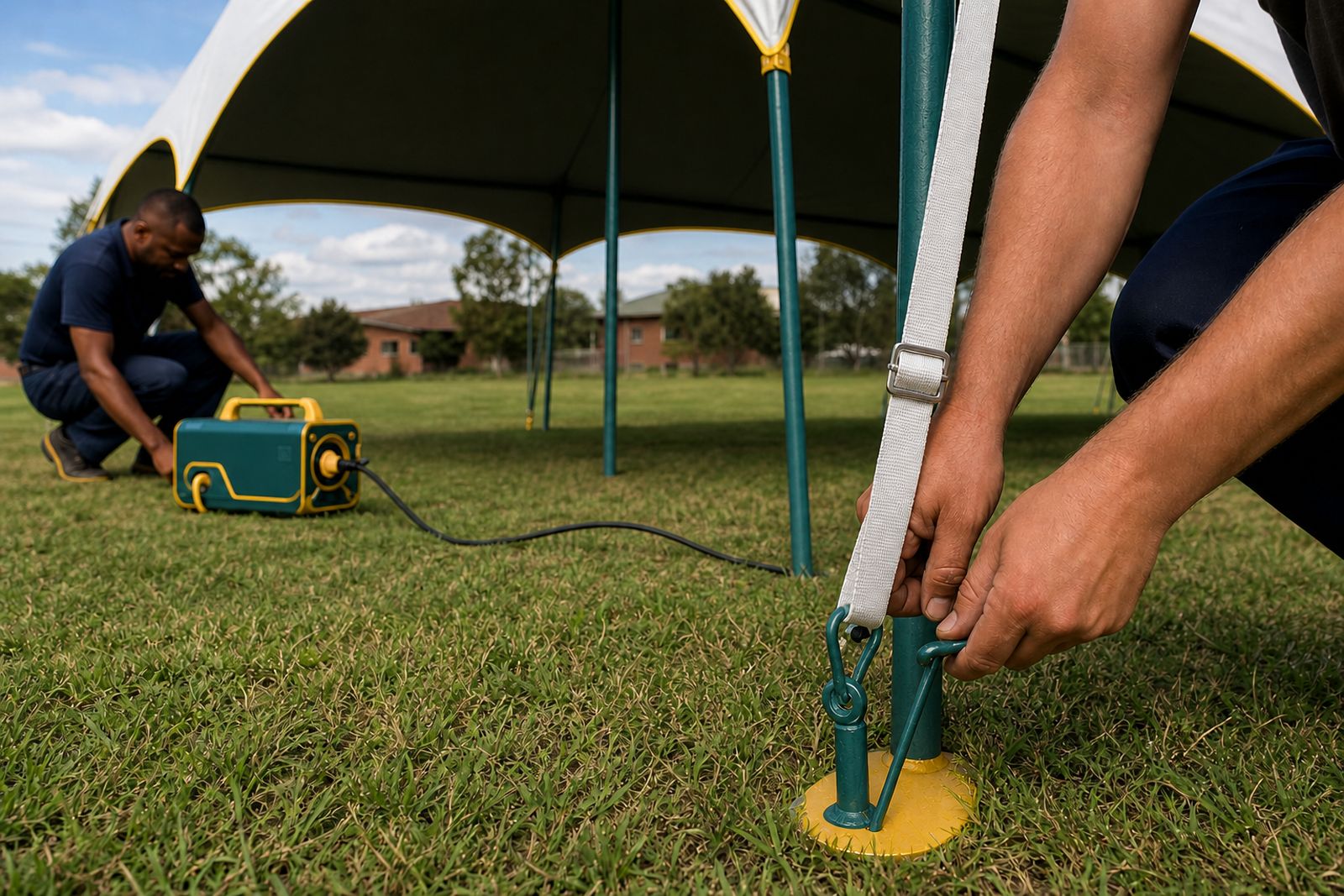
Anchoring is not a formality. Pegs, sandbags or other approved securing methods need the right ground and enough space to do their job. If the surface is too hard, too wet or too uneven, the layout may need to change. Small fairground rides also need level ground and controlled access, especially where guests queue close to moving parts. When a wind change makes the setup unsafe, the best move is often to pause, adjust or stop the use of that item.
Power, water and shelter around the equipment
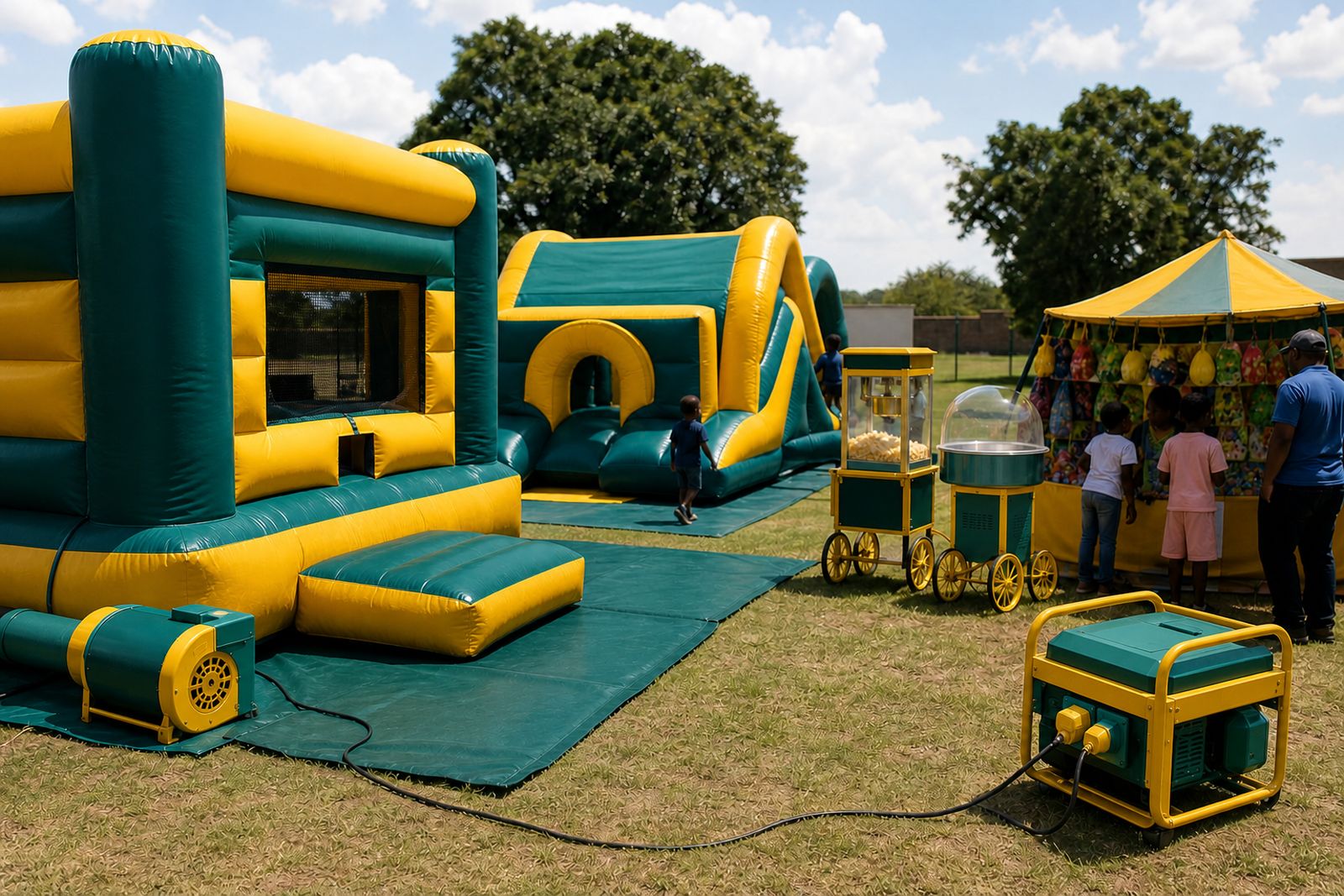
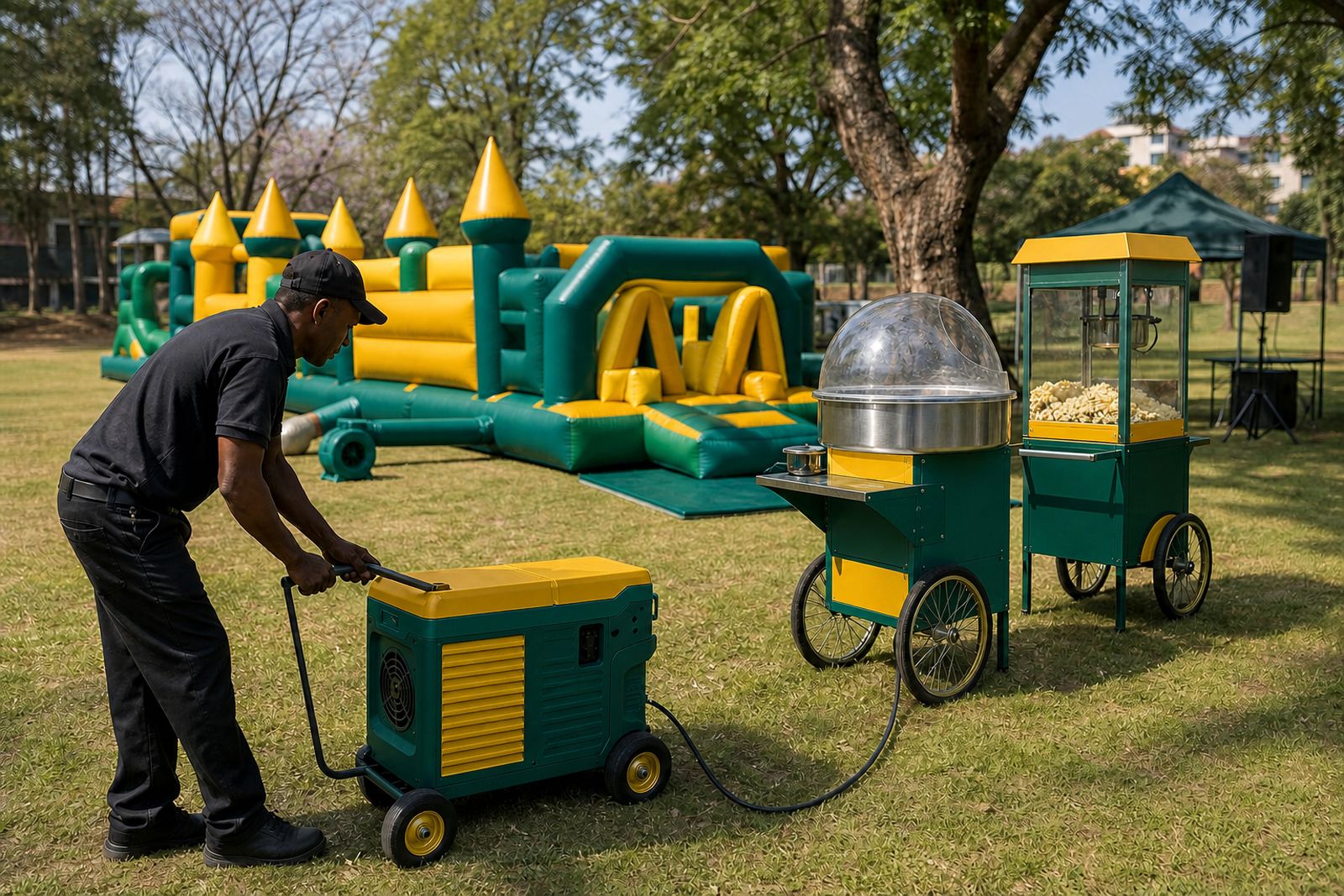
Some amusements need mains power, and a few need steady access to water for their effects or cleaning. That is where the site layout matters. Blowers, arcade machines, photo booths, candy floss carts, popcorn machines and certain lighting or sound components all need sensible cabling routes and dry positioning. If the event area is open to rain, the crew may need cover points, weatherproof mats or a generator arrangement for parts of the programme.
- Keep cables out of puddles and off main walkways
- Place generators where exhaust and noise will not bother guests
- Protect machines from spray, mist and roof drip points
- Allow crew access for refuelling, checks and strike at the end
Where food service is included, dry storage for consumables and a sheltered handover point help keep the service tidy. In coastal towns, wind and damp air can affect paper stock, electrical leads and grip on smooth floors, so the site setup needs a bit more care than an indoor hall.
What a backup plan usually covers
A proper weather plan is more than a hopeful note in a booking file. It sets out the backup layout, the items that can move, the items that must stay indoors and the point where the crew has to stop or change direction. Schools often need extra attention because children move quickly and queues can build near entrances. Corporate family days and mall activations need a clean visitor flow, with the fallback route clearly marked.
Useful backup arrangements usually include:
- A sheltered alternative space on the same site
- A shortlist of indoor-friendly amusements if the weather turns hard
- Extra floor protection where guests may track in water
- Clear rules for stopping use during strong gusts or heavy rain
- Adjusted staffing for supervision, queue control and strike
When the schedule is tight, the crew may also revise setup order so the first activities open before the rest of the site is fully dressed. That helps keep the event usable even if the weather keeps shifting through the morning.
Booking steps when the forecast is not settled
Weather-sensitive events work best when the site details are shared early. The team needs the venue type, surface, access route, shelter options and the mix of amusements on the booking. From there, the setup can be planned around wind exposure, wet ground and power needs. If the event is spread across a school field, foyer and parking area, each part may need a different weather response.
Deposits, delivery windows and collection plans are normally tied to the event date and the chosen items. If the forecast changes near the day, the event plan may shift too, especially where large inflatables or outdoor rides are involved. Clear site notes help the crew plan the load order, the strike sequence and the safest way to run the programme if rain starts while guests are already on site.
When to keep moving and when to change the layout
The best weather plan is practical, not optimistic. Light showers may be manageable with cover and a few layout changes. Strong wind, standing water and slippery ground call for a firmer decision. The same event may still work well if the focus moves from a wet field to a covered hall, or from a tall inflatable to a game lane and snack area.
For schools, malls, birthdays and corporate family days, the aim is the same: keep guests safe and keep the attraction mix usable. A smart backup arrangement gives the day a workable shape, even when the sky is uncertain.