
A public holiday layout that keeps families moving
Heritage Day works best when the site feels open, with clear walkways, short queues and different activities for different ages. A school field, shopping centre court or corporate picnic ground can all handle the day well if the layout is planned around foot traffic, shade and the places where parents naturally stop to watch.
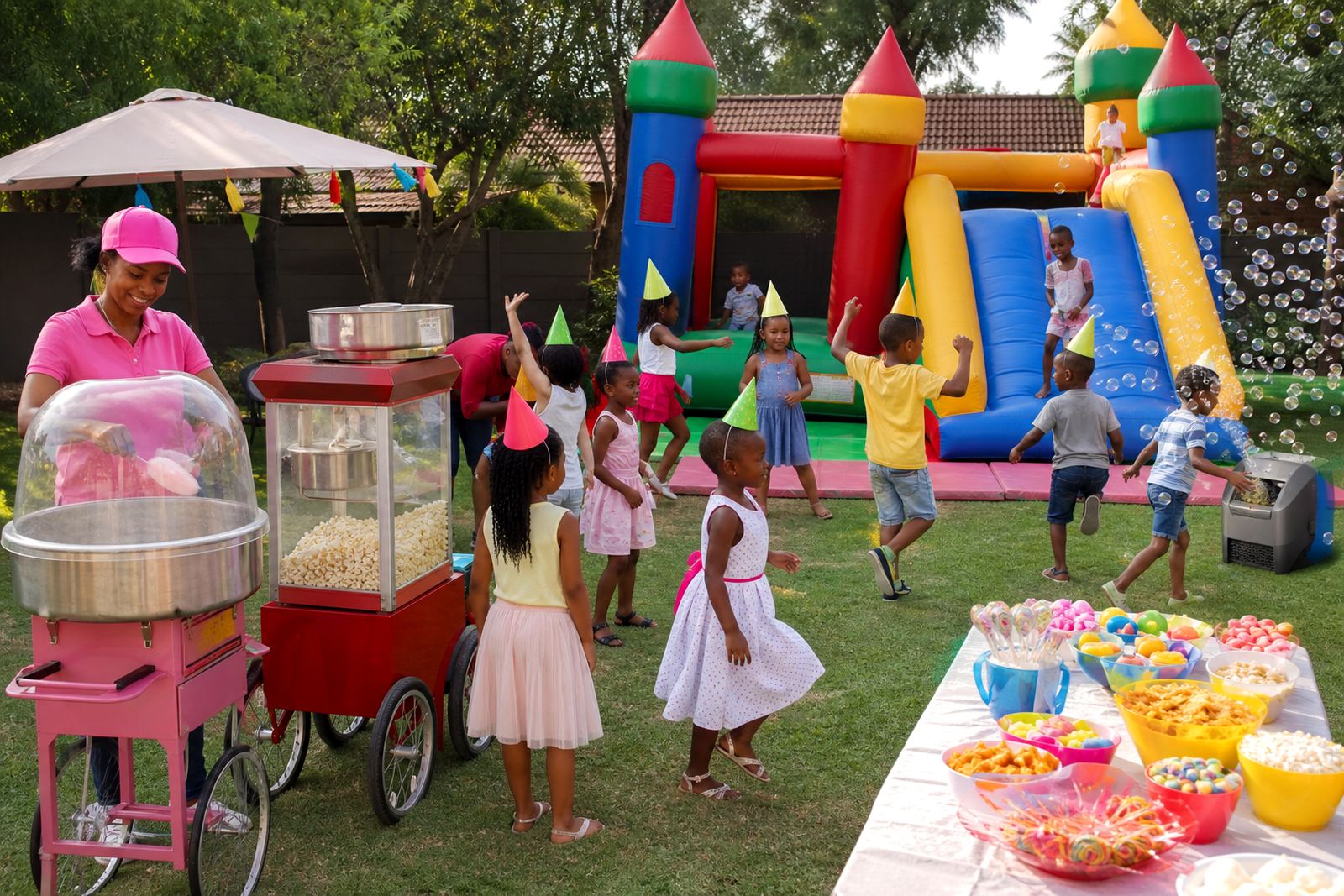
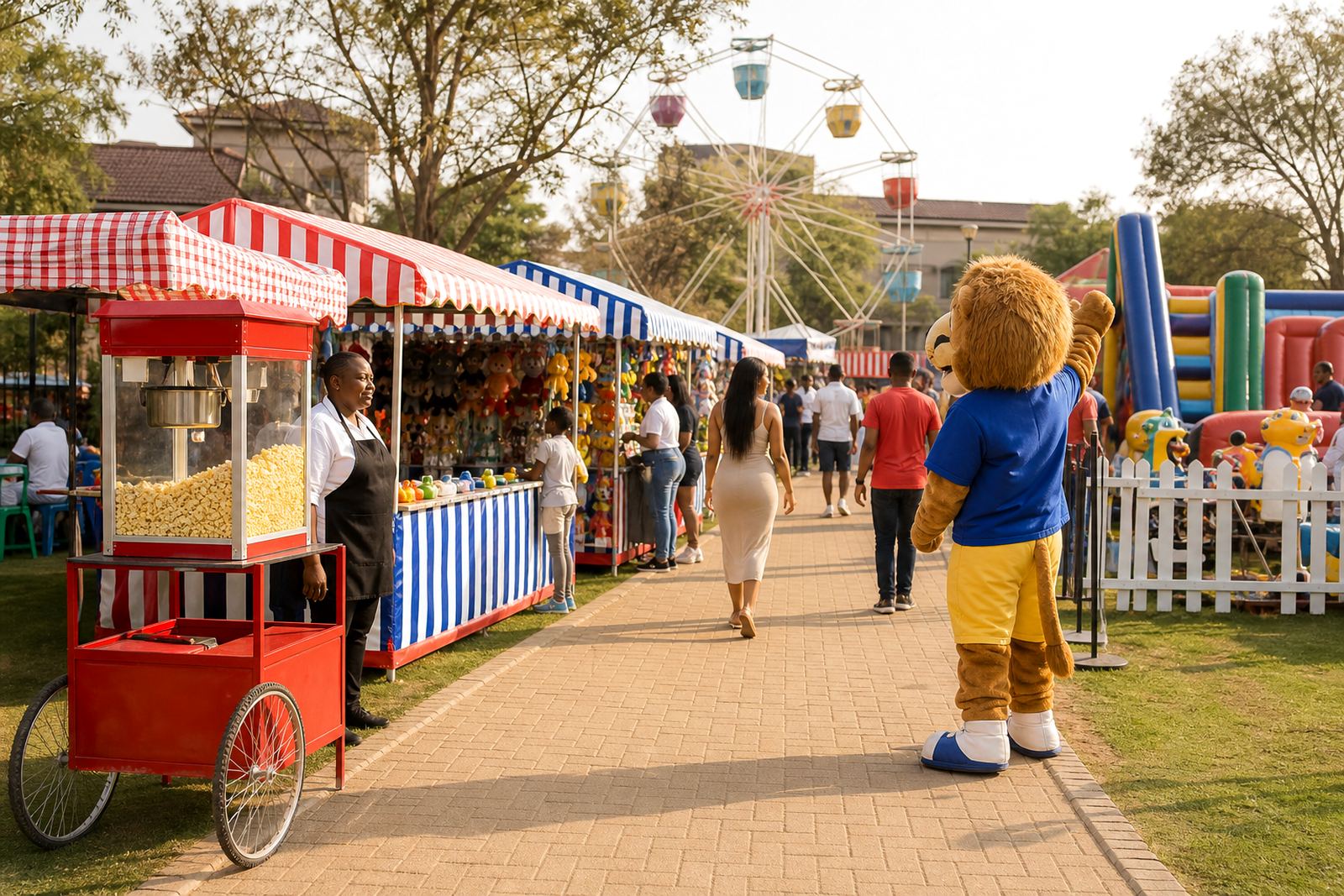
For mixed groups, we usually split the ground into three parts. One zone carries the larger inflatables and the small rides, one holds the quieter games and photo stops, and one sits near the food carts so people can rest. That keeps children moving between activities while adults still have a clear sightline. It also helps when the weather changes, because the layout can shift a queue under cover without pulling the whole setup apart.
- Keep inflatables on level ground with enough clearance around the entrance and exit points.
- Leave space for queues at carnival games and snack carts, not only the equipment footprint.
- Place the photo booth where families can gather without blocking the main walkway.
- Use shade or marquee cover near waiting areas where possible.
Public holidays tend to bring a rush around late morning and early afternoon. A tighter plan for access, power and crowd flow prevents bottlenecks when the first wave arrives and the second wave rolls in after lunch.
The usual mix for Heritage Day crowds
Heritage Day events need variety, not one large attraction trying to do all the work. The strongest line-up usually includes a jumping castle for younger children, a bigger inflatable obstacle course for older children and teens, and a few carnival games that pull in parents as well. Add a photo booth, candy floss or popcorn cart, and one small ride or moving attraction, and the site starts to feel complete without becoming cluttered.
Arcade cabinets and retro gaming machines fit well at indoor mall activations or under cover at corporate family days. They give older children and adults a place to wait with purpose, which reduces crowd pressure at the most popular inflatables. Foam machines and bubble machines can work well for a festive feel, but they need the right space and supervision so the ground does not become slippery in the wrong area.
- Jumping castles suit younger age groups and need anchoring, mats and a clear no-shoes rule.
- Inflatable obstacle courses need more space, more staff attention and a longer setup footprint.
- Carnival game stalls work well near a payment or token point, especially where the queue can turn safely.
- Snack carts and photo booths draw steady traffic when placed near the main entrance or resting area.
For mixed-age crowds, the goal is not to pack in every option. It is to place enough variety on site that children stay busy and adults can move through the day without standing in one line for too long.
Power, anchoring and the parts people forget
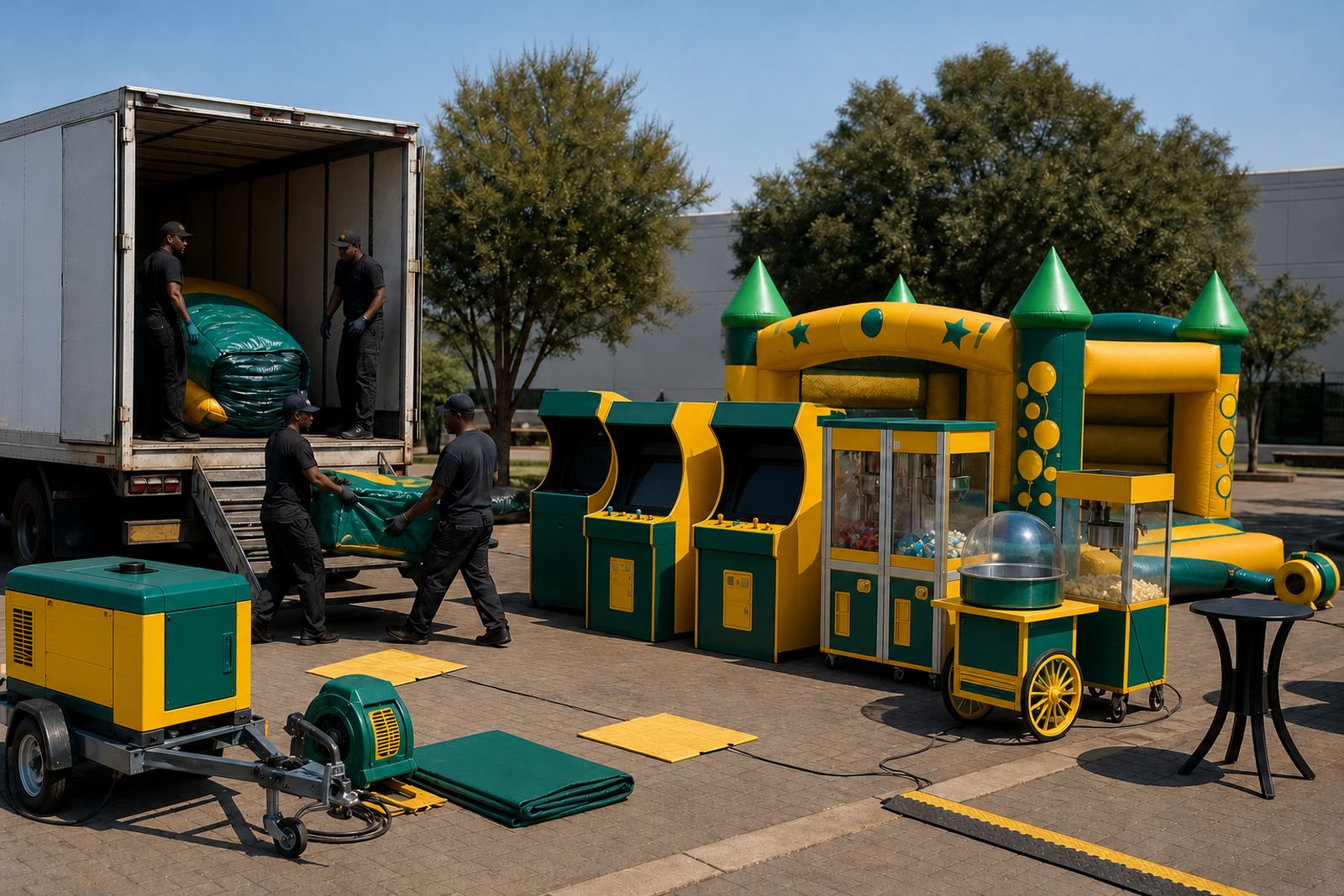
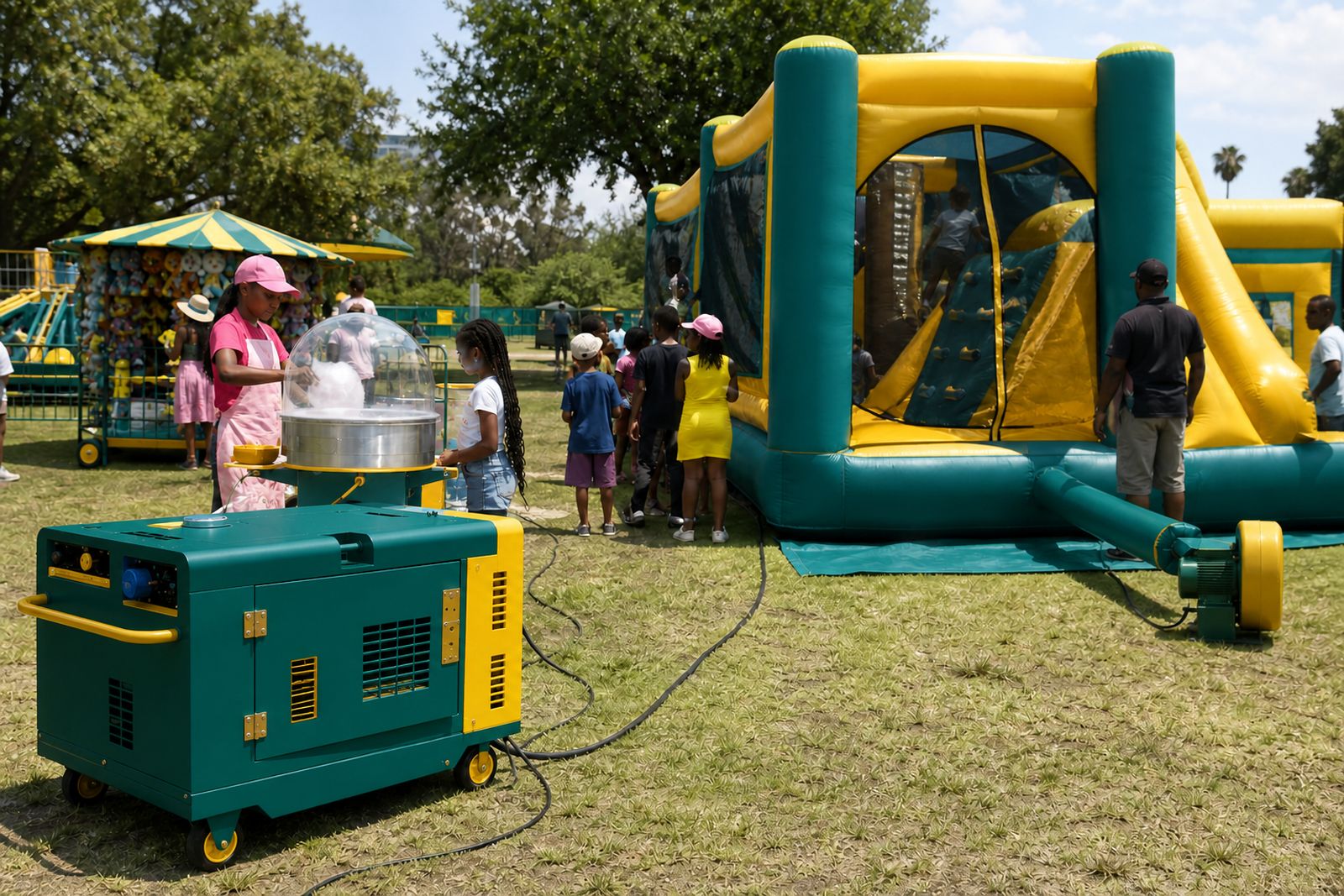
Many Heritage Day setups look easy from a distance, then run into trouble when the practical details are left too late. Inflatable equipment needs blowers, secure anchoring and safe ground. On grass, that means proper stakes where the site allows it. On hard surfaces, weights and mats become essential. If the venue has rules about fixing points, the plan must respect them before the first item arrives.
Some attractions work on mains power, especially arcade machines, photo booth gear, popcorn machines and certain ride components. Where the site is spread out, power distribution has to be mapped properly so cables do not cross pedestrian paths. If generators are needed, they must sit in a safe position with enough ventilation and the correct cabling for the load. Power planning is not a side note, it shapes where each item can go.
Wet weather planning matters too. Heritage Day can bring warm sun, but it can also bring wind or rain depending on the town and venue. Inflatables may need to be paused or secured further, and outdoor snack service can need cover. A sensible setup includes a fallback option for moving quieter pieces under shelter or shortening the equipment list if the site cannot support every item in poor weather.
- Check whether the venue allows staking into the ground or needs weighted anchoring.
- Keep mats at entrances, exits and around the most active play areas.
- Route cables away from foot traffic and food service points.
- Build a weather plan that covers wind, rain and surface changes.
Supervision that suits schools, malls and corporate family days
Heritage Day activations are safer and calmer when each attraction has a role assigned to it. Schools often need stricter movement control, especially where learners arrive in groups and queue discipline can slip. Malls need clean traffic flow and clear signs because visitors join and leave at different times. Corporate family days usually need a more relaxed tone, but the same safety basics still apply.
Trained crew members can handle supervision, queue management, mat placement, ride operation and snack cart service. That helps the client focus on the day itself rather than checking every moving part. For photo booths, an attendant keeps the line moving and helps guests understand the props or print process. For smaller rides and live game stations, staffing is what keeps the event from becoming uneven or overfull in one corner.
Children of different ages should not be mixed casually on the same attraction. Height limits, age guidance and entry spacing need to be set before the public starts using the equipment. Where a ride or inflatable suits only a narrow age band, another attraction nearby should serve the older or younger group so no one feels left out.
At public holiday events, one small mistake can slow the whole site. The common ones are putting food too close to the busiest game lane, leaving no seated rest area, or treating the setup as if all children will arrive at the same age and pace. That is rarely how family events actually behave.
Budget ranges in Rand for a Heritage Day booking
Budgets shift depending on how many attractions you want, how long the event runs and whether you need delivery, setup, supervision and collection built in. A simple family package with one inflatable, a snack cart and a small game station sits at the lower end. A larger school or mall activation with several inflatables, a photo booth, a ride and full crew support sits much higher.
For planning purposes, it helps to think in bands rather than exact numbers. A modest Heritage Day setup may land a quoted price. Mid-range combinations with more than one attraction, staffed supervision and extra logistics can fall a quoted price. Larger public holiday events with multiple zones, power planning, generator supply, queue control and several pieces of equipment can move beyond a quoted price, depending on site conditions and the final mix. Ask for a quote
Transport distance, ground conditions, the number of crew needed and whether the venue has working power all affect the final figure. Events in Midrand, Johannesburg, Pretoria, Centurion and Sandton are often easier to plan than sites with tight access or long load-in paths. National road shows to Durban, Cape Town or Bloemfontein need even more care around timing, travel and equipment selection.
- Smaller sites do better with fewer large pieces and one strong queue anchor.
- Busy malls often need more staffing and clearer crowd direction.
- Corporate family days usually benefit from a balanced mix of active and quiet attractions.
- Schools may need stricter safety spacing and a tighter entry plan.
Booking steps that suit a holiday calendar
Heritage Day dates fill quickly because the holiday sits well for family gatherings, school events and branded public activations. Once the venue is confirmed, the next step is to map the ground, note access points and decide which attractions fit the available space. That gives enough detail to match equipment to the site instead of squeezing too much into one corner.
Clients usually send the event date, venue suburb or town, expected age range, approximate guest count and the type of atmosphere they want. From there, the mix can be adjusted to suit younger children, teens or a wider family audience. A mall in Pretoria may need a compact setup with neat queues, while a school in Durban might have more field space and better room for a larger inflatable course.
Amused serves Midrand, Johannesburg, Pretoria, Centurion, Sandton, Durban, Cape Town and Bloemfontein, with national road show support when the event needs it. The team structure includes operations, logistics, bookings, safety and client service, which helps each part of the event stay properly handled from the first site check through to strike and collection.
Heritage Day is at its best when the attractions feel easy to use and safe to move around. A good plan keeps children active, parents comfortable and the whole site steady from the first arrival to the last collection run.