
Barrier lines that guide the crowd without fuss
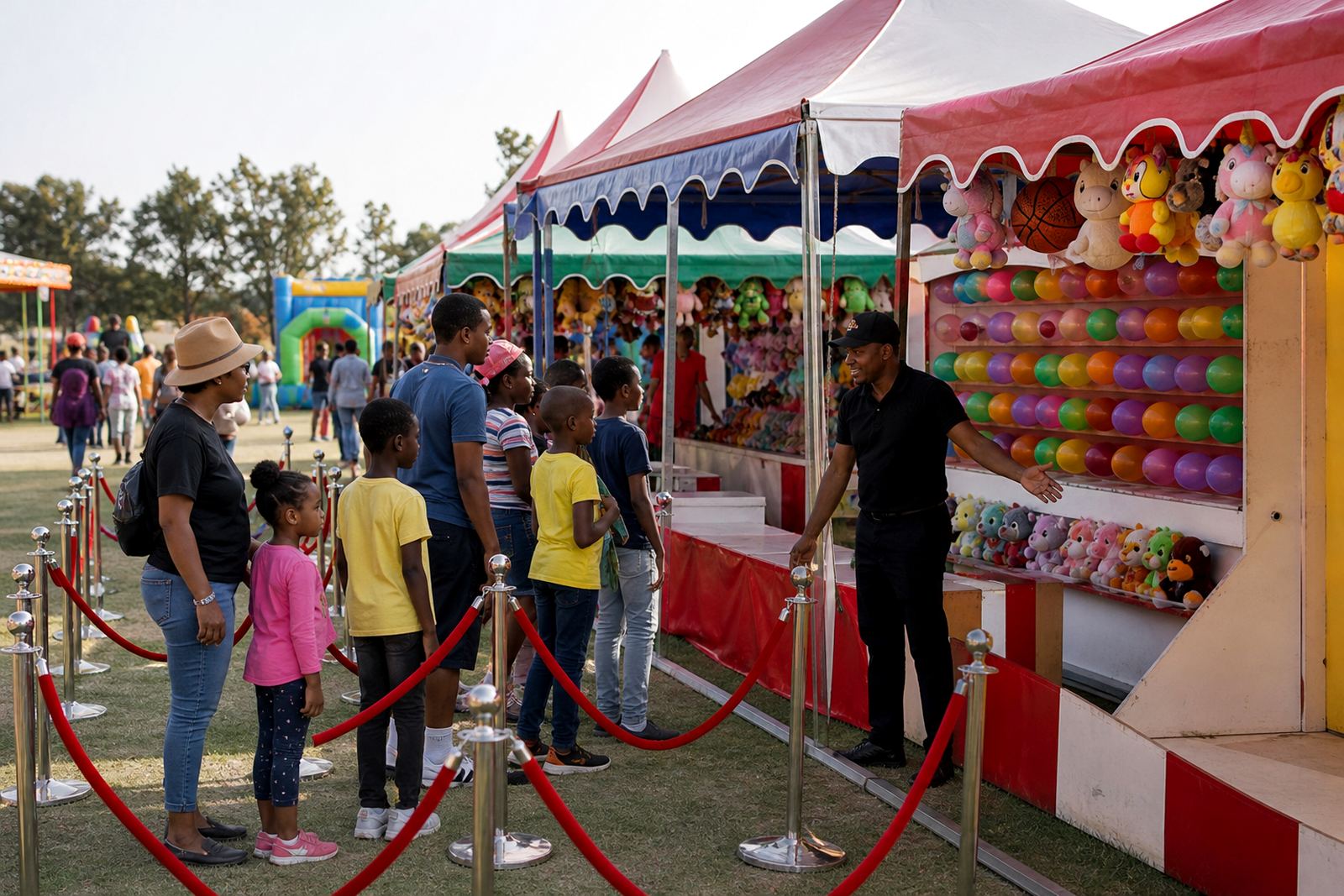
Queue management starts with the layout, not the crowd. We mark entry, merge and exit points with barrier systems, rope lanes or soft barricading where the venue suits it, then place signs and staff where guests can see them before the line gets messy.
For school fun days, mall activations and family events, the aim is to keep the attraction visible and moving. A clear lane also protects the working space around jumping castles, arcade units, snack carts and small rides, which helps keep the setup tidy and safer for everyone on site.
- Barrier lines for single file or split queues
- Waiting zones for families, learners and mixed-age groups
- Entry, exit and marshal points set out before guests arrive
- Space kept clear around moving parts, snack points and photo stops
What our crew manages at ground level
On the day, our crew does more than point people in a direction. We monitor the queue, keep the lane moving at a sensible pace, watch where younger children bunch together and step in when the line needs reshaping because of weather, noise or a sudden rush from another attraction.
For higher traffic areas, we use a simple rhythm: greet, direct, release, reset. That keeps the attraction approachable and stops one point from backing up while another sits empty. When an event has several draws at once, we can set separate lanes for each item and keep the flow readable for parents and staff.
- Queue marshal support for busy periods
- Lane splitting for separate age groups or ticketed access
- Guest direction around entrances, exits and viewing edges
- Simple crowd flow around food carts, rides and photo booths
Space planning for castles, games and small rides
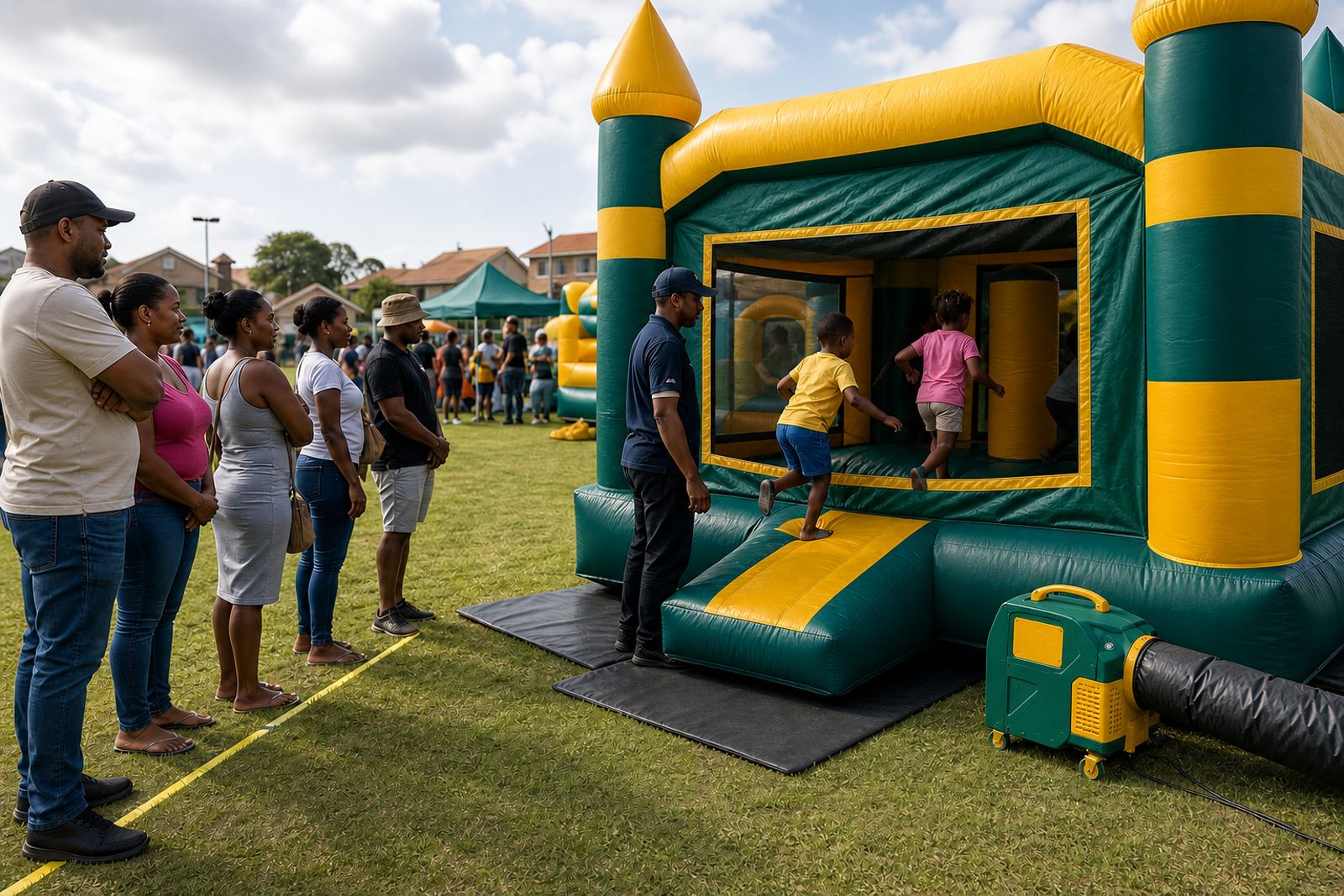
Different amusements need different breathing room. A small jumping castle can fit into a modest area, while an inflatable obstacle course may need a longer run and a wider safety buffer. Arcade cabinets, carnival game stalls and snack carts take less floor space, but they still need a sensible line so guests do not block the service side.
We plan queues with the attraction in mind. That means leaving enough room for anchoring points, blowers, safety mats and staff access, then placing the waiting line where people can see the action without drifting into the operating zone. In windy or damp conditions, the layout may need more space or a different direction to keep surfaces dry and the flow clear.
- Space allowances matched to each attraction type
- Clear access for blowers, cables, mats and crew movement
- Line placement that avoids crowding the operating area
- Wet-weather adjustments where ground conditions require it
How the booking is set up
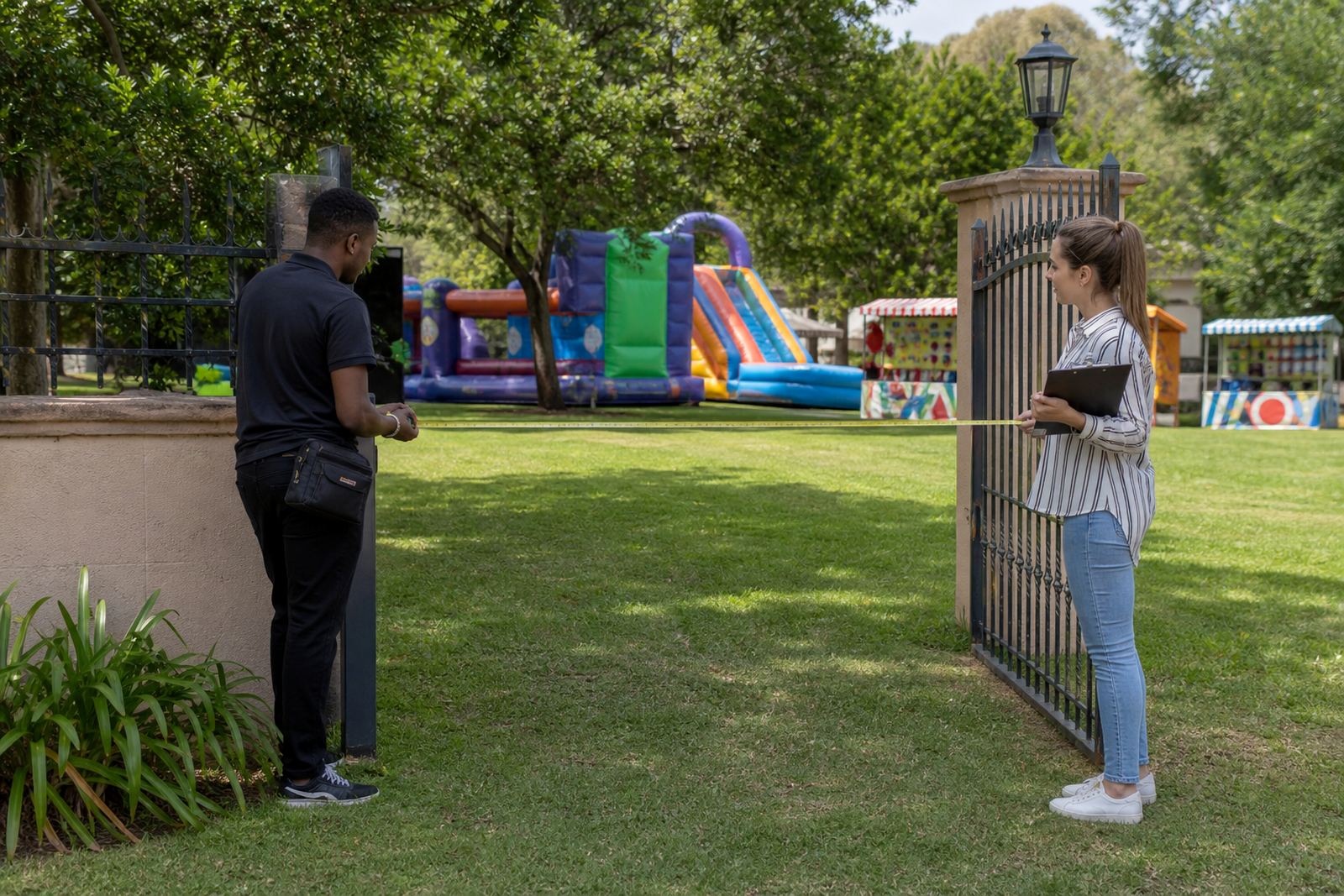
We start with the event details, then look at the site, the age group and the list of amusements in play. From there, the queue plan is matched to the footprint of the venue, the expected guest movement and any limits set by school, mall or corporate site management.
Where needed, we include queue barriers as part of the event layout, along with supervision points and access space for delivery and collection. For larger road-show style events across Gauteng and other major cities, the plan may also include separate arrival lanes, a managed waiting area and a simple handover point for crew control.
- Site details reviewed before layout planning
- Age range and guest mix used to shape the lane design
- Barrier, sign and marshal positions fixed into the plan
- Delivery, setup and collection built around the queue layout
Pricing shaped by the site, the crowd and the hours
Queue management is priced according to the size of the event, the number of staff needed, the amount of barrier gear required and the time the crew stays on site. A compact birthday with one attraction needs a different setup from a school field day or a mall activation with several draw points.
If the venue is spread out, if there are multiple entry gates, or if the queue needs to be managed alongside snack service and photo booth traffic, the cost structure changes with it. We keep the pricing approach practical and linked to the working parts of the event, rather than forcing one flat pattern onto every booking.
- Staffing level affects the final plan
- Barrier count changes with the queue length
- Site shape and guest volume influence the setup
- Multi-attraction events need more coordination
After the event, the lane is cleared and checked
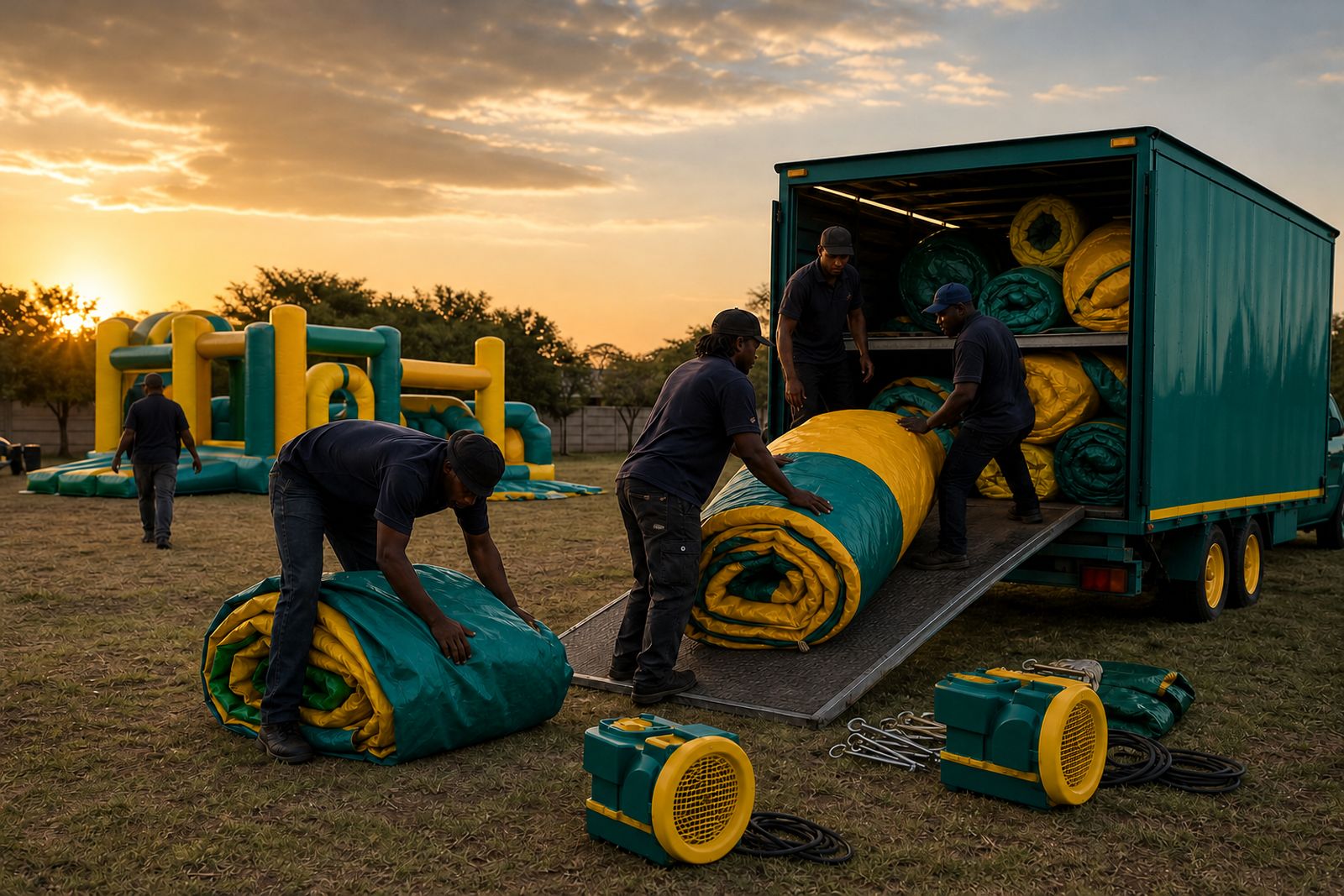
Once the crowd has thinned out, our crew clears the barriers, checks for loose items and packs the queue area back into order. If the event used mats, signs or temporary lane markers, those are removed with the same care used at setup, so the venue is left neat and ready for handover.
For schools and corporate grounds, that clean finish matters. It keeps passages open, avoids stray gear in car parks or play areas and makes it easier for venue staff to resume normal use of the space. If another amusement is still running, we keep the queue area active until that last section is ready to close.
- Barrier removal and site pack-down included
- Loose items checked before the crew leaves
- Paths and access points cleared for normal use
- Handover kept neat for venue staff and organisers
Key facts
| Service area | Midrand, Gauteng and national event road shows |
|---|---|
| Typical use cases | Schools, malls, corporate family days and birthdays |
| Queue tools | Barriers, rope lanes, signs and marshal points |
| Crew role | Guest direction, pacing, supervision and handover |
| Layout factors | Age group, site footprint, weather and attraction count |
| Event types | Single attraction queues and multi-activity crowd flow |