
What gets measured before the first inflatable rolls in
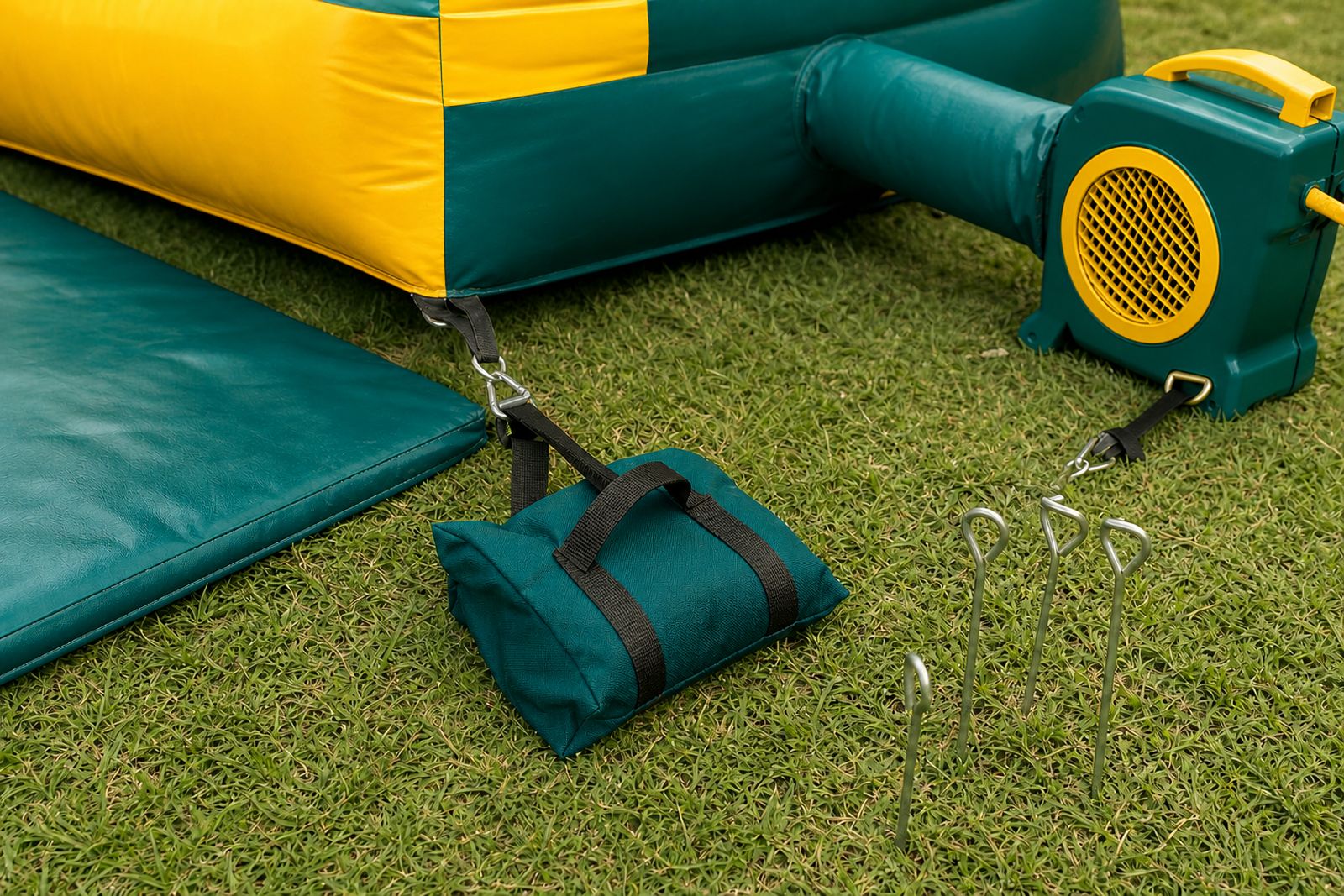
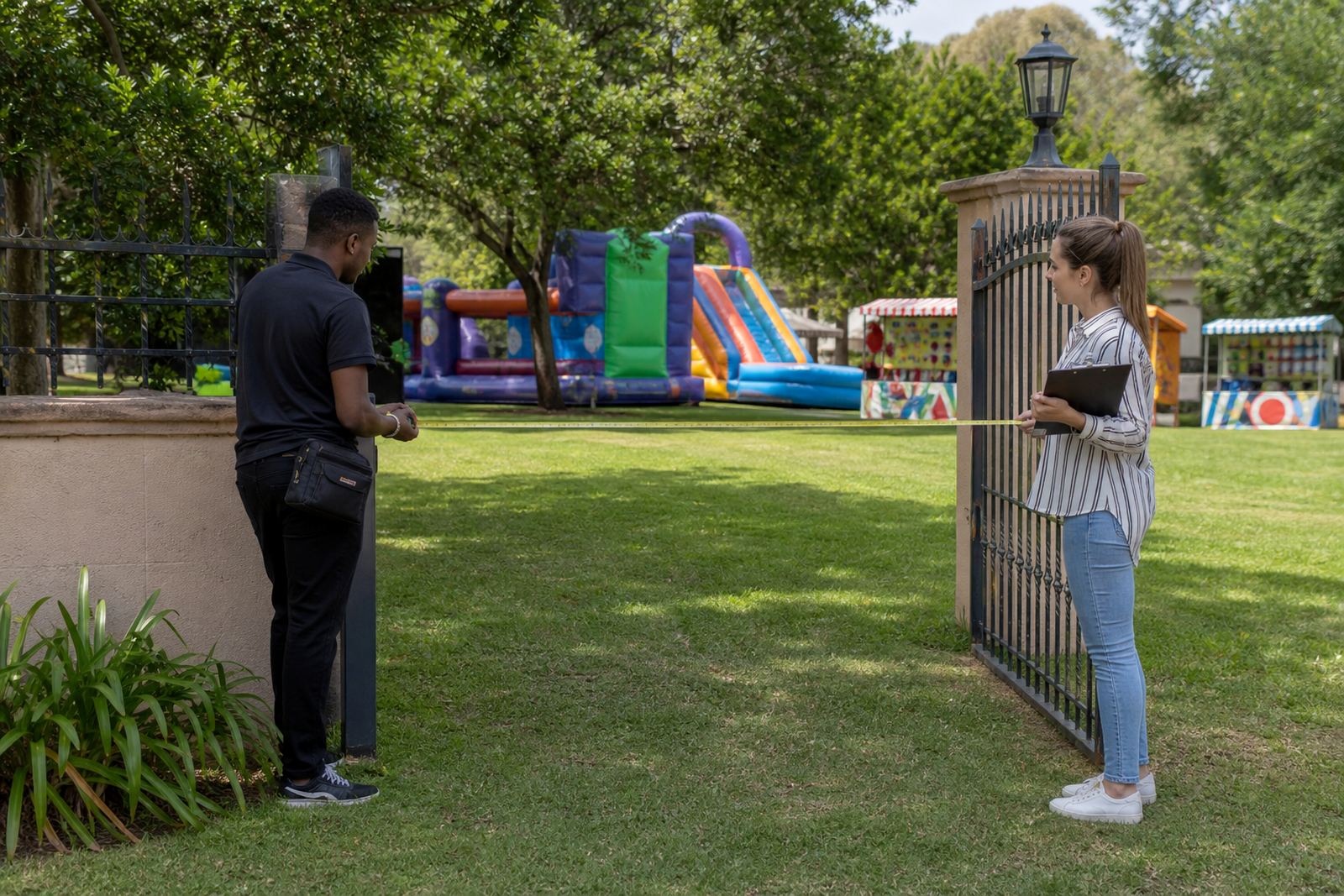
We look at the usable area, not just the rough size of the venue. That means checking length, width and the shape of the space, plus doorways, service roads, load-in points and any tight corners that can slow delivery vans or trailers. A jumping castle that looks small on paper still needs clear ground around it for blowers, pegs, sandbags or water ballast, and safe walkways for children and crew.
We also check overhead clearance. Trees, awnings, CCTV poles, light fittings and low canopies can affect inflatables, foam units, tall photo booth backdrops and small ride installs. If the site has a slope, soft turf or uneven paving, we note where extra mats, levelling or alternate placement may be needed. Coastal humidity, dusty school grounds and polished mall floors each ask for a different setup approach.
- Space for the amusement and a safety buffer around it
- Access for vehicles, trolleys and crew movement
- Clear height for tall units, ropes and any overhead hazard
- Ground type, slope and anchor options
How access, queues and guest flow get tested on site
A good check is not only about the equipment. It is also about how people will enter, wait, watch and move away again. For schools, we look at class lines, break-time movement and where children should pause before entering. For malls and corporate family days, we look at pedestrian traffic, entrances, fire lanes and any nearby trading points that must stay open.
Where the crowd is dense, we plan for queue barriers, marshal positions and clear access between food carts, arcade machines and game stalls. If a photo booth or mascot stop is placed badly, it can block a walkway and create pressure at the wrong point. We note those pinch points before setup starts, so the layout works with the site instead of fighting it.
- Entry and exit points for guests
- Queue space near games, rides and snack carts
- Visibility for supervisors and attendants
- Safe separation from roads, parking bays and service doors
Power, blowers and generator needs in plain terms
Some amusements run on mains power, others need several circuits, and some can be supported with a generator if the venue cannot supply enough load. We check plug points, cable runs, breaker positions and where cords will cross paths. Blowers for inflatables, popcorn machines, candy floss carts, foam machines and some small rides all have different demands, so the available supply has to be matched to the setup.
We also look at where power equipment can sit without blocking staff or guests. Cables should not run through wet areas, main walkways or under pressure points from vehicle movement. If the site has no suitable power at all, we plan around generator placement, fuel access and noise tolerance. That work matters at schools, malls and outdoor birthday lawns where the layout changes from hour to hour.
The check-in process from first brief to signed-off layout
Once the event brief is in hand, we map the amusements that fit the venue and the guest ages. A small birthday lawn in Midrand will need a very different plan from a corporate family day in Pretoria or a mall activation in Cape Town. We then look at the site itself, note the limits and decide which units suit the space, access and weather exposure.
After the visit or review, we share a practical summary of what fits, what needs support and what should be moved or left out. That can include larger inflatables, anchor type, matting, power support, line control and any wet weather adjustments. If the event has mixed ages, we separate younger children from older teens where possible, and we pay attention to height limits on rides and obstacle courses.
- Brief review and unit matching
- Site walk-through or access review
- Safety and layout notes
- Final placement plan for delivery and setup
Safety details that matter on the day
Good site checks reduce surprises. We look for sharp edges, loose gravel, exposed roots, cracked paving and any overhead hazards that could affect setup or supervision. Safety mats are placed where children step on and off units, especially on hard flooring or where the ground is slightly uneven. Inflatable seams, anchor points and blower positions are also reviewed so the install stays tidy and stable.
For carnival game stalls, arcade cabinets and snack carts, we check the surface level and the line of sight for attendants. If the space is crowded, supervision points are marked so crew can guide movement without bunching at one corner. Wet weather plans are also part of the check, because a sudden storm can change what is safe to run and where guests should shelter.
Costs, deposits and the shape of a quote
Pricing for a site check depends on where the venue sits, how much travel is involved and whether the visit is folded into a larger event booking. For national road shows or multi-stop work, the layout review is usually planned with the wider logistics, so the quote reflects travel, labour and equipment support rather than a flat one-size fee. A detailed site with many units, guest zones and power points takes longer to assess than a small birthday garden.
We normally base the quote on the number of amusements, the complexity of access and any extra services needed, such as generator supply, queue management or supervision. Deposits are used to secure the date and reserve the team, with the final plan tied to the agreed site conditions. If the venue rules change, or the footprint shifts, the quote is adjusted to match the actual work on the ground.
- Travel and access distance
- Size and number of amusements
- Power or generator requirements
- Extra crew, mats, barriers or wet weather cover
What gets left behind after the crews pack out
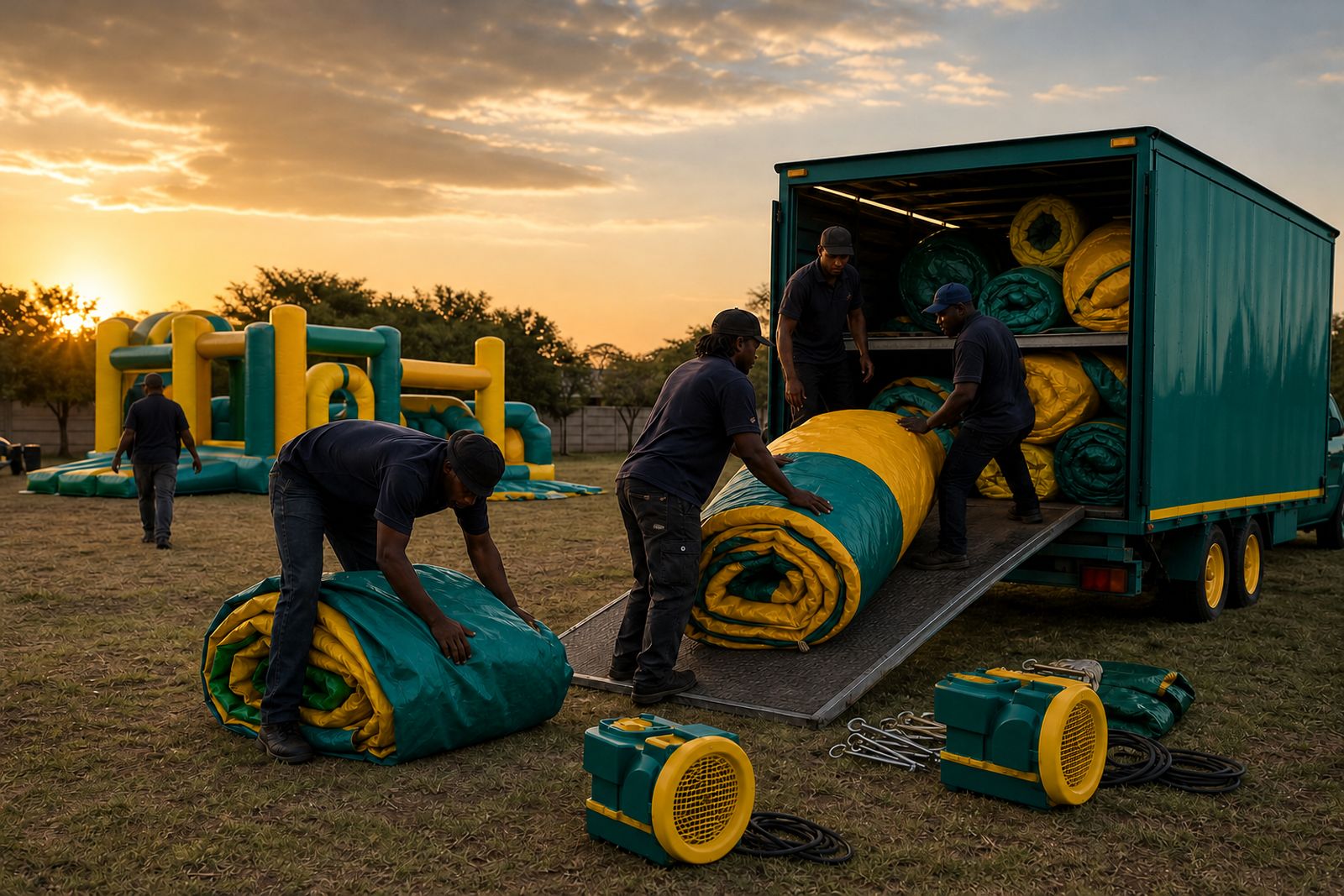
After the event, the team removes the equipment, blower gear, mats and any temporary markings used for layout control. The area is checked for loose tape, pegs, packaging and other stray items before handover. If the venue has special rules, such as school grounds or shopping centre loading bays, we work to keep the area neat and clear for the next users of the space.
We also note anything useful for future hire planning, such as a gate that is too narrow for larger units or a patch of ground that stays soft after rain. That kind of aftercare helps with the next booking, because it keeps the layout grounded in what the site can actually carry. It is plain work, but it saves time on the next setup and avoids awkward corrections on event day.
Key facts
| Service area | Midrand, Gauteng and national road shows |
|---|---|
| Common venues | Schools, malls, corporate family days and birthdays |
| Site factors | Space, access, surface, overhead clearance and guest flow |
| Power review | Mains supply, cable routes and generator planning |
| Safety items | Anchoring, mats, supervision points and queue control |
| Related support | Delivery setup, wet weather plans and strike and collection |