
Measure the route, not just the opening
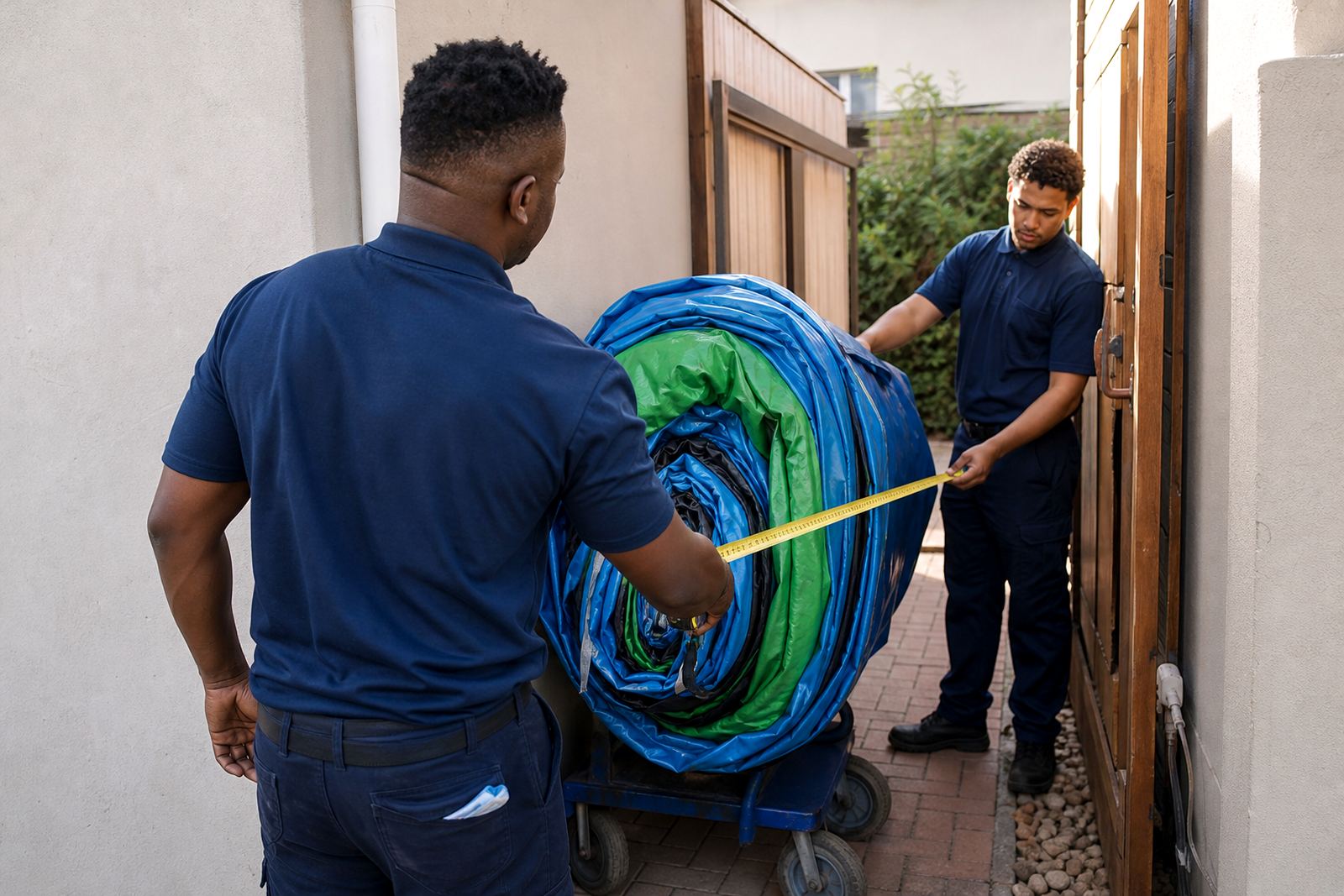
The first measurement that matters is rarely the front gate. A crew may still need to move through a side passage, around a water tap, past a parked car or through a backyard pinch point before the equipment reaches its final spot. A single clear width at the entrance means little if the route narrows again two metres later.
For schools, malls and office parks in Midrand and nearby areas, the best check is a full path from vehicle drop off to the setup point. Count gate posts, wall caps, uneven paving and any low branches that sit in the way. Inflatable units often arrive folded and bagged, but they still need enough room for hands, trolleys and careful turning.
- Measure the narrowest point on the route.
- Allow extra space for crew hands and trolley wheels.
- Check for slopes, steps and tight corners.
- Note any locked gates that need access on arrival.
Stairs, ramps and tight turns change the plan
One short staircase can turn a simple booking into a slower lift. Even where a product can be carried, stairs add strain and increase the chance of scuffed walls or a dropped corner. Long passages can be just as awkward when a cabinet, frame or counter has to be angled through at the last minute.
Games and ride equipment also differ in shape. A candy floss cart moves differently from an arcade cabinet, and a photo booth case needs a cleaner turning line than a pile of soft play items. If the access path has a bend, note whether it turns left or right and whether a landing exists between levels. That detail helps the crew load the right team and the right set of wheels.
In office towers and shopping centres, service corridors are often the only route. Those corridors can include fire doors, security points and low rails that eat into the usable width. If a lift is part of the route, the internal car size and door opening matter just as much as the passage outside.
What different hire items usually need
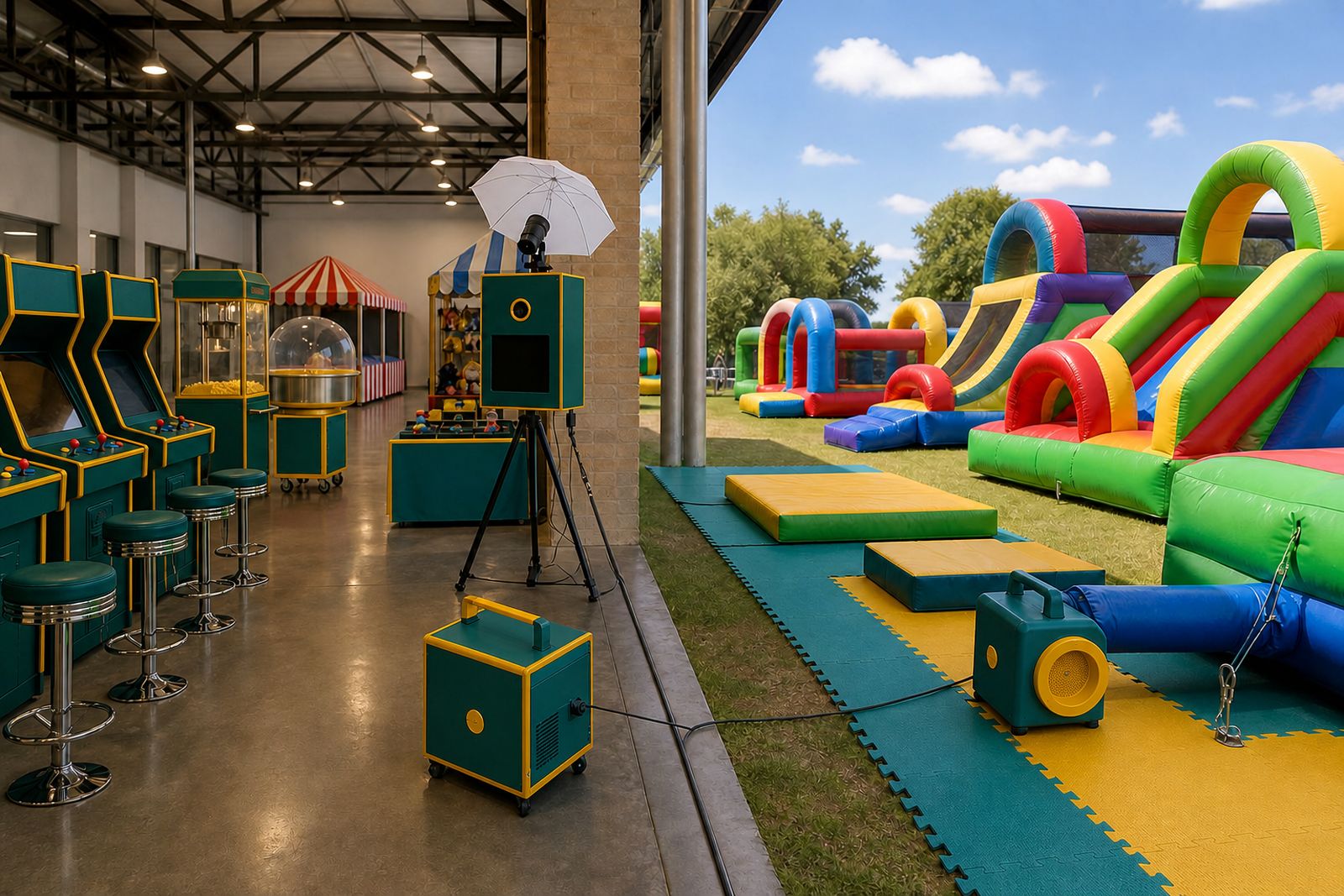
Not every amusement item asks for the same space. A small jumping castle may fit where a larger obstacle course will not. A carnival game stall can often be placed closer to a wall, while a small fairground ride needs a more open delivery path and more room to turn into position. For outdoor events, the crew also looks at ground surface, anchoring points and whether mats can lie flat.
As a guide, these are the access questions that help most:
- Can the item pass through a gate without tilting too sharply?
- Is there room to carry the folded unit without scraping walls?
- Will a blower, power lead or generator route need extra clearance?
- Can safety mats be laid without blocking a doorway or escape route?
- Is there space to stage the unit before final placement?
For indoor setups, ceiling height matters too. Foam machines, bubbles and photo booth structures may fit under standard roofs, but a crew still needs enough clearance for lifting arms, stands and signage. If the access route is neat but the venue doorway is low, the job can still slow down.
A Midrand school day that nearly stalled at the gate
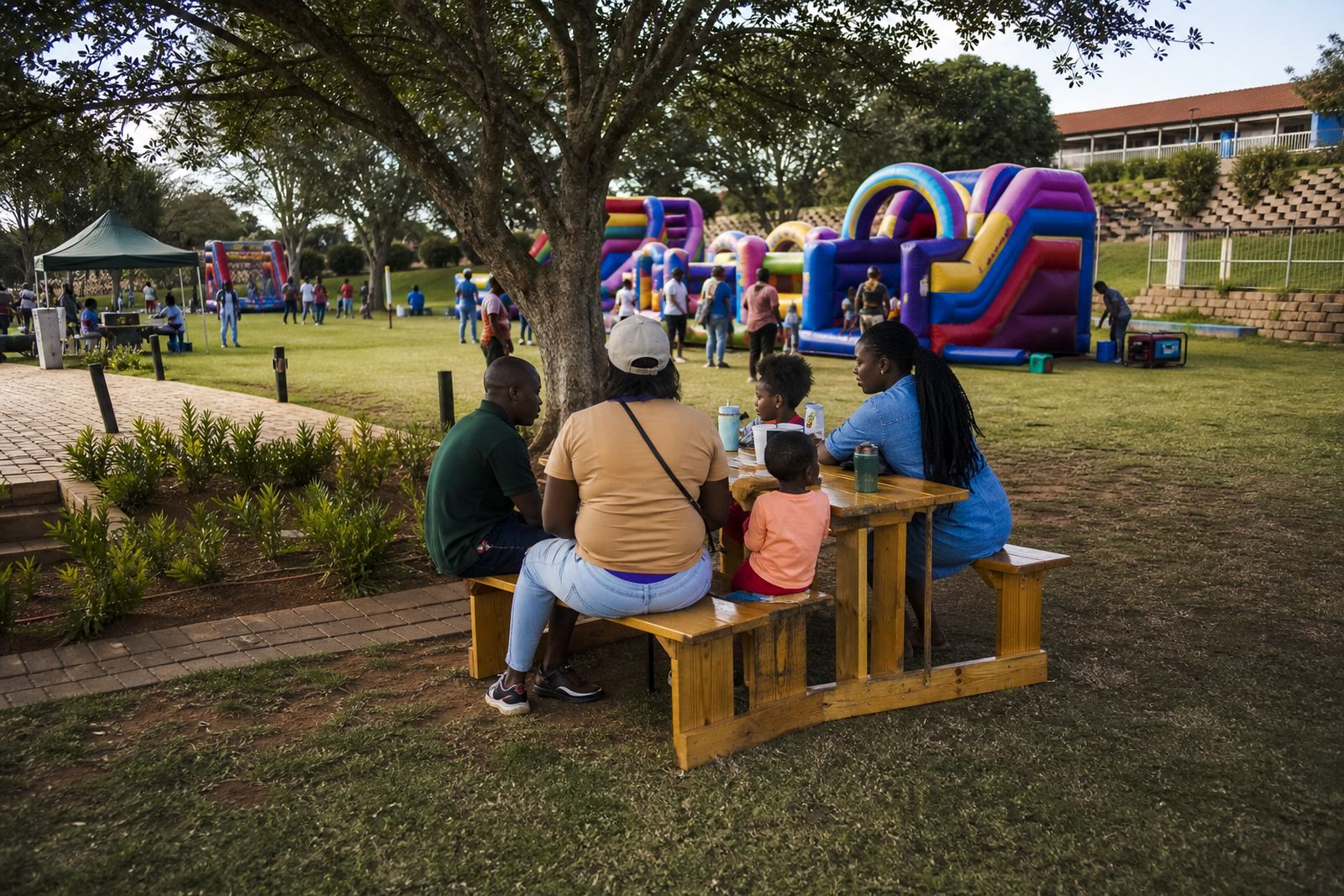
A school in Midrand once booked a mix of inflatable play, carnival games and a snack cart for a family event. The courtyard looked open, but the side gate was narrower than the main entrance and there was a sharp turn behind the hall. The equipment could still be installed, yet the route needed careful handling and a different arrival order.
The crew used the widest point for the largest folded pieces first, then moved smaller items through the passage once the main path was clear. Mats were laid before anchoring, and the snack cart was placed where it would not block learner movement. That sort of adjustment is common across Gauteng, especially where older buildings have narrow side access and modern event gear has to fit around them.
When the access route is checked early, the day usually feels calmer on the ground. Fewer objects need to be shifted twice, and the crew can focus on setup, supervision and queue flow instead of trying to solve a doorway problem while people are already arriving.
Power points, safety zones and weather still matter
Access width is only one part of the delivery picture. A blower for an inflatable needs its own clear position, and the cable route should not cross a busy walkway where children will run. If a generator is needed, the crew also looks for a firm, outdoor position with enough room for safe placement and noise control.
Safety zones matter even more when the route is tight. A unit that fits through a gate still needs room around it for mats, supervision and movement in and out. In wet weather, a narrow passage can become slippery fast, especially where polished floors or tiled entries are involved. For that reason, the team may check whether a covered area or alternate route is available before event day.
Helpful checks before delivery:
- Clear loose furniture, bins and parked vehicles.
- Keep keys or access codes ready for locked side gates.
- Mark the route from drop off to setup point.
- Tell the crew about stairs, slopes and surface changes.
- Share any school or site rules on moving equipment after hours.
The details that keep collections tidy
Strike and collection can be just as sensitive as setup. If an inflatable, ride or game has to be removed through the same narrow route, the crew needs space to pack, fold and wheel items back out without blocking people still on site. A busy mall, school hall or office courtyard can become awkward if the exit path is tighter than the entrance.
Good access notes also help with planning deposits, booking steps and event logistics in a general sense. A crew can prepare the right transport, the right crew size and the right sequence when they know whether the route includes stairs, long passages or a side gate with a tight turn. For national road shows, that kind of detail saves time on the ground and keeps the work orderly from one stop to the next.
If you are planning a birthday, corporate family day or school fun day, measure the route before the delivery vehicle is booked into place. A few numbers written down early can spare you a lot of lifting later.