
Hall Space Changes the Whole Plan
An indoor venue gives you walls, doors and a fixed floor, which helps when you need a clear route for queues, food tables and parent seating. The ceiling height matters as much as the floor area, because many inflatables need enough headroom for the fan, the top shape and safe movement around the unit.
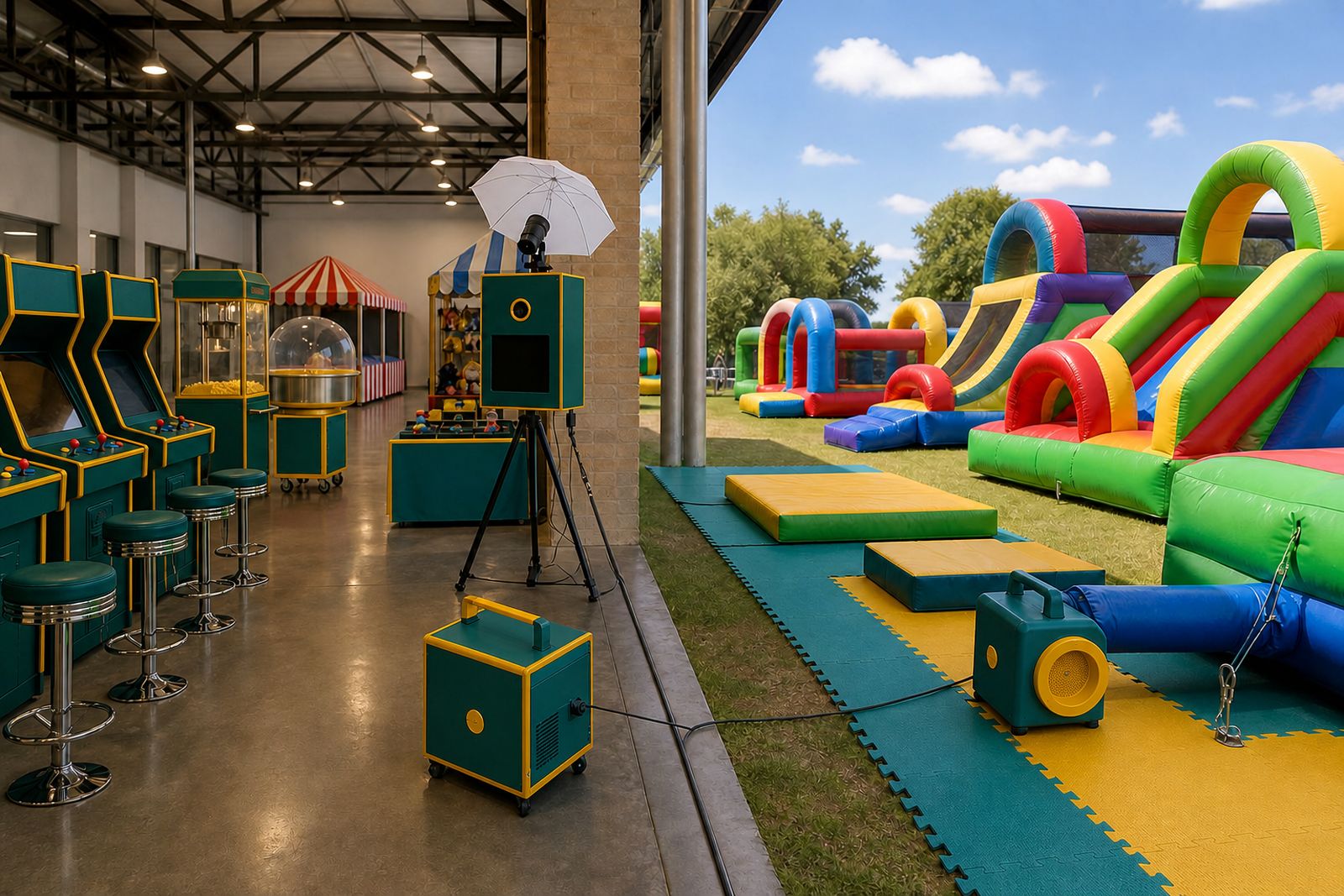
For a school hall in Midrand or a function room in Sandton, the first question is often not what fits, but how people will move once the activity starts. A jumping castle beside a photo booth can work well in a hall if the exits stay open and the queue does not block the snack cart.
- Measure the usable floor, not the whole room
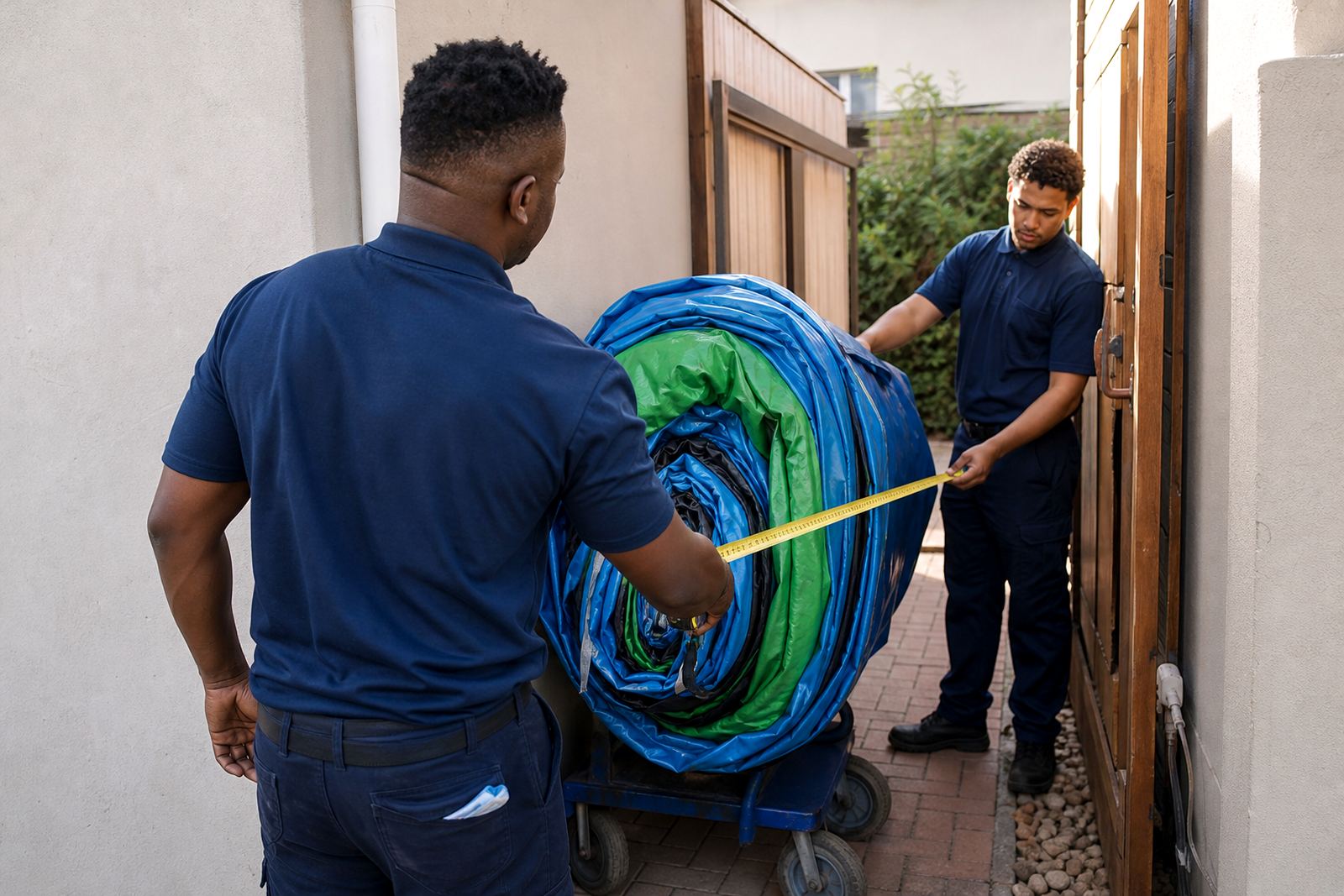
- Check door widths for delivery and set up access
- Leave space for mats, queue lines and crew movement
- Keep clear paths to toilets and emergency exits
Open Air Gives More Freedom, With More Variables
Outdoor events usually give more room for obstacle courses, small rides and game rows, but the site has to behave. Grass, paving and compacted ground all need different anchoring, and a windy afternoon can change the way a castle or ride is positioned. Shade also matters, especially for birthdays and school fun days that run through the hotter part of the day.
In open spaces, the layout should allow for wet weather changes before the first guest arrives. A covered backup spot, even if it only holds the smaller games and the candy floss cart, can save the day when the sky turns or the ground softens after rain.
- Anchor inflatables properly for the surface type
- Plan for shade, water points and walking routes
- Keep a dry backup zone for key activities
- Allow extra space around moving rides and queues
Power, Blowers and the Quiet Work Behind the Fun
Indoor and outdoor setups both depend on power planning, but the load looks different. An inflatable uses continuous airflow from blowers, arcade cabinets need stable power, and popcorn or candy floss carts may need their own supply points depending on the venue layout. A photo booth also works better when the power point sits close to the operating area, not across the room.
At an indoor venue the cords, plugs and access routes need neat control because guests will walk close to them. Outside, the question is often where the generator sits, how the crew protects cables, and whether the sound from a machine or generator will sit comfortably with the rest of the event.
- Check power points against the final floor plan
- Keep cables taped or covered where guests walk
- Separate food carts from damp ground where possible
- Place generators where noise and fumes stay clear of guests
Safety Mats, Supervision and Guest Limits
Whether the event is indoors or outdoors, the safest layout starts with the right size unit for the age group. Smaller children need gentler play zones, while mixed-age crowds need clearer rules and stronger supervision. Height limits matter on obstacle elements and small fairground rides, and an operator needs enough room to watch entrances, exits and loading points.
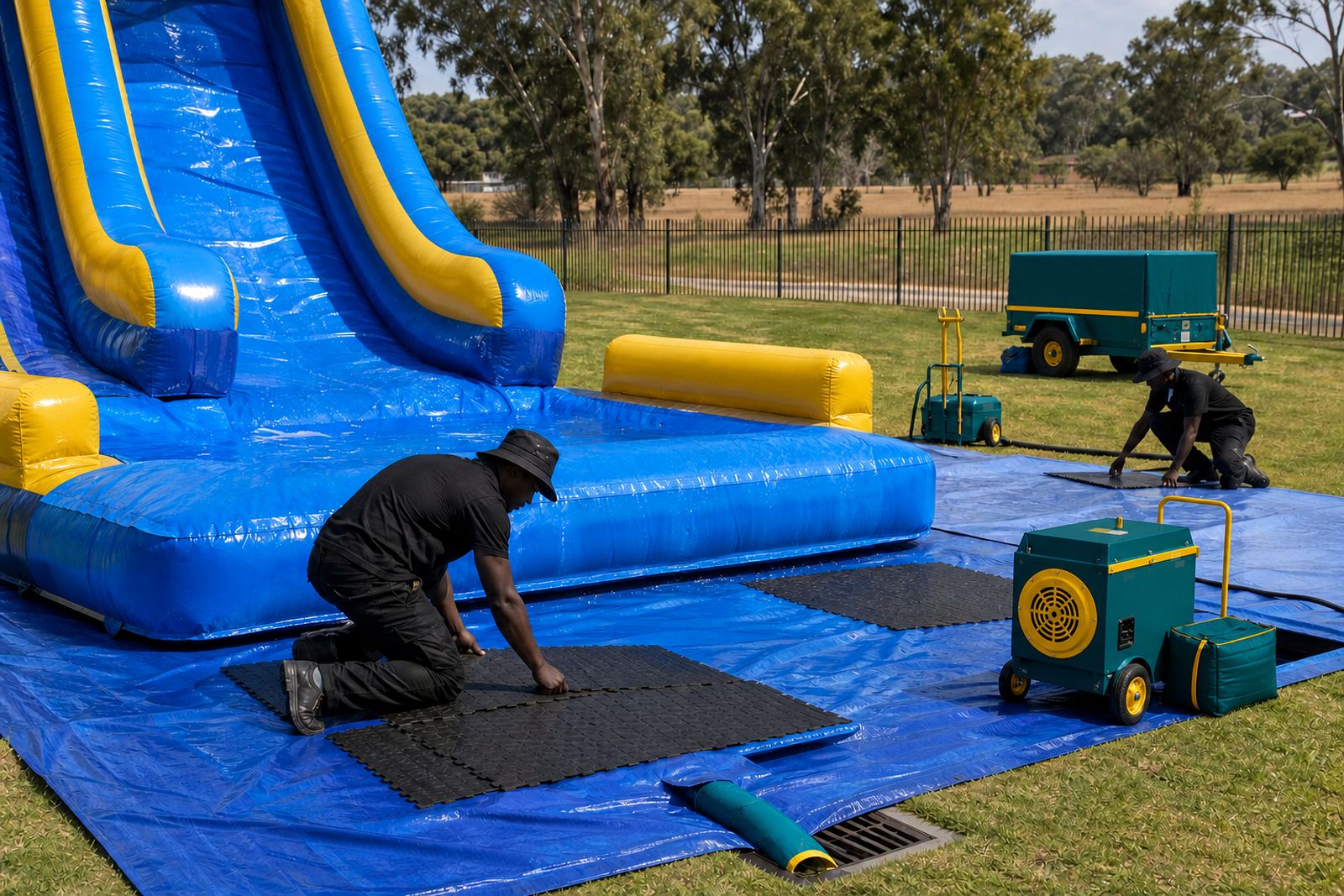
Safety mats are more than a nice extra. They help at the step on and off point, at the front of a slide, and near areas where feet can catch on a seam or threshold. Indoor floors can be smooth and hard, while outdoor ground can shift slightly under pressure, so the mat layout changes with the surface.
- Match each attraction to the ages on site
- Use mats at steps, entrances and ride edges
- Keep staff on hand for queue control and turns
- Set guest limits to suit the unit and venue space
A Midrand School Fair Looks Different from a Garden Birthday
A school fair in Midrand often needs a straightforward flow, with a gate point, a few active stations and a clear path for parents. A garden birthday may feel looser, but it can turn messy if the castle, snack cart and photo booth all sit in the same corner. The best layout is the one that keeps movement calm, even when the crowd gets lively.
For a corporate family day in Pretoria, the crew may use a combination of games, arcade cabinets and a mascot appearance to spread people out. For a mall activation in Johannesburg, foot traffic changes all the time, so each attraction needs a neat entry point and enough visibility to draw people without clogging the passage.
- Schools need tidy queue lines and clear supervision zones
- Malls need compact footprints and visible signage points
- Gardens need weather-aware spacing and ground checks
- Corporate days need guest flow across more than one activity
Booking Steps That Keep the Day Tidy
The booking process gets easier when the venue facts arrive early. A good brief includes the site type, guest age range, rough headcount, available floor or garden space, power points and whether the event is indoors, outdoors or partly covered. That lets the team plan delivery, setup, strike and collection with less guesswork.
Deposits, venue rules and access times also matter. Some buildings want early loading, some lawns need protection for the grass, and some malls have strict delivery doors or loading bays. When the event covers a full day, the crew may need to swap one attraction for another, or move a food cart closer to the crowd after the main rush.
- Share the venue address and access details
- List the attractions you want in order of priority
- Tell the team about flooring, shade and power access
- Include venue rules on noise, wet weather and collection