Why snacks and bounce play do not mix well underfoot
Inflatables work best on clean ground with clear borders. Once chips, sweets, sauce and juice boxes move into the play zone, the surface gets messy and the footing changes fast.
Children often run from a food table straight back to the jumping area with sticky hands or wet shoes. That is where slips happen, and where an operator has to keep stopping the play to clear the area. On a busy birthday or school fund-raiser, the problem is usually not the food itself, it is the traffic between the food table and the entrance to the inflatable.
Keeping eating areas seperated from bounce and slide play gives crews room to manage safety mats, line up shoes and watch the doorway properly. It also makes cleanup easier when the hire is collected later in the day.
How far apart the zones should sit on a real site
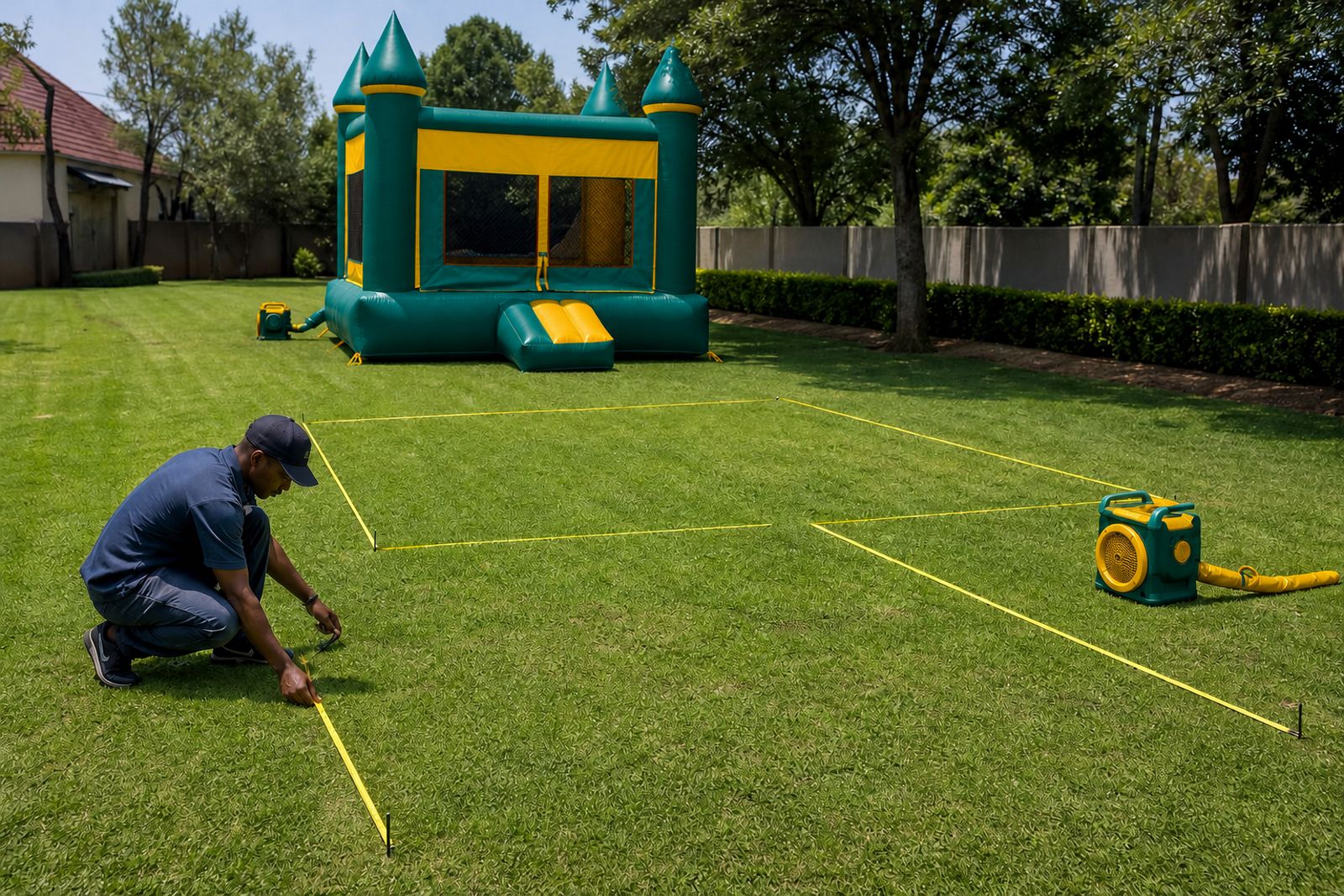
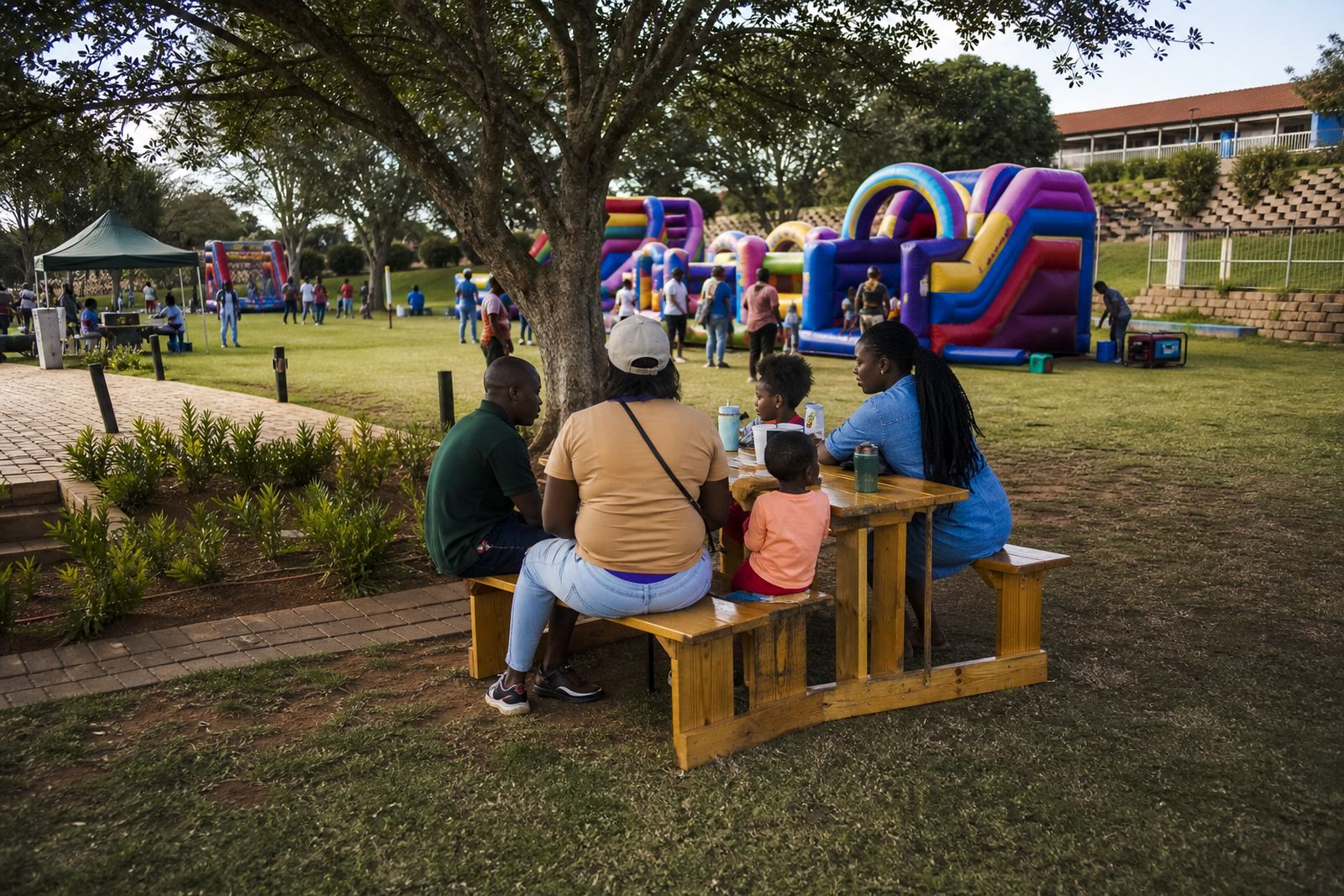
The gap does not need to be huge, but it must be sensible. A food table should sit far enough away that crumbs, drinks and queueing children do not spill into the play exit. For smaller yards, the trick is to use a side passage or a shaded edge of the site instead of putting the snack station right beside the blower and entry point.
On larger school or mall grounds, the play area and the eating area can be set on different sides of a courtyard or field. That gives adults a clear view and keeps the line for popcorn or candy floss from cutting across the inflatable route.
- Keep the entrance to the inflatable open and easy to supervise.
- Leave space for a queue without blocking the food table.
- Place bins near the eating area, not beside the play opening.
- Avoid placing drinks where they can be knocked over onto mats.
What food tables need beside castles, slides and obstacle runs
Snack carts and play equipment can work side by side, but each one needs its own space. Popcorn machines, candy floss carts and drink tables attract people in seconds, so the crew needs a clear serving point that does not push families into the inflatable queue.
For a birthday in Midrand, for example, a jumping castle may sit on one lawn while a popcorn cart stands under shade near the patio. That kind of set-up keeps the children moving between activities instead of crowding one corner. It also helps if the serving point is on a hard surface, because spills are easier to wipe up there than on grass or soft ground.
When there are arcade cabinets, carnival game stalls or a photo booth on site, the layout matters even more. Food beside those features can create one long queue with nowhere for people to stand and nowhere for crews to work. The better plan is to spread the attractions out and leave the eating area as its own stop.
Busy hands, sticky fingers and the safety rules that still count
Safety around inflatables is not only about the blower, anchors and mats. It also includes what children carry in with them. Open cups, lollies on sticks and greasy snacks can end up on the inflatable floor, and that changes the surface under bare feet.
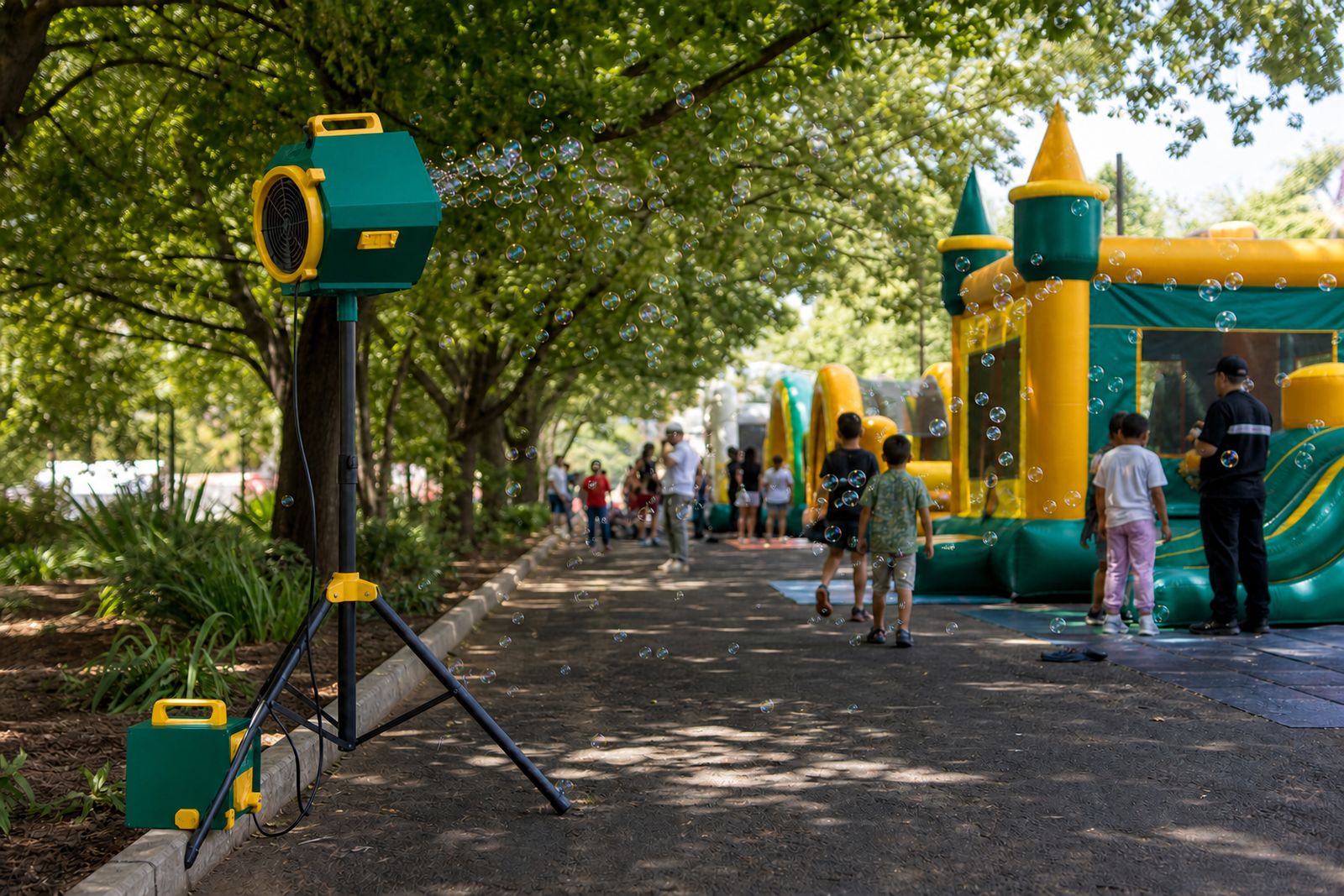
Supervision matters at the doorway. Crew members will usually ask that food is kept outside the play area and that children pause before entering. This keeps the mats cleaner and gives the operator a better view of age groups, height limits and rough play. Foam and bubble machines need their own watch points too, because the ground around them can become wet and shiny.
- No food inside the inflatable unless the operator says a special setup allows it.
- No glass or hard containers near the play zone.
- Wash hands before children re-enter after eating.
- Keep wet wipes and bins close to the snack point.
Power, weather and the mess that follows a sudden change
Many food stations and play features rely on power in different ways. Inflatable blowers need a steady supply, while candy floss machines, popcorn machines, arcade cabinets and photo booths may need their own power plan. If the event is outdoors, the crew also has to think about generator placement, cable runs and keeping those items away from wet ground.
Weather can change the food layout too. A dry morning can turn into a windy afternoon, and lightweight napkins, cones and wrapping can start moving across the lawn. If rain arrives, food should not be left under the same open stretch as the inflatable. Covered tables, hard standing and short cable runs make the whole setup easier to manage.
At collection time, separate zones also save time. A snack area that has stayed apart from the play space is usually quicker to clear, because there are fewer crumbs in the mats and less rubbish stuck around the entrance.
A Midrand school sports day with a cleaner flow
At a school sports day in Midrand, one side of the field was used for a jumping castle and a small obstacle course, while the tuck shop and candy floss stand stayed near the covered seating. That layout meant children could play, eat and queue without crossing each other every minute. The crew could watch the inflatable doorway, the snack line and the route to the toilets without any confusion.
The important part was not just distance, but direction. The food point faced away from the entry mat, so the line never blocked the slide exit. Parents had somewhere to stand, teachers could keep an eye on the younger children and the whole field felt less crowded. On a windy day or a hot one, that kind of spacing makes a real difference.
For malls, birthdays and corporate family days, the same logic holds. Food belongs close enough for convenience, but not so close that one spill turns into a long clean-up around the inflatable.
What a good booking conversation should cover
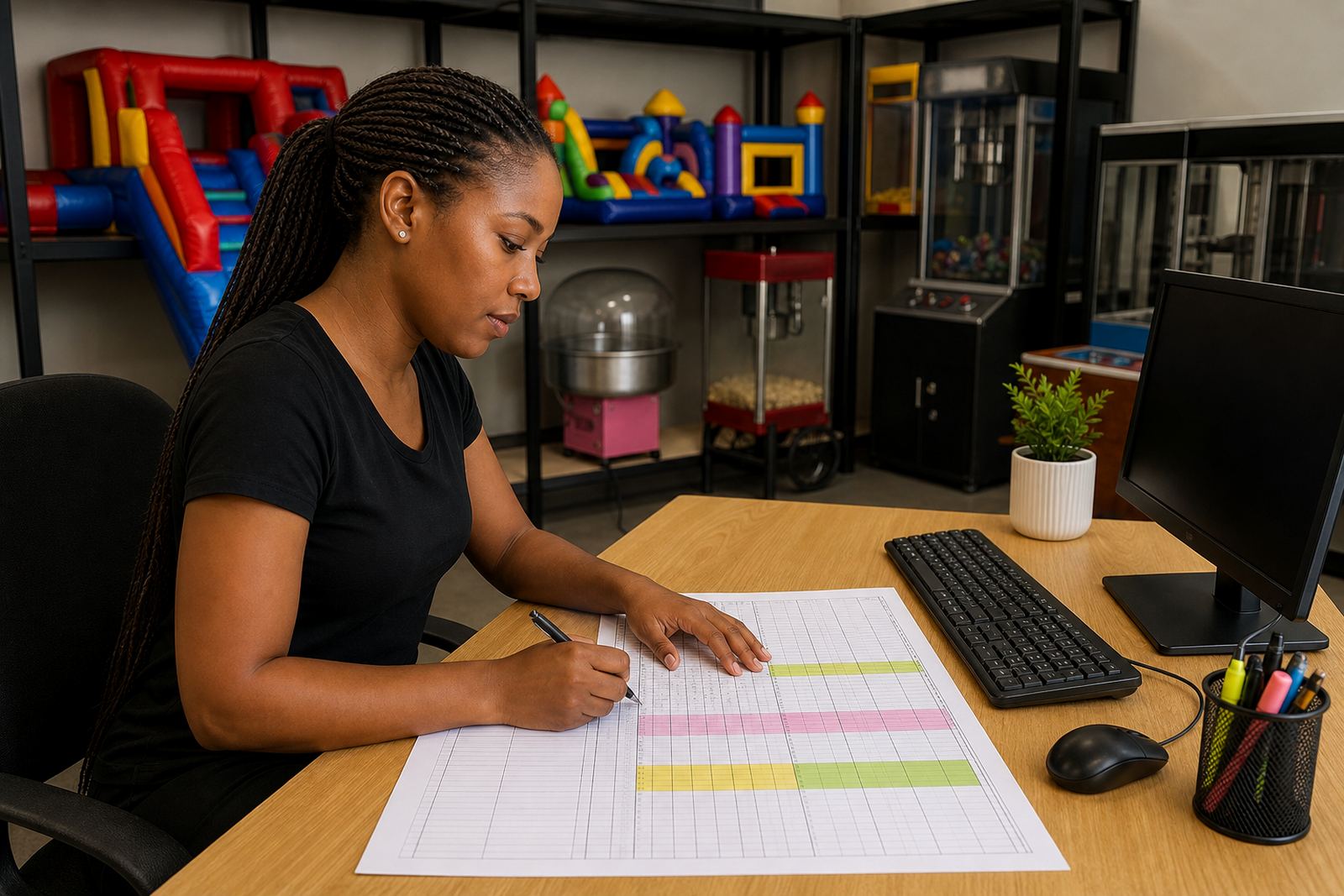
The crew needs to know whether there will be popcorn, candy floss, packaged snacks, a full catering table or a small refreshments point. That shapes the site plan, the cable routes and the way queue management is handled.
A simple list makes planning easier:
- The number of children and the ages using the inflatable.
- Whether food will be served in packets, cups or from hot machines.
- Whether the ground is grass, paving or a mix of both.
- Whether shade, water or hard standing is available near the snack area.
- Whether the event is indoors or outdoors, and what the weather plan is.
That information helps shape delivery setup, on site supervision and strike and collection. It also keeps the food area where it belongs, away from the bounce zone and easy to manage for the whole day.