
What anchoring is doing on the day
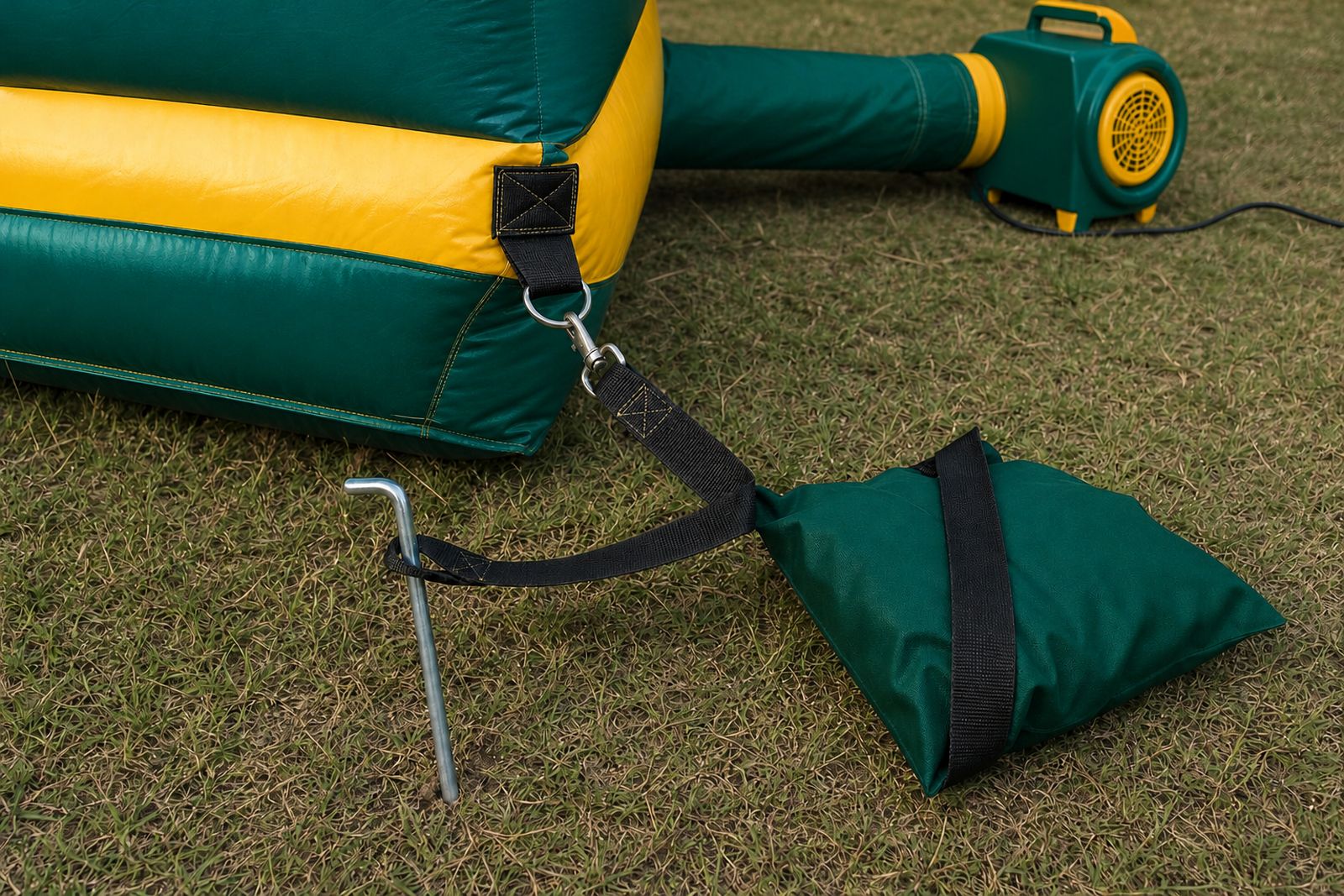
An inflatable is not held in place by weight alone. The blower keeps air moving through the structure, while pegs, ballast or fixed tie points stop the unit from creeping, lifting or turning when the crowd builds up. On a school field in Midrand, a clear patch of grass may look ready, but the surface still needs checking for firmness, slope and hidden soft spots.
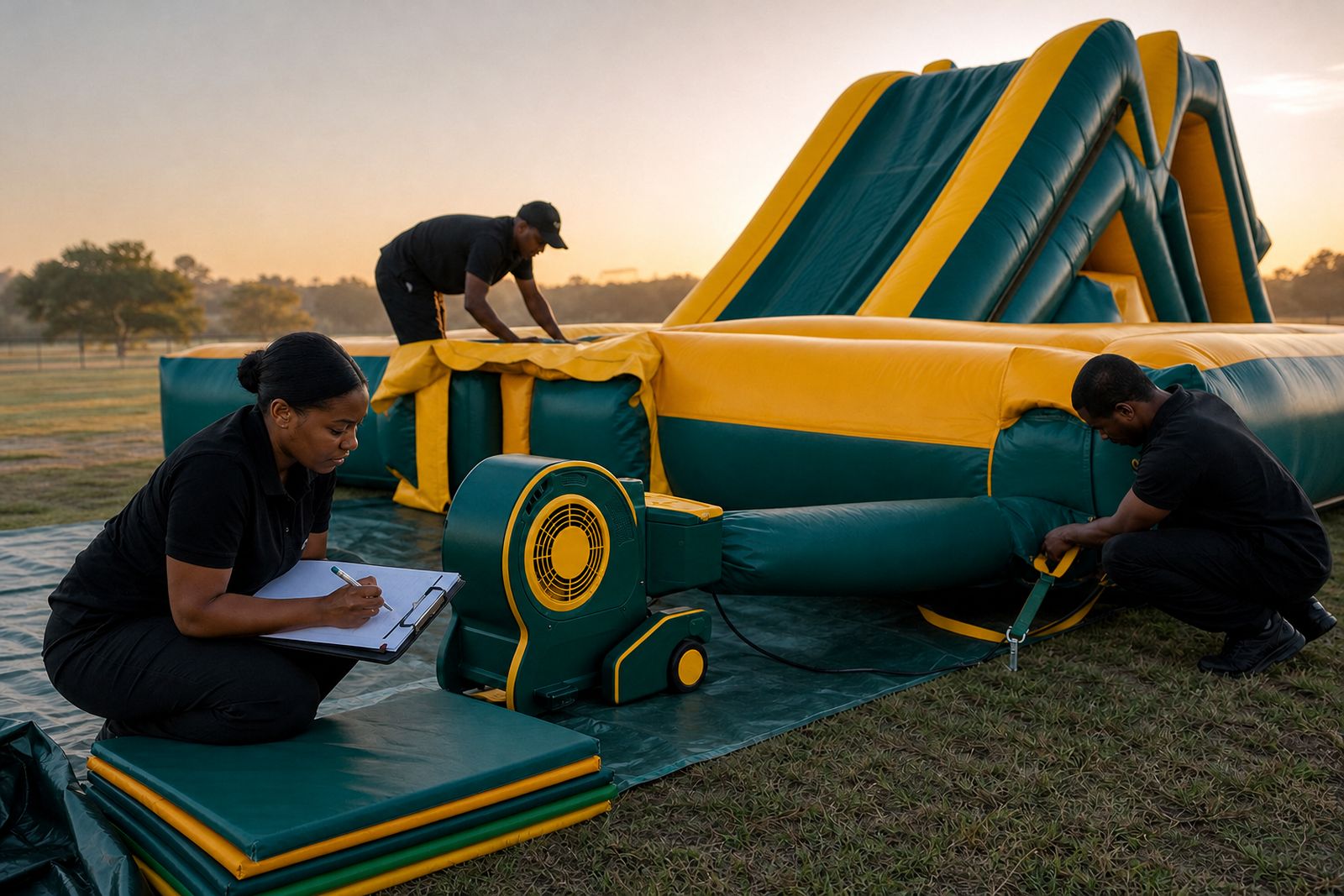
Good anchoring also helps with orderly use. If the unit shifts, the entrance can move, safety mats can slide and the queue becomes messy. Trained crews look at the whole set up, not just the castle itself, because stability starts with the ground under it and the space around it.
Pegs, ballast and tie points are not interchangeable
Pegs suit grass and other ground that will take a driven anchor point. Ballast is used where pegs are not suitable, such as hard paving, some school courtyards or mall forecourts. Firm tie points matter too, but only where the structure and venue layout allow a proper fixing point.
The choice is based on the surface, the size of the inflatable and the way people will move through the activity. A small castle for a birthday in Centurion does not need the same setup as a long obstacle course at a corporate family day in Pretoria. The principle is the same though, secure the unit so the crew can supervise without fighting the site.
- Pegs are used where the ground gives a solid hold.
- Ballast is added where the floor cannot be pierced.
- Tie points need a sound structure, not a guess.
- Each point must be checked before the crowd arrives.
Ground conditions change the whole plan
Grass after rain, loose sand, cracked paving and polished indoor floors all behave differently. In Durban the air can be humid and surfaces can stay damp for longer, while in Johannesburg dry wind can shift loose items if they are not secured. That is why anchoring is never a one-size answer.
Our crews look at access, slope, overhead clearance and the space needed for blowers, cables, queues and viewing areas. Even a neat open patch can become unsuitable if the ground is soft at one end or if the inflatable sits too close to a fence, wall or parked vehicle. A careful site check cuts down on surprises once the unit is inflated.
Mats, barriers and crowd flow sit in the same plan
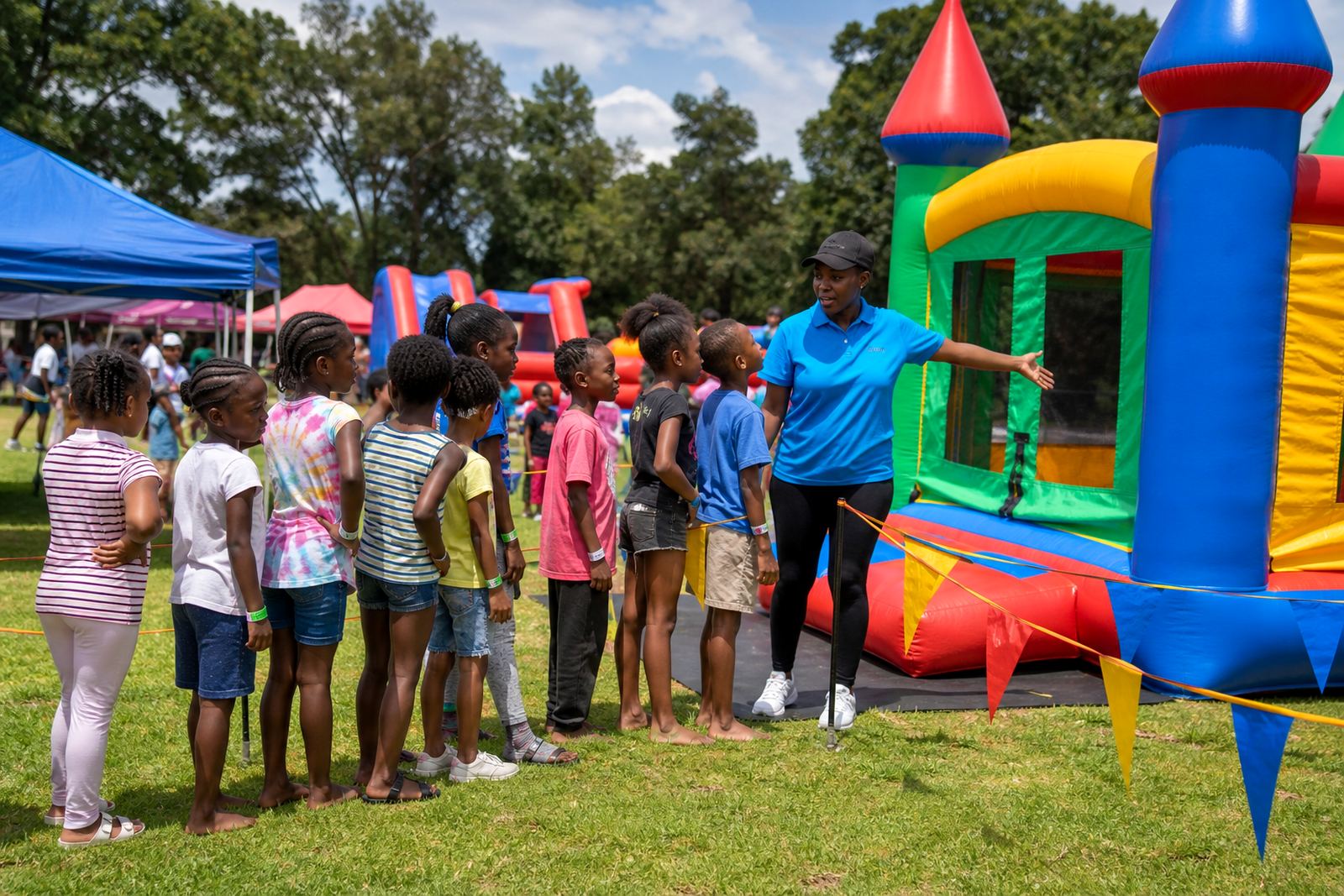
Anchoring is only part of a safe layout. Safety mats at entry points reduce hard landings, while barriers and simple queue lines help keep children from pressing into the front panel or crowding the blower area. Supervision matters as much as the fixings, because a stable inflatable still needs rules on height, age range and the number of users inside.
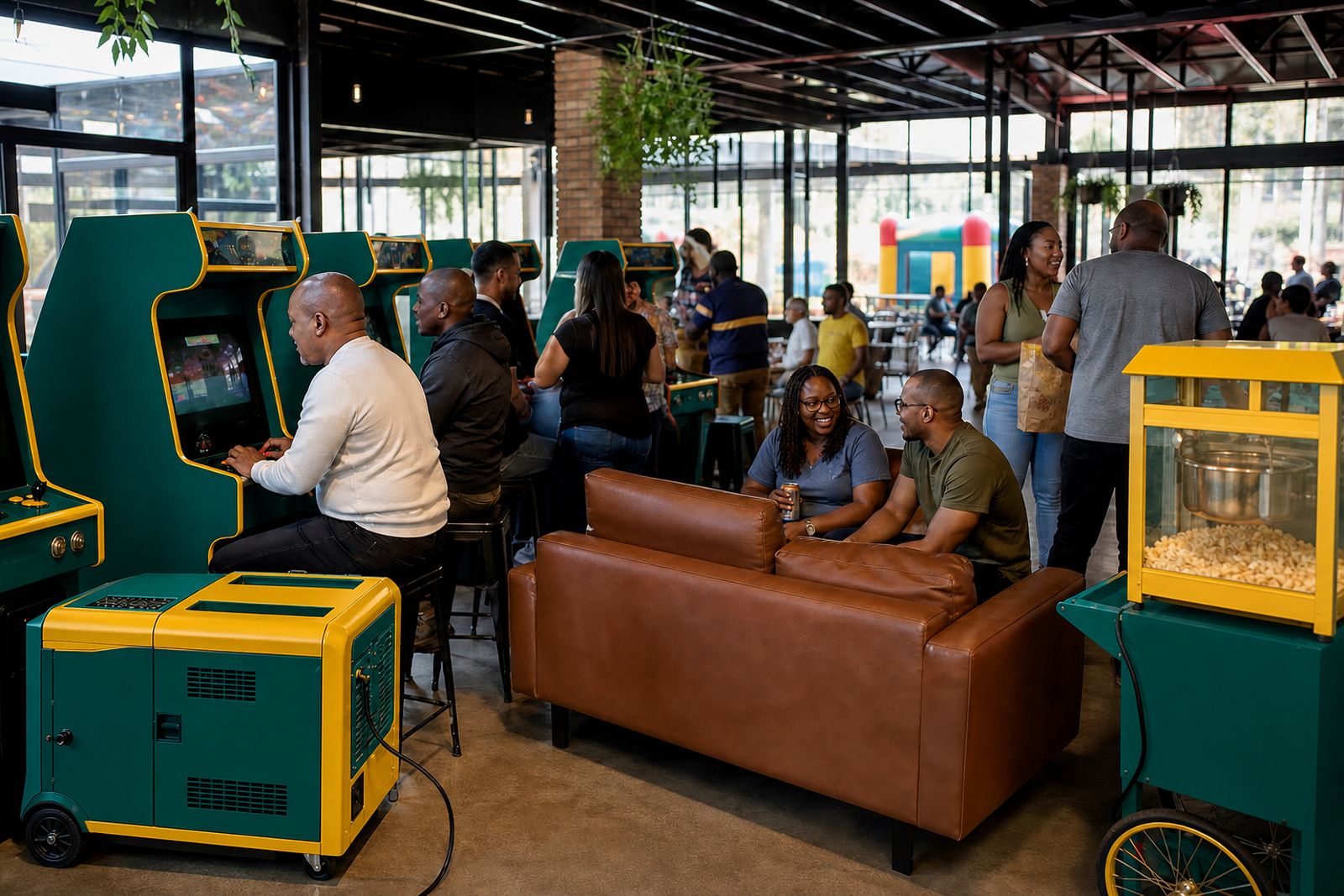
For malls and school events, the crew often has to balance pedestrian movement with the play zone. That means the anchor points, mats and queue space all need to work together. If one part is weak, the rest carries more strain than it should.
- Entry mats should sit flat and stay visible.
- Queue lines must leave space for staff to manage movement.
- Blower areas need open airflow and no loose debris.
- Children should enter by the rules for that unit.
Wind, weather and the decision to pause
Weather planning is part of anchoring, not an extra. Strong gusts, rain on a slick surface or a sudden change in direction can make a unit unsafe even when the fixings are correct. That is why trained crews watch the site throughout the hire, especially at outdoor events where the day can shift quickly.
A wet patch under a ballast point, or a softening lawn after rain, can change how secure the unit feels under load. The sensible response is to stop, assess and adjust the setup. It is better to reset the ground plan than to push on with a half secure structure and hope for the best.
A Midrand road show example with school and mall ground
Take a national road show that starts from our Midrand base and moves into a school field in Johannesburg, then a mall forecourt in Pretoria. The inflatable obstacle course on grass can take pegs, but the same event at the mall needs ballast and a tighter crowd layout. The crew still follows the same order, site check, anchor selection, safety mats, blower checks and supervised use.
For a birthday in Sandton, the setup may be lighter and the footprint smaller, but anchoring still matters because children change direction fast and parents want the area kept tidy. We aim to make hiring simple. It is to make the unit steady enough that the fun stays on the activity, not on whether it is shifting underfoot.
When bookings are confirmed, details such as surface type, access gate width, power point position, generator need if required, and the likely weather plan are worked into the setup. That way the anchor system matches the site instead of being forced onto it.