
One item in an open yard is the easiest kind of start
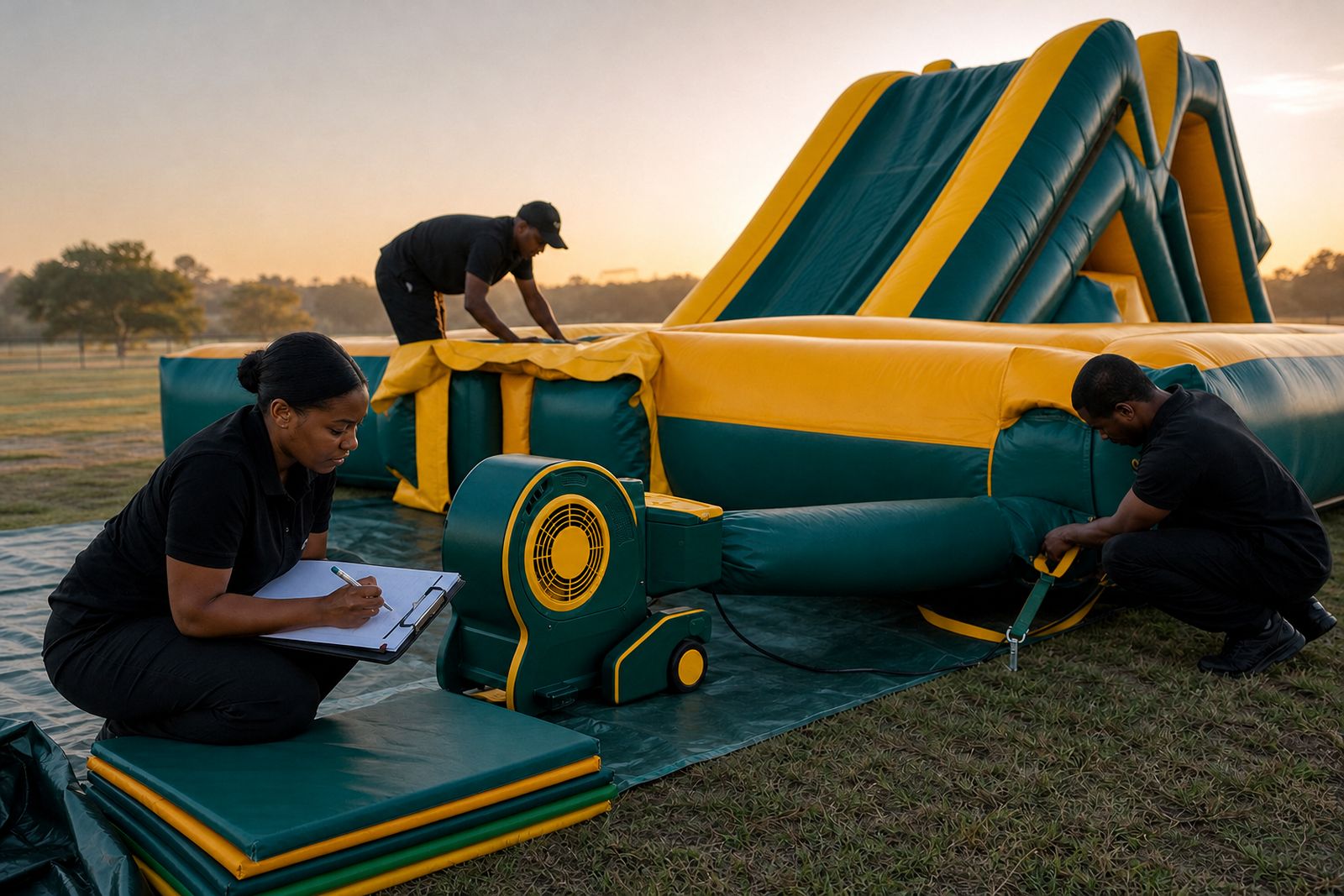
A single jumping castle on level ground is usually the cleanest setup, especially at a school field or private home with clear access for the vehicle. The crew still has to check the grass or paving, lay mats where needed, and anchor the unit properly with pegs, sandbags or other fixings suited to the surface. A blower needs a safe spot too, with enough room for airflow and for the lead to run without being a trip point.
Small items move faster when there is no bottleneck at the gate, no steep slope and no awkward tree roots underfoot. A castle that fits in a modest yard can still take longer if the entrance is narrow, or if the crew has to carry pieces around a parked car and a garden wall. In Midrand, many homes and schools have mixed paving and lawn, so the ground check matters as much as the size of the unit itself.
- Clear access from the vehicle to the setup spot saves time.
- Flat ground makes anchoring neater and safer.
- Longer cable runs and tight corners slow the job down.
- Wet grass or loose sand can change the fixing method.
Mixed packages add minutes at every handover point
When a birthday booking includes a jumping castle, candy floss cart and photo booth, the work is not only about putting things in place. Each item needs its own position, its own cable path or service point, and its own working gap for children, attendants and queue lines. The crew also needs to leave enough room between items so a queue for one attraction does not block the next one.
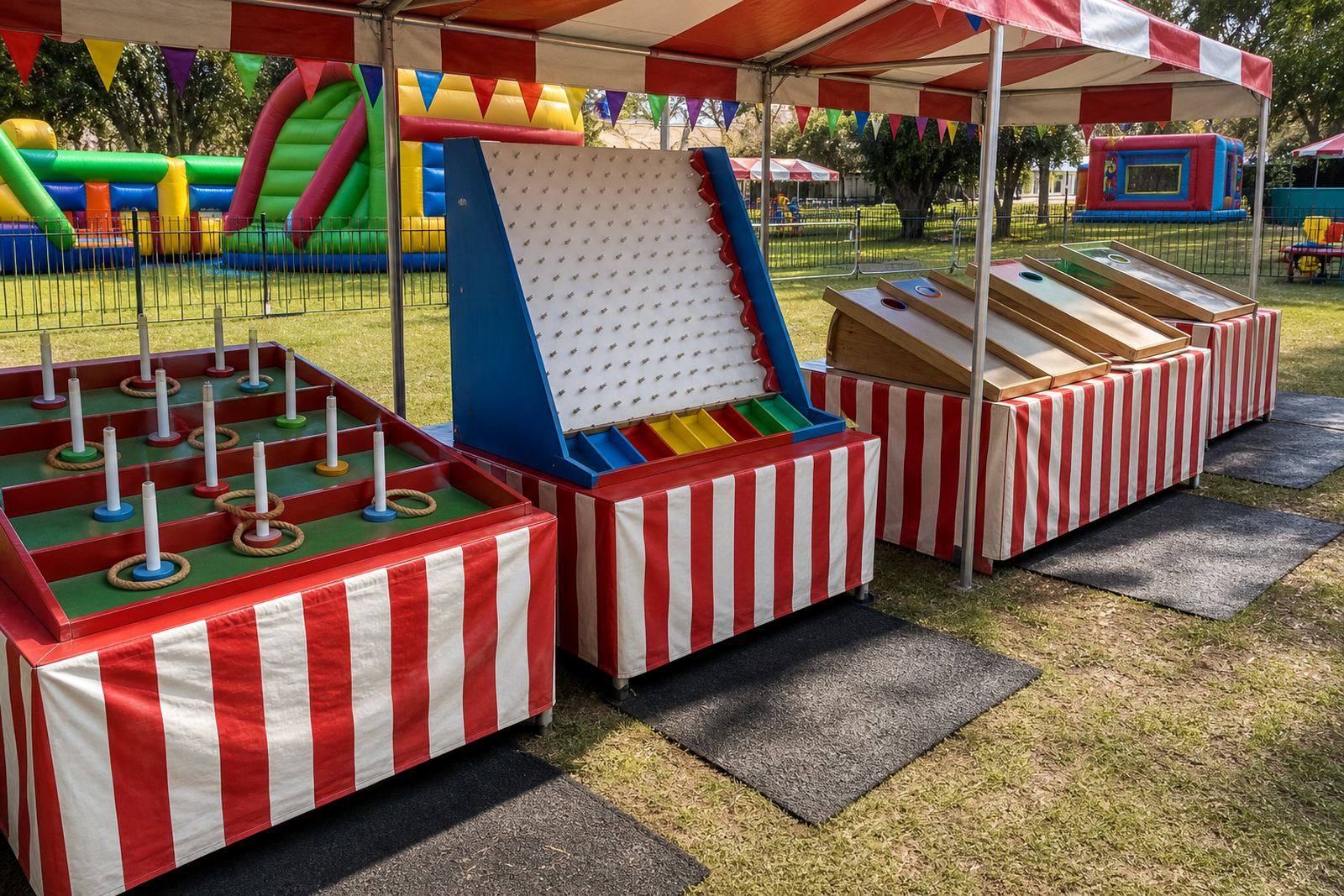
That is where setup time starts to spread out. A candy floss machine may need a stable table and a safe power point. A photo booth needs a level area where guests can step in and out without being squeezed by traffic. If a carnival game stall is part of the package, the layout must also allow for prizes, player movement and a little waiting space. The more pieces in the row, the more the crew has to think about sequence, not just placement.
Mixed packages often run best when the order is planned before the truck arrives on site. Bigger items go down first, then the smaller stops that need a fixed line or attendant position. That helps the day feel orderly and keeps the public from drifting into the work zone while the last piece is still being dressed.
Rows for schools and malls need working space, not just floor space
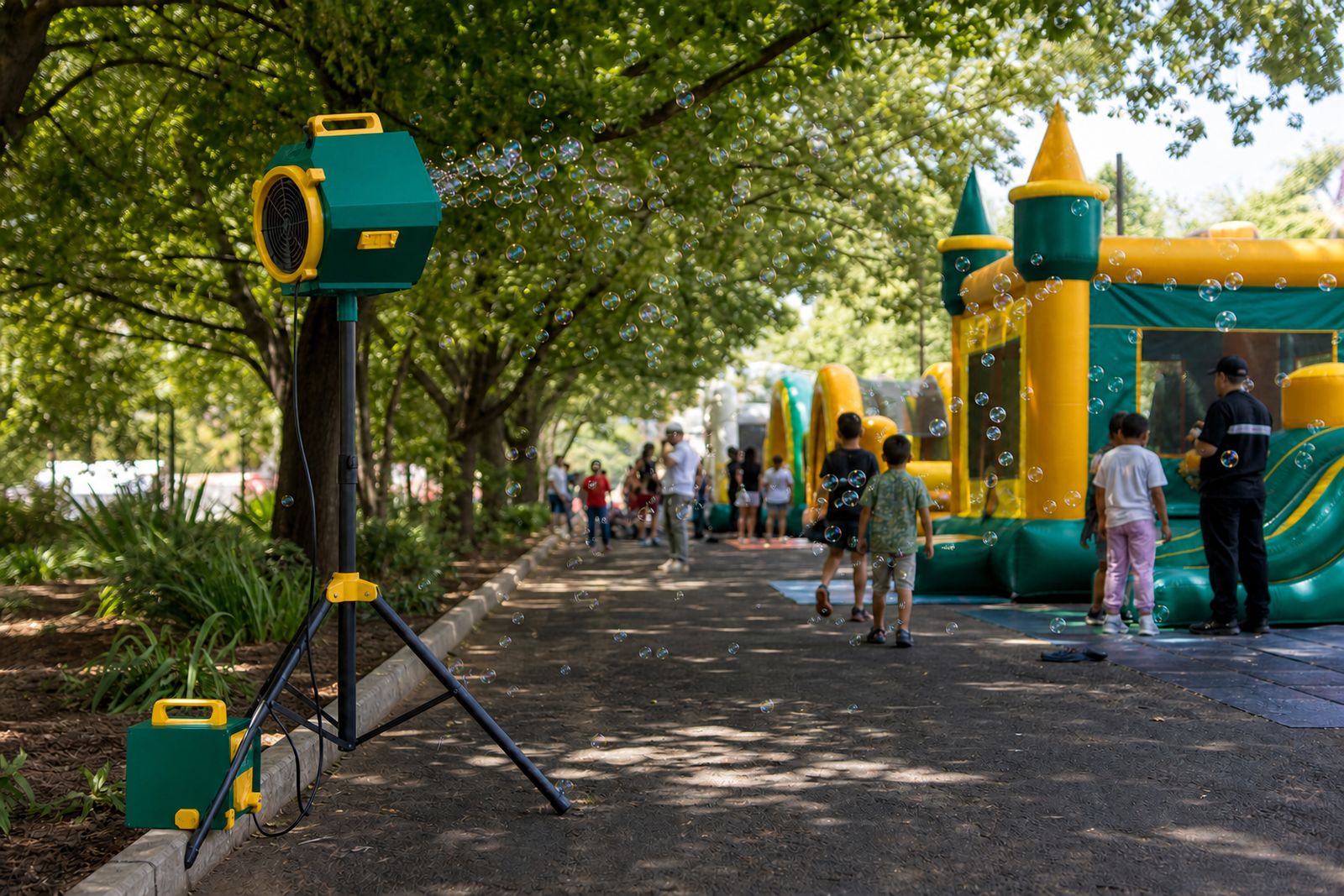
A row of amusements at a school fete or mall activation can look simple from a distance, but the back end is where time goes. Arcade cabinets need a dry spot and a neat cable route. A foam machine or bubble unit needs a safe spray zone and a clean boundary so the wet area does not spread through the rest of the event. Small rides need a little more care again, because the crew has to manage access, loading points and the space around the moving parts.
For public events, the access path matters almost as much as the footprint. If the setup must move through a lift lobby, a tiled mall passage or a gate with a tight turn, the crew may need more time than the brochure size suggests. Outdoor rows can be faster when the ground is open and the vehicle can park close to the pitch, but then the weather plan becomes part of the timing too. Wind, rain and soaked grass all change the pace of anchoring and dressing the site.
- Public venues often need a layout that keeps queues away from walkways.
- Wet surfaces can call for extra mats and slower handling.
- Arcade cabinets and photo booths need safer, drier positions.
- Small rides usually need more room around them than people expect.
Power, water and crew movement shape the clock
Many amusements work on mains power, so the crew has to map plugs, leads and load points before the first unit starts. Generators are useful where the venue has no suitable supply or where the event layout is spread across a wide area. Candy floss and popcorn carts may need power as well as a level working surface, while foam and bubble machines need careful placement so the output lands where it should and not into a walkway or a wall.
There is also the human side of it. The crew must move around guests, leave a clean corridor for safety, and keep the work area open until the final fix is secure. Where supervision is included, a trained attendant may be stationed with the attraction after setup. That means the handover is not only about packing things out of the truck, it is about setting the event up so the rest of the day can run without constant correction.
For larger school functions and corporate family days, a sensible start is to allow more time than the smallest hire would need. Not because every job runs slowly, but because several small tasks pile up once the package grows. One cable becomes three, one queue becomes four, and one unit can need another mat or extra space around the back. Those details do not make headlines, yet they decide whether the row feels tidy or crowded.
Weather, access and safety checks decide how the day begins
Weather planning matters in Gauteng and across the coast too. Wind can affect inflatables, and rain can make anchoring, mats and cabling more fiddly. A wet-weather plan is not only about cancellation. It can also mean shifting a unit to firmer ground, keeping electrical gear drier, or changing the order so the most sensitive items go in after the sky settles.
Access checks are just as practical. If the venue has stairs, a narrow service passage or a long walk from the drop-off point, setup time grows. If the pitch has soft soil, the crew may need different fixings. If children are already moving around the site, the team has to work with extra care and clearer barriers. Safety mats, blower placement, anchoring and supervision all sit in the same picture, and none of them should be treated as an afterthought.
For a Midrand base serving Johannesburg, Pretoria, Durban, Cape Town and Bloemfontein, the value is in reading the site early and loading the right gear for the job. A school field, a mall court and a backyard birthday each have their own rhythm. The same attraction can take a different setup window depending on where it lands and what has to sit beside it.
A local example from Midrand shows how the schedule changes
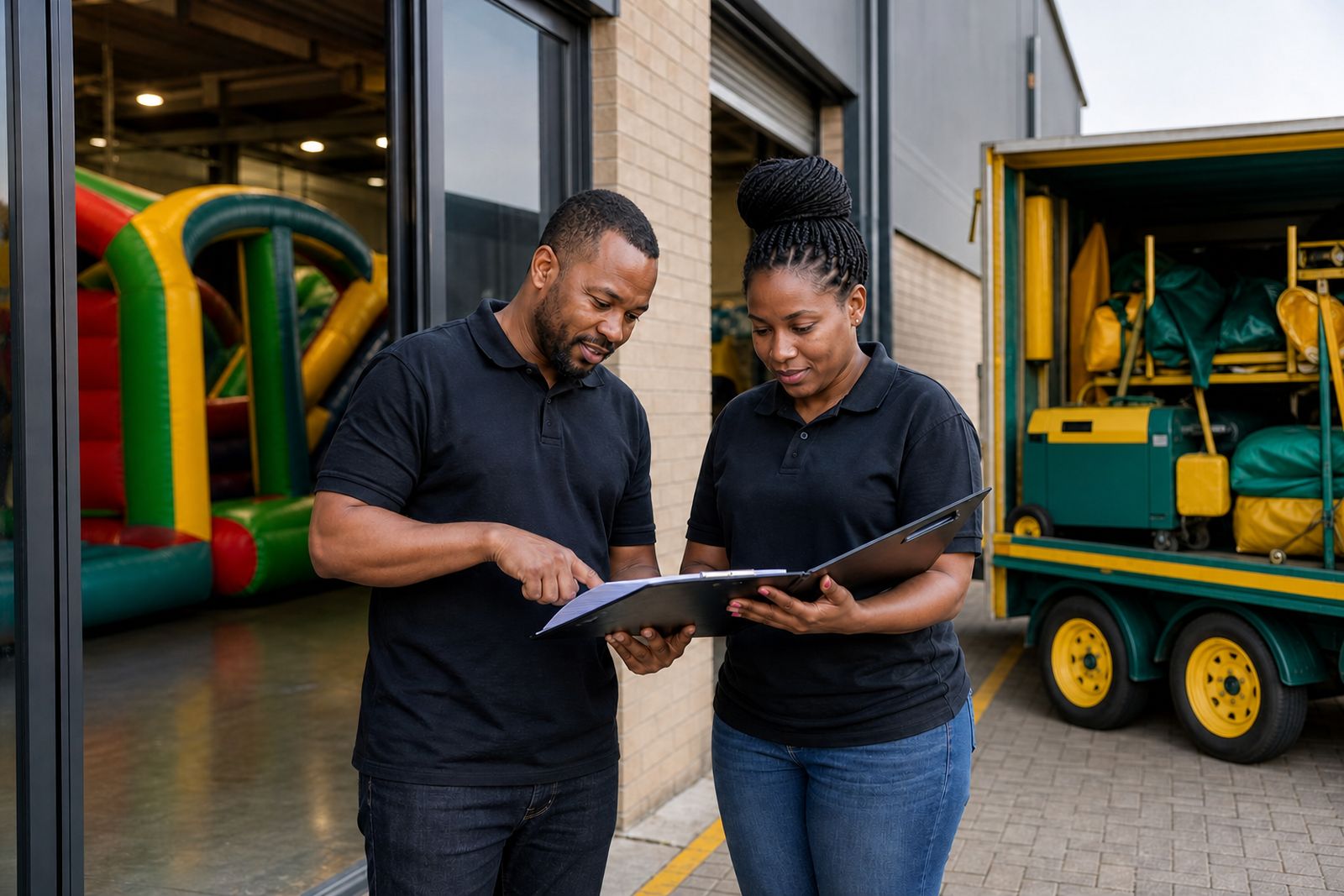
Take a birthday in Midrand with a castle, a photo booth and a snack cart. On an open lawn with vehicle access close to the gate, the crew can place the main inflatable first, run the power neatly, then position the smaller items without crossing the main play space too many times. The day starts faster when the layout is straightforward and the family has already cleared the area.
Now change that to a school event with a game stall, arcade cabinet, foam machine and two inflatables. The same crew needs more space between pieces, a clearer queue pattern, and extra attention to wet areas, cables and supervision points. The actual setup work is still practical and routine, but the small decisions stack up. That is why a larger event row can feel very different from a single hire, even when every item is familiar.
The cleanest bookings are the ones where the crew can read the site, place the items in the right order and keep the work zone open. With that in place, the event does not just look organised, it starts that way.