
Why the age split matters on the day
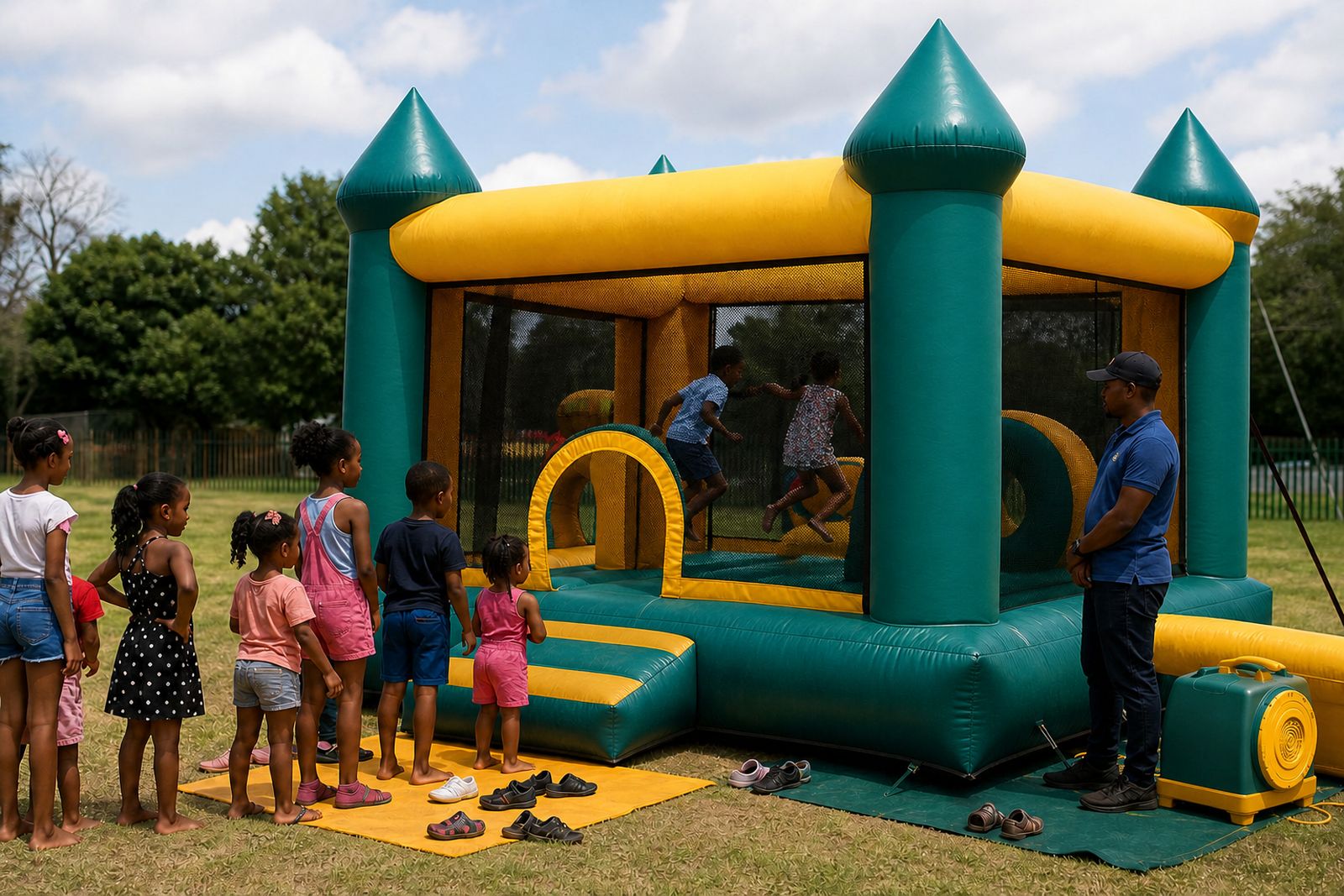
Children of different ages usually do not use a bounce unit in the same way. A four-year-old is still learning balance, timing and personal space, while an older child often jumps harder, turns faster and tries bigger moves. That difference can lead to collisions, nervous children hugging the side walls, or little ones getting knocked over near the entrance.
At school fêtes, mall activations and birthday parties in Midrand, the safest layout is often a separate unit or a clearly timed session for younger children. The point is not to exclude anyone, it is to match the play to the body size and confidence of the users. That keeps the atmosphere light and the supervision easier for the crew and the adults nearby.
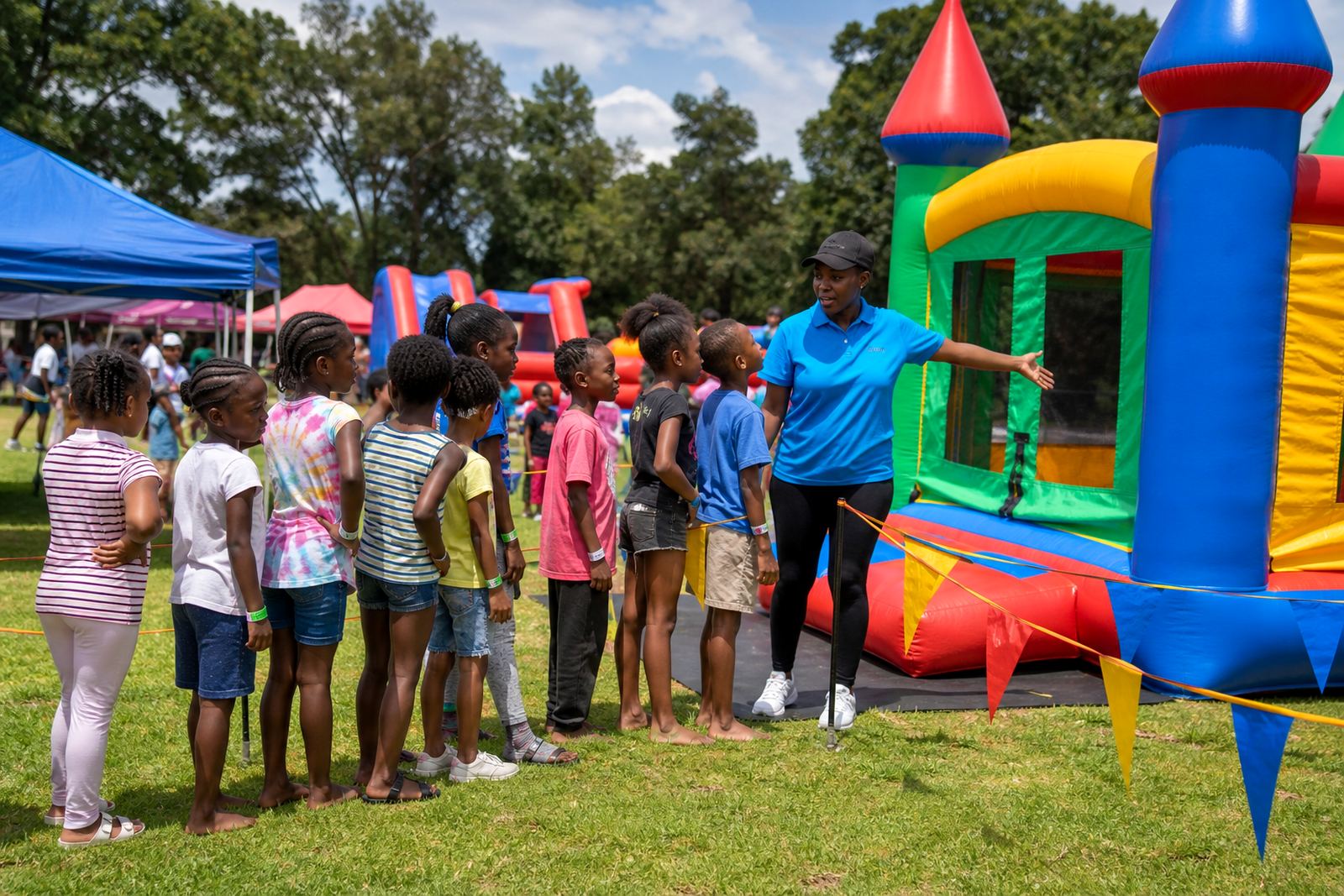
Where the numbers are mixed, the age split also helps with queue control. Younger children wait more patiently when they know the smaller unit is theirs, and older children usually accept a faster pace when the rules are clear. It sounds basic, but it prevents most of the fuss before it starts.
How crew members judge the right grouping
Our crews look at more than age alone. Height, confidence, the number of children waiting, and the type of inflatable all play a part. A low bounce castle with soft walls may suit a younger group, while an obstacle-style inflatable with tunnels and climbs is better suited to older children who can follow direction and keep moving.
For a school in Pretoria or a family day in Sandton, the same unit can be used in different ways across the day. Morning sessions might be reserved for the smaller learners, then the older children take their turn after lunch. If the event is busy, two units often work better than one because the line moves, the noise drops and the children settle faster.
- Check whether the inflatable has a low entrance, higher walls or an obstacle layout.
- Keep similar ages together where the bounce floor is crowded.
- Use shorter sessions for younger children so they do not overheat or tire quickly.
- Place one adult or crew member close to the entry point for steady monitoring.
The size of the unit changes the age mix
Not every bounce unit carries the same load. Smaller castles work well for toddlers and early primary school children because the floor area is limited and the movement stays gentle. Larger inflatables can hold more bodies, but that does not mean every child should be allowed in at once. The useful question is not how many can fit, but who should be sharing the space.
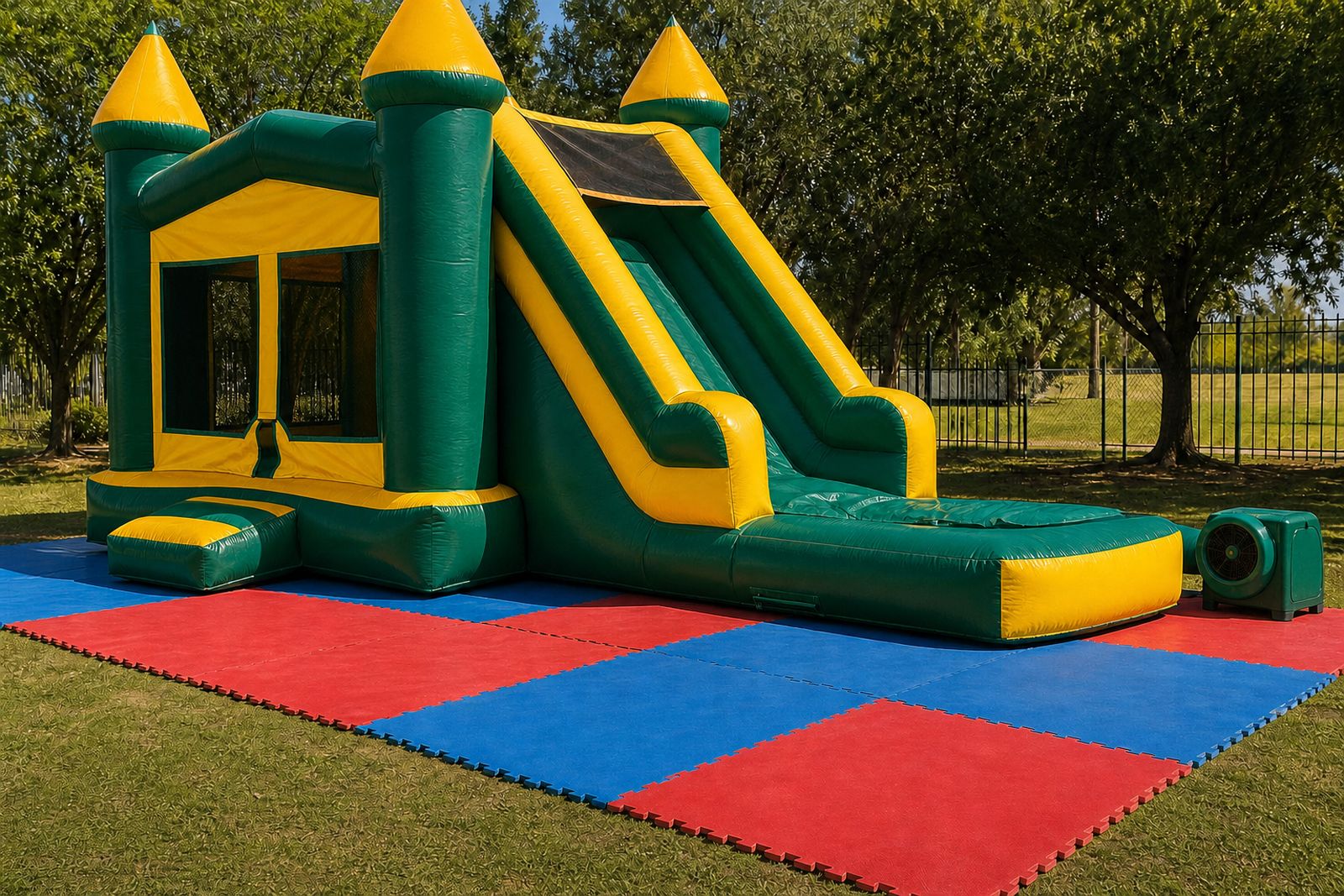
A long inflatable obstacle course needs more judgement than a plain bouncing area. Older children can manage the climbs, crawl-through sections and turns, while younger children may stop halfway or bunch up at the narrow points. That is where bumps happen. Safety mats at the entrance, proper anchoring and a clear run-in area matter just as much as the size of the inflatable itself.
In coastal towns like Durban, the ground can be softer after rain and the crew may need extra anchoring checks before play starts. In dry inland areas, the surface is usually firmer but dust can still make footing tricky. A proper site check helps decide whether the age group should be split by unit or by time slot.
What happens when ages are mixed without a plan
Mixed ages are not always a problem, but they need structure. If a five-year-old enters a bounce unit with a group of ten-year-olds, the smaller child often spends more time trying to stay upright than enjoying the play. The older children may not mean to be rough, yet their jumping style can put the younger child off balance in seconds.
This is also where supervision becomes more important than people expect. A trained crew member or attentive adult can watch for toddlers at the edge, older children racing too hard, and children slipping in and out too fast. If the unit is being used at a corporate family day, the crowd often includes cousins, siblings and friends of very different ages so the rules need to be repeated clearly.
Clear grouping also helps when the event includes other amusements. A photo booth, candy floss cart or carnival game stall gives children who are waiting for their turn something calmer to do. That lowers pressure on the bounce unit and keeps the line from turning messy.
A Midrand school morning with two age bands
Picture a school event in Midrand with learners from Grade R through to Grade 6. The younger children use the small castle first, with a crew member checking the entrance, the number inside and the time each group gets. After that, the older children move onto a larger inflatable or an obstacle course that suits their stride and energy. The changeover is calm because the rules were set before the first child climbed in.
That same morning might also include foam machines, a popcorn cart and a few carnival games. Once the bounce sessions are separated, the rest of the event flows better. Parents can take photos without crowding the play area, and teachers do not need to shout over children waiting for a free-for-all on one unit.
For events in Johannesburg or Centurion, this sort of split is often the difference between a tidy programme and a noisy scramble. The practical answer is usually simple: smaller children get a smaller zone, older children get a firmer challenge, and the queue stays under control.
Booking notes that help us plan the right mix
Those notes help with the size of the inflatable, the blower position, mats, power planning and whether the unit should be split by age. If the event is in Bloemfontein or Cape Town, local weather and floor conditions can change the setup slightly, so the age plan should be set early.
We also look at arrival space, collection access and whether there is room for a separate queue. For bounce units at birthdays, the split may be as simple as toddlers first and older siblings later. For bigger school or mall programmes, a fuller programme with supervision and a staggered session list usually works better.
Age grouping is not a stiff rule, it is a way of making the play feel fairer and safer. When children are matched to the right unit or session, the bouncing lasts longer, the waiting feels shorter and the adults spend less time stepping in. That is the sort of order that keeps the event moving without turning the day into a chase after every small collision.