
Cable runs should follow the people flow, not fight it
The safest lead is the one people barely notice. It should travel along walls, behind counters, through fenced edges or under covered access points where foot traffic stays light. A cable stretched across a queue or play lane invites a stumble, and a rolled mat or trolley wheel can pull a plug loose in seconds.
For a birthday in Midrand or a school function in Pretoria, the layout changes with the venue shape. A jumper near a lawn edge needs a different cable route from a photo booth tucked beside a hall doorway. Good placement starts before the first item is off the trailer, because once guests arrive the useful path is the one already cleared.
- Keep cables out of walkways, entrances and queue lines
- Use the shortest practical route to the power point
- Leave slack only where movement is expected
- Avoid placing leads under doors that close hard
Every power point needs space, cover and a little breathing room
Not every item draws power in the same way. A jumping castle blower runs for the duration of the hire, while candy floss machines, popcorn carts, arcade cabinets and foam machines may switch on and off through the day. That means the extension plan must match the equipment list, not just the number of sockets on the wall.
Longer cable runs can cause voltage drop if the lead is too light for the distance or the load. That can show up as weak motors, temperamental lighting or a machine that refuses to settle. For larger setups, especially where several amusements share one area, it helps to map each item to its own supply point and keep heavier users apart where possible.
- Match cable rating to the equipment load
- Keep high-draw items on separate runs where practical
- Do not bundle multiple leads until they become a tangle
- Watch for warm plugs, buzzing sockets or loose connections
Anchoring and matting stop more than wind
Lead safety and ride safety meet at ground level. A cable that is pinned neatly can still fail if the surface shifts, a mat curls, or an inflatable moves after wind picks up. That is why proper anchoring and safety mats matter around every area where children or adults may step, queue or dance.
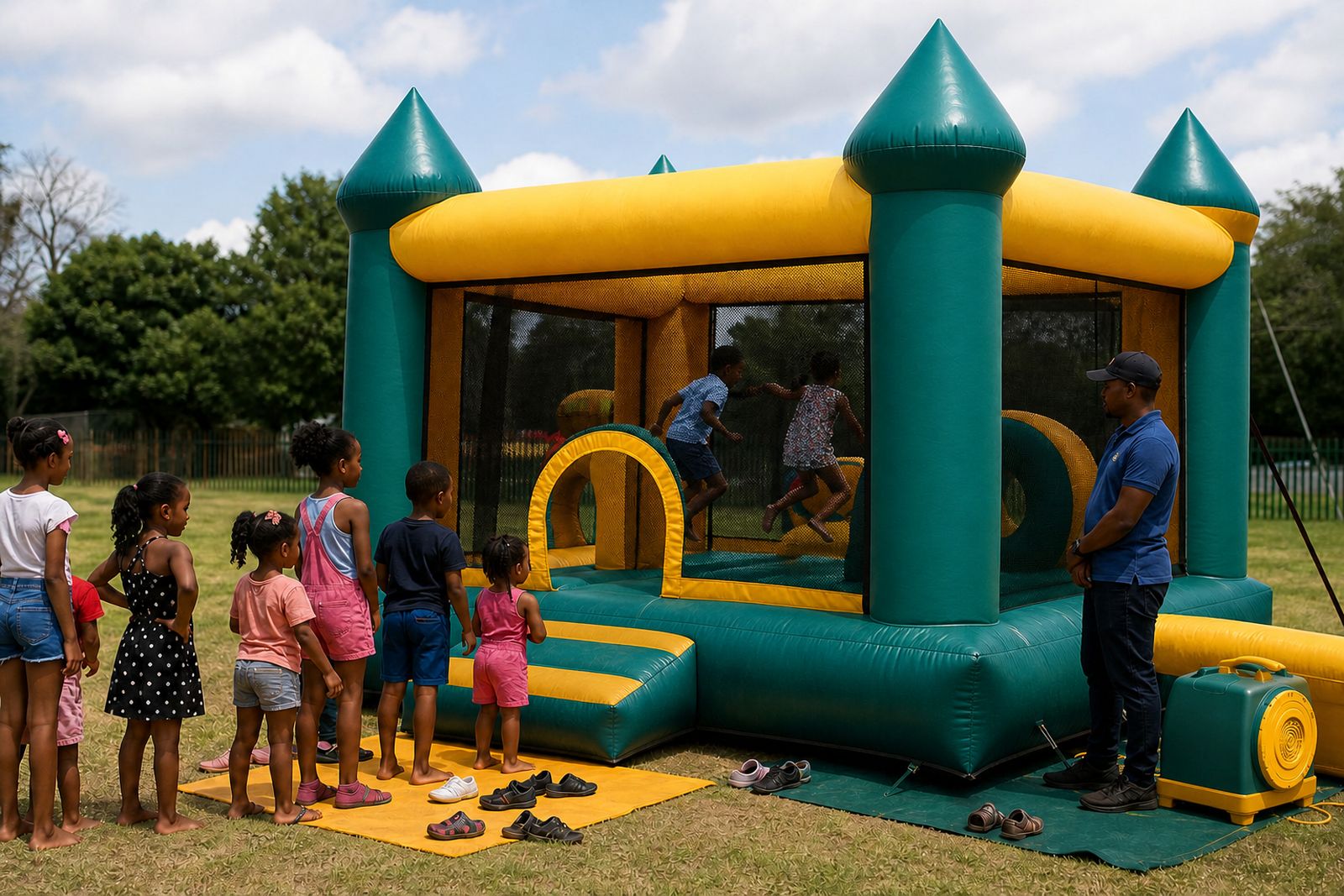
On a school field in Johannesburg, a castle blower may sit beside a fenced-off lane while carnival games line the edge of the route. In that setup, the lead should be protected by mats or cable covers where people must cross, and the blower should stay clear of heels, scooters and trolley wheels. The aim is not to hide the cable at all costs, it is to keep it visible enough for checks and safe enough for public use.
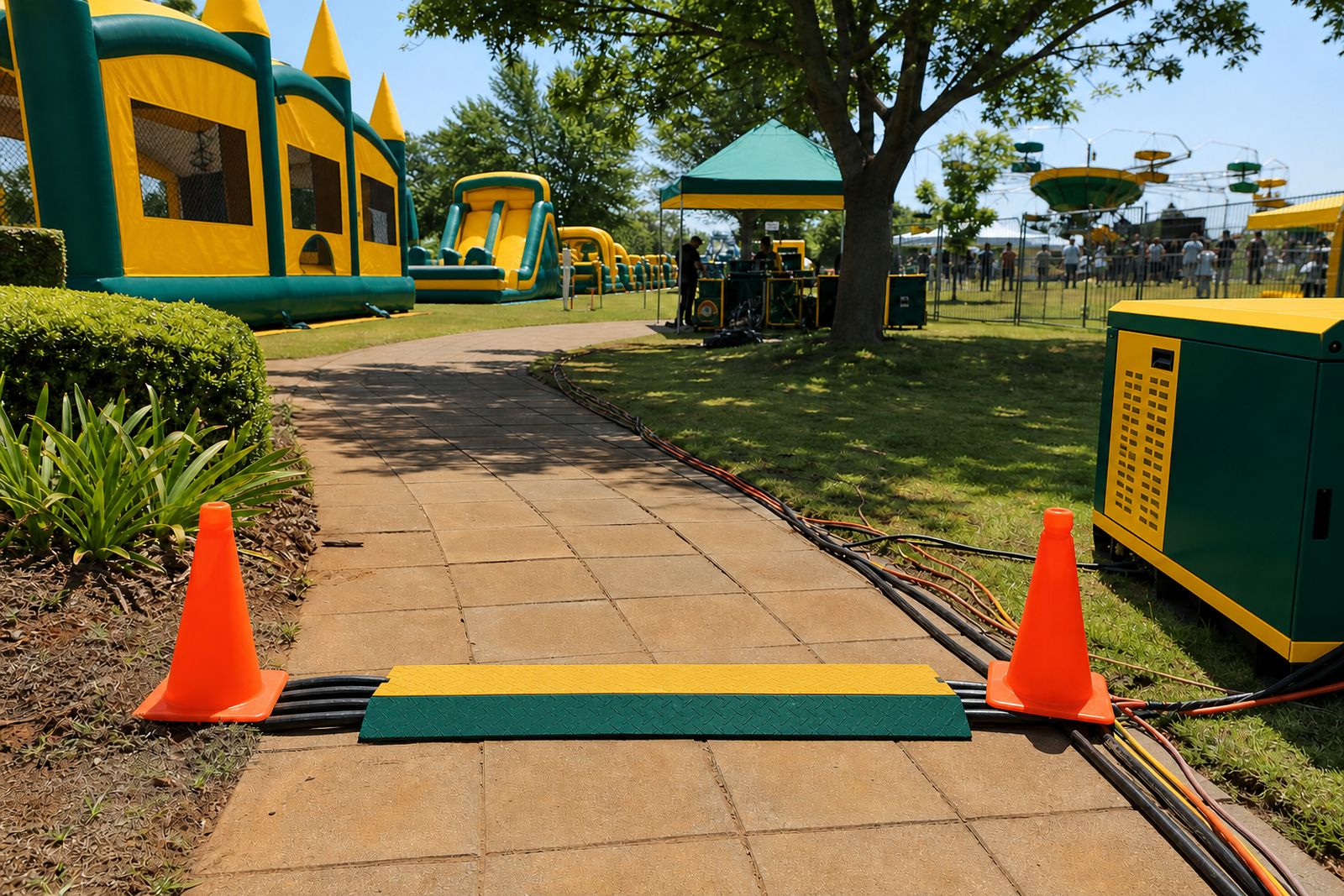
- Use mats or cable covers where feet must cross
- Anchor inflatable equipment before final cable placement
- Keep blower units away from contact points and loose debris
- Check that coverings do not create a new trip edge
A local Midrand event needs a different cable plan from a mall activation
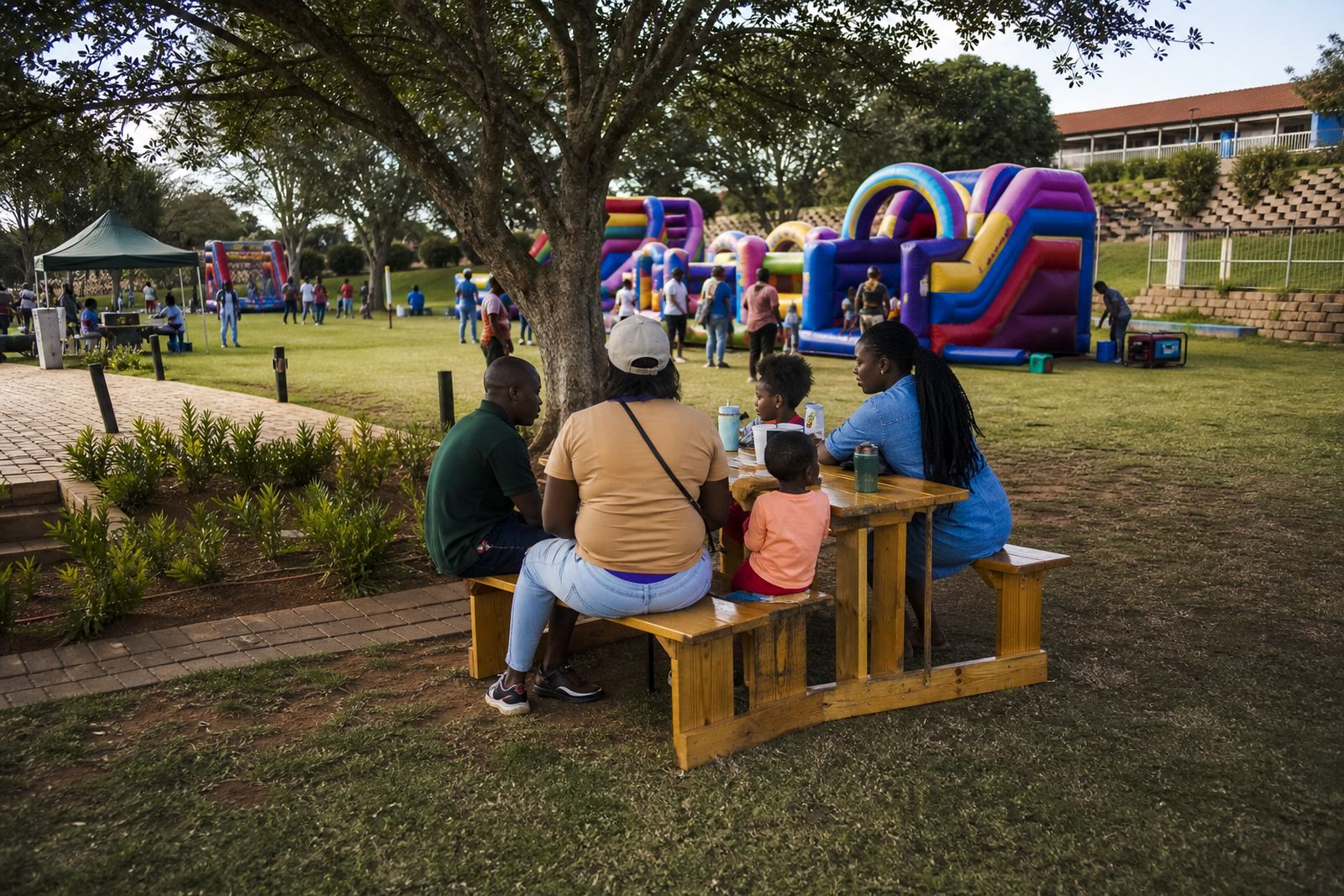
A Midrand school sports day has open ground, changing foot traffic and more chance of dust or uneven grass. A mall activation in Sandton or Centurion brings tighter access, cleaner floors and stricter route control. The same extension lead can work in both places, but only if the run is treated as part of the site plan.
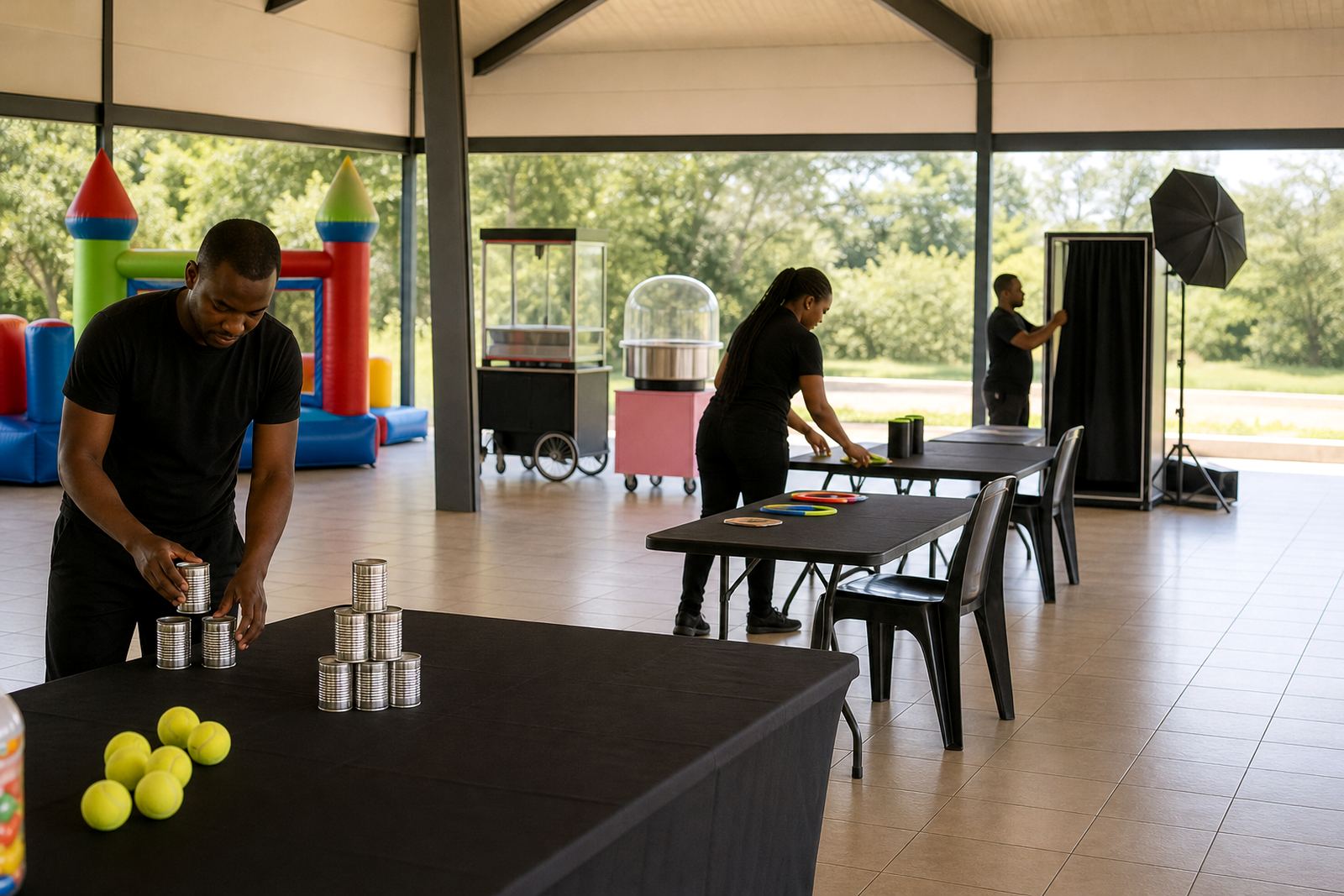
A practical crew proves its worth there. One person watches the equipment, another checks the route, and a third keeps the public side neat while games, machines and mascots keep moving. For a national road show, the cable plan should travel with the load list so the setup in Durban does not rely on the same guesswork as a hall in Bloemfontein.
- Adapt the route to grass, paving or indoor flooring
- Leave access for venue staff and emergency movement
- Keep a spare lead or backup route in mind for larger setups
- Mark crossings where guests are likely to miss the cable
Strike work matters because tired cables fail quietly
At the end of an event, extension leads often look the same as they did at the start, but the damage can sit inside the plug end or along a pinch point. When the strike is rushed, leads get coiled too tightly, dragged over rough ground or stacked with wet mats and snack gear. That is when a harmless-looking cable starts to shorten its useful life.
Good packing is slow enough to notice wear and quick enough to stay orderly. Leads should be unplugged at the source, checked for cuts or crushed sections, then coiled without kinks. Wet cables need drying space before storage, and any plug that has taken a knock should be set aside rather than pushed back into the next load.
- Unplug from the source before moving equipment
- Check for splits, heat marks and bent pins
- Coil leads loosely to avoid internal strain
- Separate wet gear from dry storage boxes
Small habits protect the event and the power points
Extension lead safety is not a large theory, it is a chain of small decisions made before guests arrive and again during the event. Keep routes short, keep joints visible, keep crossings protected and keep each power point treated as a piece of working equipment. That approach protects children, crew and venue fittings in one go.
When the cable plan is clear, the rest of the hire can do its job without drama. The blower stays on, the arcade machine stays live, the popcorn cart keeps moving and the photo booth does not lose power halfway through a busy queue. That is the standard a trained crew should work to at school fêtes, mall activations and birthday setups across South Africa.