
What a crew watches while children are moving fast
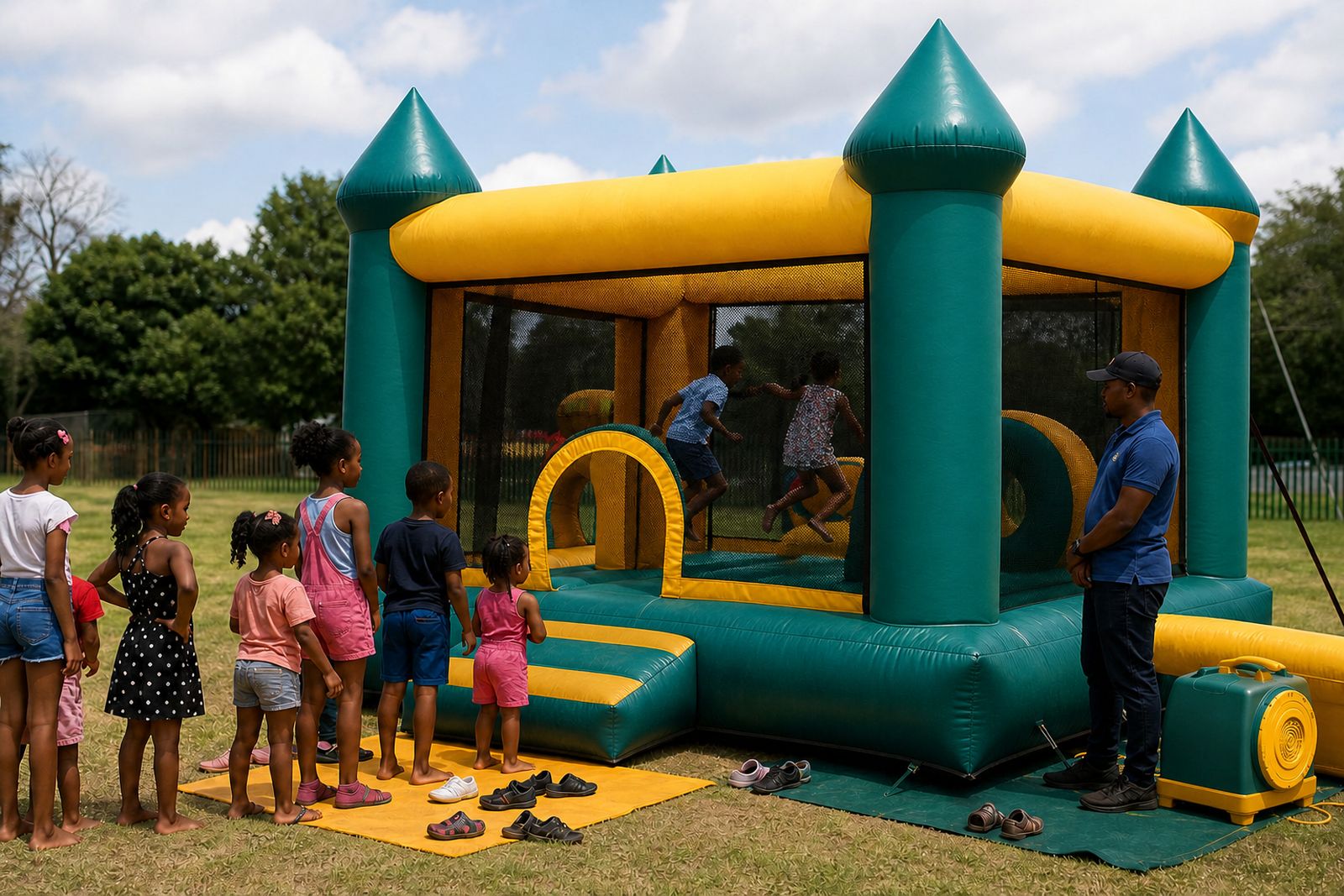
Schools often run inflatables in short rotations, which works well when the timetable is tight and the playground is full. Supervision keeps each group moving on schedule without turning the game into a rush. The crew helps manage the line, calls up the next group and resets the unit if children have been running or climbing in the wrong direction.
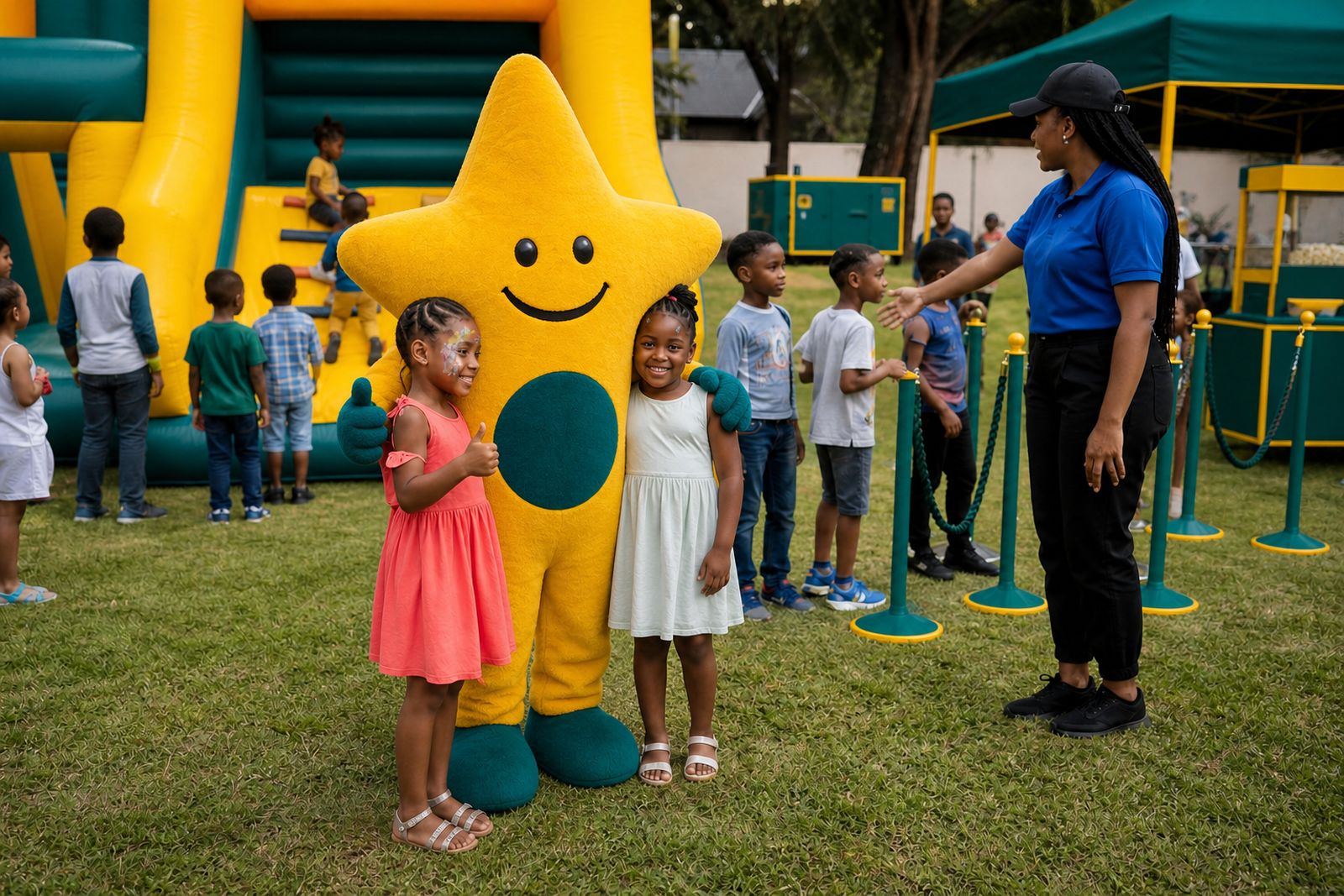
At a primary school sports day, a smaller castle may suit younger learners while an obstacle course can be reserved for older children. The right supervision supports that split. It also helps when a teacher or organiser wants the inflatable used in turns alongside carnival games, snack carts or a photo booth. The point is not only safety, but a steady rhythm that keeps the whole site working.
- Older and younger children are often separated for smoother play.
- Rotation groups are kept small enough for the unit size.
- The crew pauses play when the surface gets too crowded.
- Teachers or organisers can coordinate the schedule around other activities.
Space, mats and anchoring are part of supervision
Good supervision starts with the ground itself. A castle on grass in Pretoria needs anchoring that suits the soil, while a setup on a paved forecourt in Cape Town may need heavier planning around mats and edge control. The crew looks at slope, surface condition, overhead branches and the path children use to reach the entrance. Even a well-built inflatable can become awkward if the approach is narrow or the area is cluttered.
Safety mats matter because children do not always land where you expect. They help at the entrance, near steps and around any hard edge. Crew members also watch the surrounding space, because a supervisor is not only looking at the people on the inflatable but at the ring around it. That includes waiting children, parents taking photos and other entertainment pieces nearby.
For larger obstacle courses, supervision covers the whole course line. The entrance, exit and side zones all need attention. A long unit needs enough space for safe movement, plus a route for crew access if someone needs to stop the game.
Weather calls and wet surfaces need a clear plan
In Gauteng and coastal cities, weather can change the job quickly. Light drizzle, wind or a damp surface can alter how a unit is used. Supervision includes deciding whether the area is still suitable, whether play should pause, or whether the wet weather plan needs to take over. That judgement is practical, not dramatic.
If the surface is slippery or the wind picks up, the crew may lower foot traffic, hold the queue and secure the inflatable before anyone enters again. In some cases the safest move is to stop use and wait for the site to settle. That applies at school grounds, family days and mall courts alike. A trained crew does not treat weather as an afterthought, because water and vinyl surfaces can change the way a child moves inside the unit.
- Play pauses if footing becomes unsafe.
- The crew checks the surface before restarting use.
- Anchors and blower lines are monitored during changing weather.
- Wet weather plans help the organiser avoid guesswork on site.
Power, blowers and the crew line behind the fun
Inflatables depend on continuous air, so supervision also includes the power side of the job. The blower must stay clear, the cable run must be tidy and the generator, where used, must sit in a sensible position away from children. The team watches that no one trips over leads or stands in the wrong place behind the unit.
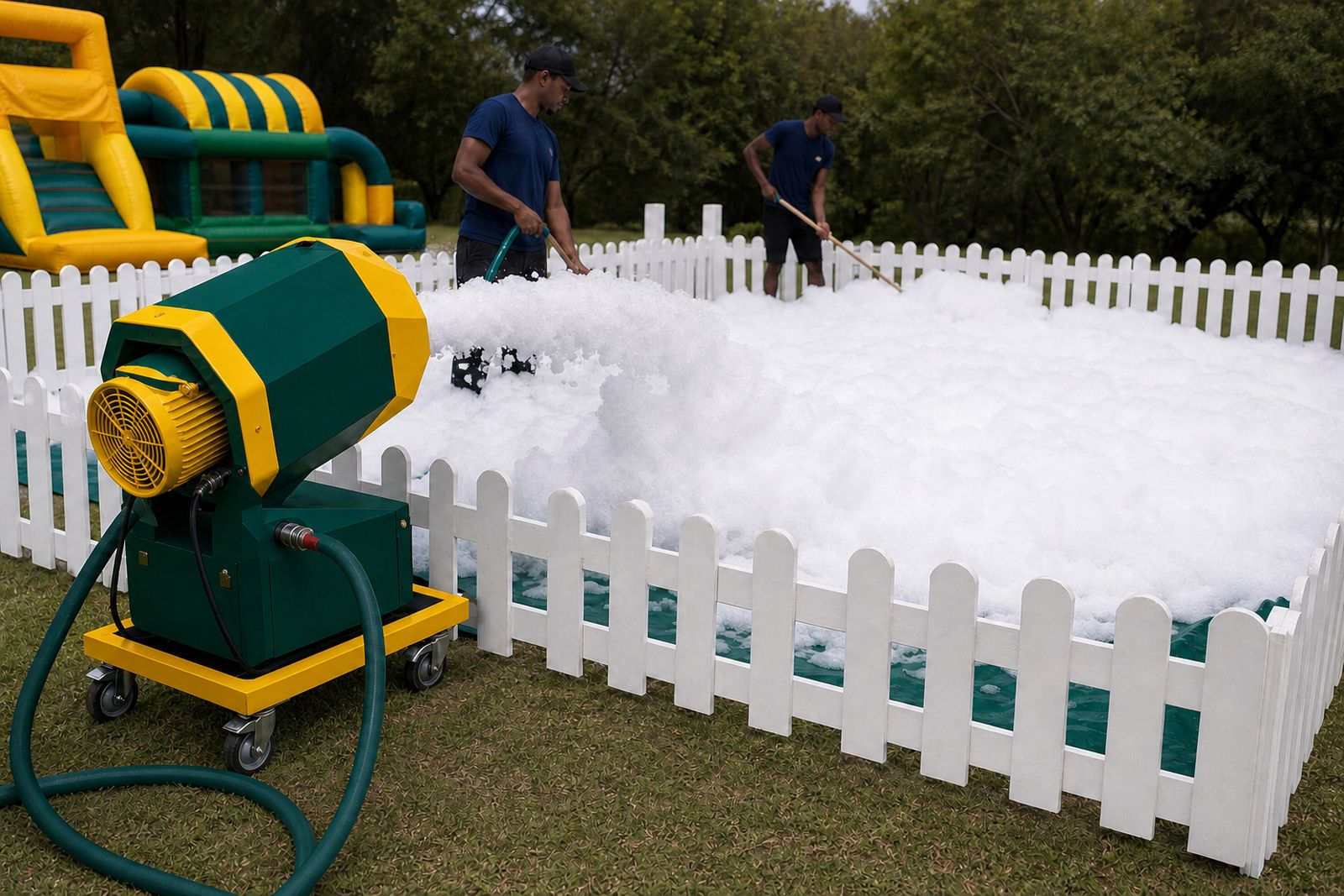
For arcade cabinets, foam machines, popcorn carts and photo booths, the supervision role changes shape but the principle stays the same. Someone keeps the queue moving, someone handles the equipment, and someone watches the space around it. On a mixed event in Midrand, one crew may be looking after a jumping castle while another manages snack service and a photo booth line. Each zone needs a person who knows what normal movement looks like, and what looks off.
When a site has several attractions, the crew lead sets the flow so the whole area does not bunch up at one point. That is especially useful where parents want to watch, children want to swap activities quickly and the organiser wants the day to keep its shape.
A Midrand example from a school-and-family day setup
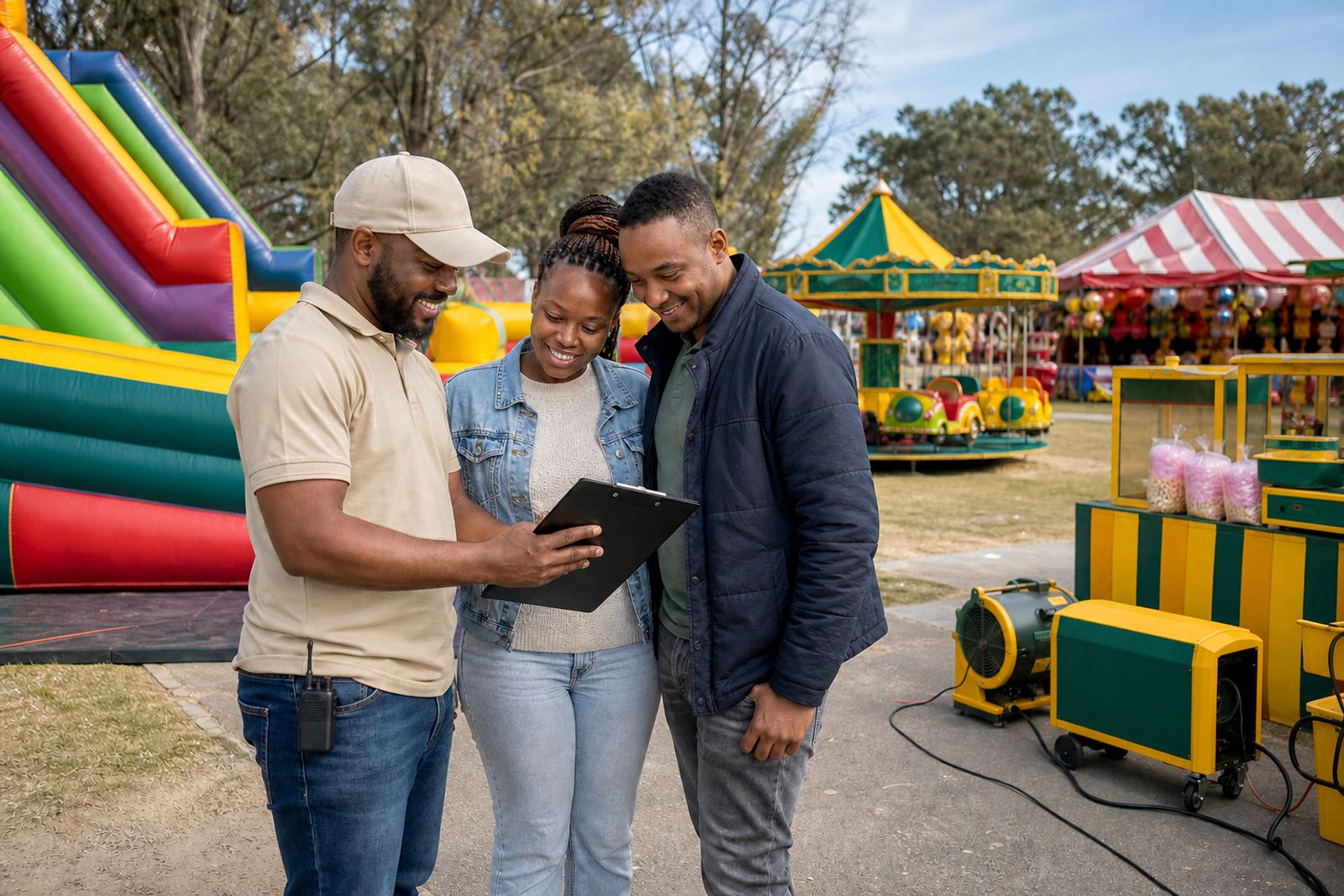
At a Midrand school event, a castle for younger learners might run beside a small obstacle course for older children. The crew can separate the activity into zones, keep the queue narrow and use clear entry control so the youngest children are not pushed by the older group. A teacher or organiser may help with class order while the crew handles the inflatable itself.
That same setup works at a birthday, just on a smaller scale. Children arrive in bursts, parents drift between the snack cart and the play area and the inflatable gets used in short, energetic turns. Supervision keeps the unit from turning into a free-for-all. It also gives the organiser a clearer view of who is inside, how long the group has been playing and when a turn should end.
Active supervision is not about watching from a distance. It is a working part of the hire, along with delivery setup, anchoring and mats, on site supervision and strike and collection. When the crew is doing its job properly, the children can enjoy the bounce, the organiser can follow the programme and the equipment stays in good order for the rest of the day.