
Begin with the true footprint, not the label
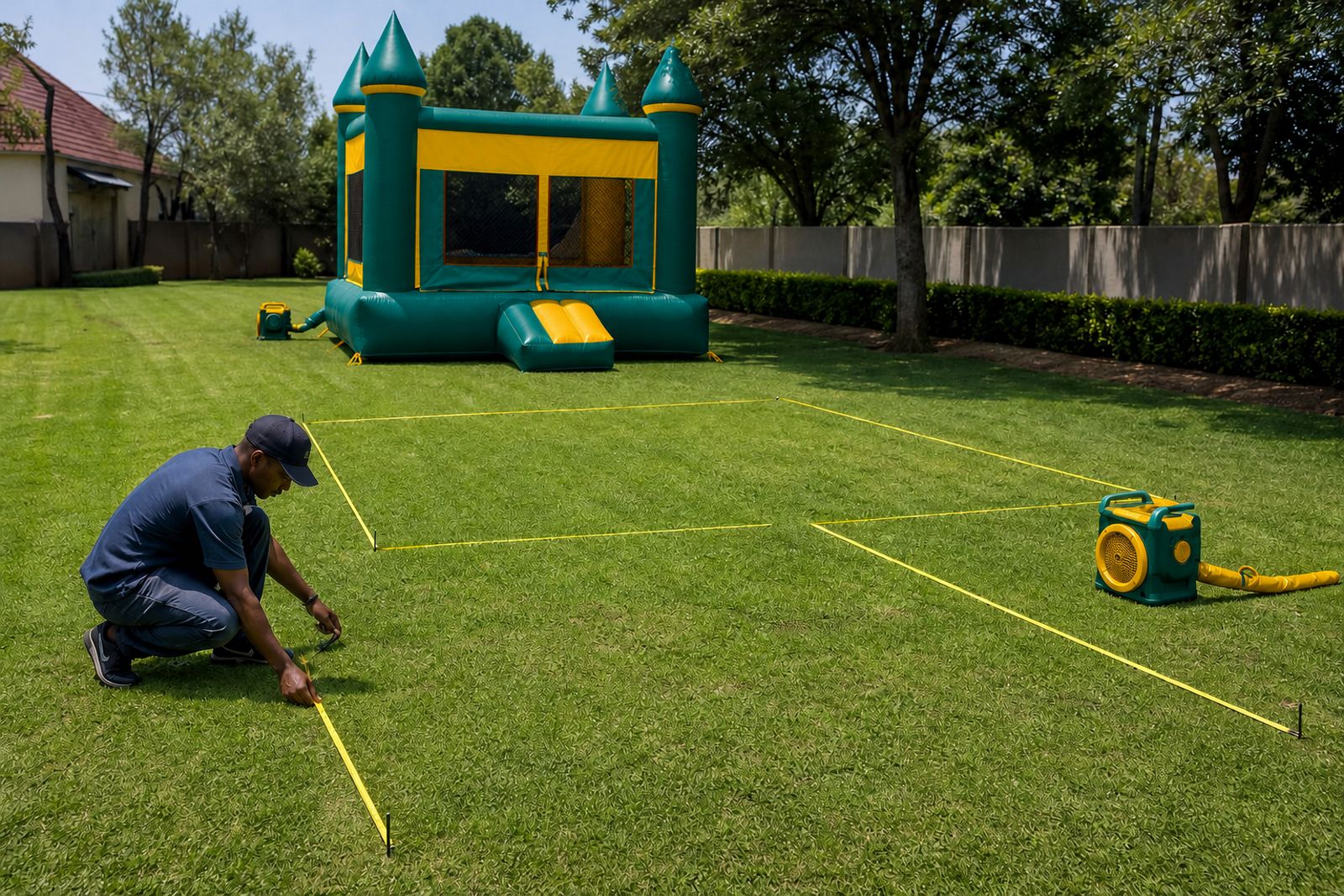
A small castle for younger children may look compact on paper, then grow once you add safety mats, blower clearance and the path the crew needs to walk around it. For a tidy lawn in Midrand, that extra margin can be the difference between a neat setup and one that feels squeezed between a wall, a tree and the snack table.
Measure the open area in metres, then add space on all sides. The inflatable is only one element in the overall setup. You also need a clear run for the blower hose, room for tie-down points, and a strip where children can wait without crowding the entrance.
- Check the full length, width and headroom.
- Allow clear sides for pegging or sandbag anchoring.
- Leave a dry path from the vehicle to the setup point.
- Keep doors, gates and fire exits clear at all times.
Leave the queue its own strip of ground
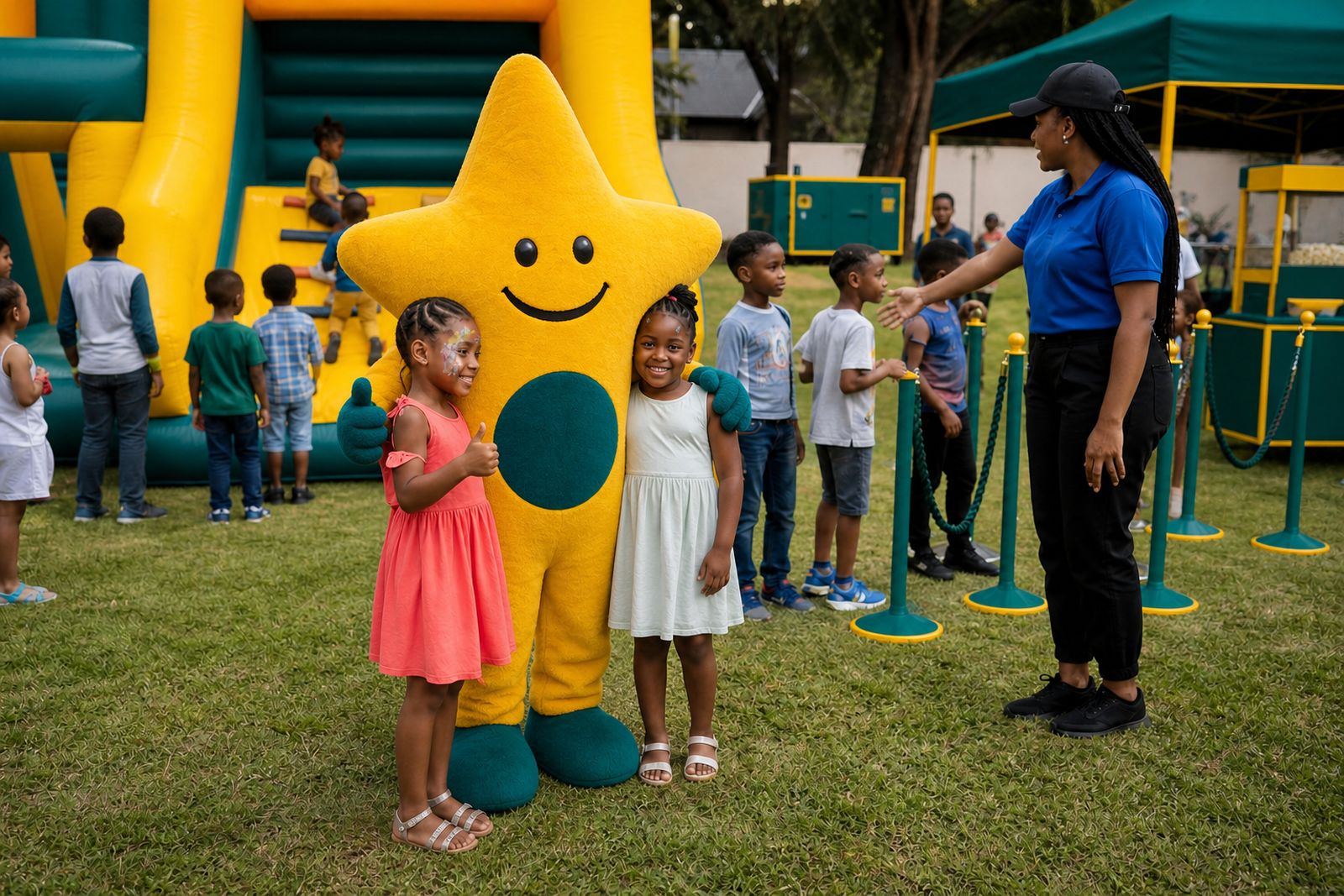
Most problems around a castle happen outside the inflatable. Children bunch at the front, parents stand too close, and the entry point becomes a knot of shoes and elbows. A queue lane, even a simple one marked by ropes, cones or staff guidance, keeps the area calmer and safer.
For birthday parties in Sandton or school fun days in Pretoria, it helps to think in terms of movement. There should be a waiting space, a changing space for shoes if needed, and a clear exit so the next child does not meet the one leaving. That small bit of planning changes the whole rhythm around the attraction.
- Allow extra room in front of the entry flap.
- Keep the queue away from serving counters and ride exits.
- Make space for parents who are watching from the side.
- Separate younger children from older ones where possible.
Flat ground makes the difference
Inflatables work best on level ground. A gentle slope can shift the bounce pattern, leave one side sitting higher than the other and make the entrance feel awkward. Grass is common for schools and private homes, but hard surfaces and indoor floors can also work if the anchoring, protection and access are planned properly.
In Gauteng, dry dust on bare ground and soft winter grass each need a different approach. On a polished hall floor in Bloemfontein, for example, the crew may need extra matting and careful position checks. On a lawn, they look for hidden sprinkler heads, stones, roots and low branches that could interfere with the setup.
- Choose a surface that can take the weight and movement.
- Watch for overhead branches, light poles and cables.
- Keep the surface free of glass, loose bricks and sharp objects.
- Plan for the crew to inspect the area before inflating.
Blowers, power and the working edge
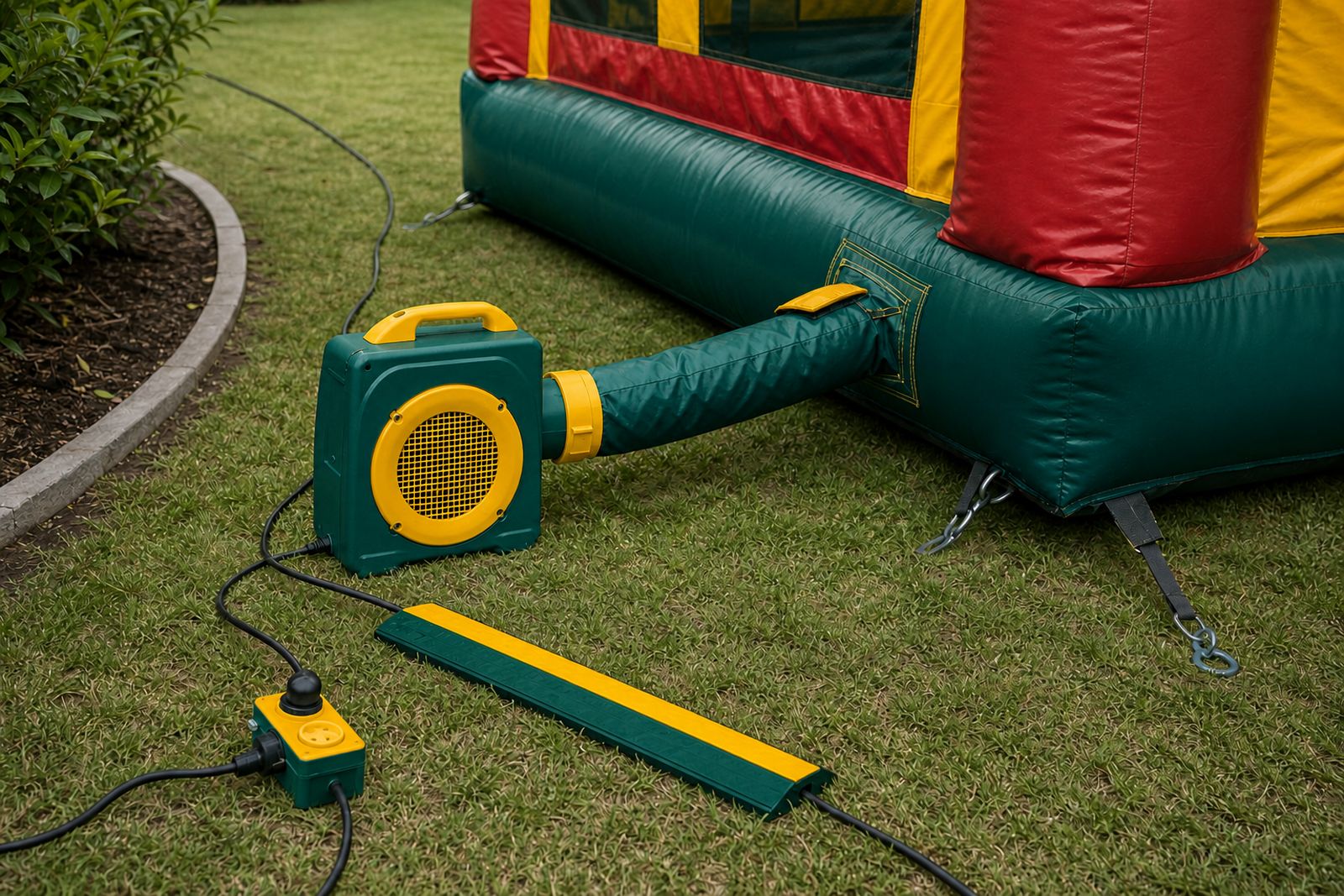
Every inflatable needs a blower and a safe route for the cable. The unit should sit where the crew can reach it without crossing the play area. If the event site has limited power points, the crew may plan generator supply instead, with the machine positioned away from the crowd and protected from foot traffic.
That working edge matters just as much as the play space. Cable runs must not sit where children can trip, and the blower should never be blocked by drapes, bins or snack carts. At malls, schools and corporate family days, the setup often needs a sensible plan for cable covers, wall access and safe movement around the base.
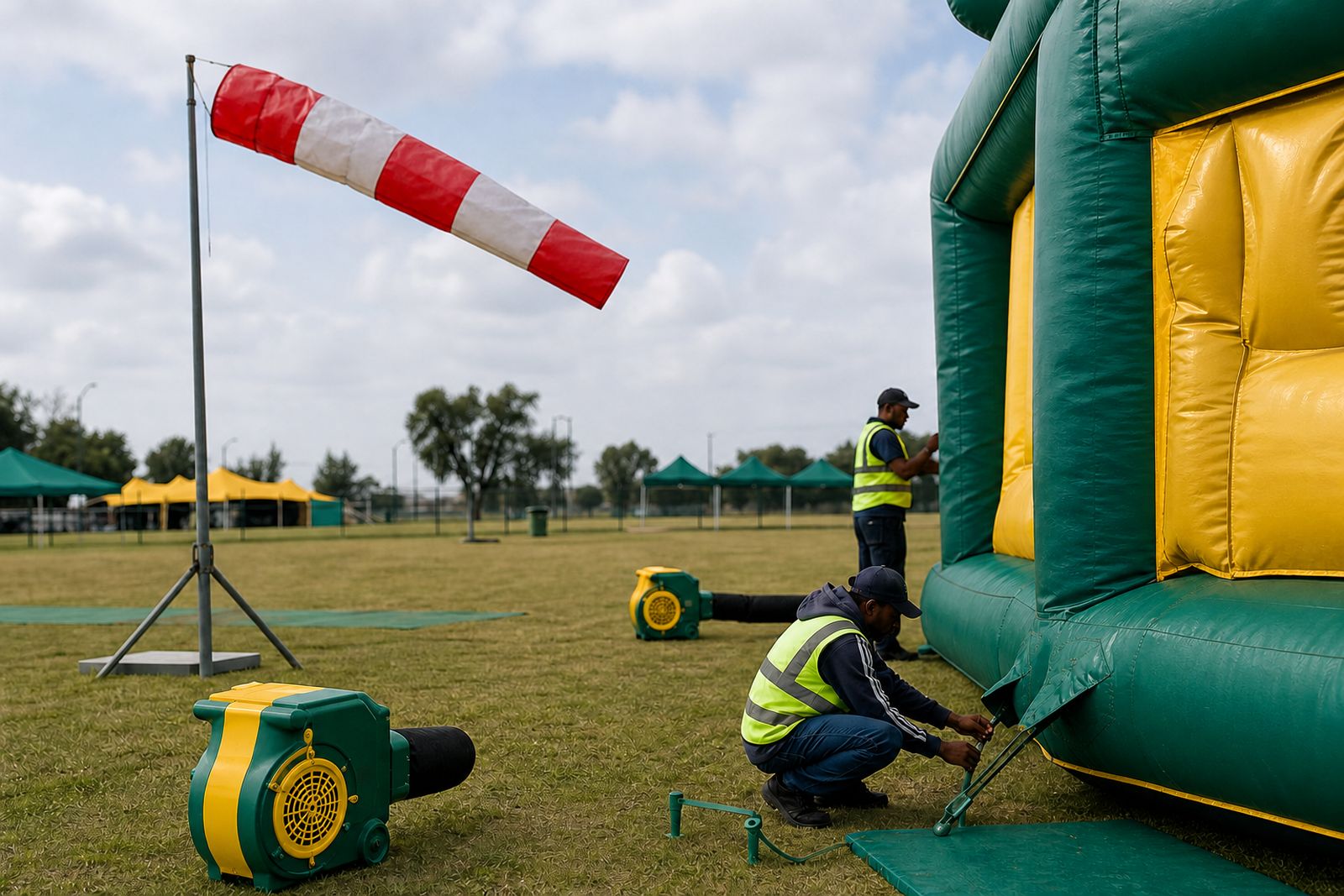
Weather also changes the power plan. Wind, rain or damp ground can affect where the equipment sits and how it is secured. A good setup leaves room to adapt without moving people through the hazard zone.
Ages, heights and the right sort of chaos
Not every inflatable suits every age group. Smaller children need lower entries, softer bounce areas and simple internal shapes. Older children can handle larger obstacle units, but they still need space to climb, turn and land without colliding at the corners. Height limits matter too, especially where an event mixes age groups.
At a birthday in Durban or a school market in Cape Town, the crew may separate the play slots so that toddlers are not sharing with bigger children. Supervision helps, but the layout does a lot of the work before the first child climbs in.
- Choose an inflatable size that suits the age group
- Keep taller children off units meant for small children.
- Use mats at the entrance and exit points.
- Plan clear rules for shoes, sharp items and rough play.
Local example: a school field in Midrand
Picture a school sports field in Midrand with a castle, a foam machine and a small snack cart. The field looks large enough at first glance, but once the crew marks the inflatable area, a waiting lane, a service route and a safe perimeter, the available space tightens quickly. That is normal. The answer is not to squeeze everything closer together, it is to place each item with purpose.
The castle sits on the flattest patch. The queue forms off to one side. The snack cart stays beyond the blower route so the team can work without children cutting through. Parents and teachers can still see the action, but they are not standing inside the service edge. That sort of layout makes the event feel orderly without looking over-managed.
For national road shows and larger family days, the same thinking applies in Johannesburg, Pretoria, Durban, Cape Town and Bloemfontein. Space is always local, even when the event moves around the country.
Booking notes that help the day stay tidy
A booking works better when the site details are clear from the start. The crew needs to know whether the ground is grass, concrete or indoor flooring, whether there are gates or lifts to pass through, and whether the inflatable must fit beside other amusements such as arcade cabinets, photo booths or carnival games.
It also helps to know whether the event runs in one long block or in smaller turns, because that affects queue planning and strike timing. For schools and malls, access times and collection windows matter too. A clear note about the venue, the age group and the available area helps the team prepare the right unit and the right crew.
- Share the venue type and the open area in metres.
- Mention stairs, gates, lifts or narrow access points.
- Note the age range and expected number of children.
- Include any weather concern or indoor backup plan.