
When the breeze turns into a planning issue
Outdoor amusement hire looks straightforward on a calm morning, then a strong afternoon gust rolls across an open field and the day changes shape. A jumping castle that felt fine at setup can start moving under strain, especially on hard ground, exposed school fields or car parks with very little shelter.
For that reason, wind is treated as part of the operating plan, not as an afterthought. Crews look at the surface, the available anchoring points, the size of the inflatable, and how many children are likely to use it at the same time. A small unit on grass may behave very differently from a long obstacle course on paving near a mall entrance.
In Midrand, open sites can pick up sharp crosswinds in the afternoon. The same is true on parts of the Highveld, where a clear sky does not always mean steady conditions. The practical question is not whether the attraction can be inflated, but whether it can stay secure and supervised while people are using it.
Anchoring, mats and the parts nobody notices first
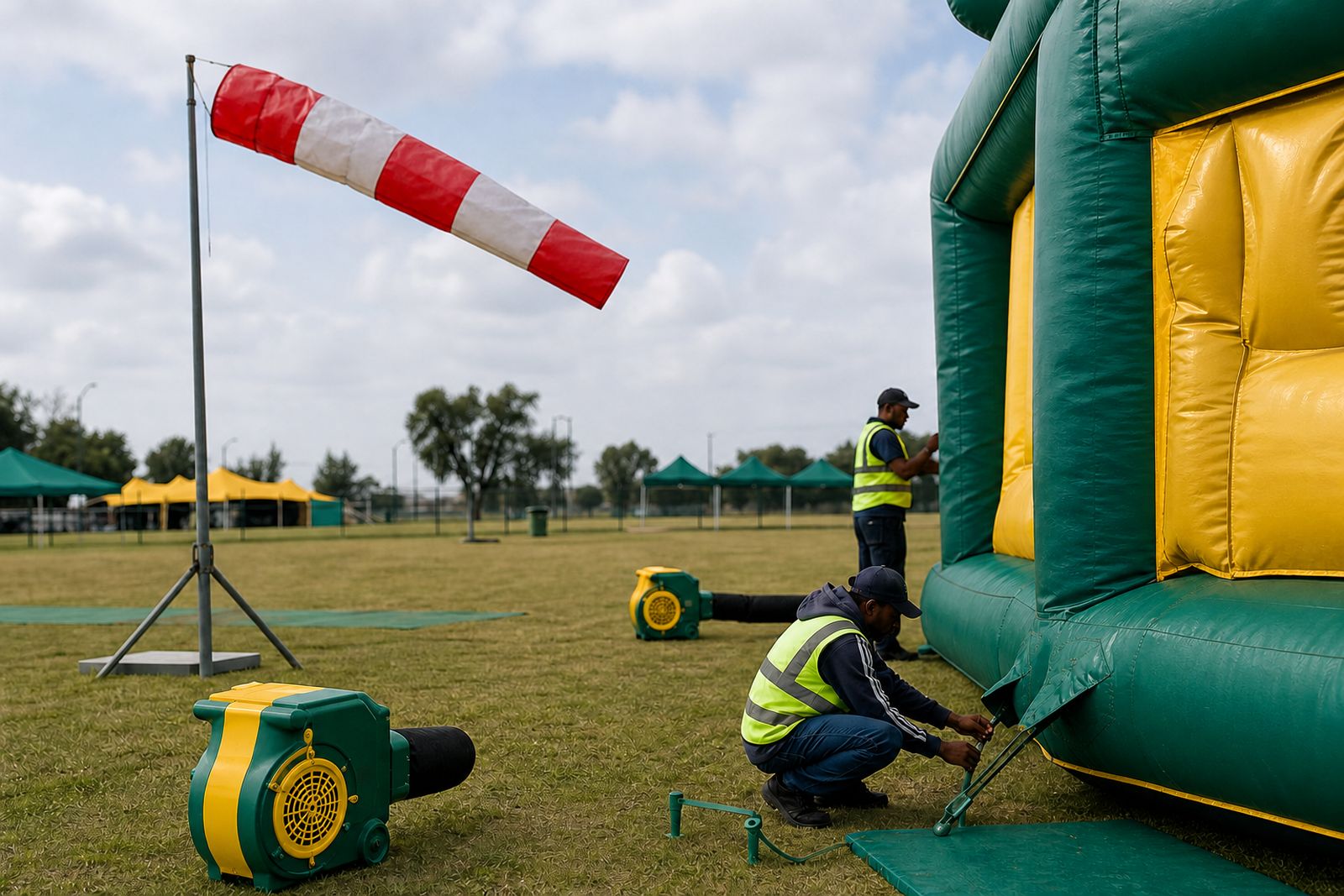
Good wind control starts at ground level. Inflatable attractions are normally secured with pegs on suitable soil, or weighted where pegs are not possible. The method depends on the surface and the unit, because a light castle and a larger obstacle course do not behave the same way in a gust.
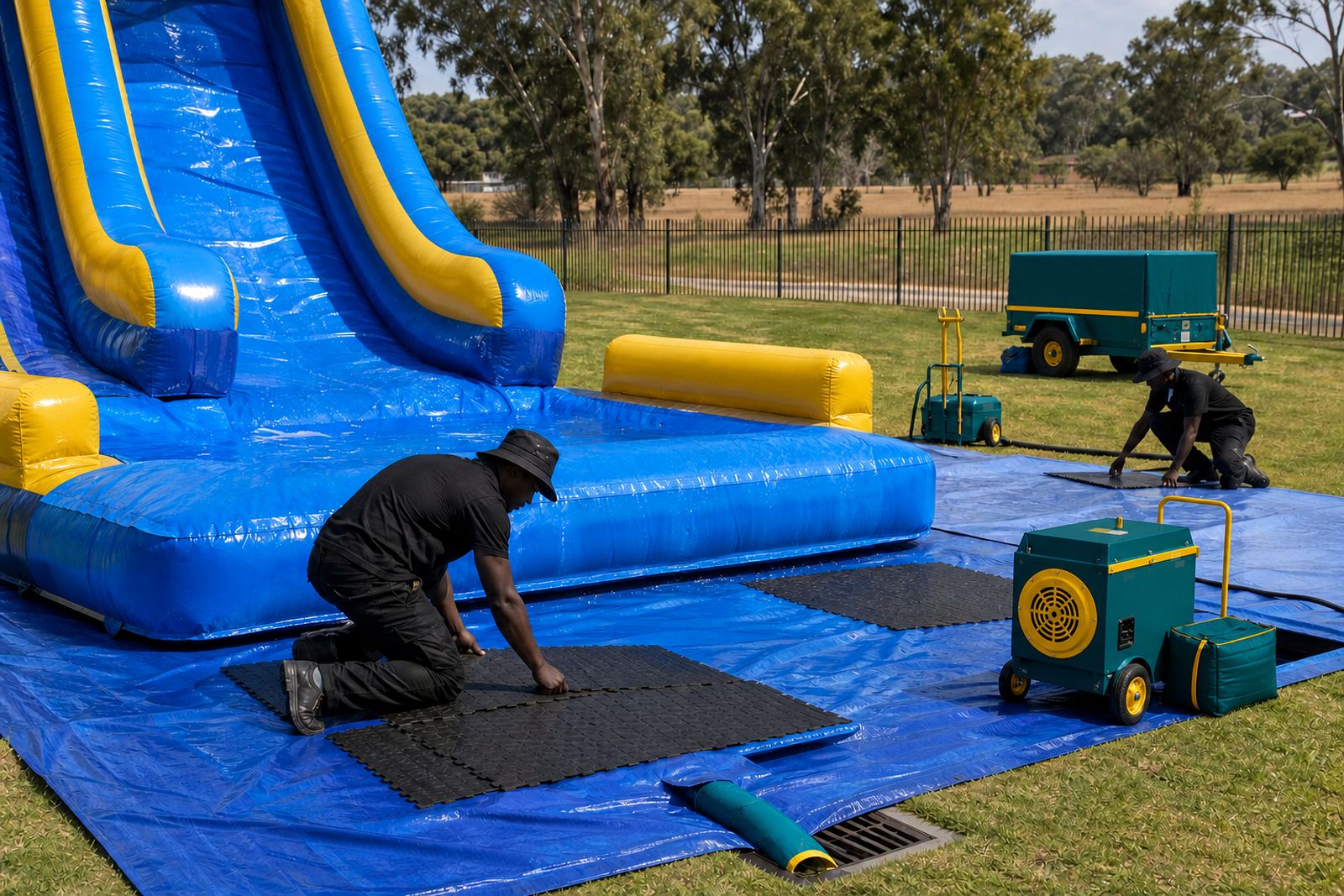
Safety mats matter as much as the anchor plan. They help at entry points, protect against slips and create a clear landing zone for children stepping in and out. If the weather turns rough, those mats also support safer queue handling because staff can keep the approach area neat instead of crowded.
- Grass gives more anchoring options than paving.
- Large inflatables need more open space around them.
- Gates, fences and walls can create wind channels.
- Loose décor and lightweight shade items can become hazards.
That is why site checks matter before a booking is confirmed for an outdoor space. A field at a school in Pretoria may need a different setup from a mall forecourt in Johannesburg, even if the same castle is going out.
Age groups, height limits and supervision on a gusty day
Wind changes how a crew manages the people using the attraction. Younger children need tighter supervision, especially where entry and exit are close to the ground and the inflatable has sides that can shift slightly under pressure. Older children and mixed-age groups need clearer rules, because heavier movement inside the unit creates more bounce and more strain.
Height limits also matter when a unit is fitted with taller walls or slides. The crew has to think about who is entering, how many are inside at once, and whether the attraction still feels stable when children move fast in one section. A windy day may call for a lower number of users than a calm one, even when the attraction is approved for more under normal conditions.
Trained supervision is not just standing nearby. It includes keeping the queue orderly, watching for sudden weather shifts, and stopping use if the wind is no longer within the safe operating window. That decision can feel strict, yet it is the ordinary part of running outdoor amusements properly.
What changes for obstacle courses, carnival stalls and rides
Not every hire item responds to wind in the same way. Inflatable obstacle courses have long runs, higher side walls and more surface area for gusts to catch. Carnival game stalls can need extra ballast or repositioning if they sit in an exposed line. Small fairground rides and mascots also need careful positioning so they do not become awkward in a crowded, windy layout.
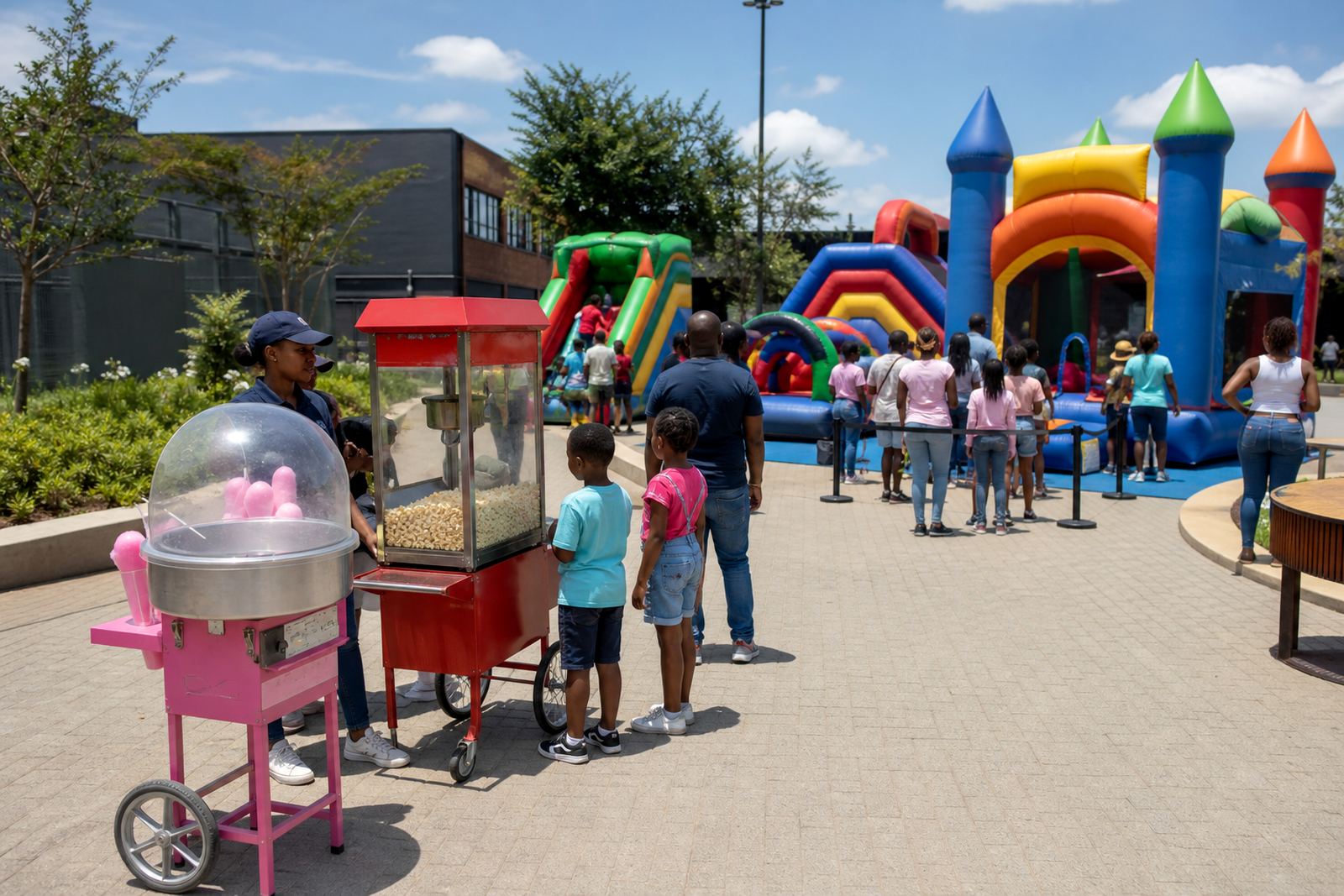
Arcade cabinets, popcorn machines and candy floss carts are less exposed once they are under cover, but access still matters. A windy day can push dust, paper cups and loose packaging across a site, so the serving area has to be planned with the same attention as the amusement itself. When food carts are involved, crew placement and queue lines need to stay tidy and easy to manage.
- Obstacle courses need extra clearance on both sides.
- Game stalls work best where wind is not funnelled.
- Photo booths do better under a tent or indoor cover.
- Mascots need a clear walking route and shade breaks.
At a school sports field in Gauteng, that often means shifting the plan away from the most exposed edge of the ground and toward a sheltered side or indoor hall entrance.
Power, generators and the weather calls that sit behind the scenes
Many amusements need mains power for blowers, lighting, photo booths, foam machines and snack carts. Where a site does not have suitable power nearby, a generator may be used, but it has to be placed carefully and kept clear of queues, cord crossings and wet ground. Wind adds another layer, because cables, covers and loose signage need to be secured properly.
Foam and bubble machines are especially sensitive to placement. In strong wind, foam can drift away from the play area, and bubbles can vanish before children even reach them. That is not a fault in the equipment, it is simply the weather changing how the attraction behaves.
A practical plan will also include what happens if a gust arrives mid-session. The crew may pause use, reduce numbers, adjust the layout or move a component under cover. Wet weather plans matter too, because wind and rain often arrive together on the same afternoon in places like Durban or Cape Town.
Midrand road shows and the local example that makes the point
A Midrand base works well for road shows because the travel routes reach Johannesburg, Pretoria, Centurion and farther afield without making the setup feel improvised. For a corporate family day at a large outdoor venue, the crew may arrive early, mark the footprint, anchor the inflatable, place mats and run a short equipment check before opening the attraction.
Now picture a gusty afternoon at a school fair in Pretoria. The jumping castle starts the day in good shape, but the wind picks up across the open field. The crew shortens the queue, checks the anchor points again and may pause use if conditions move beyond what the unit should take. That is the sort of decision that protects children and the equipment at the same time.
For a mall event in Sandton, the same thinking applies in a different setting. Wind can cut through loading bays and open walkways, so the setup may need extra weighting, tighter queue barriers and a better position for the snack carts or photo booth. The real lesson is plain: outdoor amusements are planned around weather, not around hope.
Booking steps usually include site checks, delivery setup, supervision, anchoring, power planning and collection after the event. Deposits and final details are handled before the day so the crew can prepare for the ground, the crowd and the forecast without improvising at the gate.
A calm event begins with the weather in mind
Wind does not cancel every inflatable hire, but it does change the operating decision. A castle that is fine on a sheltered lawn may need a different layout on an open field, and a photo booth that works indoors may need a more protected position outside. The right plan is the one that matches the site, the size of the attraction and the people using it.
That is the practical side of outdoor amusement hire. It is not only about delivery and setup, it is about knowing when to anchor harder, when to reduce numbers, and when to stop use for the day. Those calls keep the event orderly and the equipment where it should be.