
Start with the youngest feet on the ground
Toddlers need the most predictable space on the site. Keep their zone close to adult seating, with soft flooring, low entry points and clear edges so little ones do not drift into faster games or a queue of older children. A small jumping castle, bubble machine or gentle mascot visit suits this age better than anything with steep climbs or fast exits.
For very small children, the ground matters as much as the attraction. Safety mats, a shaded waiting area and a visible adult check point help the area stay calm. If a castle needs a blower and anchoring, the setup must allow for firm fixing and enough clearance around the unit, because toddlers often move without much warning and need space that feels contained.
- Keep toddler inflatables low, simple and easy to watch.
- Place seating within a few metres of the play zone.
- Use soft barriers, mats and shade where possible.
- Leave the louder attractions well away from this corner.
Children need activity, but not crowd pressure
Primary school children usually want movement, noise and a bit of competition. This is where obstacle courses, carnival games and medium sized inflatables fit well. The zone should offer a clear queue line, open run-up space and enough staff or adults to keep turns moving without pushing or shouting. If you are using arcade cabinets or retro gaming machines, keep them under cover and out of direct sun so the screens and controls stay usable through the day.
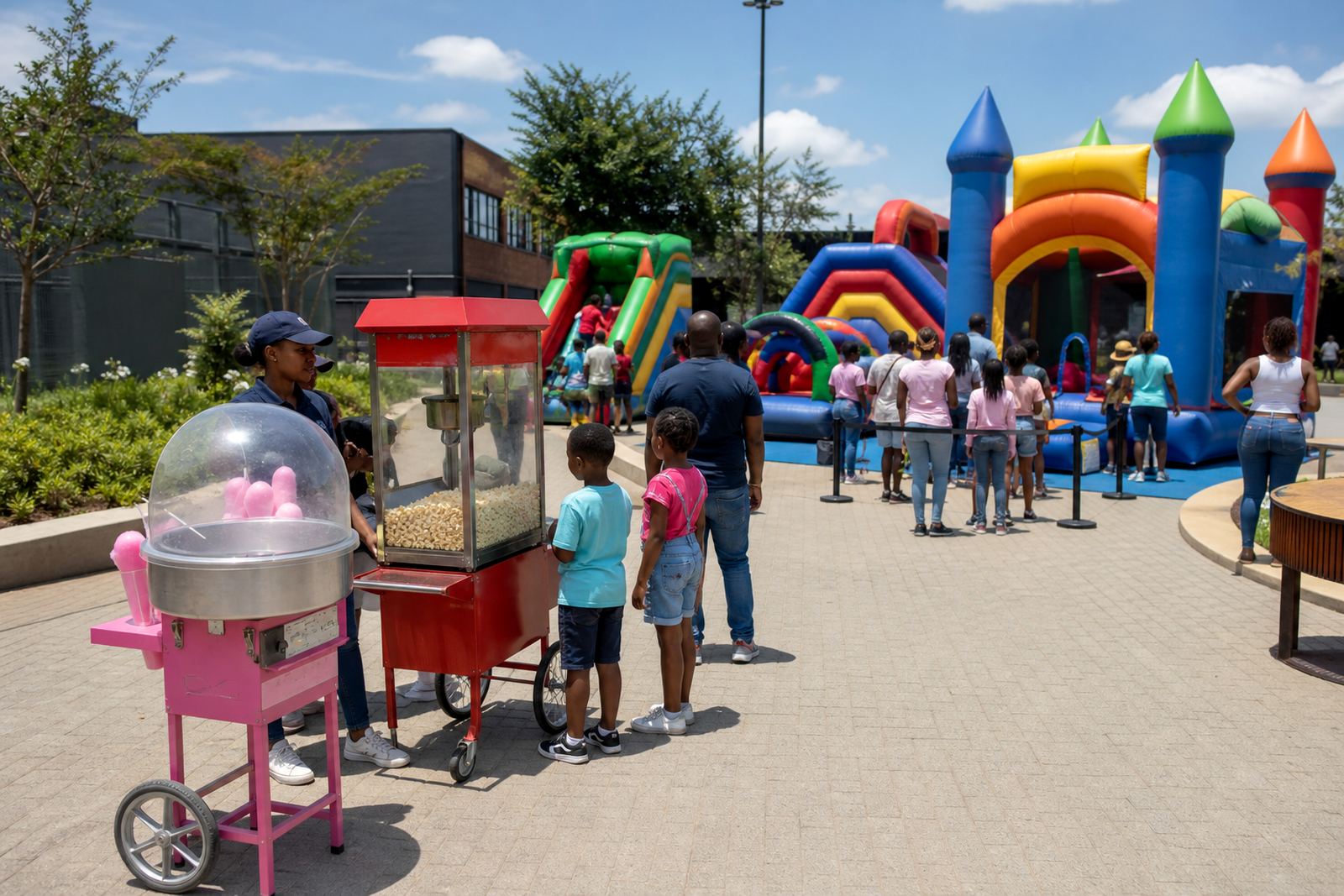
The best children’s zone has variety without confusion. One side can hold a scoring game, another side can hold a bouncing area, and a third corner can handle snacks like popcorn or candy floss. That split reduces bunching and makes it easier for parents to see where each child has gone. In windy weather, inflatables need proper anchoring and a check on ground conditions before use, especially on school fields or open hardstands.
- Mix active play with a quieter prize or skill game.
- Keep queues short and clearly marked.
- Separate food carts from active play surfaces.
- Allow enough clearance for blower hoses and staff movement.
Teenagers want something that feels less childish
Teens usually step away from the sweet spot of kiddie play and need attractions that feel sharper and more social. Arcade games, reaction-based challenges, photo booths and a bigger obstacle course can work well here. They also like a space where they can gather without being pushed into the toddler zone or asked to stand around too long. If music is part of the event, keep the sound level balanced so the teen area has energy but does not overpower the rest of the site.
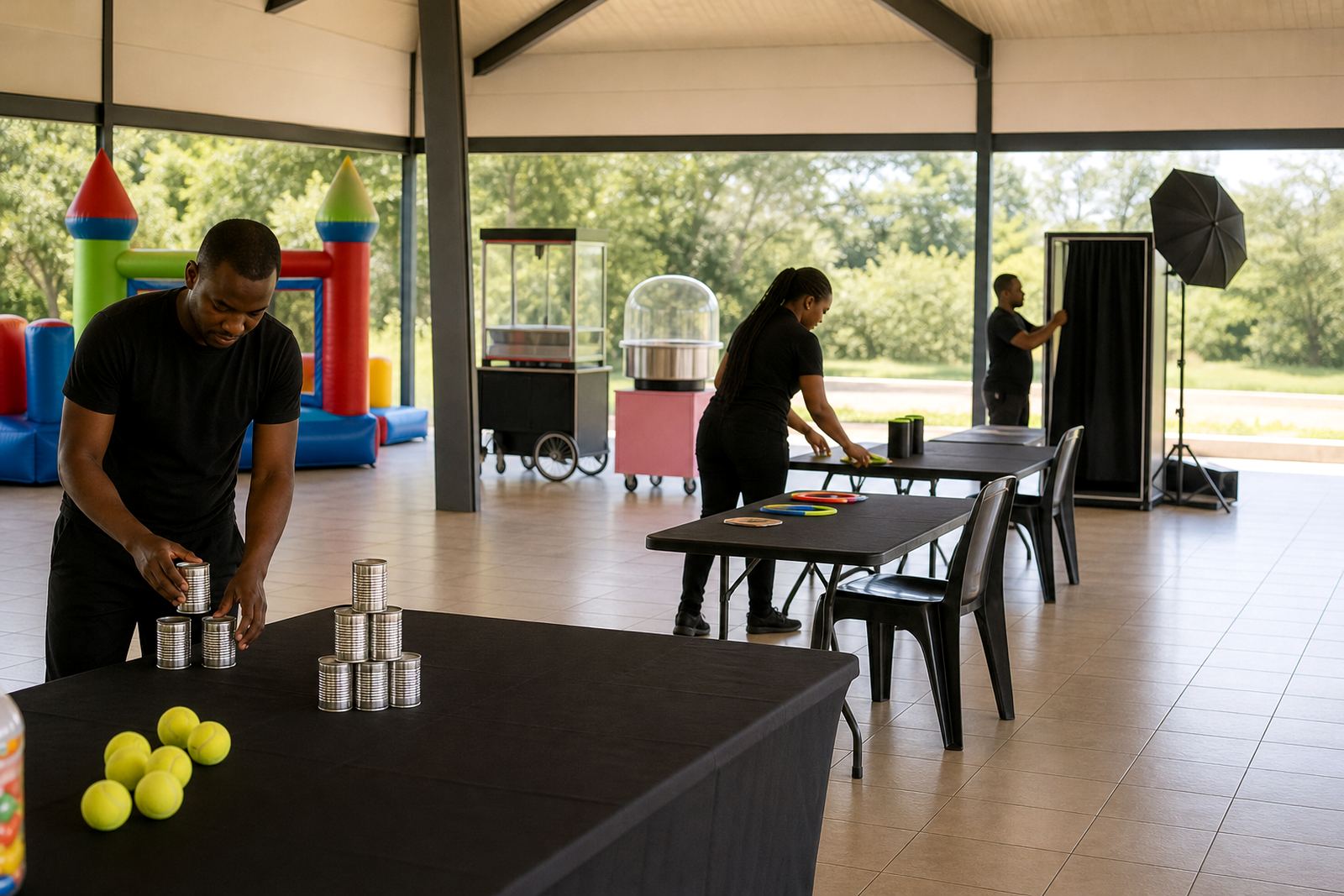
For this age group, the best layout gives them a reason to stay in one place for a while. A photo booth near the edge of the zone works well because it creates a reason to gather, pose and move on. If you add a foam machine or bubble feature, make sure the floor surface suits it and that the area can be controlled when it gets slick. Teens are often fast to notice when a setup feels awkward, so the practical details matter.
- Choose games with scorekeeping or a clear challenge.
- Put the photo booth where it can be queued neatly.
- Keep slippery features in a separate marked area.
- Allow room for waiting without blocking walkways.
Adults stay involved when their space is respected
Adults are not just there to watch. They want shade, decent sightlines and a place to stand or sit while children move between zones. At a corporate family day or a school fair, adults often drift between food, photo stops and the queue for the more popular rides. If their circulation path is blocked, the whole event starts to feel cramped.
A useful adult zone is usually placed near the food service, seating and the main line of sight to the busiest play areas. That way parents can supervise without chasing every child. Small fairground rides can also sit close to this area if the age and height rules are clear, because adults often move in with younger children or watch older ones take a turn. For evening functions, the power plan matters too, especially when arcade machines, snack carts and lighting all draw from the same source.
- Give adults a shaded view of the main play areas.
- Place food and seating where traffic can flow around them.
- Keep age and height rules visible at each attraction.
- Plan power points around the equipment that needs mains supply.
A Midrand school fair needs sharper zoning than most
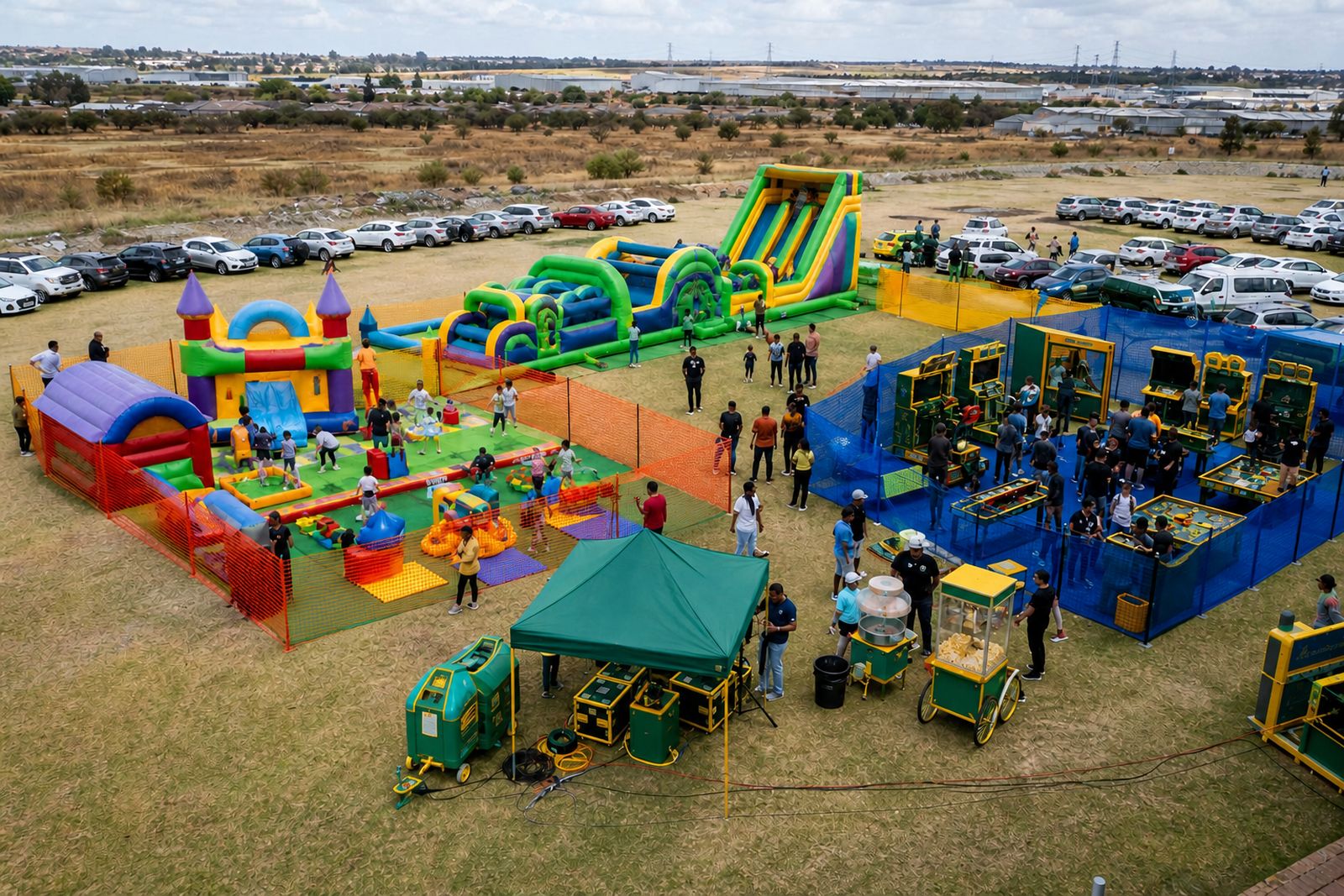
At a Midrand primary school sports field, the smartest setup might split the site into four parts. Toddlers can stay closest to the stage and parent seating, with a low castle and bubble play. Children can take the central field with a medium obstacle course and two carnival stalls. Teens can move to the hardcourt for arcade machines and a photo booth. Adults can stay along the shaded edge near food and the view of the whole field.
That layout reduces crossing paths, which matters when grandparents, teachers, younger siblings and teenagers all arrive at the same time. It also makes supervision easier because each zone has a different pace. If there is a chance of wet weather, the outdoor attractions can be shifted so the slickest surfaces are the easiest to keep under control. When a venue has limited access for trucks or a tight loading bay, setup and strike need careful timing so the site remains tidy and open for the next group using it.
In Gauteng, where school fields and shopping centre courtyards can be exposed to wind, a clear anchoring plan is not optional. Crews need to check ground firmness, cable runs and walkways before the first child enters. It is practical work, and the site usually runs better when every age group has a defined place rather than sharing one big open patch.
The booking details that keep the plan workable
Mixed-age events go smoother when the brief covers the layout, the crowd mix and the equipment order. A booking team needs to know whether the day is aimed at toddlers and parents, school children and teachers, or a wider family crowd with teens included. That affects the size of inflatables, the number of attendants, the snack carts, the need for queue management and whether generator supply is required for the more power-hungry items.
It also helps to confirm access to the venue, the space available for setup and the points where crews can load in and out. If the event uses a photo booth, mascots, foam machines or small rides, those items need their own operating space and a route for guests to move around them.
- Share the age mix and likely headcount.
- Note indoor, outdoor or split-site use.
- List any power limits, access gates or surface issues.
- Include the attractions that need staff or supervision.
The safest event is the one that feels orderly
Clear zones make the entire event easier to move through. Toddlers are calmer near their own play area, children get enough movement, teens have something that feels worth their time and adults can watch without standing in the middle of the action. That order is what lets a birthday, mall activation, school day or family function run with less friction.
Amused works across Johannesburg, Pretoria, Durban, Cape Town and Bloemfontein with the same practical approach: match the attraction to the age group, keep the movement clear and put the active pieces where they can be supervised properly. You do not need to fill every gap. It is to give each group a place that suits how they move, wait and play.