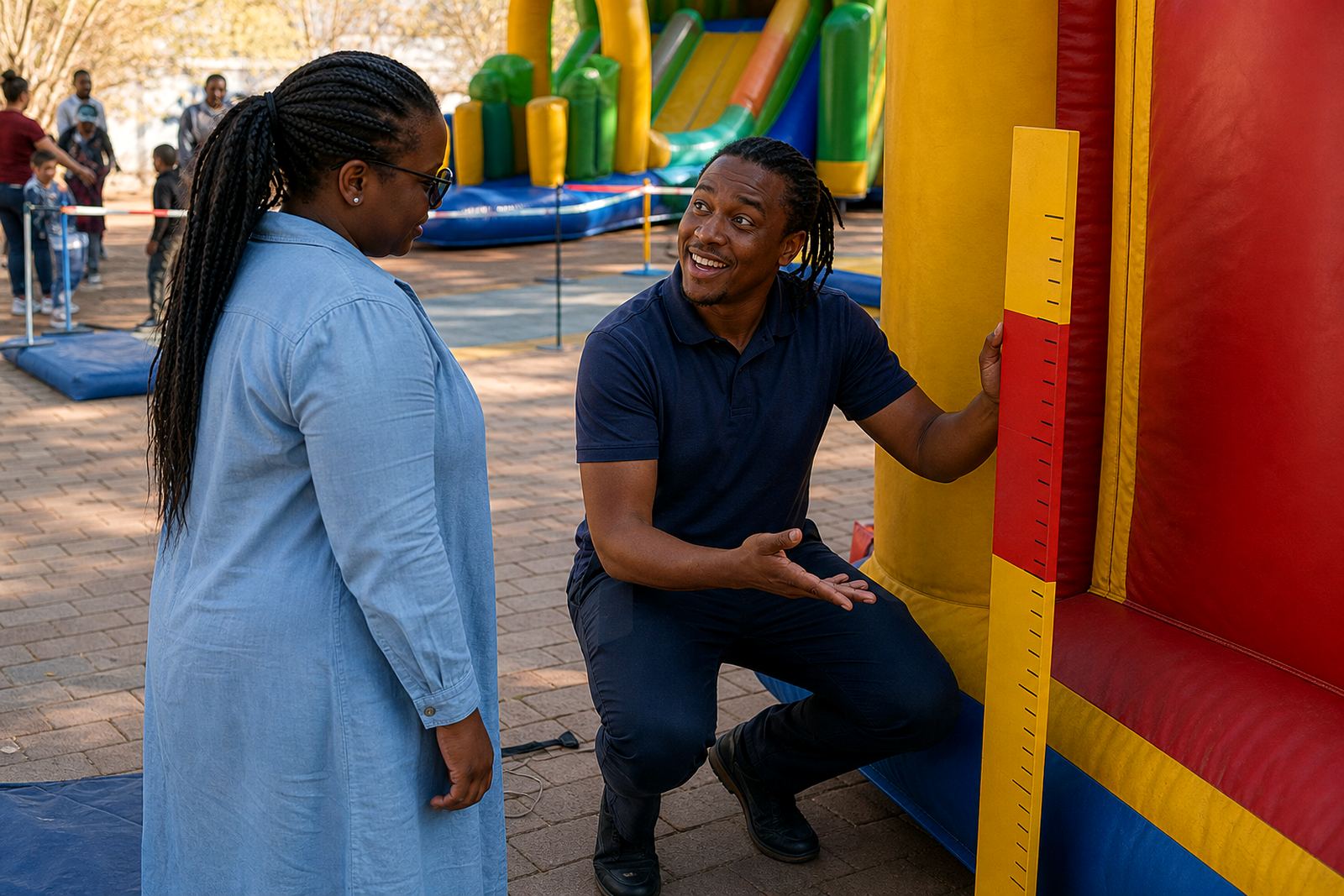
Why the size call matters before anyone climbs in
Every inflatable, ride or game has a working range. That range is usually based on a mix of body size, age, height and the way people move through the activity. A small jumping castle can feel perfect for younger children, but the same unit can become crowded fast if older children or adults join in. The aim is not to exclude people for no reason. It is to keep the pace fair, reduce pushing and lower the chance of someone landing badly.
At a busy school fete in Midrand, a crew might split children into shorter age groups so the smaller ones get a turn without pressure from bigger bodies behind them. That same thinking helps at corporate family days too. When guests can see where they fit, the queue moves better and the attendant can keep watch without constant corrections.
What usually changes from one amusement to the next
Different attractions ask for different limits. A soft play unit may suit smaller children only, while a long inflatable obstacle course might allow older children if the lane width, wall height and landing space are suitable. Carnival games and arcade machines usually have fewer physical limits, but they still need sensible spacing so players and spectators do not bump each other.
- Jumping castles often use age bands and maximum occupant numbers.
- Obstacle courses may need one person at a time through each lane.
- Small fairground rides often set a height marker for safe sitting position and restraint use.
- Foam and bubble areas need clear slip control and enough open floor around the unit.
- Photo booths work better with simple line control, especially for children under supervision.
The crew should explain the rule before the first group enters, not after the space has already filled up. A clear sign and a steady attendant do a lot of the work.
How a crew checks fit on the day
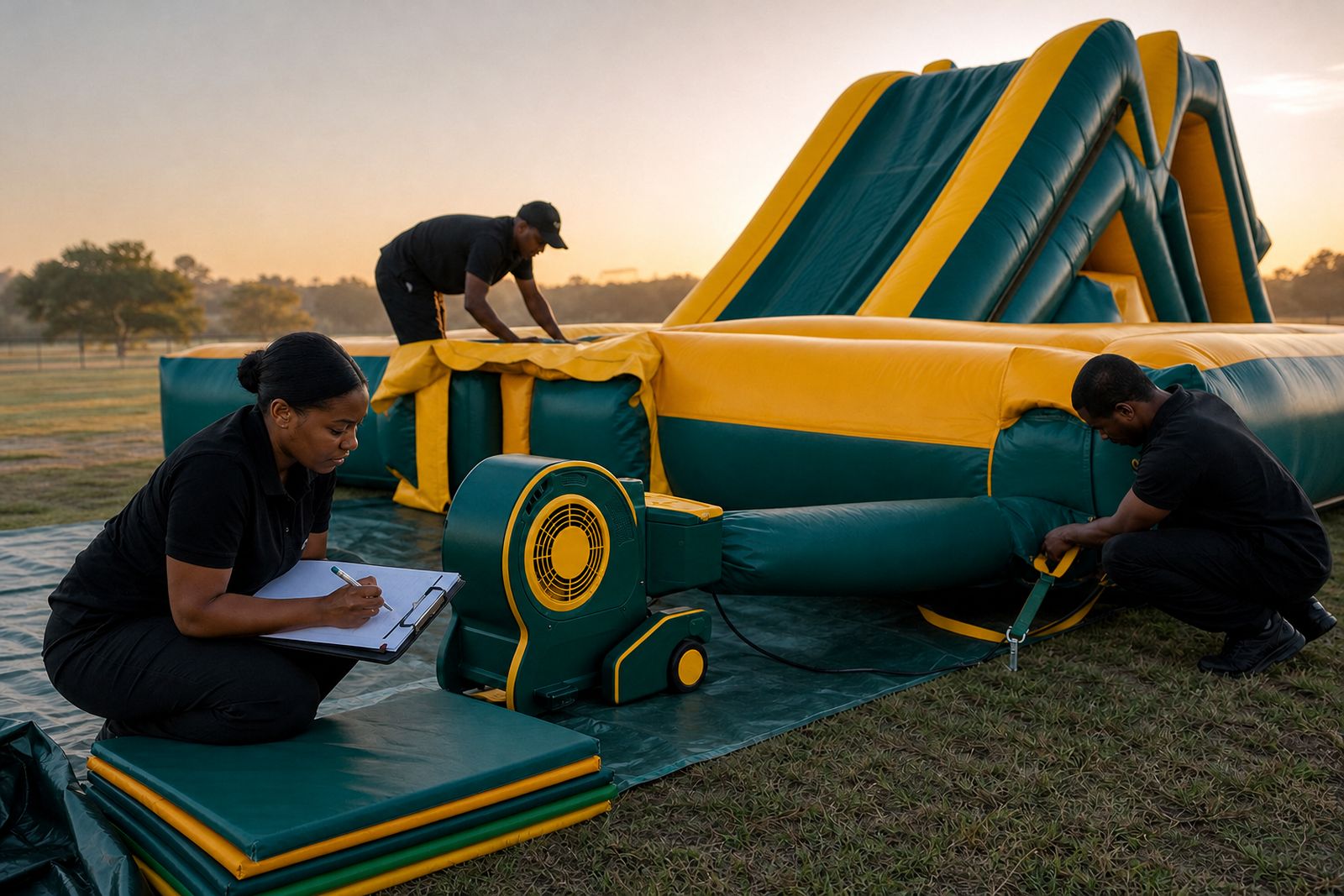
On site, the first check is usually practical. The team looks at entry height, body control and how many people can stand safely inside without crowding the walls or doorway. They also look at shoes, sharp objects and wet clothing, because those things matter just as much as height. Even when a child is the right size, the wrong footwear or a slippery shirt can change the risk quickly.
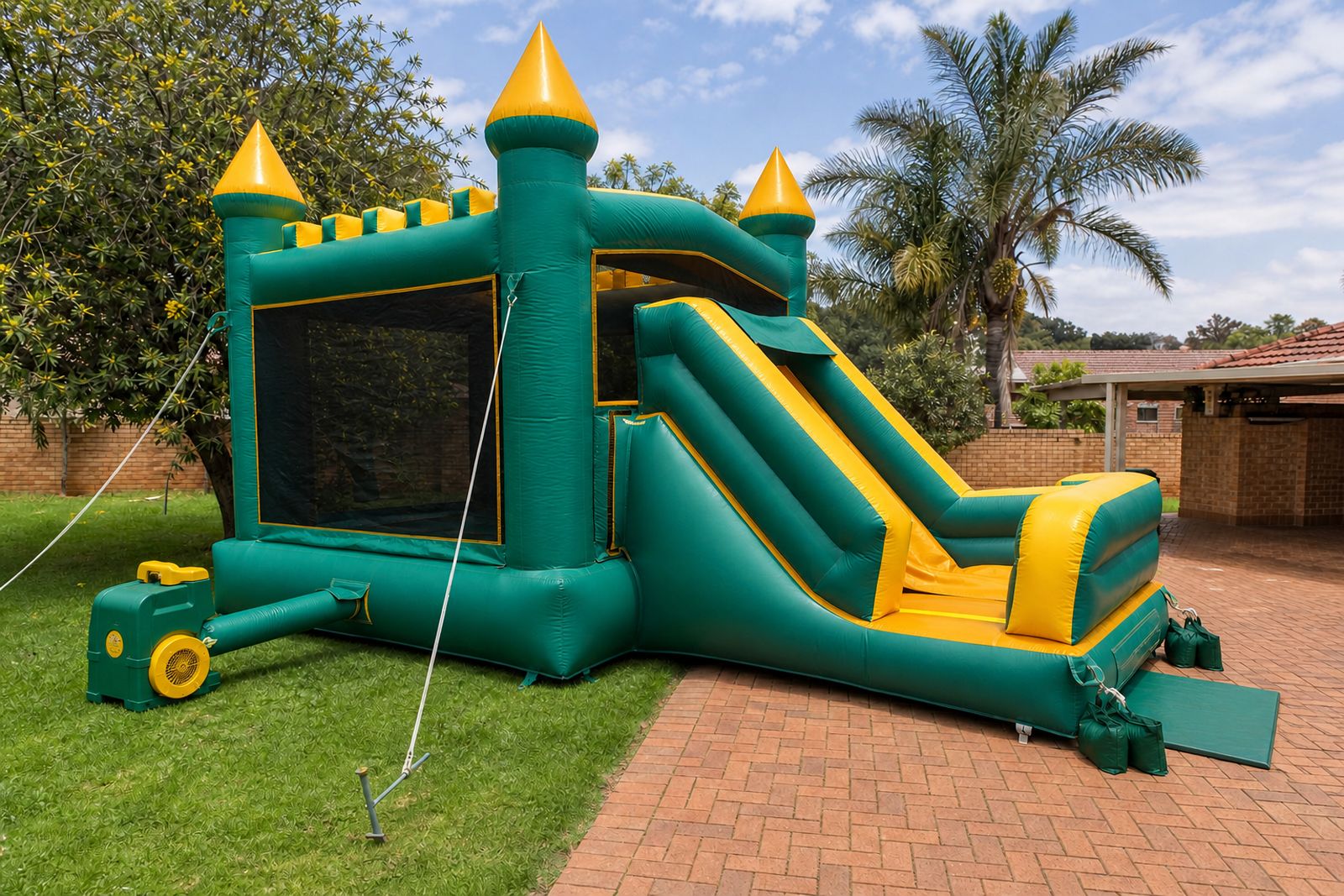
For heavier attractions, anchoring and mat placement matter a lot. Safety mats should sit at entries, exits and any hard edge where a step down happens. If an inflatable is installed on grass, pegs or ballast bags need to suit the surface. On paved courtyards in places like Sandton or Pretoria East, the crew will usually plan the anchoring and access route before the first blower is switched on.
- Check who enters first, especially where mixed age groups are expected.
- Keep one person at a time in narrow obstacle sections.
- Use mats where children step on or off raised points.
- Separate active play from snack carts and queue lines.
- Keep an eye on speed, not just size.
Power, blowers and the space around the attraction
Some amusements need mains power for blowers, lights, arcade cabinets, popcorn units or candy floss carts. Others may need a generator where the venue lacks usable power or where the loading is too spread out. The crew needs enough space not only for the unit itself, but also for cables, access paths and the safe zone around moving people.
A jumping castle might fit neatly in a court, yet the blower, cable run and operator position can add another layer of space. If a photo booth is nearby, guests need room to queue without blocking the entrance to the inflatable. If a foam machine is part of the mix, the floor surface and drainage need attention. This is where weight and height rules connect with layout planning, because the safest setup is the one that also keeps people moving in an orderly way.
Wet weather, wind and the stop point nobody should ignore
Weather can change the way a unit is used, especially outdoors. Strong wind, heavy rain or a slick surface can make a lightweight attraction unsuitable, even if the guest mix is perfect. A good wet weather plan sets out when an item pauses, when it is cleared and how the crowd is moved to another activity. That is especially useful at school events where children keep arriving and the site can get noisy very quickly.
In a coastal city, moisture can make floors and steps slippery, while inland dust can affect the grip on mats and entry points. The team should decide in advance how to cover the unit, protect the electrical route and manage a pause without confusion. The point is to keep the activity controlled rather than push through a poor surface just because the booking calendar is full.
A Midrand school fair example with mixed ages
Picture a Saturday fundraiser at a school in Midrand. Younger children want the jumping castle, older learners want the obstacle course and parents want the photo booth and snack cart. If everyone is sent to the same entry at once, the line turns messy within minutes. If the crew sets a height guide at the door, marks the age bands and places an attendant at the entrance, the flow stays calmer and the children get more turns.
That same event can still feel lively without turning chaotic. Smaller children move to the castle, older children take the course in short runs and the queue for the arcade cabinets is kept separate from the snack line. Nothing about the fun is reduced. It is simply arranged so the right people use the right attraction at the right time.
- Use visible markers for height where children need a quick check.
- Keep younger children away from bigger mixed groups on the same unit.
- Position food and drink away from active play surfaces.
- Leave enough room for crew movement, especially during busy peaks.
- Plan a clear strike path so collection does not cut through the crowd.
The booking notes that make the limits easier to manage
Good booking details help the crew match the attraction to the crowd. Age range, expected guest numbers, floor type, power access and the available footprint all affect the final setup. If the event has a range of guests, say so early. A mall activation with short bursts of foot traffic is very different from a birthday party where the same group may stay on site for hours.
It also helps to mention whether the event needs a mascot appearance, queue control, snack service or a supervised game stall. Those details change how the team stages the space. When the right limits are clear from the start, the result is less pressure at the entry point and a fairer experience for everyone who wants a turn.