
The footprint that makes the booth feel calm
A basic photo booth setup usually needs a clear patch of floor rather than a large corner. For most indoor functions, allow about 3 m by 3 m for the booth, operator space and a small prop table, then add room for people waiting nearby without pressing into the frame. If the backdrop is wide or the photo print station sits beside it, the space can stretch a little wider.
The best spot is level, dry and close enough to the action that guests notice it, but not so tight that traffic piles up in front of it. At school events and mall activations, a booth tucked against a wall can work well, as long as the camera view stays open and the entrance side does not choke the passage.
Backdrop, camera point and prop table in one layout
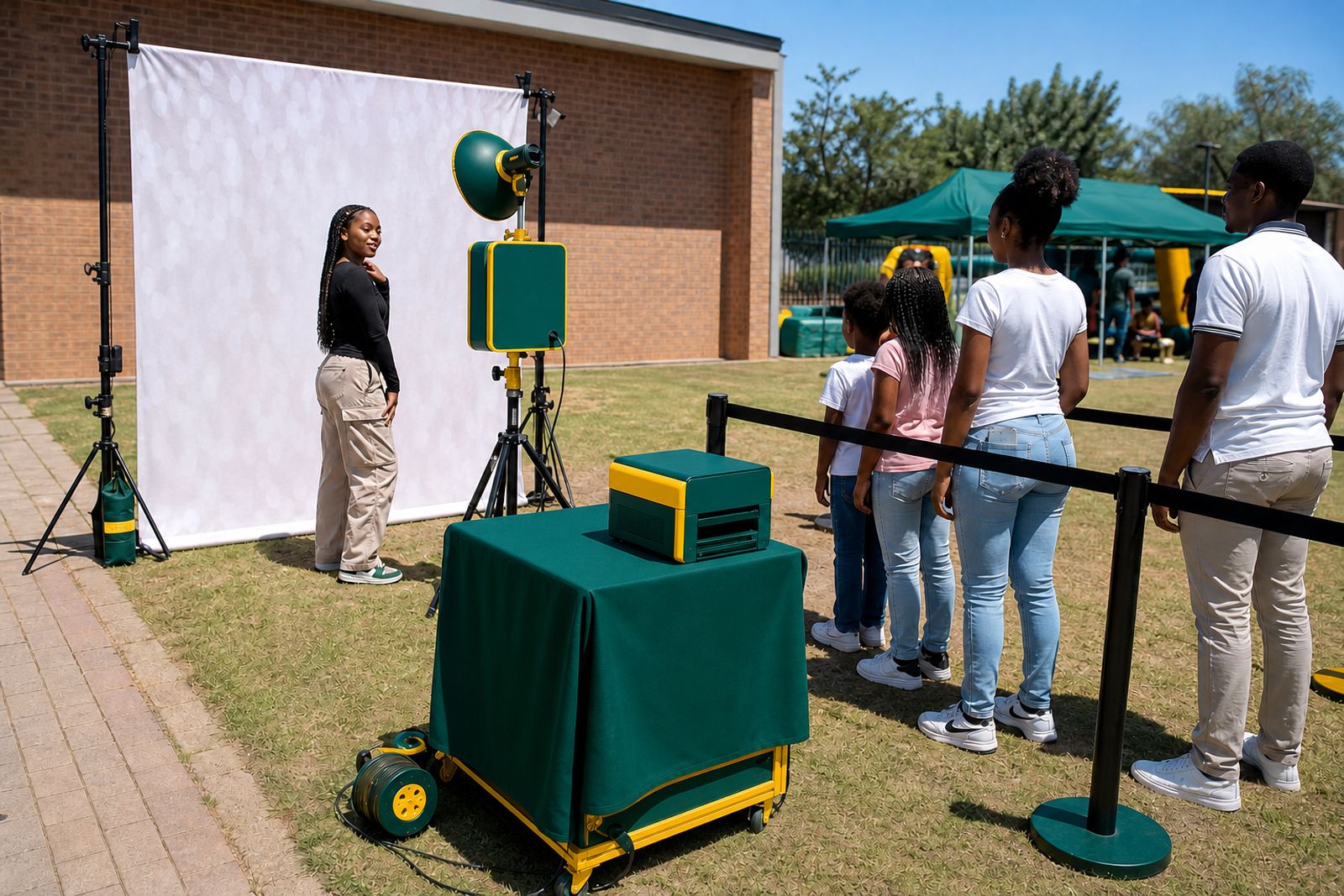
The backdrop sets the width, the camera point sets the depth, and the prop table usually sits just off to one side. A neat three-part layout keeps the booth easy to use. Guests step in, pick up a prop, face the camera, then move out without crossing back through the queue.
- Backdrop: usually needs a straight run of wall or frame space, with enough width for two or three people in a shot
- Camera point: must stay far enough back for full-body or half-body images, depending on the booth style
- Prop table: works best beside the entry side, not in front of the lens
- Queue lane: should leave a clear walk line so guests are not waiting across a doorway or service aisle
When the room is narrow, the frame can still work if the queue is managed properly. At a corporate family day in Midrand, for example, a booth may sit beside a refreshment zone with a short waiting line along the wall, which keeps the photo area open and the flow steady.
Indoor venues and the ceiling height question
Most photo booths are happy indoors, but ceiling height matters more than people expect. A simple open booth with a backdrop can fit under modest roof lines, while a larger enclosure, hanging decor or a step-and-repeat style frame may need extra height to avoid a cramped look. Low ceilings can also change the angle of the lights, which affects the final image.
If the venue has pillars, beams or low bulkheads, those should be checked before the booth is set down. A clean corner in a foyer, hall or function room often gives better results than a flashy but tight nook. Airy spaces also help with sound, especially when the booth is close to speeches or announcements.
Queues, props and the human traffic around the booth
The booth itself is only part of the space. Guests gathering, laughing, adjusting hats or glasses, and checking the printer tray all need a bit of breathing room. A queue that sits too close to the camera makes people rush. A queue that sits too far away leaves the booth looking empty.
- Keep the waiting line off main walkways where possible
- Leave a small buffer between the prop table and the queue
- Use a clear entry point and exit point if the layout allows it
- Place the booth near activity, but away from food service spill areas
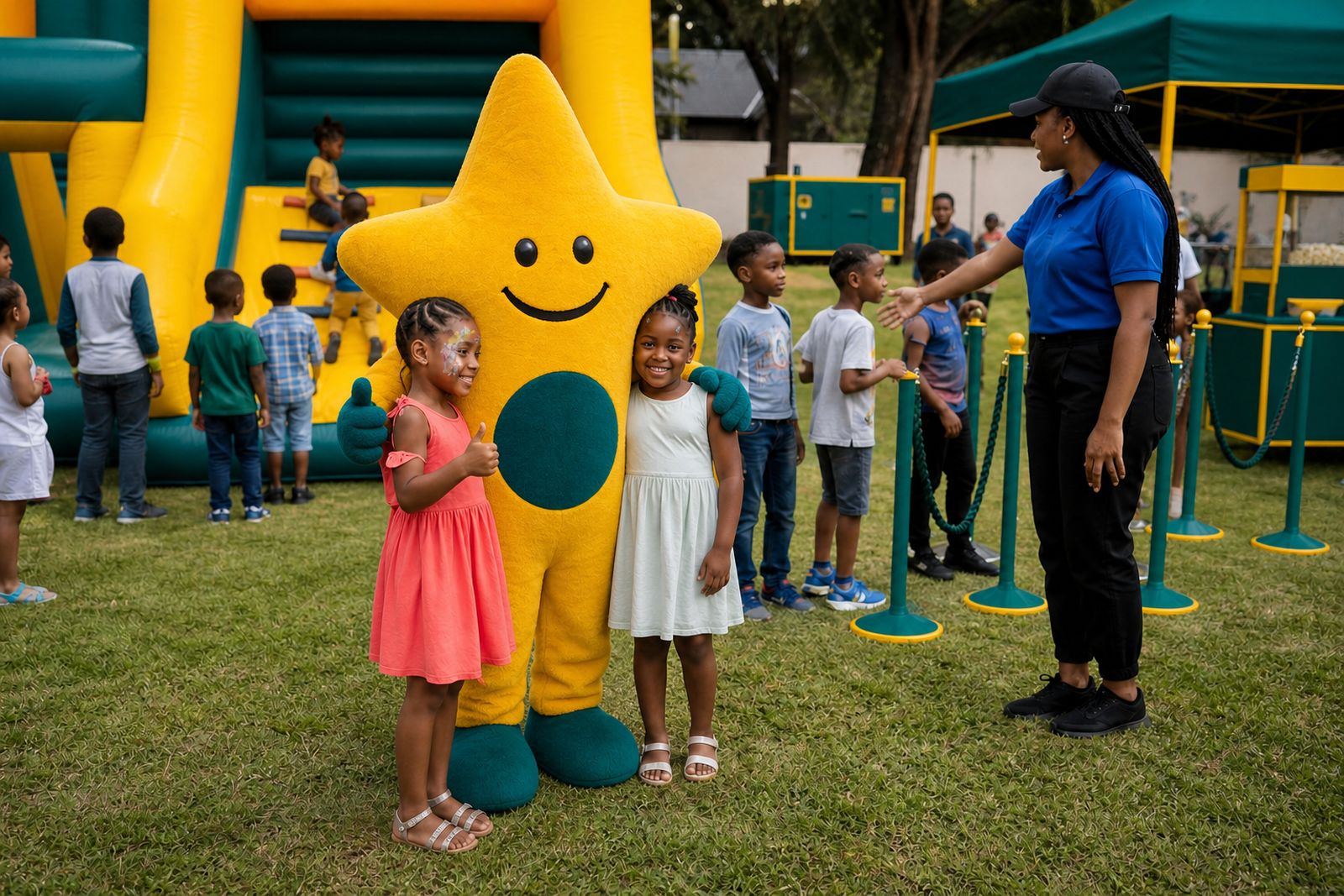
For birthdays, the crowd is often mixed ages, so the queue needs to be wide enough for children and adults at the same time. For malls and schools, the line may need gentle marshalling so people do not drift into adjacent stalls or passages.
Power, cabling and where the operator stands
Some photo booths need a standard power point for the camera, lighting and printer. The cable run should be short and kept out of the footpath. If the booth uses a laptop or printer table, that station needs its own small patch of surface space, not just a corner of the backdrop area.
The operator also needs a standing position that does not block the guests. That person may help with props, keep the queue moving, and guide guests into the right distance from the lens. If the booth has live printing, the table should be close enough for the operator to reach it without stepping into the shot every few minutes.
Wet weather, outdoor lawns and tricky event surfaces
Outdoor booths work best on firm, level ground. Grass can be fine if it is dry and even, but soft lawns, sand or uneven paving can make the setup awkward. Wind can move lightweight backdrops and rain can ruin both the props and the queue area, so a covered option is usually safer when the weather looks uncertain.
At a school fete in Pretoria or a birthday in Durban, a sheltered veranda, hall entrance or marquee edge can solve a lot of problems. The trick is to keep the booth visible without letting weather or ground conditions create extra fuss. If the space is damp or exposed, the setup may need a different orientation or a heavier backdrop support.
A Midrand example that shows the spacing in practice
A neat mall activation in Midrand might use a 3 m by 4 m patch near an event court, with the backdrop against the rear edge, the camera facing out, and the prop table on the left. The queue can run along the side of the space, which leaves the centre open for photos and helps passers-by see what is happening.
That same layout can scale down for a smaller office celebration or stretch wider for a school fun day with higher foot traffic. The key is not the size alone, but the way the room handles movement. If guests can step in, pose, collect prints and move away without bumping into each other, the booth is in the right place.
That helps us work out how the booth, queue and prop table should sit before the event day arrives.