
Start with the doorway, not the game
Before an arcade cabinet rolls in, measure the route from the delivery point to its final position. A machine that fits the floor space can still fail at the doorway, through a tight passage, or on a sharp turn beside a wall. In Midrand school halls and corporate venues, the first check is usually the widest clear path, the nearest level surface, and any steps, thresholds or ramp edges that will slow the move.
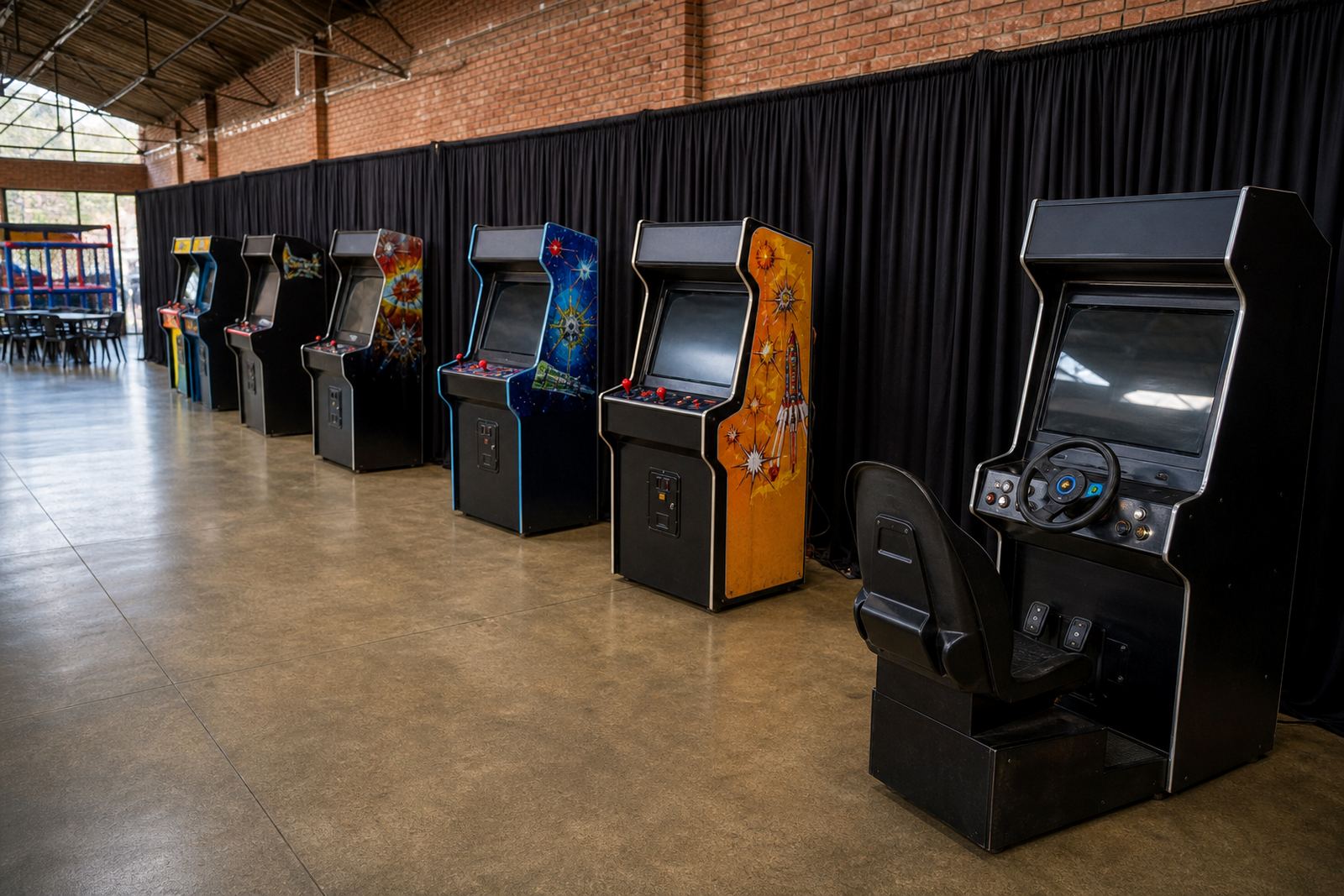
Arcade and retro gaming machines are usually placed where crews can reach them without crossing the full crowd. That makes setup cleaner and keeps the machine stable while it is being levelled and tested. If the event includes several cabinets, leave room for players to wait behind the active game and for an attendant to stand to one side without blocking access.
- Measure the doorway width and ceiling height at the narrowest point.
- Leave a clear route for trolley movement and turning space.
- Check for steps, cables, low beams and loose mats.
- Keep the machine close to a wall only if airflow and access stay open.
Sound levels work better with a planned edge
Arcade machines can carry a surprising amount of sound in a closed room, especially when several attract screens and speakers are running together. The best spot is often along one side of the hall rather than at the centre, where noise bounces off every surface and crowds the conversation area. In a hotel ballroom, foyer or school function room, a side wall can soften the audio spill while still keeping the games visible.
That matters for birthdays and family days where music, announcements and talking all happen at once. If the room already has a stage or PA system, the game zone should sit far enough away that speakers do not compete with the machine sound. A narrow strip near the entrance can work well for one cabinet, but a larger hire usually needs a more settled corner with room for a queue.
- Keep arcade audio away from the main speech area.
- Avoid placing speakers face to face with a cabinet screen.
- Separate high traffic paths from the game zone.
- Use the room edge to reduce noise bounce where possible.
Screen glare is a real placement problem
Bright windows and glass doors can wash out a screen, especially during daytime events in Gauteng. If the cabinet faces direct sunlight, players may struggle to see the game properly and the front panel can look dull even when the machine is switched on and working. A slight angle away from the window usually helps more than moving the cabinet deeper into the room, because it protects the screen without burying the game in a corner.
Indoor placement also needs attention to reflections from polished floors and glossy walls. A mirror finish behind the machine is rarely a good idea, and strong overhead light can be just as distracting as sunlight. At a Midrand school prize-giving, for example, a retro cabinet placed beside a full-height window may need a curtain, blind or a different wall entirely. The aim is plain enough: players should see the action without leaning in or shading the screen with their hands.
- Where possible, place screens so direct sun does not hit them.
- Check glare from windows, glossy tiles and mirrors.
- Use blinds, curtains or another wall if needed.
- Test the view from a child’s height and an adult’s height.
Crowd flow matters more than people expect
A machine that is easy to reach draws play without breaking the rest of the event. A machine that sits in a bottleneck causes shoving, slow movement and long queues that block catering, photo booth access or the route to the toilets. For school fairs and mall activations, the best placement usually leaves a clear lane in front of the cabinet and a separate waiting strip beside it.
When several arcade cabinets are hired together, group them so players can move from one game to the next without crossing the whole room. That layout works well near other attractions, but not right beside a narrow doorway or serving counter. Crews often set the machines in a shallow arc or a loose line, which gives the area shape and helps supervisors watch the crowd without standing in the middle of it.
- Keep entrances, exits and serving counters clear.
- Leave a queue lane that does not cut through the room.
- Group similar games together for easier supervision.
- Place high interest machines where people can see them early.
Power, cabling and supervision should sit together
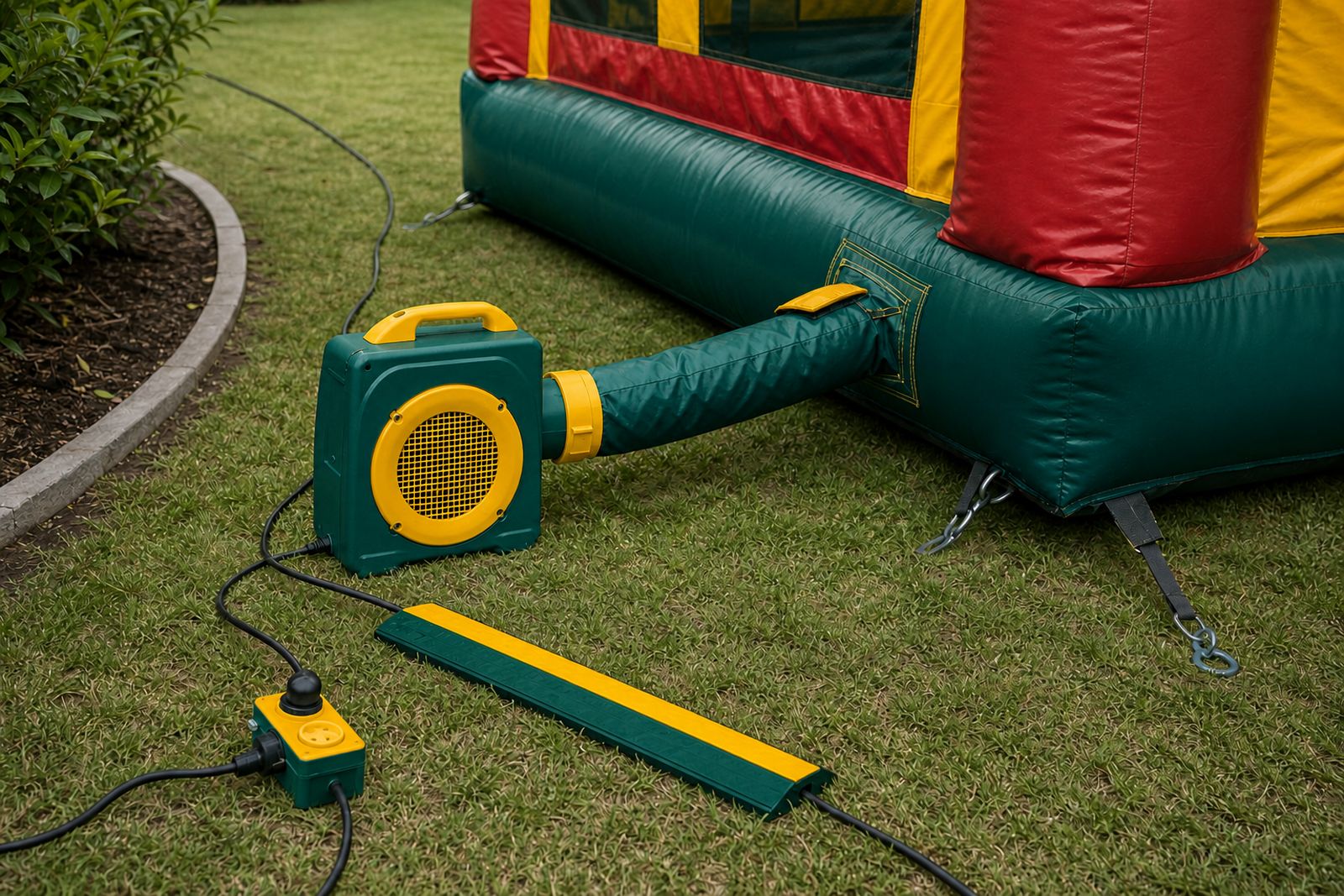
Most arcade cabinets need stable mains power, and the cables should be run where feet will not catch them. That means planning the outlet position before the machine is rolled into place, not after the crowd has arrived. If the venue outlets are far from the chosen spot, cable covers or a different layout may be needed so the line stays tidy and safe.
Where the event includes many amusements, the arcade area should stay within sight of the crew or event organiser. Supervision is easier when the game is not hidden behind a partition, tablecloth or display wall. It also helps to place the cabinet where the attendant can step in to reset play, guide younger children, and keep the front area moving without noise or fuss.
Midrand road shows often mix arcade cabinets with candy floss carts, a photo booth and a foam machine outside. Inside, the placement needs to leave the machine dry, level and easy to inspect. If the floor is damp from wet shoes or cleaning, the cabinet should wait until the surface is safe and fully dry before it is switched on.
A school hall example from Midrand
In a typical Midrand school hall, the best arcade spot is not the centre of the room. A side wall close to the entrance can work better, especially when the hall is being used for a birthday afternoon or a parents’ function with tables and service counters. The cabinet sits where guests can see it as they arrive, but not where it interrupts speeches, food service or the main walking line.
In that setting, crews may place one machine under softer light, turn it slightly away from the windows and leave a marked space for waiting players. If the hall has a polished floor, the machine stands on a level area with cable protection and enough space for the rear panel to breathe. That kind of layout keeps the game active without turning the hall into a squeeze point.
For larger bookings, the same thinking applies in Johannesburg, Pretoria, Durban, Cape Town and Bloemfontein. A mall atrium, corporate family day tent or school assembly space all need the same basics: access, visibility, control of glare, and a queue that does not swallow the room.
What our crew checks before the first player steps up
Placement is not just about where the machine looks good. It is about whether the cabinet can be delivered cleanly, connected safely and played without crowd confusion. Our team plans the set down with the venue shape in mind, then adjusts for sound, light and movement once the machine is on site.
- Access route from vehicle to final position
- Screen angle, window light and overhead glare
- Outlet position, cable length and floor protection
- Queue space, supervision point and nearby foot traffic
- Room for setup, testing and later strike and collection
For schools, malls and corporate family days, that attention helps the arcade zone feel organised rather than squeezed in. It keeps the machine visible, the room easier to move through and the whole hire simpler to run from start to finish.