
Start with the ground, not the attractions
Open fields look generous at first glance, but a proper layout begins with measuring the usable area, not the whole grass patch. Trees, sprinkler heads, goal posts, slopes, drain covers and patchy ground all change how a jumping castle or inflatable course can sit on the site.
A crew will usually mark the field into play zones, waiting lanes and a clear access line for moving equipment in and out. That helps the day run in a steady pattern, and it also keeps learners away from the anchor points, blowers and cable runs.
- Check the flat section first, then work outward.
- Leave enough room for crew movement behind each attraction.
- Keep entrances visible from the viewing side.
Give each inflatable its own breathing room
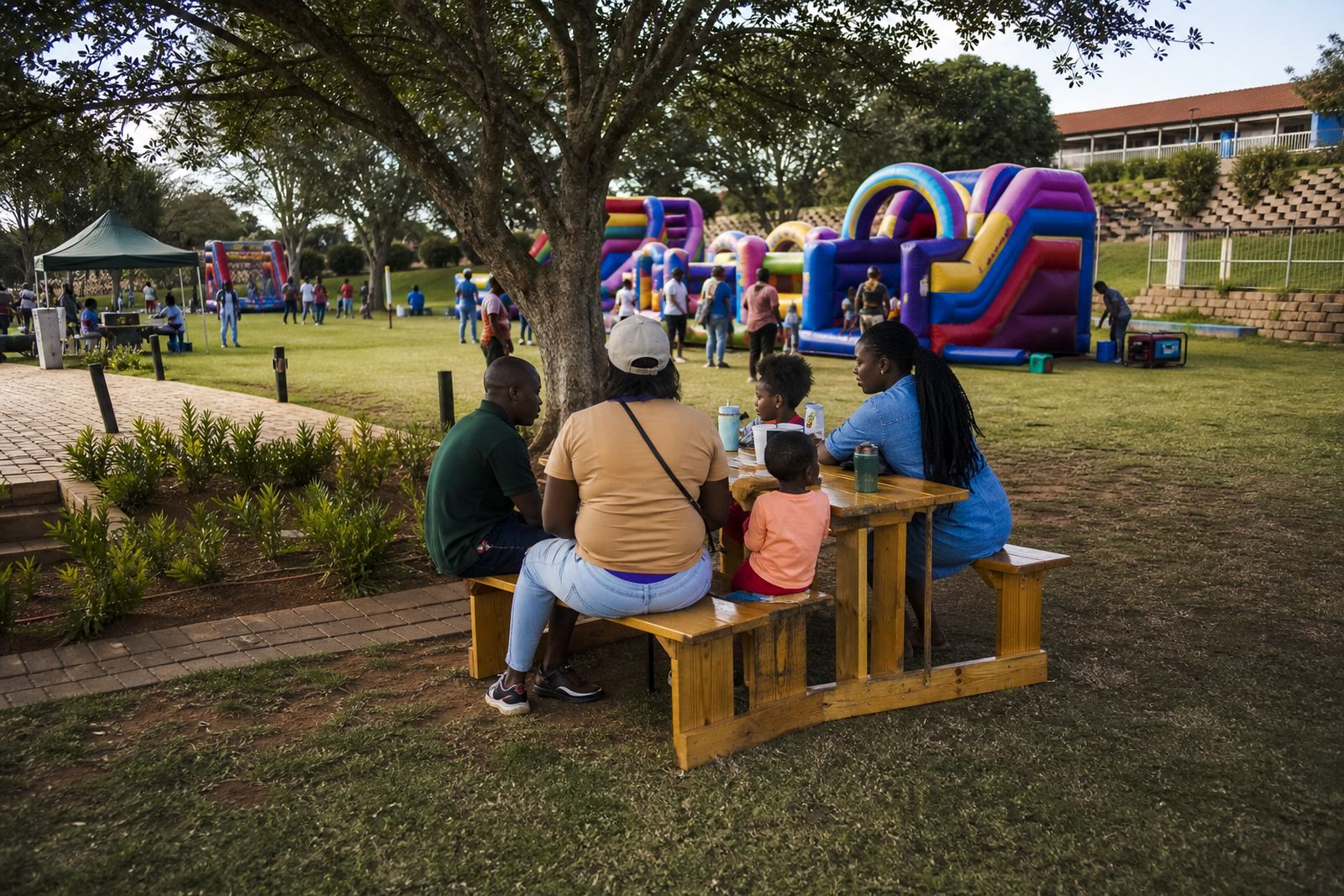
Inflatables need more space than the printed footprint suggests. Once safety mats, blower placement, tie-down points and entry ramps are added, the real space requirement grows quickly, especially on a field where wind can move across the open side.
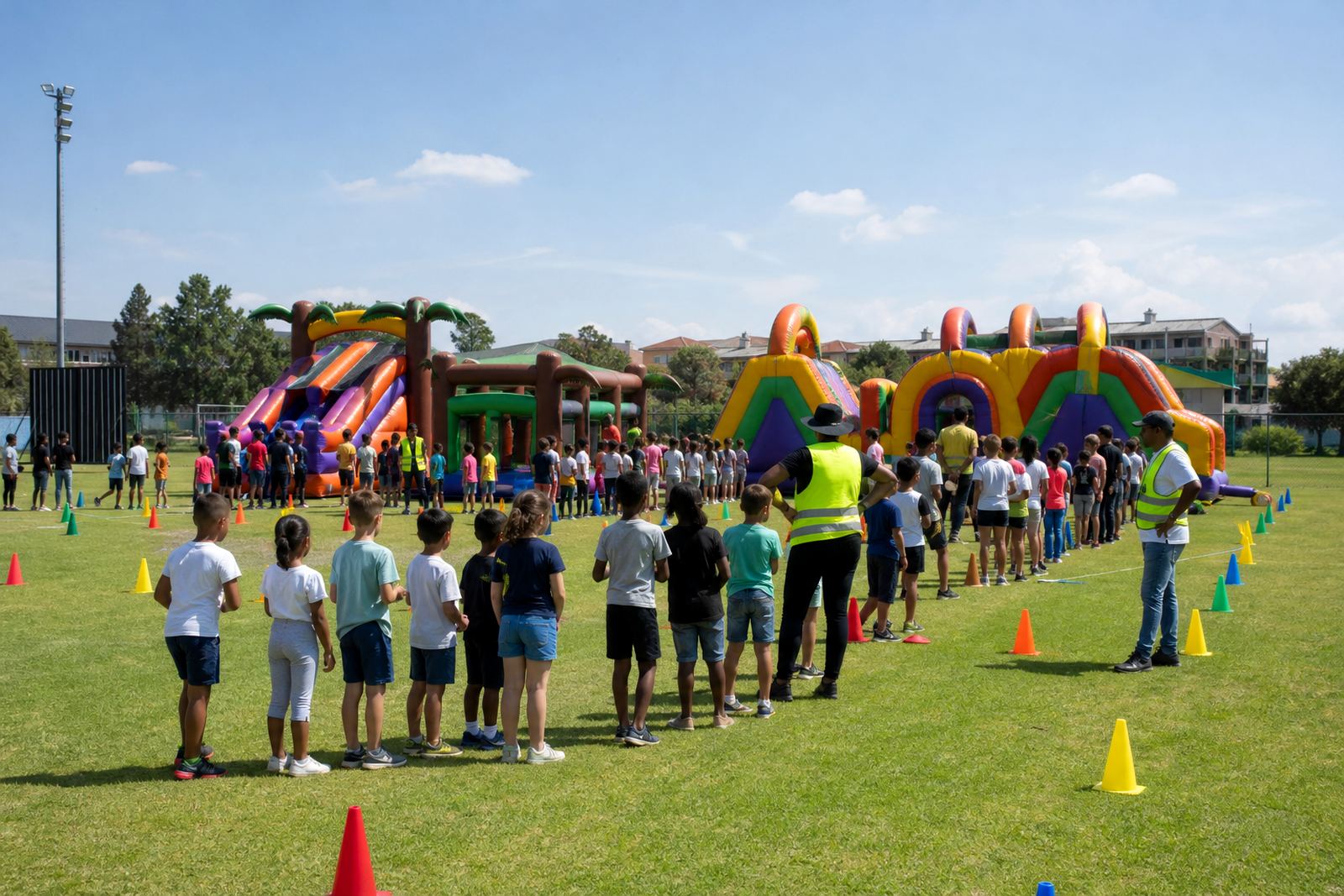
A compact jumping castle can fit into a tight school quad, but a long obstacle course needs extra width for queue control and a clear exit lane. It helps to stagger inflatables rather than line them up too closely, so one group does not block the next group waiting to play.
- Keep blower intakes open and away from foot traffic.
- Allow a safety buffer around corners and slide exits.
- Plan the queue so children wait on one side only.
Where teachers and supervisors stand matters
Teachers need sight lines, not a distant corner with chairs facing the wrong way. A good viewing point sits high enough or central enough to see the entry and exit of each activity, while still leaving a route for crew members to move through the site if needed.
At larger school events, the best viewing strip often runs along the edge of the main activity zone. That gives staff a clear line across the field and keeps the middle open for the children. If the school wants age groups separated, the viewing line can also divide junior and senior activities.
- Place supervisors where they can see both queue and play zone.
- Leave a central lane for crew access and urgent movement.
- Use rope lines or cones to stop drifting between zones.
Carnival games work best in a calm corner
Carnival game stalls need steady flow, not a crowd pressed up against the front table. A corner of the field or the edge of a paved court often works well, because it lets children line up without cutting across the main play area.
Game stalls also benefit from a little shade where possible, since adults running the stalls need to handle tokens, prizes and score cards without clutter. When the school wants several games together, they should be grouped with a short gap between each table so one queue does not merge into the next.
- Set the games where the ground stays firm underfoot.
- Keep prize tables behind the stall line, not in front.
- Allow space for learners to step aside after playing.
Food carts, photo booths and quieter attractions belong together
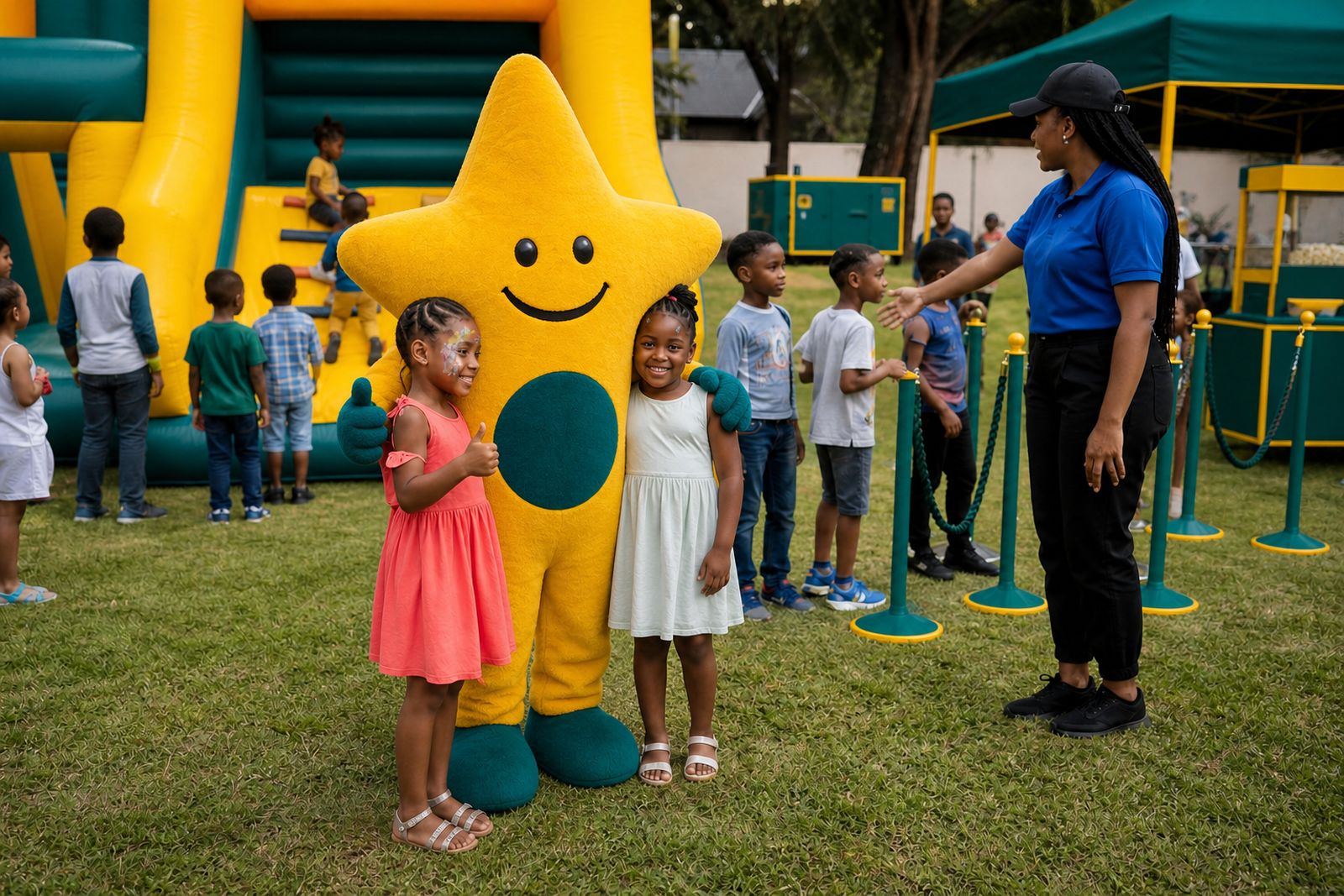
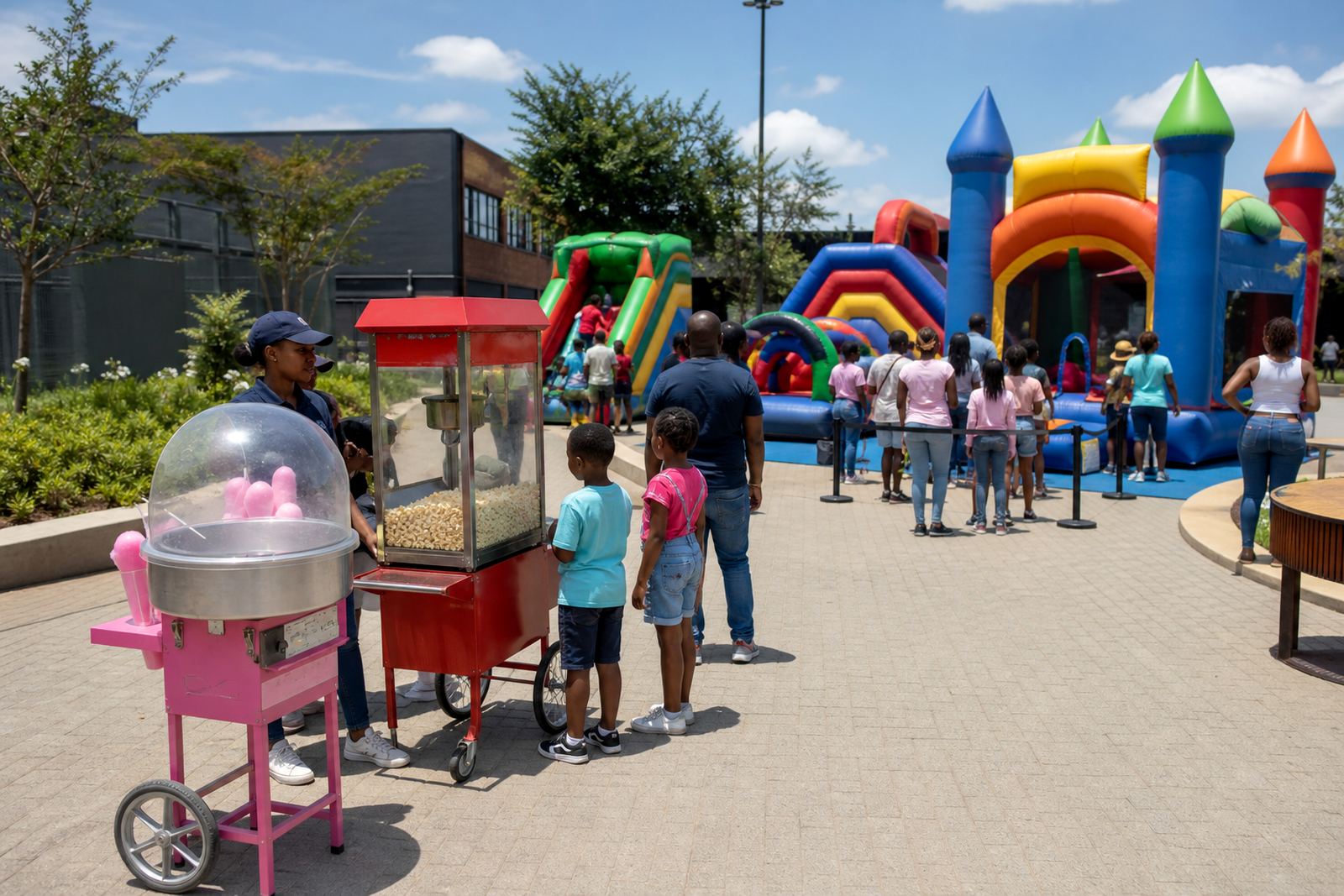
Candy floss carts, popcorn machines and photo booths change the pace of the day, so they work best in a slower zone away from high-energy inflatables. This gives teachers a place to send smaller groups, learners waiting for a turn, or children who need a breather between activities.
A photo booth setup usually needs a flatter, calmer patch than a jumping castle, while snack carts should sit where queues can form without blocking the main circulation path. If the field has one sheltered edge, that often becomes the best home for these attractions, especially when wind picks up on a wide open site.
- Group quiet attractions near one another for easier supervision.
- Keep snack queues away from the entrance of active rides.
- Leave a tidy path for refills, props and crew checks.
Power, weather and collection need their own lane
Anything with a motor, lighting or heat element needs planned power access. Blowers for inflatables, generators for some attractions, and plug points for machines all need cable routes that do not cross the main walking lines.
Weather planning matters on school grounds too. If wind picks up or rain softens the grass, the layout may need to shift so anchors stay secure and wet surfaces do not turn into slippery exits. Strike and collection are easier when there is a clean path back to the loading point, with no parked cars or blocked corners in the way.
- Keep power runs short, neat and visible to crew.
- Allow a dry fallback space if the field turns soft.
- Leave space for packing, folding and loading after the event.
A Midrand school field example with clear lanes
On a Midrand primary school field, one side can hold a jumping castle, a medium obstacle course and a mascot stop, while the far edge carries two or three carnival games and a snack cart. The centre strip stays open as a moving lane, with teachers watching from the same long side so they can see every entrance.
That sort of arrangement helps younger children move in smaller groups, while older learners can be sent to the larger attraction first. It also leaves enough room for setup trucks to drop equipment close to the edge, then move out before the gates open. The result is not about packing the field full, it is about shaping the field so the day feels ordered from the first arrival to the last collection.
For schools in Johannesburg, Pretoria, Durban, Cape Town and Bloemfontein, the same basic layout logic holds. The ground changes, the weather changes and the available space changes, but the working pattern stays familiar: safe distances, clear viewing points and no wasted crossings through the middle.