Start with the date, place and crowd mix
The first step is to pin down the basics. A school fun day in Pretoria needs different space, queue control and supervision from a birthday in Midrand, and a mall activation in Sandton may need tighter access points, public walkways and stronger crowd planning.
A jumping castle for toddlers needs a different layout from a tall obstacle course for older children, and a photo booth has different foot traffic from a carnival game stall.
- Event type: school, mall, corporate family day or birthday
- Areas covered include Bloemfontein, Cape Town, Durban, Johannesburg, Midrand and Pretoria
- Guest mix: ages, height ranges and estimated numbers
- Surface: grass, tar, paving or indoor floor space
- Access: gates, loading points and any stairs or tight corners
Match the amusement to the space on site
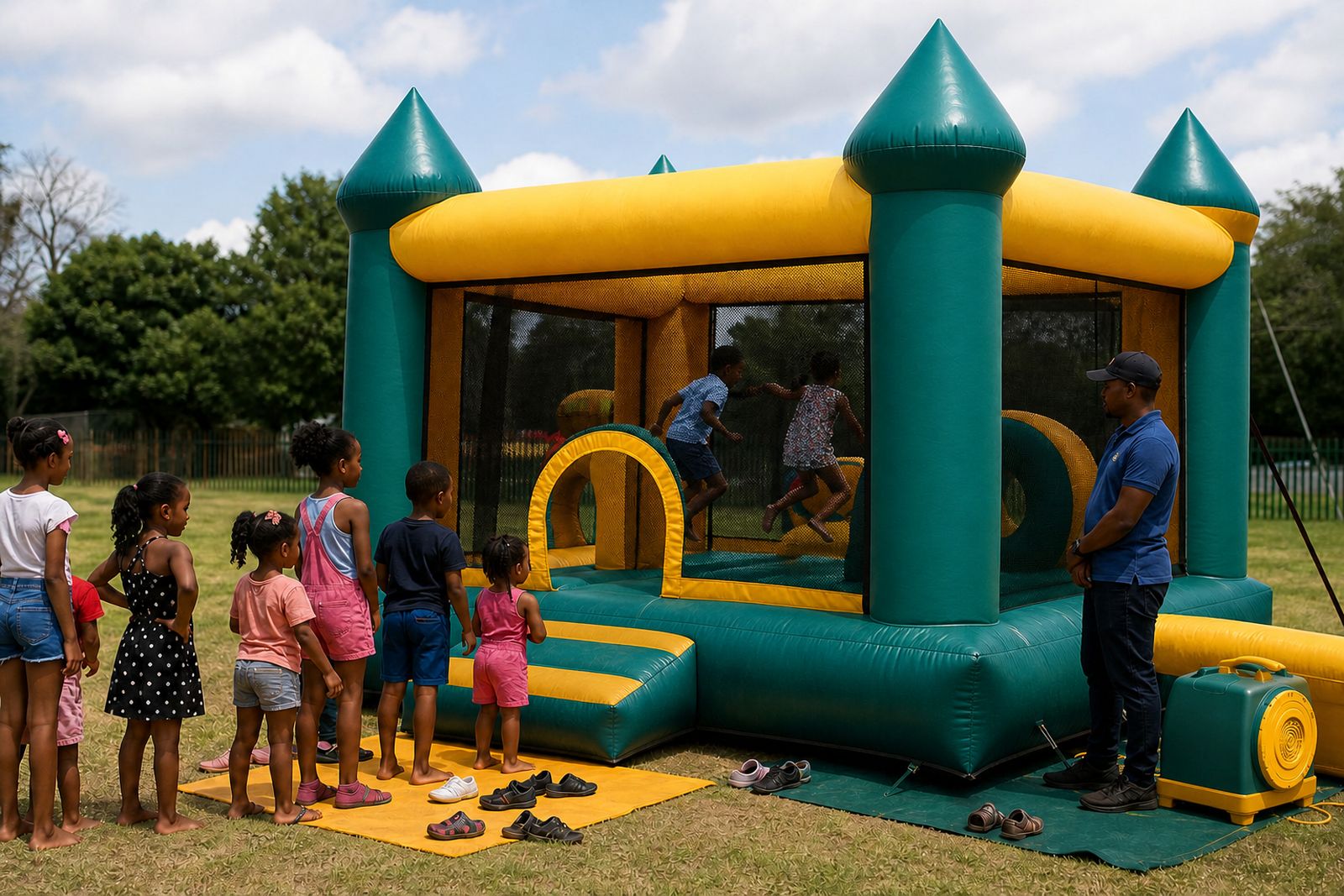
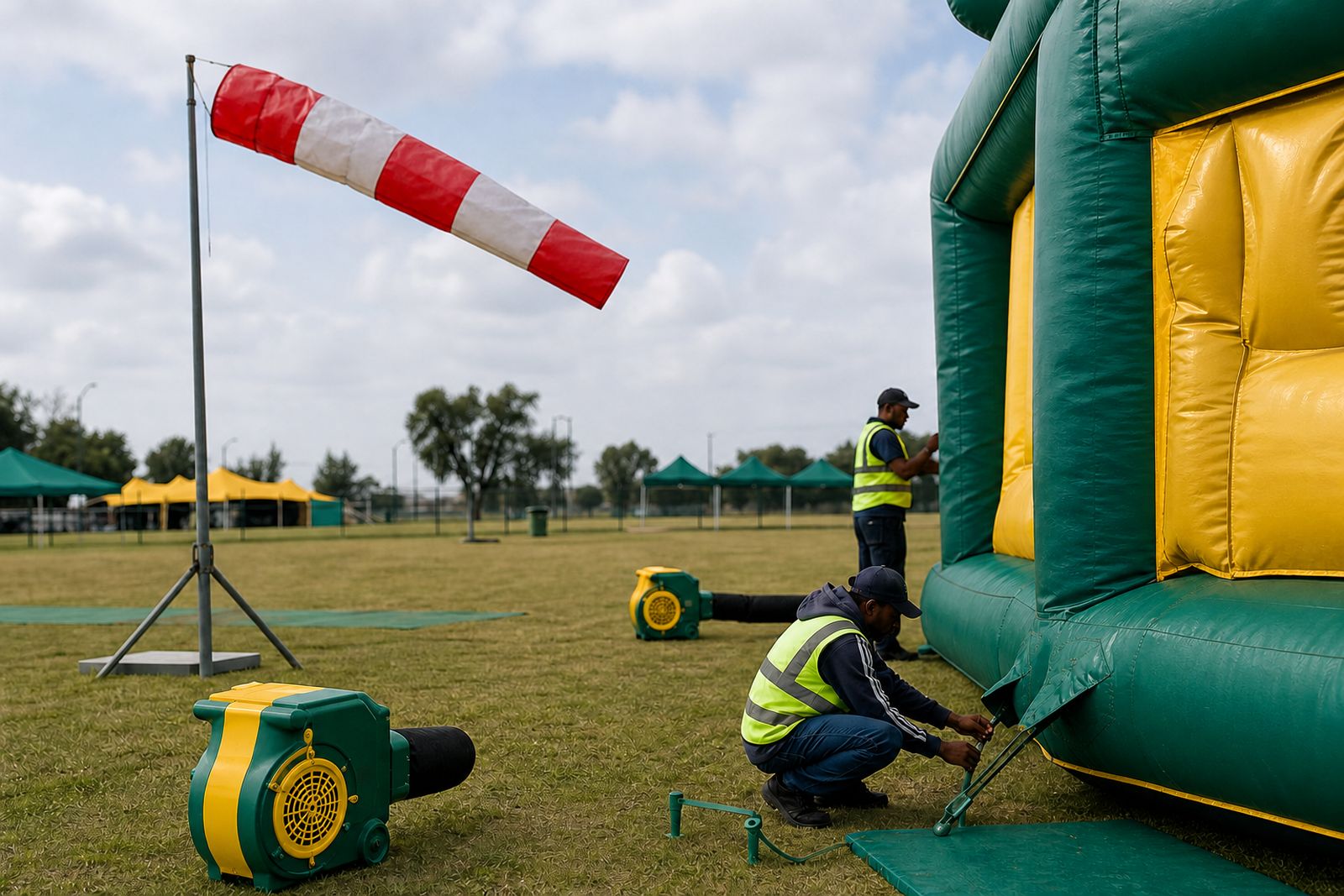
Once the basics are known, the next step is matching the attraction to the available area. Inflatable units need clear ground, enough height, and room for anchoring points, blowers, safety mats and a sensible walking lane around the unit. If the site is windy or the grass is uneven, that changes the setup plan straight away.
Obstacle courses need longer clear runs than a standard jumping castle, while arcade cabinets need level floor space and sensible access for children and adults. Small fairground rides, foam machines and bubble machines also need a practical layout so the crew can work safely and the crowd can move without bottlenecks.
- Measure how long, wide and high the area is
- Check whether the surface allows pegs, sandbags or other anchoring
- Leave space for mats, queue lines and crew access
- Separate wet features from dry gaming areas
- Keep power points or generator space in the plan
Planning the power, water and queue flow
Some attractions are simple, while others need more planning. Candy floss carts, popcorn machines, photo booths, arcade units and some inflatable systems may need mains power or generator support depending on the venue. If a venue has strict rules about power access or vehicle movement, that must be part of the plan before delivery day.
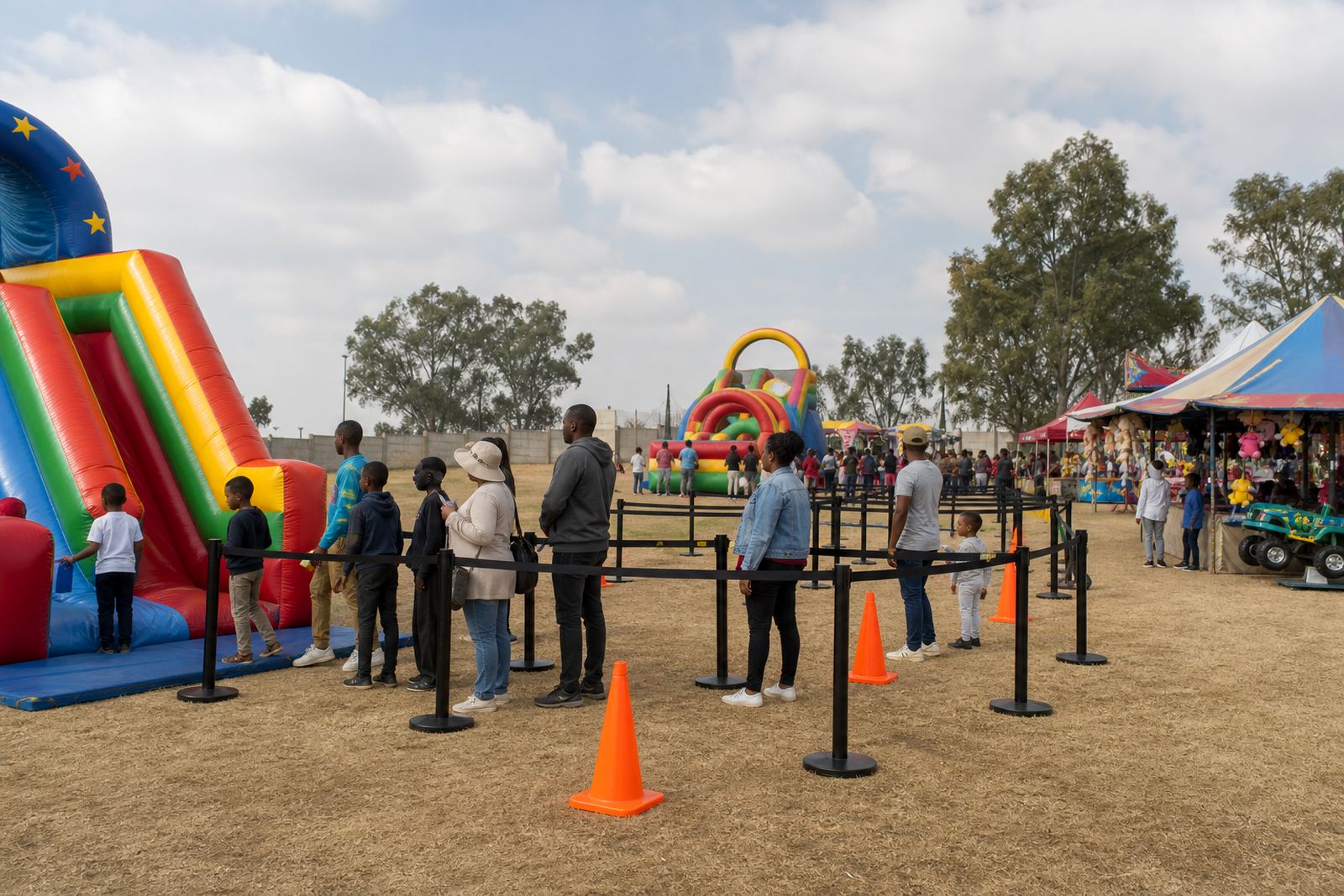
Queue movement is as important as the equipment itself. A carnival game stall works better when the line is marked clearly, and a photo booth runs more smoothly when there is a small waiting zone and a crew member to manage turns. For larger school and mall events, this keeps children moving without crowding one entrance.
- Confirm if mains power is available and where it is located
- Check whether a generator is needed for the full set-up
- Plan cable routes away from foot traffic
- Place snack carts where serving and collecting are easy
- Use barriers or markers where queues are likely to form
What gets confirmed before the booking is locked
After the site details are clear, the next stage is confirmation. This is where the equipment list, crew needs, setup order and collection plan are settled. For a birthday in Centurion, that may be one castle, one snack cart and a photo booth. For a corporate family day in Cape Town or Durban, it may include several inflatables, game stalls, mascots and supervised ride handling.
At this point, the organiser should know what is included in the booking, what needs access on site, and what the crew will handle. The event does not need guesswork on the day. A clean confirmation helps the organisers, the venue manager and the crew work from the same plan.
- Final attraction list and any age or height limits
- Setup area, access route and collection point
- Wet weather plan if the site is outdoors
- Deposit and balance arrangement
- Any venue rules on time windows, vehicle entry or noise
Event day movement from arrival to strike
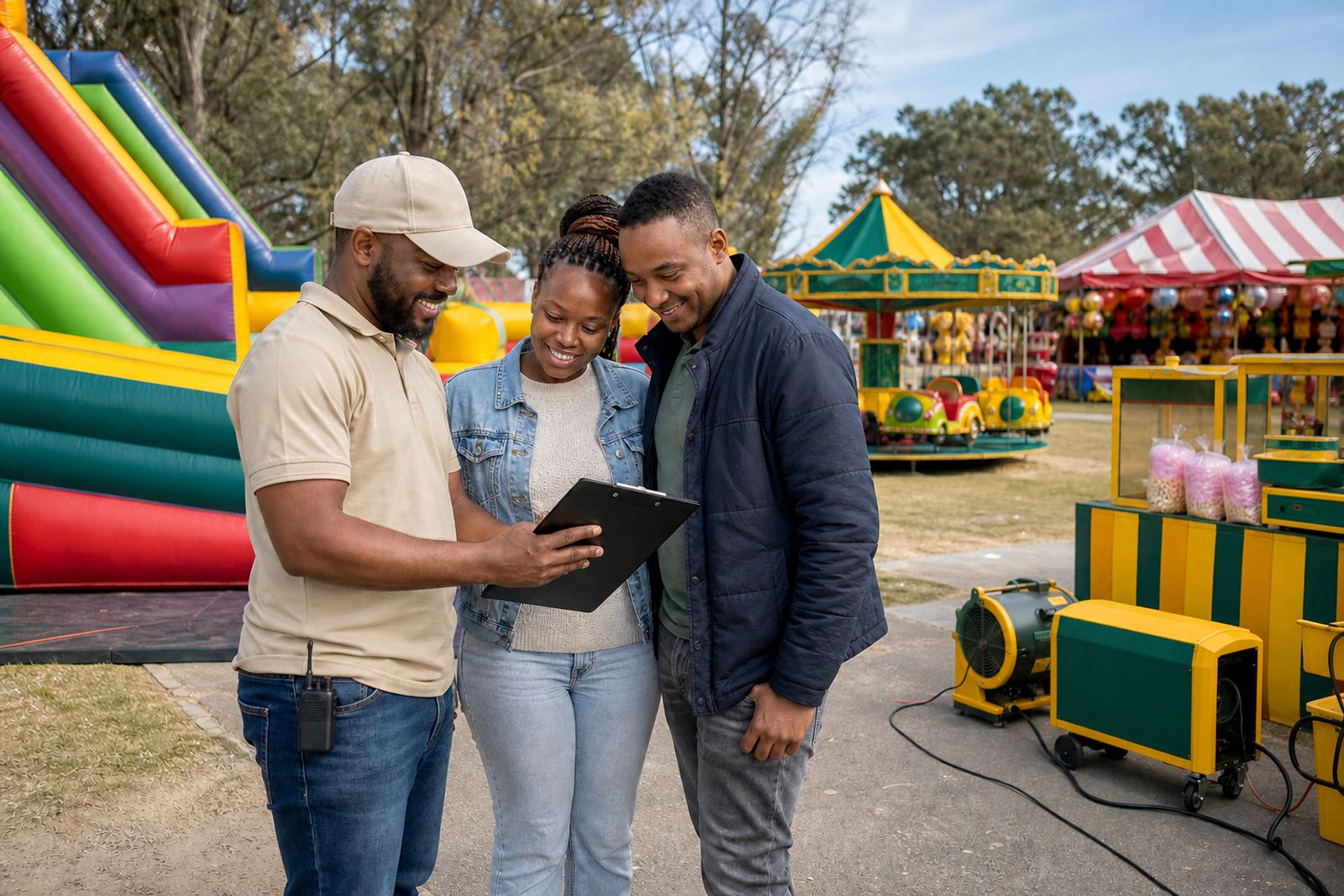
On the day, the crew arrives with the equipment, checks the site, and sets out the safe working area. Inflatable units are positioned, anchored and tested, safety mats go in place, and the team checks that the blower lines and entry points are right. Where needed, supervision is added so the attraction is run properly and children are guided in a calm, orderly way.
For a mall or school event, the set-up has to fit the live environment. That means working around deliveries, foot traffic and the venue’s own timetable. When the event ends, the strike and collection stage is just as important. The team packs down the equipment, removes mats and anchors, and clears the site so the area can be handed back in good order.
Anele once handled a mixed family day in Midrand where a castle, foam machine and candy floss cart had to sit close together. The fix was a slight shift in layout, one separate queue lane for the snack service, and a clear walkway between the dry play area and the wet feature. The crowd moved better and the crew had a cleaner working line.
Keep the booking useful for the next event
A proper booking also involves getting equipment to the venue. It is also about making the next event easier to plan. Notes on what space worked, which entrance was best for loading, where power sat on the property, and how the queue moved all help when another school day, mall activation or birthday is lined up later.
For organisers in Johannesburg, Pretoria, Durban, Cape Town, Bloemfontein and Midrand, the strongest bookings are usually the ones with clear site details and a sensible mix of attractions. A jumping castle, arcade machine, carnival stall and snack cart can all work together if the layout is planned properly and the crew knows the ground rules before arrival.
- Note the venue plan and entry points
- Note which attractions drew the longest queues
- Save any weather notes for outdoor sites
- List any venue rules that affected setup or collection