

The gate list the venue will ask for
Most venues want more than a date and a headcount. They need to know what is being brought in, where it will sit, how it gets there and who is responsible for the setup area. That applies to schools, shopping centres, office courtyards and residential gardens in Midrand and across Gauteng.
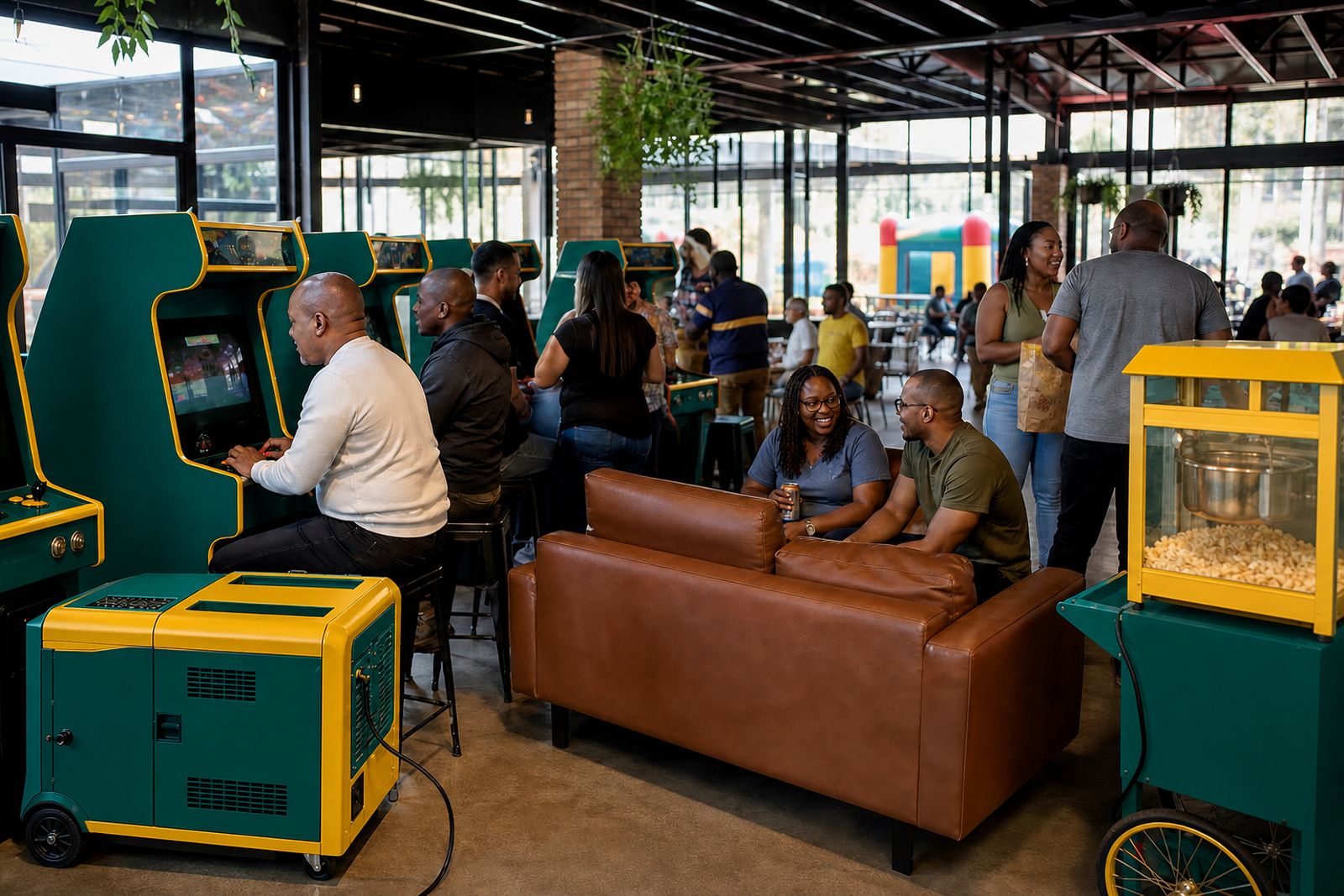
For inflatable units, the venue may ask for clear measurements, power access and the type of surface. For arcade cabinets, candy floss carts, photo booths and small fairground rides, the questions are usually about doorway width, lift access, vehicle drop off points and whether there is a sheltered space if the weather turns. A quick walk through the site avoids last minute conflict with security or facilities staff.
- Ask for the loading route and nearest parking bay.
- Confirm whether gates, lifts or passages have width limits.
- Check if the venue requires an event plan or public liability details.
- Find out who unlocks the area and who signs off collection.
Noise rules around whistles, blowers and crowd music
Noise is not the same at every venue. A school sports field may be fine with a blower running and a lively announcer, while a mall forecourt or office plaza may have tighter limits on music, microphones and crowd volume. Carnival games and arcade machines are usually quieter, but the full setup can still create a lot of sound once a crowd gathers.
It helps to ask about any quiet hours, neighbour concerns and generator limits before the day arrives. Some venues allow only certain hours for amplified sound. Others care less about the equipment and more about the calls from the public who share the space. If a venue is strict, keep the music low, choose games that do not need a loud host and place the noisiest pieces away from office windows or neighbouring shops.
- Check whether the venue measures noise or works on a simple complaint basis.
- Ask if generators are allowed and where they can stand.
- Confirm whether a PA system needs advance approval.
Access routes that save the crew a long carry
Inflatables, ride parts and game counters are bulky. A smooth path from the truck to the setup spot matters just as much as the equipment list. Steps, tight corners, soft lawns after rain and long distances across a campus can add time to the setup. In Midrand, many corporate parks and school grounds have controlled entrances, so access details matter early.
Venue managers usually want to know when the truck can enter, how long it may remain near the site and whether service lifts can take the load. If a floor is tiled or polished, the crew may need extra protection under trolleys and anchor points. A site that looks easy on paper can become awkward when there is a narrow service corridor or a basement parking height limit.
- Measure the route from the drop off point to the activity zone.
- Check for stairs, low awnings, ramps or grass that gets soft.
- Confirm whether the truck can reverse close to the setup point.
- Ask if the venue needs delivery vehicles registered in advance.
Floor protection and anchoring on real surfaces
Floor protection is one of the first things a venue notices, especially in halls, foyers and function rooms. Safety mats, base pads and proper anchoring help protect surfaces and keep equipment steady. If the surface is polished, painted, interlocking or recently sealed, the venue may want extra care written into the booking notes.
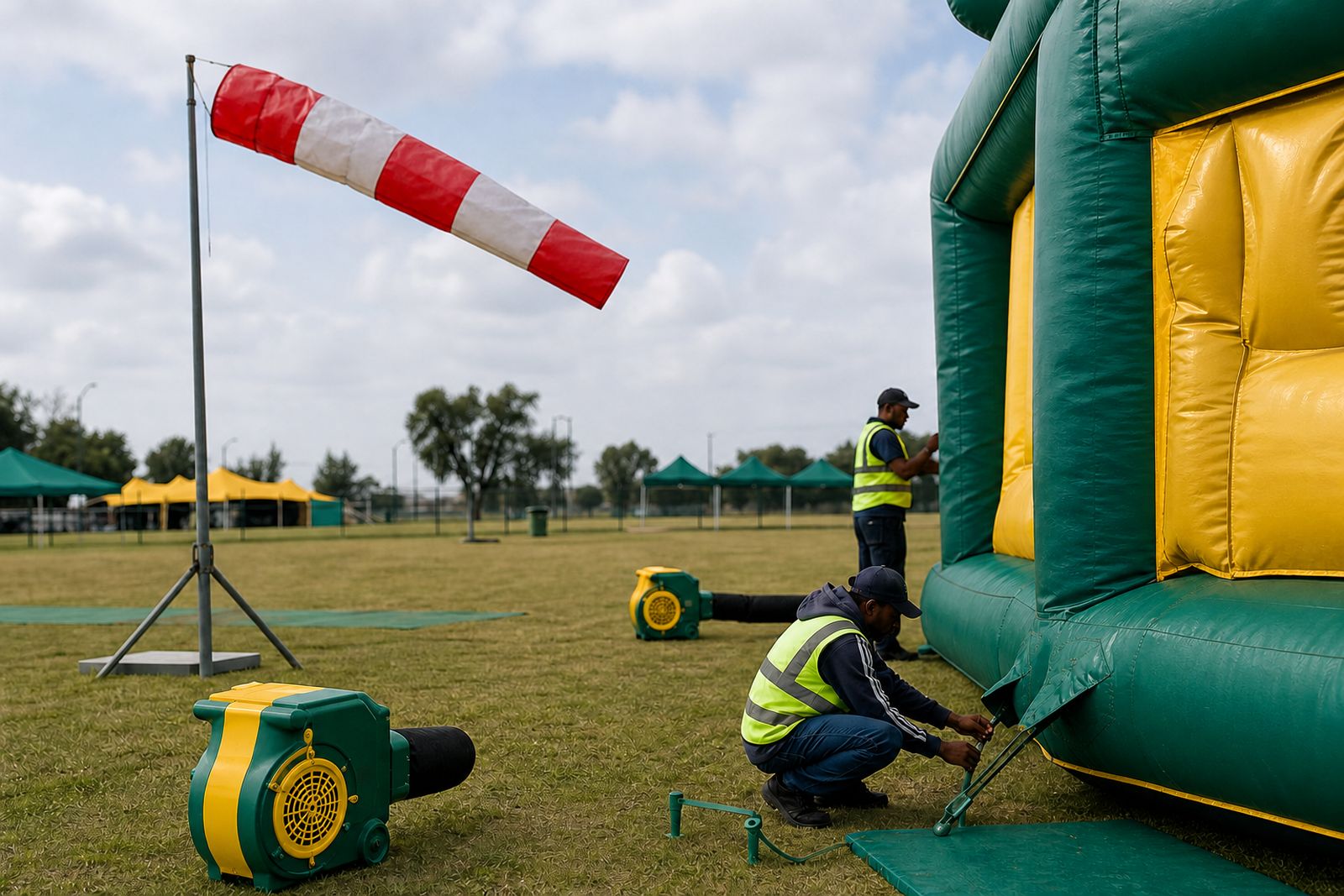
Outdoor surfaces bring different questions. Grass, compacted soil, paving and asphalt each need their own approach. A jumping castle or obstacle course usually needs enough open space around it for airflow, safe access and a clear exit. It also needs anchor points suited to the ground. On a windy day in Johannesburg or a damp afternoon in Durban, those basics matter more than the colour of the unit.
- Confirm what surface the venue allows for the equipment.
- Ask whether mats must cover entry points or loading paths.
- Check if weights, pegs or sandbags are allowed on site.
- Find out who is responsible for surface protection after pack down.
Collection times, cut-offs and the cleaning window
Most venue problems start at the end of the event, not the beginning. If a hall closes early, the crew may need to strike the setup faster and work around other venue users. If it is a shared site, the team may only get a set window for collection, especially where security or cleaning crews come in after the event.
It is worth asking how much time the venue gives for pack down, whether rubbish must be removed before collection and whether the equipment may stay overnight. For birthdays in suburban gardens, the issue may be the neighbour line and gate access. For malls and schools, it is often about traffic flow and making sure the area is clear before the next programme starts.
- Confirm the latest setup and pack down times the venue allows.
- Ask whether the equipment must be removed before public closing time.
- Check if cleaners or security need the area handed over in a certain condition.
A Midrand school day that made the rules clear
A practical example helps. A school in Midrand wanted a mix of inflatable play, carnival games and a photo booth for a family event on a sports field. The grounds team was happy with the plan, but the venue rules were clear: no block on the fire lane, no heavy vehicle on the grass after rain, and no sound system near classroom windows during lessons.
That meant the activity zone moved a few metres, the crew used the paved edge for delivery, and the louder games sat well away from the nearest block. The school also asked for clear entry points, floor mats at the hall threshold and a firm collection time before evening traffic built up. None of it was difficult, yet each point mattered. When the venue rules are sorted early, the event feels organised instead of improvised.
- Read the site plan against the actual access on the ground.
- Match the activity list to the venue's noise and floor rules.
- Keep a contact person on site who can make quick venue decisions.