
When a generator earns its place on site
A generator is worth planning for when the event sits on a sports field, an open park, a school quad or a remote corner of a mall parking area. Those spaces may be perfect for jumping castles, inflatable obstacle courses, candy floss carts and photo booths, but not every spot has a socket where it is needed.
It also helps where the layout pushes equipment far from the nearest building. Long cable runs are not ideal for moving crowds, and they can get in the way of queuing children, parents and crew. For outdoor amusements, power planning is part of the layout, not an afterthought.
Our team looks at the full mix on site: what needs air, what heats, what lights and what only needs a small, steady supply. A blower for an inflatable, a popcorn machine, a foam machine or a booth with lighting all place different demands on the supply, so the set-up has to match the load, the space and the event flow.
What usually needs power at an amusement event
Not every hire item draws power in the same way. A jumping castle needs a blower running for the full hire period, while a photo booth may need lighting, a printer and a small table area for props. Snack carts can need heat or drive units, and arcade cabinets usually need a consistent supply with safe cable placement.
- Inflatables need a blower, plus clear air intake space.
- Foam and bubble machines need a stable supply and safe runoff planning.
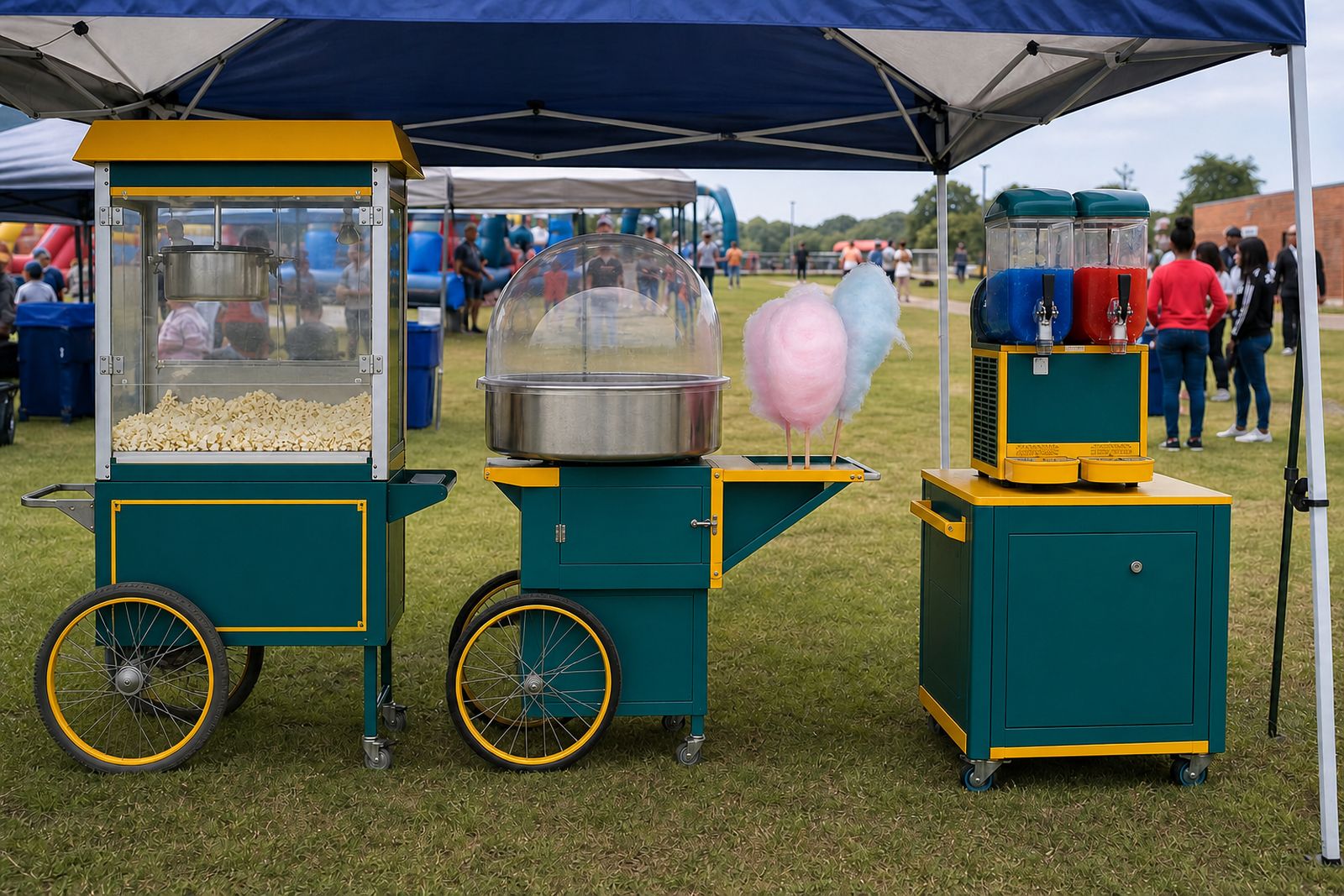
- Popcorn and candy floss carts may need heat and crew access.
- Photo booths often need sheltered power for lights and screens.
- Small rides need power, cord control and supervised operating space.
Where several items run together, the total load matters more than any single machine. A good plan avoids tripping hazards, keeps the generator away from queues and allows the crew to move during setup, service and strike without weaving through cables.
Space, wind and anchoring around the power point
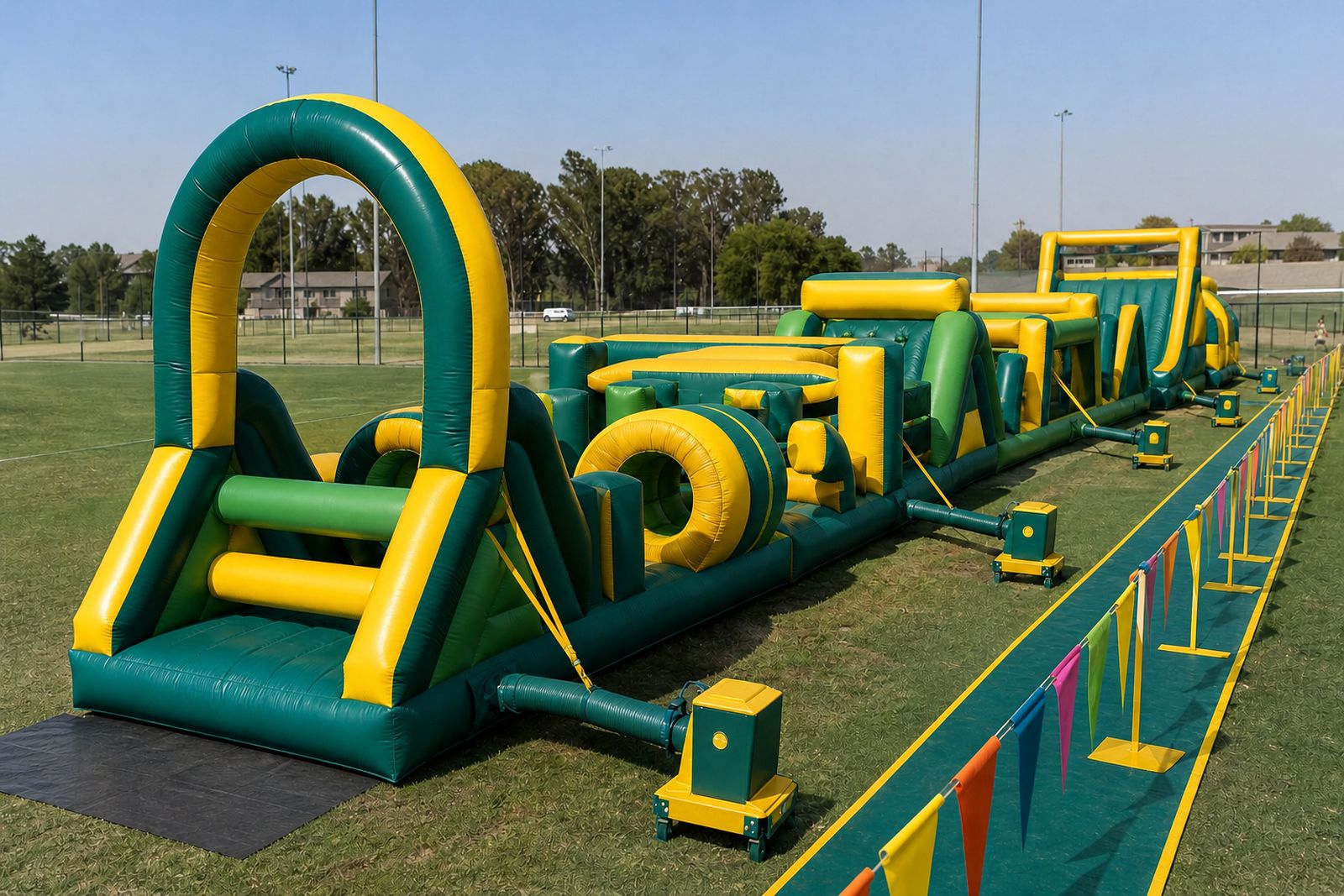
Generator placement is never only about noise or fuel. It also affects where the inflatable sits, how the blower hose runs, and whether the anchors and mats can stay properly laid out. On grass, sand or mixed outdoor ground, the crew needs enough room to secure the inflatable and still leave a safe path for children.
Wind matters too. A castle or obstacle course cannot be treated as a loose item on a warm day at a park. Anchoring points, safety mats and the direction of the blower all need checking before the first child steps on. If the event has a gusty corner, the plan may shift the layout rather than force the equipment into the wrong spot.
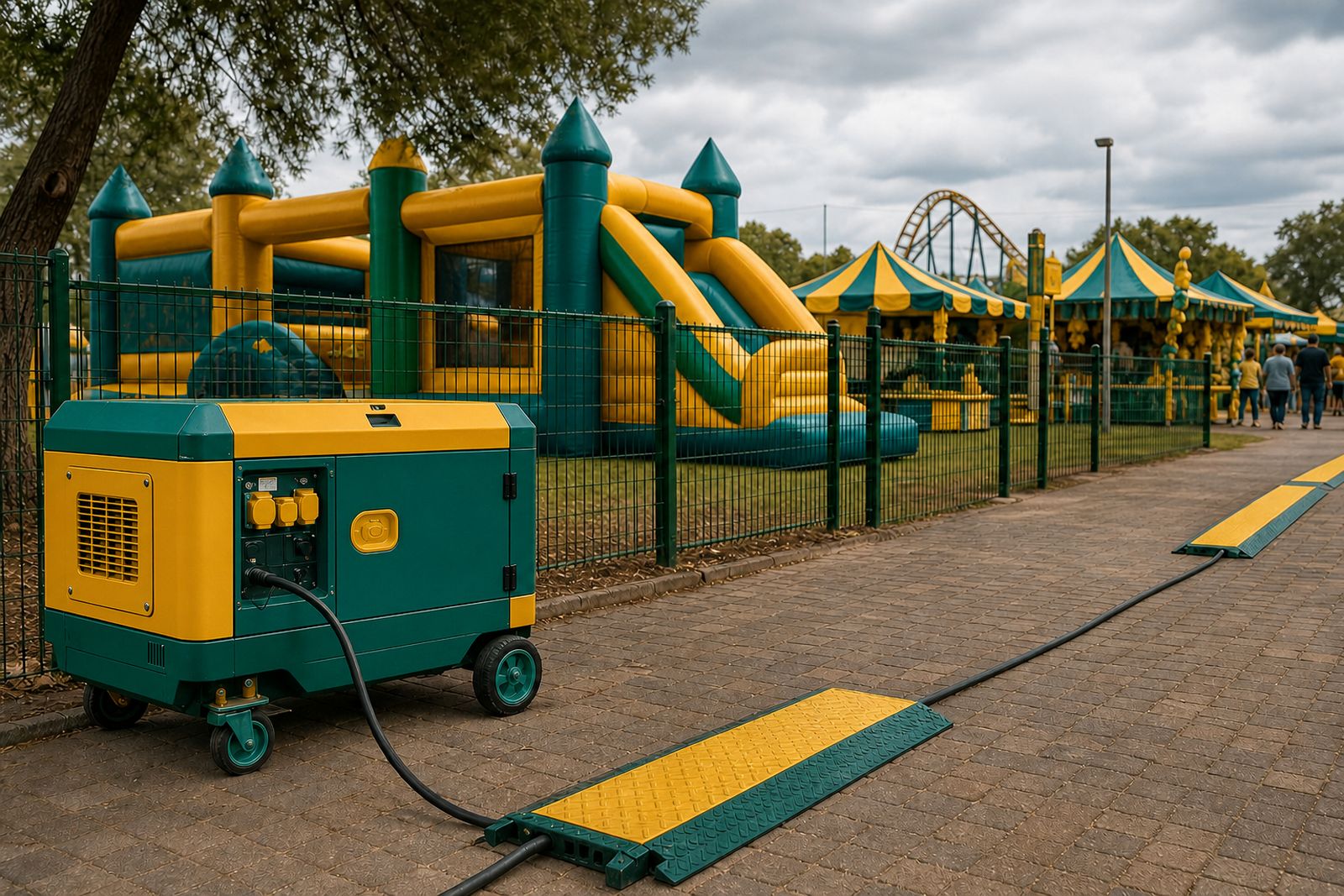
Where a generator is in use, the cord route should stay out of walking lines and away from water splash zones. If the event includes foam, bubbles or wet play, the setup needs extra attention around dry ground, cable cover and operator access.
Crew duties from delivery to strike
Generator support works best when the crew has a clear sequence. Delivery comes first, then position marking, then anchoring and power connection. Once the equipment is running, the team stays close enough to check airflow, cord condition and access around the machine.
- Place the generator where it can breathe, but not block foot traffic.
- Keep fuel handling separate from food service and child play zones.
- Test the inflatable blower before opening the attraction.
- Check cable runs after the crowd starts moving.
- Allow for strike and collection without squeezing through the crowd.
For schools and malls, the supervised setup is especially useful because the site often keeps moving around the hire area. One crew member may be watching the attraction while another manages the queue or the cord line. That keeps the gear working and the space orderly, even when the event is busy.
Wet weather, heat and other changes on the day
Outdoor events in Gauteng and along the coast can change very quickly. A dry setup in the morning can turn into a damp surface after lunch, or a hot field can become hard work for younger children by mid afternoon. Generator planning must allow for those shifts.
Wet weather plans may include moving a machine under cover, pausing use during a heavy shower, or shifting a game stall to a firmer patch of ground. If the inflatable must be protected from drizzle or wind, the crew may change the order of setup so the power unit is not sitting in the wrong place while the rest of the area is being prepared.
Heat also matters. Candy floss, popcorn and crowded photo booths can draw people into a tighter area, so the generator and cables should sit where there is still room for airflow and queue movement. A sensible weather plan is not only about rain, it is about the full condition of the site.
Booking steps and the details that help us plan
When a generator may be needed, it helps to give the event team a plain picture of the venue and the hire mix. That includes the site type, whether the ground is grass, paving or sand, and whether the equipment will sit close to buildings or in a more open section.
Useful details usually include the attraction list, the age group, the expected crowd size, and whether food carts, sound equipment or multiple inflatables are part of the same booking. If the venue has rules on fuel storage, quiet periods, access gates or delivery hours, those details matter too.
- Venue name and exact outdoor area.
- List of amusements, carts and machines.
- Ground type, along with any slope or soft areas.
- Need for generator support or mains power.
- Whether the event includes wet play or foam.
- Access for delivery, setup, supervision and collection.
A booking is easier to plan when the power part of the event is treated as part of the layout. That keeps the castle inflated, the queue moving and the food or photo station working in the same space without clutter.
How generator support fits the wider hire plan
For school fun days, mall activations, birthdays and corporate family days, power is only one piece of the hire. The real job is to make the attraction feel safe, clear and easy to move around. A generator can help that happen where the venue cannot offer a ready plug point or where the event spread is too wide for simple mains use.
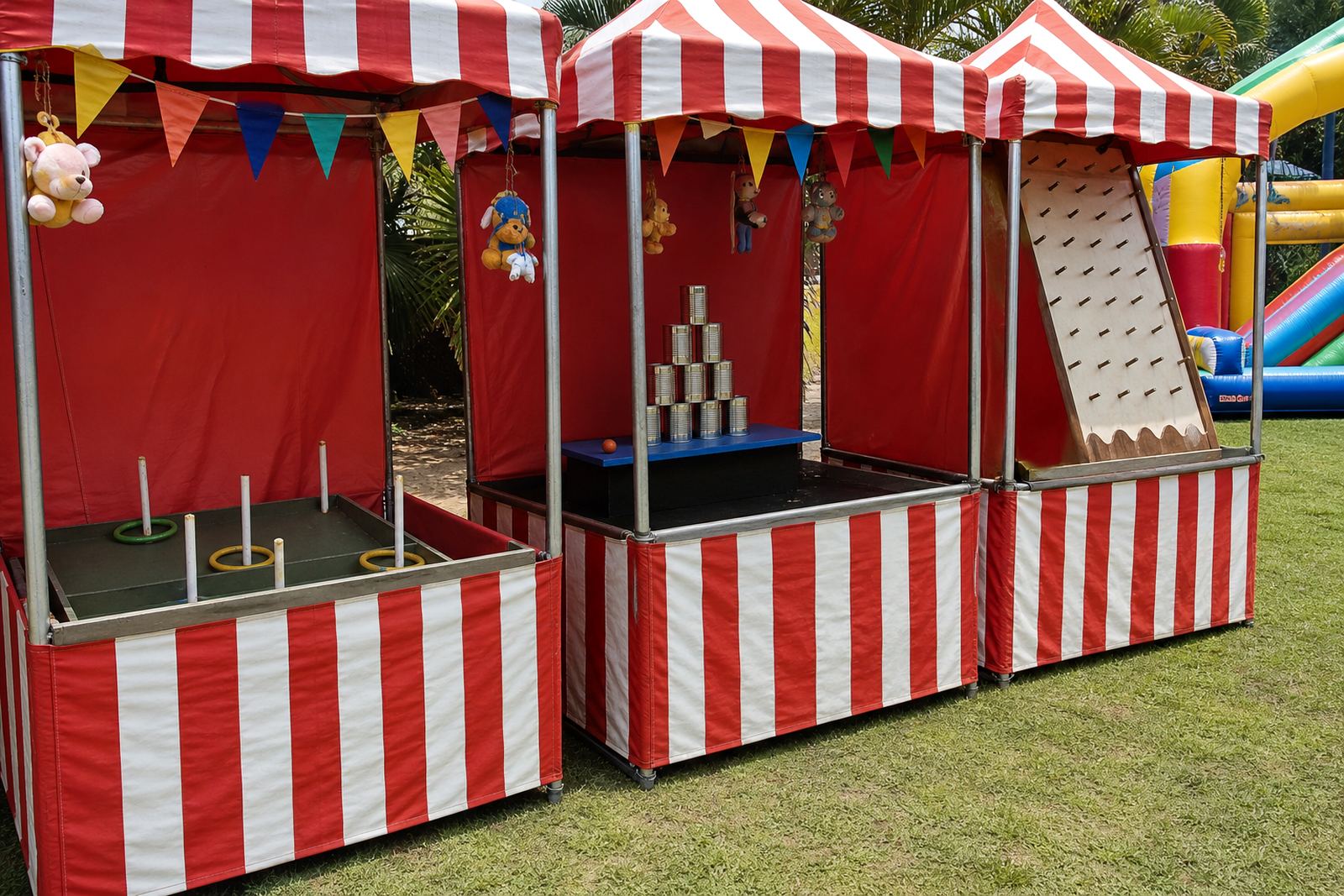
That is where site checks, delivery setup, on site supervision, power planning and strike and collection work together. The event may include a small fairground ride, arcade machines, a mascot stop, or a snack cart beside an inflatable course, and each item needs its own space and power thought. When the layout is set with care, the day feels organised from the first arrival to the last pack-out.
At Amused, generator support sits inside the wider amusement hire plan for Midrand, Gauteng and national road shows. The aim is to keep the equipment running in the right place, with the right spacing, and with crew watching the parts that need attention.