
Start with the way people will move through it
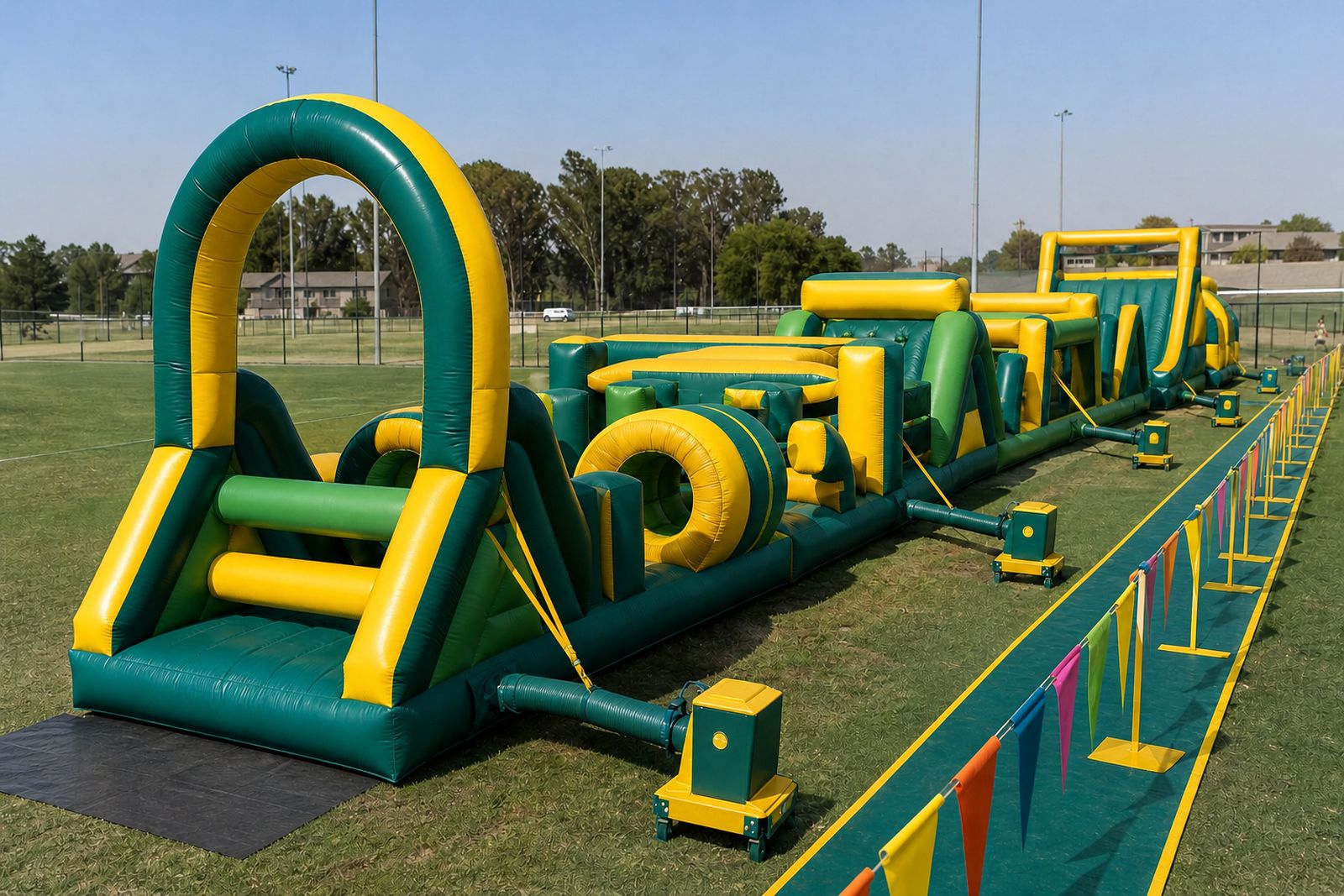
Some obstacle courses are built for straight races, while others mix tunnels, steps, pop-ups and climbing sections into a longer run. A short course can suit younger children and tighter sites, while a longer one gives older groups more time on the inflatables and more room for competition.
Think about whether the event needs head-to-head racing, a free-flowing single line, or a timed challenge with a start and finish point. A course that is too narrow can cause bunching near the entry, while one that is too long can take over the whole play area and slow down the rest of the programme.
- Match the layout to the age group using it.
- Allow clear entry and exit points.
- Keep racing lanes separate where possible.
- Leave space for marshals, queues and spectators.
Measure the footprint before you think about the theme
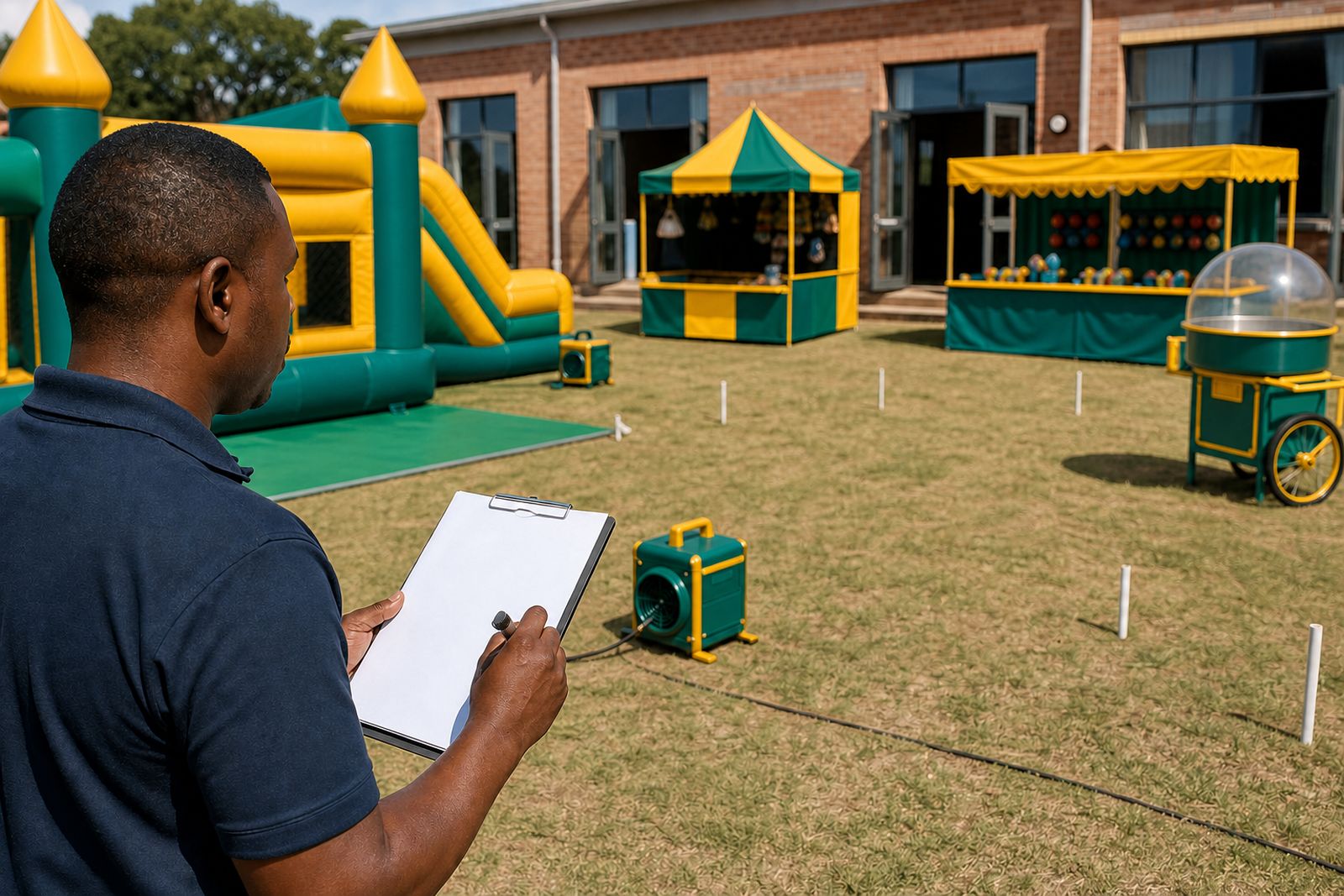
Lengths are only part of the story. The footprint must include the inflatable itself, the blower position, anchoring points, safety mats, and a little working space around the sides. On a school field or a paved mall court, that extra room matters because crews need access for setting up and later striking the unit.
We look at the usable area, not just the open area on paper. A site with trees, low branches, railings or uneven paving may need a different layout from a wide open field. If the surface is hard, mats and anchoring methods still need to be planned with care.
- Check the clear length, width and overhead clearance.
- Leave room for the blower and cable route.
- Allow access for loading, setup and collection.
- Note slopes, curbs, drains and low overhangs.
Choose between race courses and play courses
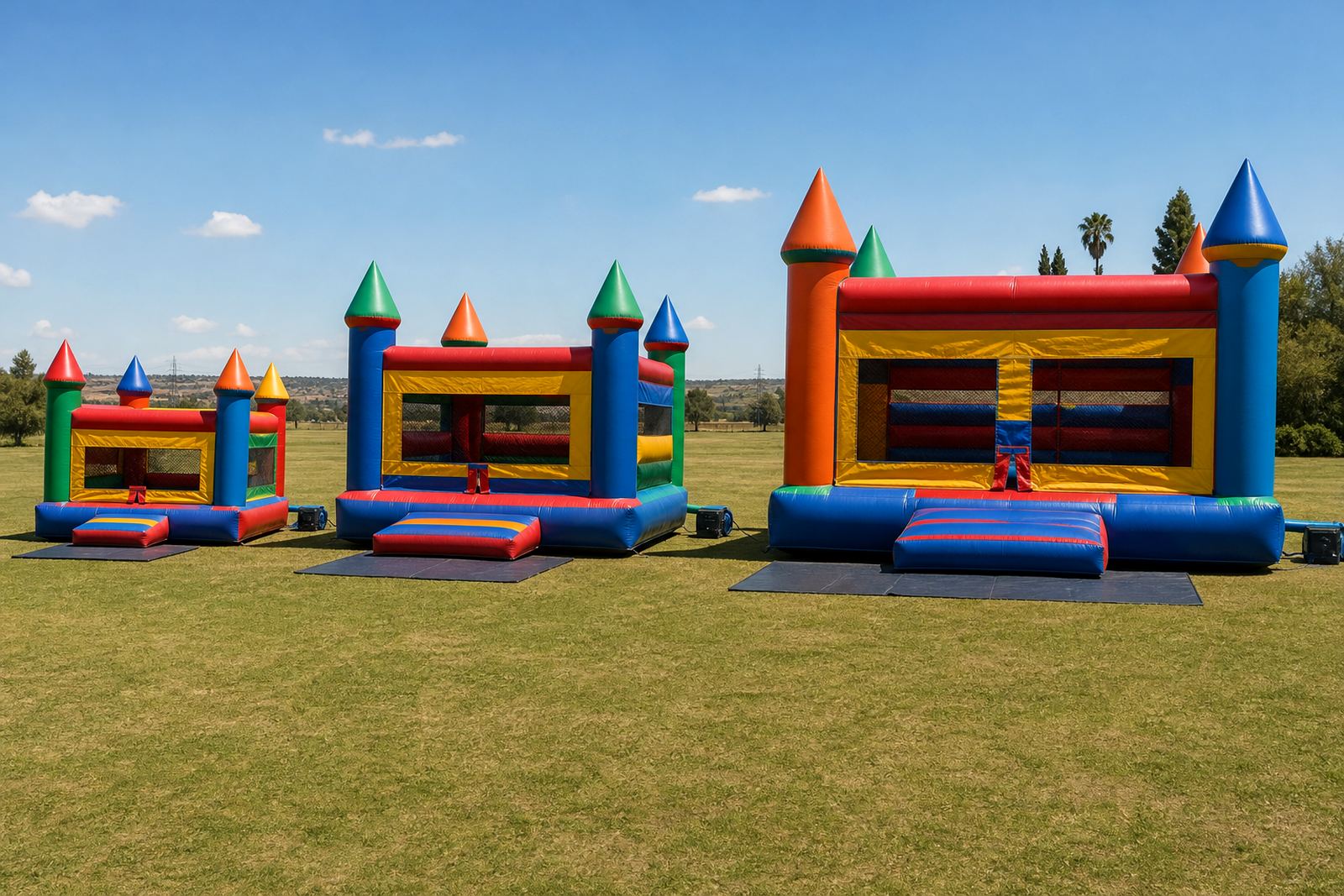
Race-style obstacle courses work well when you want movement, turn-taking and a bit of friendly competition. Play-style inflatables suit repeat use, especially at birthdays where children want to climb, crawl and slide at their own pace.
For corporate family days, schools and malls, the decision often comes down to throughput. A race course can keep a queue moving if the crew manages the turns carefully. A play course may suit younger children better when the priority is a safer pace and shorter bursts of activity.
Ask how many users can be on the inflatable at once, and whether the course is designed for one direction only. That detail affects queue management, supervision and the way the event flows across the day.
Power, anchoring and weather plans are not afterthoughts
Most inflatable obstacle courses rely on continuous airflow from blowers, so power planning is part of the booking, not something to handle later. The crew also checks where the cable can run without crossing walkways or creating a trip hazard. If the site is outdoors, anchoring must suit grass, concrete or other surfaces, and the method can change from one venue to the next.
Weather matters too. Light rain, wind and wet grass can change the setup or pause use for safety reasons. A proper wet weather plan should cover what happens to the inflatable, where children wait, and whether a dry backup area is available for the rest of the programme.
- Confirm whether mains power or generator supply is needed.
- Ask about blower placement and cable routing.
- Check anchoring for grass, paving or indoor floors.
- Plan for wind, rain and slippery surfaces.
Supervision, mats and safe spacing around the entry
Obstacle courses work best when the entry, exit and queue are kept tidy. Safety mats belong at the front and where children step down, especially when the unit is high or includes a slide section. Crews also watch height limits, age limits and the pace inside the course so smaller children are not mixed with much older players.
Supervision can be handled by the event team or by trained crew members, depending on the brief. At busy school days and mall activations, queue management becomes just as important as the inflatable itself. A good plan keeps the line moving without crowding the entrance or letting the same group stay inside too long.
- Keep the entry and exit unobstructed.
- Use mats where stepping up or down is needed.
- Separate younger and older users where practical.
- Assign someone to manage the queue and turn-taking.
What to include in a booking brief
A solid brief helps the crew match the course to the venue and the programme. You do not need polished language, just the practical facts that shape the setup. Date, suburb, surface type, age group and expected crowd size already give a lot of useful direction.
For larger road shows across Johannesburg, Pretoria, Durban, Cape Town and Bloemfontein, the logistics side matters as much as the fun side. Delivery, setup, on site supervision and collection all need to fit the same event window, especially where the site has public access, strict venue rules or limited loading space.
- Event date, venue and suburb.
- Age group and expected number of users.
- Available space and surface type.
- Power access, generator need and weather concerns.
- Whether you want racing, free play or timed use.
How Amused handles the moving parts
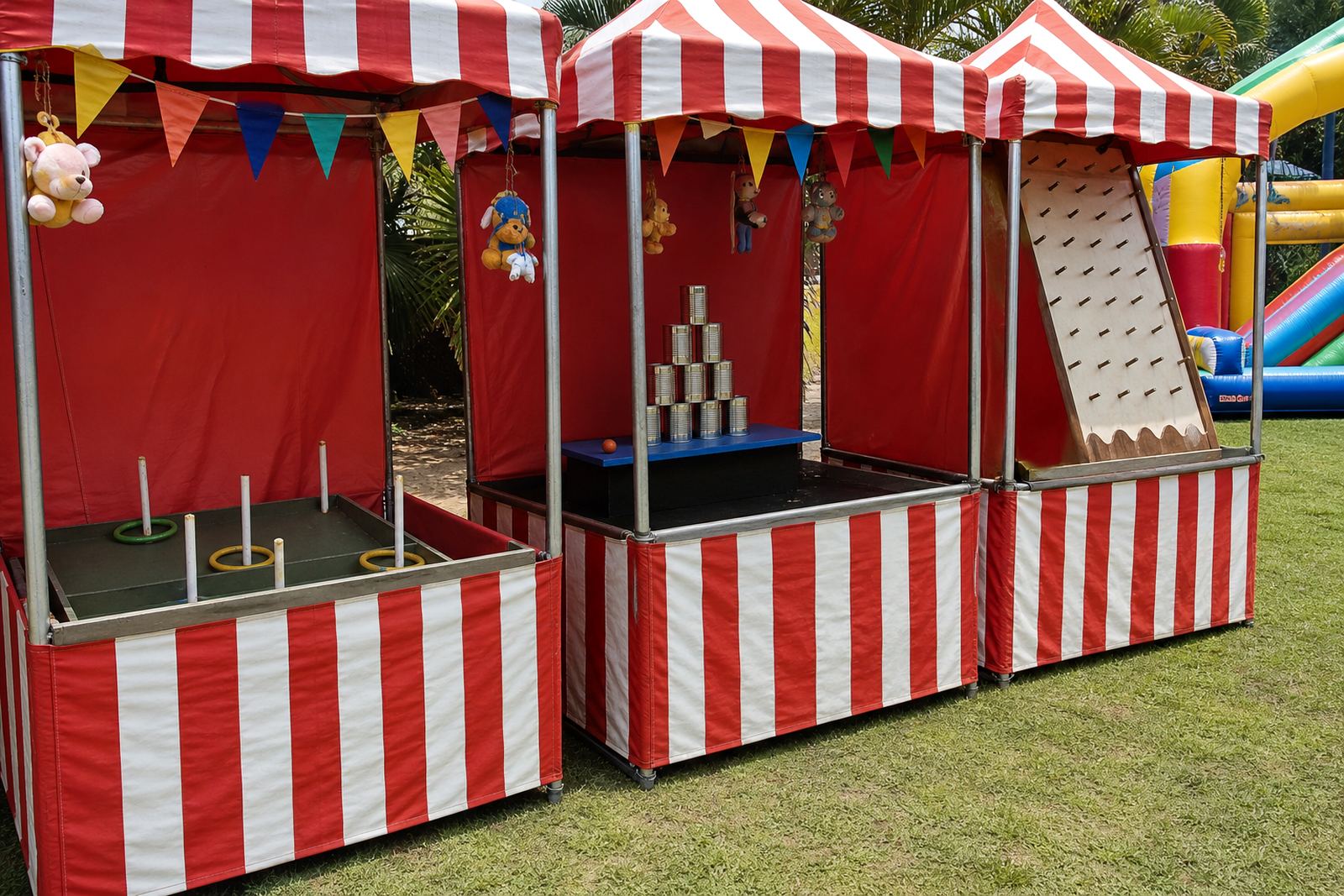
Our team works from Midrand and supports events across Gauteng and national road shows. Thabo Jantjies oversees the operation, with Anele Ebrahim on logistics, Johan Hlongwane on fleet and deliveries, Naledi Seabi on bookings, Yusuf Masilela on safety and crew training, and Candice Zungu on client service. That structure helps when a site needs more than one amusement item, or when the obstacle course is part of a bigger mix of carnival games, snack carts, photo booths or small rides.
We handle site checks, delivery setup, anchoring and mats, power planning, generator supply, wet weather plans, strike and collection, and queue management.