
Where the mat sits, not just what it is
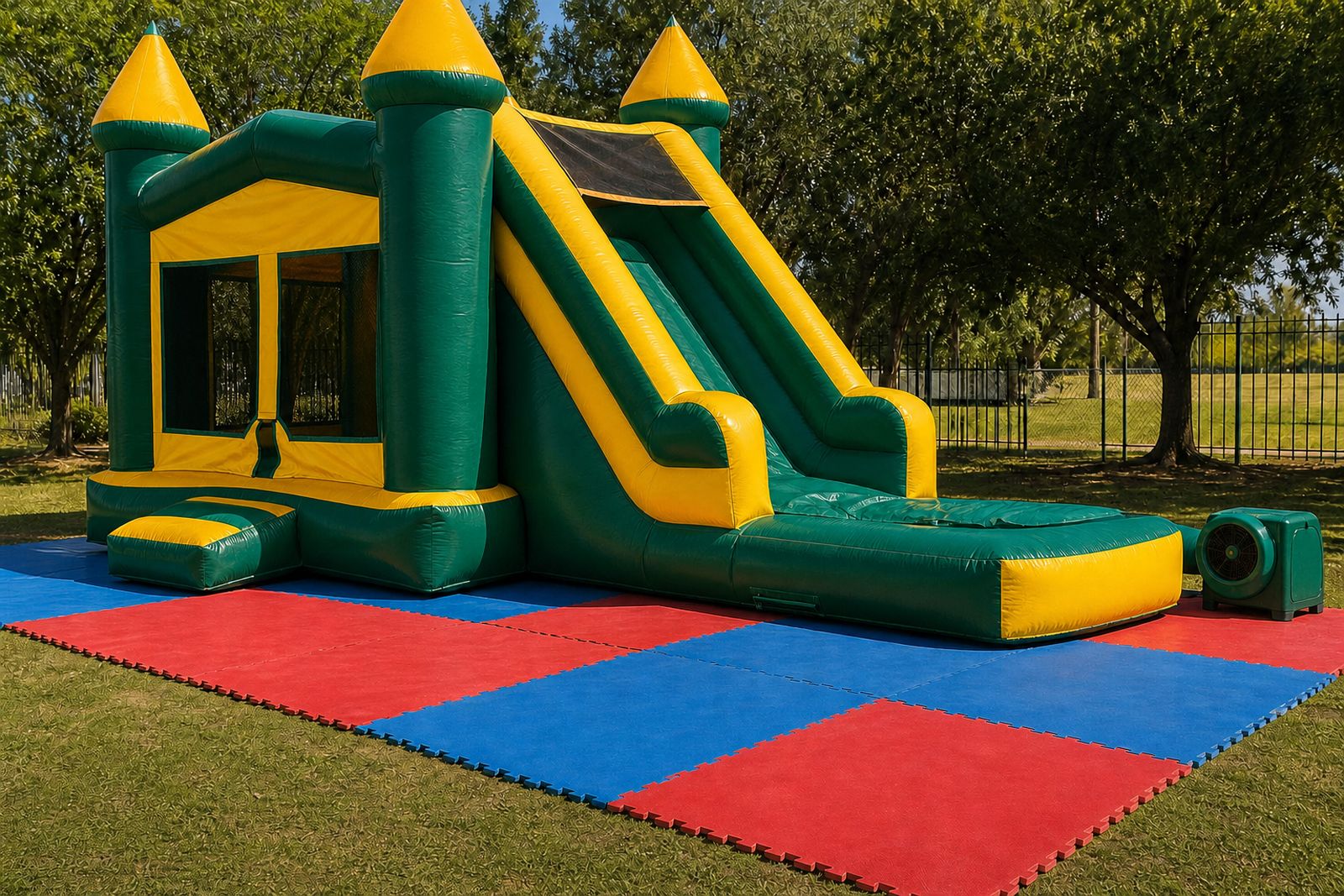
A safety mat belongs at the places where feet leave the ground or meet a harder surface. That usually means the front entry to a jumping castle, the exit point of an inflatable slide, the landing zone of an obstacle course and any spot where a child steps from turf, paving or concrete onto the play unit. On a school field in Midrand the ground may be even, but in a shopping centre parking area or a corporate lawn there can be slight slopes, hard edges and rough patches that need extra attention.
The mat is not there for show. It helps reduce the sting of a slip, covers awkward seams and gives crew a clean visual marker for where to step. It also helps parents and supervisors see the edges from a distance. When the setup has queues, small children and excited guests, that matters more than people expect.
- Place mats at all climb points and exit points.
- Extend mats beyond the first step where shoes hit down hard.
- Use wider mats where several children gather at once.
How mats work with blowers, anchoring and the rest of the setup
Inflatable amusement hire depends on the whole setup working together. The blower keeps the unit firm, the anchor points hold it in place and the mat helps manage the movement around the entrance. If the unit is on grass, the crew can anchor into the ground and place mats where children step on and off. If it is on hard standing, the mat becomes even more important because it helps create a softer transition from the floor to the play area.
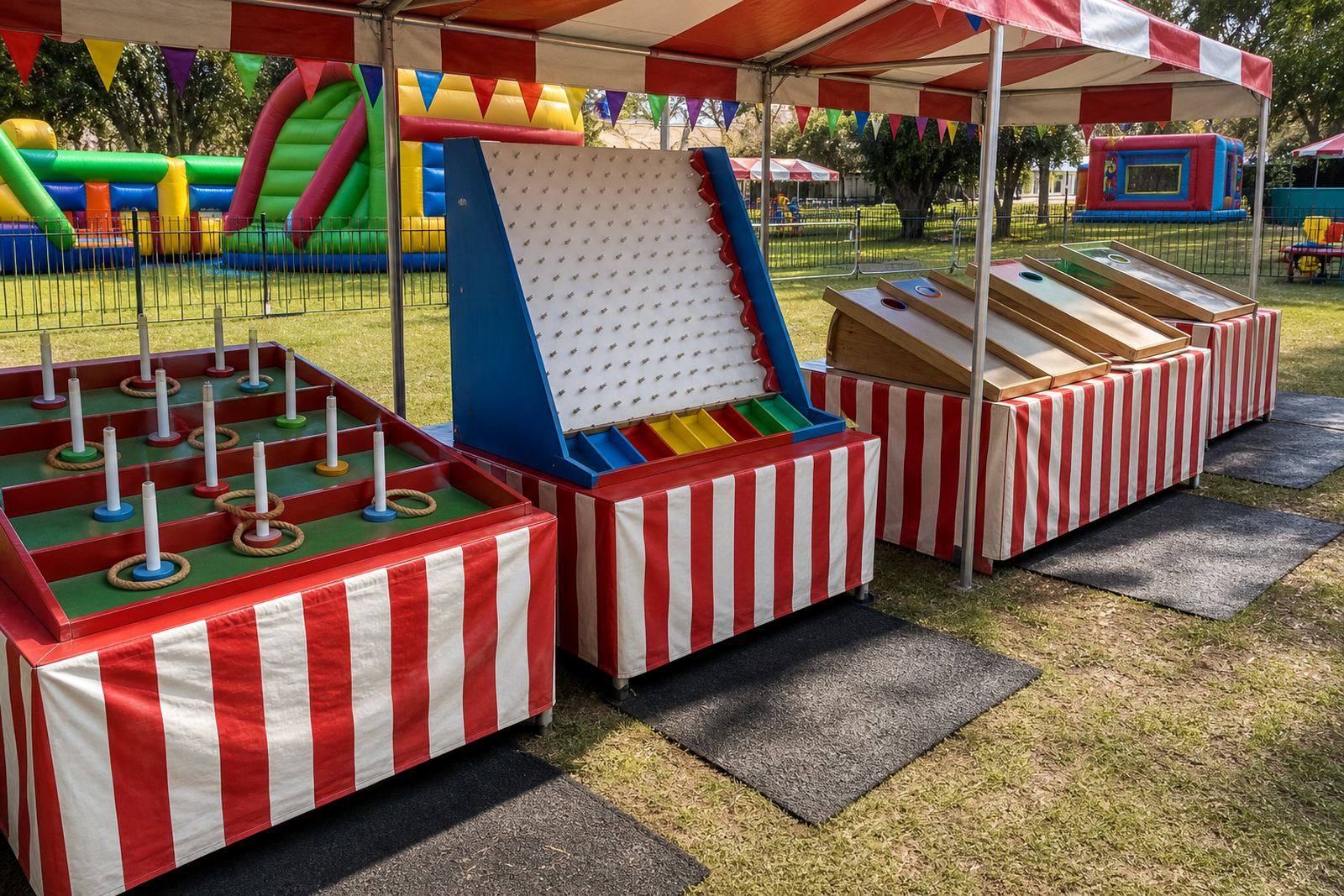
For larger inflatable obstacle courses the matting plan may stretch further than one doorway. You can have a starting mat, a landing mat and extra pads at the tight turns where children slow down or hop down. On carnival game stalls and smaller rides, mats often sit at the customer side of the counter or platform, especially where the surface changes from pavement to carpet or wooden decking.
- Keep mats flat so they do not curl at the edges.
- Match mat size to the amount of foot traffic.
- Place mats before the first user steps onto the unit.
What changes when the event is in Gauteng heat or coastal weather
Midrand, Johannesburg and Pretoria events often deal with dry, dusty ground and busy foot traffic. In those conditions mats help stop dust from blowing up at the entry point and keep the base area more controlled. At a Durban beachfront or a Cape Town venue with coastal moisture, mats also help manage damp shoes and wet patches near the access point. The aim is not to make the whole area dry, but to keep the first and last step more predictable.
Weather plans matter because a mat alone does not solve a slippery surface. If a site has light rain, pooled water or strong wind, the crew may change the layout, move the entry point or pause use until the area is safe again. That is part of normal event work, especially where children are wearing socks or running in costume shoes after a school programme.
- Use darker mats where dust and grass stains are likely.
- Check the ground underneath before fixing the final position.
- Allow extra space where umbrellas, bags and shoes collect.
Entries and exits need different thinking
An entry point carries the rush of first arrival. Children want on quickly, adults are checking shoes and crew are keeping the queue moving. The mat at the entry should be wide enough to give a stable step and long enough to cover the path from the ground to the unit. Exit points need a different kind of attention because people often step down while looking elsewhere. A mat there catches the landing and gives the user a clear place to plant both feet before moving away.
At birthday parties and mall activations the exit area can become crowded. A mat helps the crew guide traffic without making the setup feel closed off. It is also useful beside snack carts, photo booths and mascot stop points, where people stop, turn and move again in a tight space. In those moments, clear ground markings are more useful than signs.
- Put a wider mat at the exit where groups leave together.
- Keep mats clear of loose cords and queue barriers.
- Use the mat edge as a simple guide for children and helpers.
Landings on slides, obstacle runs and small rides
Landing zones take repeated impact, so they need more than a thin strip of padding. A child coming off a slide, foam section or small ride needs enough mat length to settle balance before taking a second step. Where the lander meets paving, the mat can soften the shift and reduce hard heel strikes. On obstacle courses, the landing space should also allow for the next child in line to wait without crowding the active user.
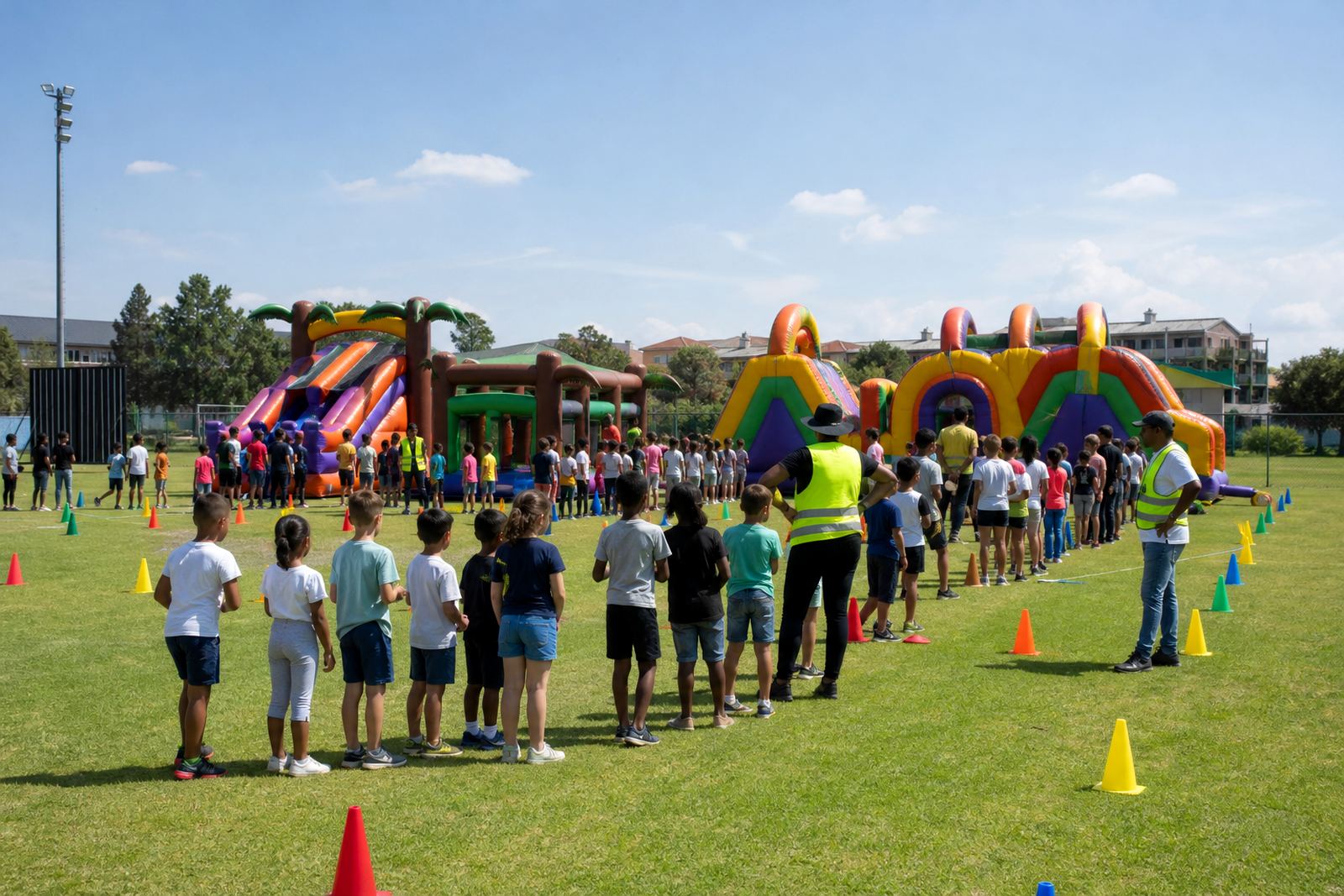
For a school fun day in Midrand, one common arrangement is a long inflatable with a clear launch mat, a landing mat and a side mat for supervisors. That gives the crew room to manage the flow while keeping the landing zone open. If the unit is smaller, the mat can still do useful work by extending the safe step beyond the final seam or fold.
How our crews place and check mats on site
Our crew treats mat placement as part of the setup, not an extra afterthought. During delivery and installation the team checks the ground, the access route and the direction that guests will move. Mats are laid where feet need grip, where children may pause and where the inflatable or game unit changes height. If the site has uneven paving or a narrow walkway, the mat position may change to suit the actual flow on the day.
We also keep an eye on the small things that matter in a busy event. Mats should not cover a drain, sit over a loose edge or block the route for the next group. On a corporate family day in Sandton or a school sports field in Centurion, the right placement helps the whole area feel more orderly without making it fussy.
- Check that each mat lies flat before opening the unit.
- Reposition mats if the queue starts pushing into the landing area.
- Keep spare mats ready where a second access point is used.
A Midrand example that shows the point
At a Midrand school event, the inflatable was set on a flat grass field with a clear route from the gate, the play area and the refreshment tables. The crew placed mats at the front steps, at the exit and beside the landing zone of a slide section. That meant children could move in and out without stepping straight from grass onto a hard edge, and the supervising teachers had a clear line of sight across the busiest points.
The same thinking works for a mall activation or a birthday in Johannesburg. The mat is not the headline item, but it is part of what keeps the whole amusement area readable. When the entrances, exits and landings are marked properly, the event feels easier to manage and the play area works the way it should.