
Where bubbles show up clearly, not just somewhere nearby
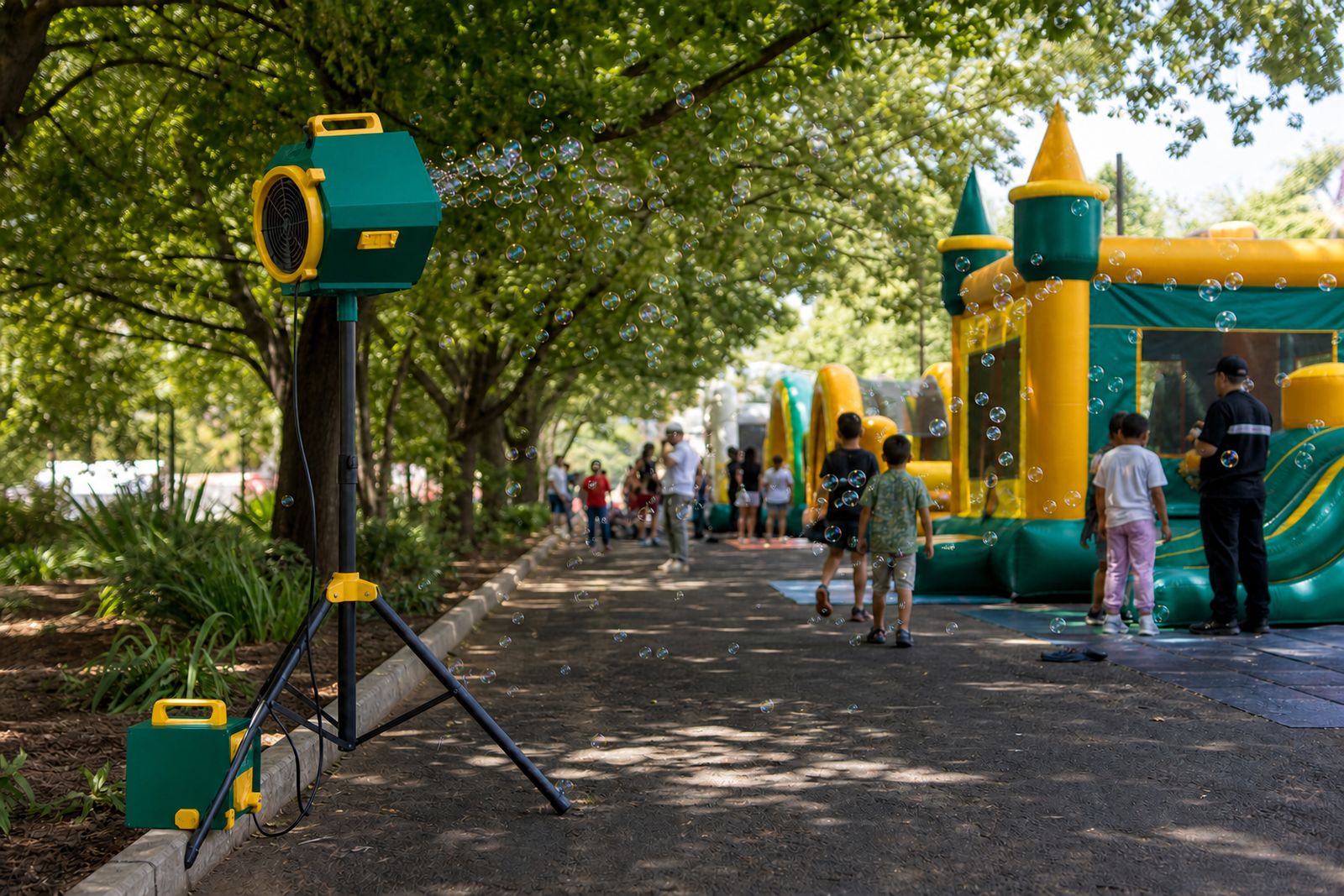
A bubble machine works well in courtyards, under roofed walkways, inside halls and at shaded birthday areas where the air stays calm. The effect is strongest when the bubbles can drift through a small crowd without being blown off course by gusts from open doors or passing traffic.
At schools and malls, the best positions are usually along a wall, beside a stage edge, or near a focal point where children naturally gather. A machine pointed into an open passage can look underwhelming because the bubbles thin out before they reach the audience.
- Choose a spot with steady air and no direct fan blast.
- Keep it away from heavy foot traffic that can scatter the foam quickly.
- Allow a clear area where children can watch without crowding the machine.
What wind changes, and why the picture disappears
Wind affects both the shape and the distance of the bubbles. A light breeze can carry them into a wider play area, but stronger wind breaks the pattern and leaves only a few floating close to the machine. On an open field in Midrand or a school quad in Pretoria, the same setup can look lively one minute and thin the next.
For outdoor events, the visual result improves when the machine is placed with its back to the wind or under a covered edge. If the site is exposed, crews often test the direction before a crowd arrives and shift the unit a few metres if needed. That small change can make the difference between a short burst of bubbles and a steady curtain that hangs in the air.
- Open lawns usually need more planning than courtyards or halls.
- Strong afternoon wind can shorten the visible bubble path.
- Shade or shelter helps the bubbles stay in view longer.
Floor choice matters when children are in the mix
A bubble machine is not only about the air, it also affects the ground below. Bubble fluid leaves a slick film on tiles, sealed concrete and polished indoor floors, so the team should plan for mats, regular wiping and a route that keeps the play area controlled. On grass, the finish is less obvious, though wet patches can still build up where the machine runs for a long stretch.
For birthdays and school fun days, it helps to place the machine where the surface can be managed easily. A shaded paving area with access to water and power is often better than a narrow indoor aisle. The crew can also mark a boundary so small children do not rush straight under the output stream.
- Tiles and polished floors need extra care around spill points.
- Grass gives a softer look, but wet patches still need attention.
- A marked play zone helps keep the bubble stream under control.
Power, setup and the quiet details people overlook
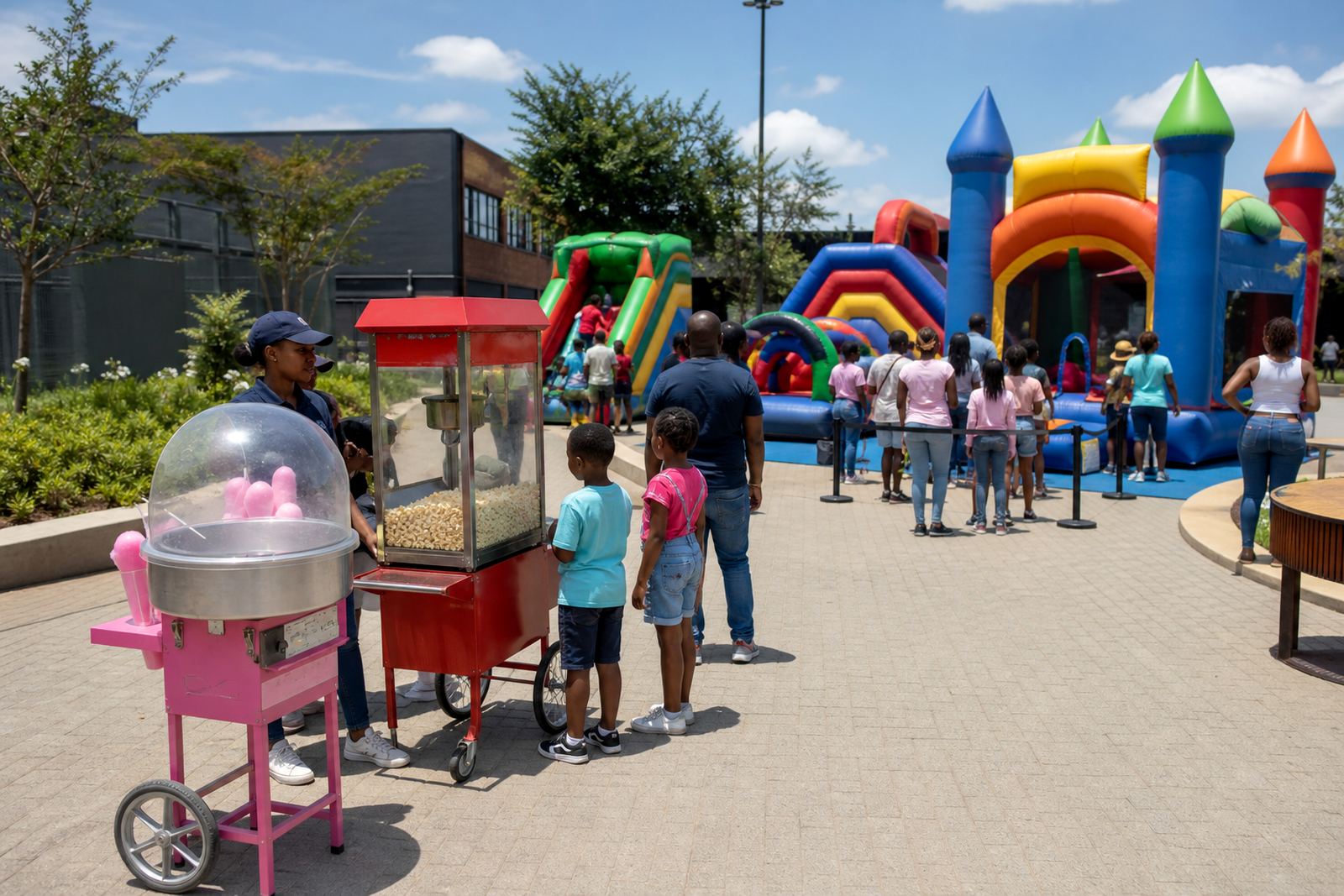
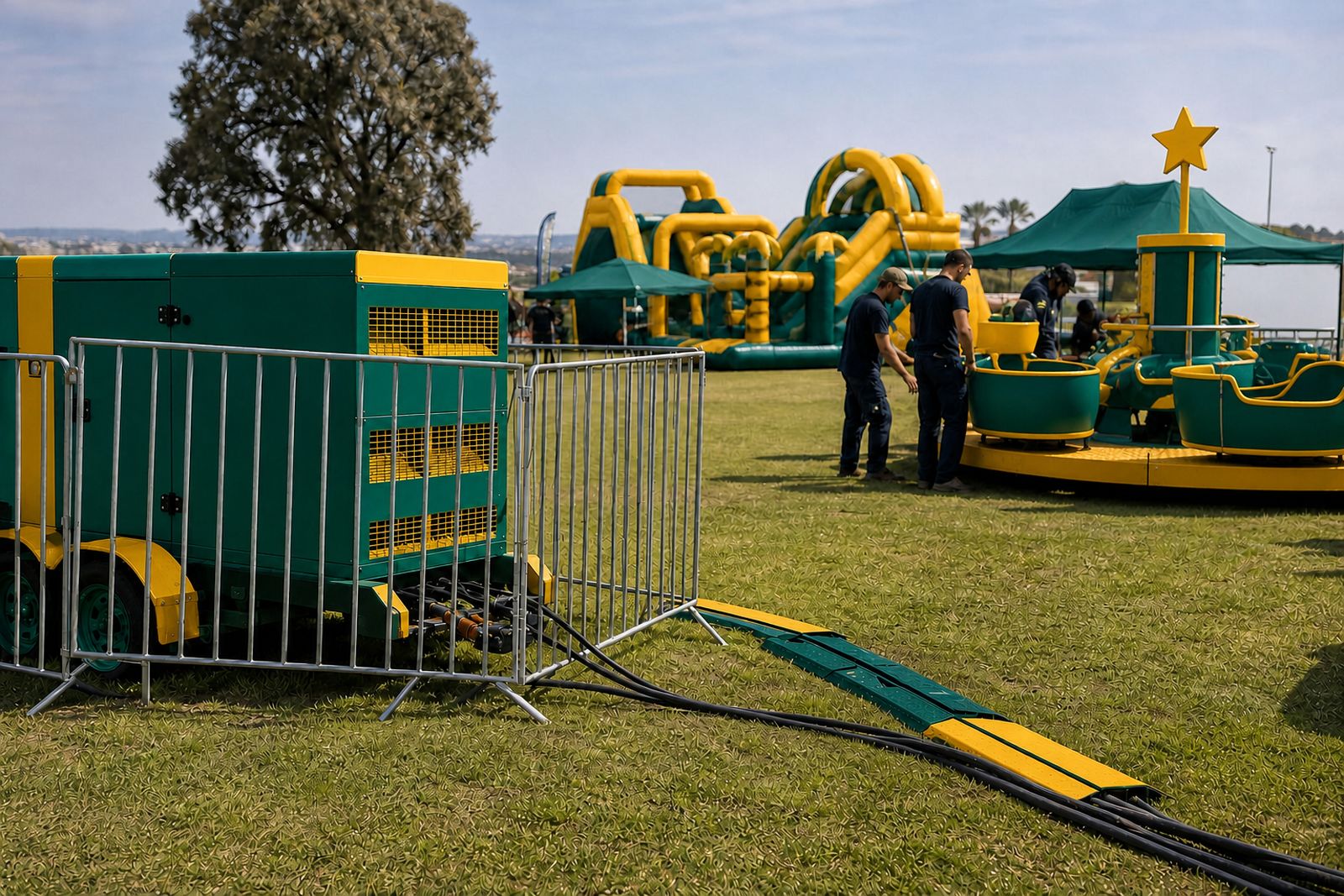
Most bubble machines need a stable power point, and some event layouts call for a generator when the venue has no convenient supply. The machine itself is not bulky, but the placement around it still needs thought, especially if the crew is running candy floss carts, photo booths or other attractions at the same time. Cable routes should stay neat and away from little feet.
Setup is usually straightforward, yet the surrounding work takes longer than many people expect. The team needs time to position the unit, test the airflow, check the output and make sure the area is safe for children. If the event has a fast changeover between activities, the bubble machine should be slotted into a wider run sheet so it does not end up squeezed between two busy elements.
- Check whether the venue has a usable power point nearby.
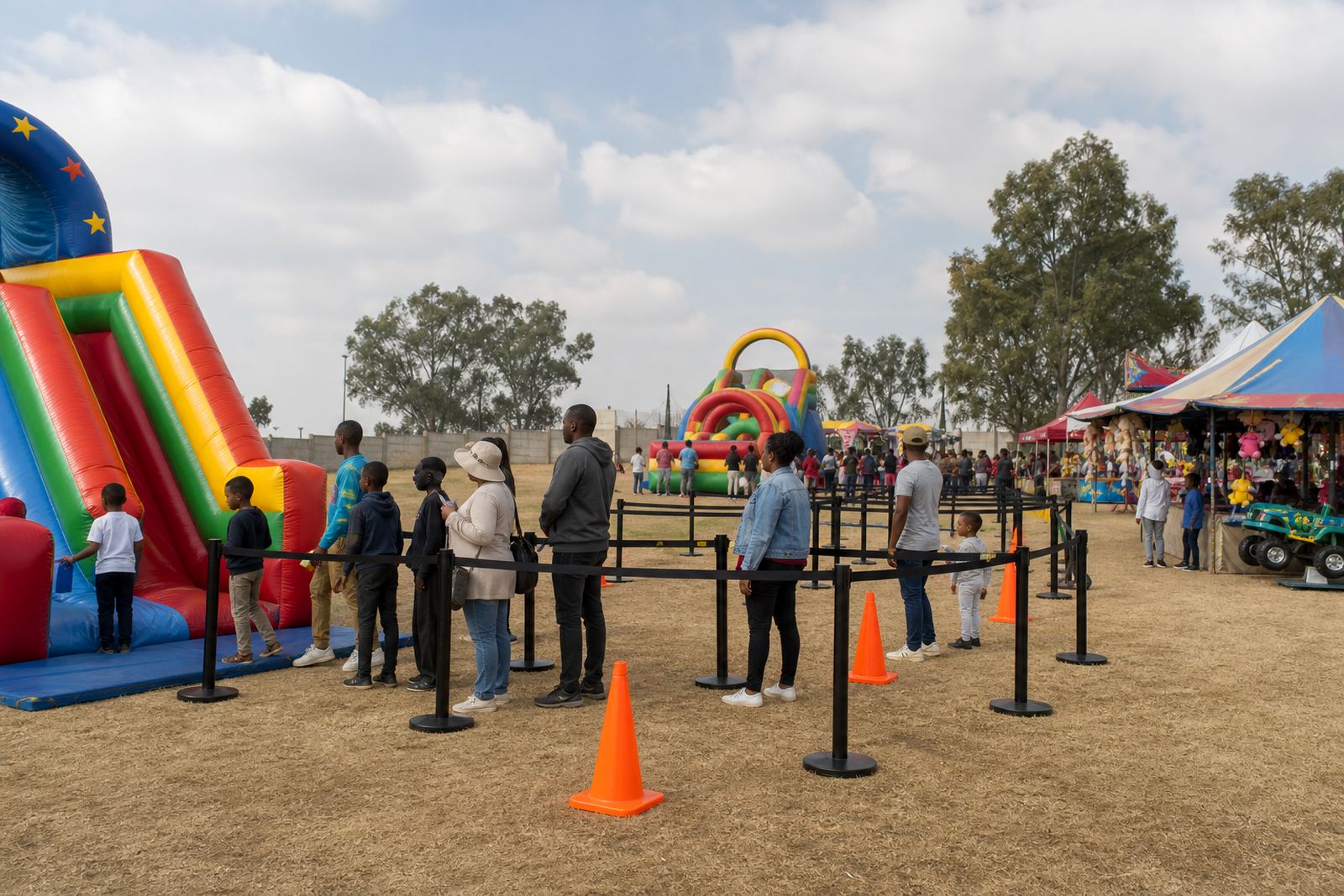
- Keep cables clear of entrances and queue lines.
- Allow enough time for testing before the crowd arrives.
Matching bubble machines to the age group
Bubble machines work for very young children and for mixed-age family events, but the setting should match the crowd. Toddlers usually enjoy chasing the bubbles at ground level, while older children often treat the machine as part of a larger game area. If a carnival stall or jumping castle is nearby, the bubbles can help soften the space and pull attention across the site.
Heights and reach matter less with bubble machines than with rides, yet the crew still thinks about where children will stand, how close they can get, and whether an adult needs to keep an eye on the area. At a corporate family day in Johannesburg, for example, a bubble zone near a shaded seating patch can give younger children something gentle to enjoy while the older ones move between arcade cabinets and inflatables.
- Toddlers need a calmer space with room to wander.
- Older children may prefer a bubble zone near other attractions.
- Supervision helps keep the play area organised and safe.
Weather plans for open-air events in Gauteng and beyond
Weather planning is worth doing even for a short bubble feature. Light rain can turn the ground into a slip point, and strong wind can move the display off target before guests have a chance to enjoy it. In Gauteng, a late afternoon breeze can change the feel of a setup quite quickly, while coastal conditions in Durban may keep the air more humid and the bubbles hanging a little longer.
For outdoor bookings, the backup plan is usually practical rather than dramatic. The machine may move under cover, shift to a more sheltered side of the venue, or join another indoor attraction if the layout allows it. A good crew will also think about strike and collection, especially when the site has to be cleared before the next event or school use starts.
- Wind is the biggest factor in how far bubbles travel.
- Rain creates slip concerns and can force a location change.
- Covered spaces usually give the most predictable result.
A Midrand example that shows the difference
At a family day setup in Midrand, the bubble machine worked best under a shaded edge near the refreshment area. The open side of the field caught the breeze, so the team shifted the unit closer to a wall and used that shelter to hold the bubbles in view. Children still had room to run, but the display stayed fuller and easier to see from the seating area.
That same approach is useful across schools, malls and birthday venues. The exact spot changes from one site to the next, yet the pattern is the same: calmer air, a clear floor, enough room for the crowd and a crew that knows how to place the machine where it can do its job. When those pieces line up, the bubbles last longer in the eye, even if the air itself is moving.