
Before the first child arrives, the site gets measured
We start by checking the space properly. A jumping castle or inflatable obstacle course needs clear width, height and length, plus room for the blower hose, safety mats and a neat entry point. On school fields in Midrand or a paved mall courtyard in Pretoria, crews check for uneven ground, low branches, shade cloth edges and any surface that could shift under an anchored unit.
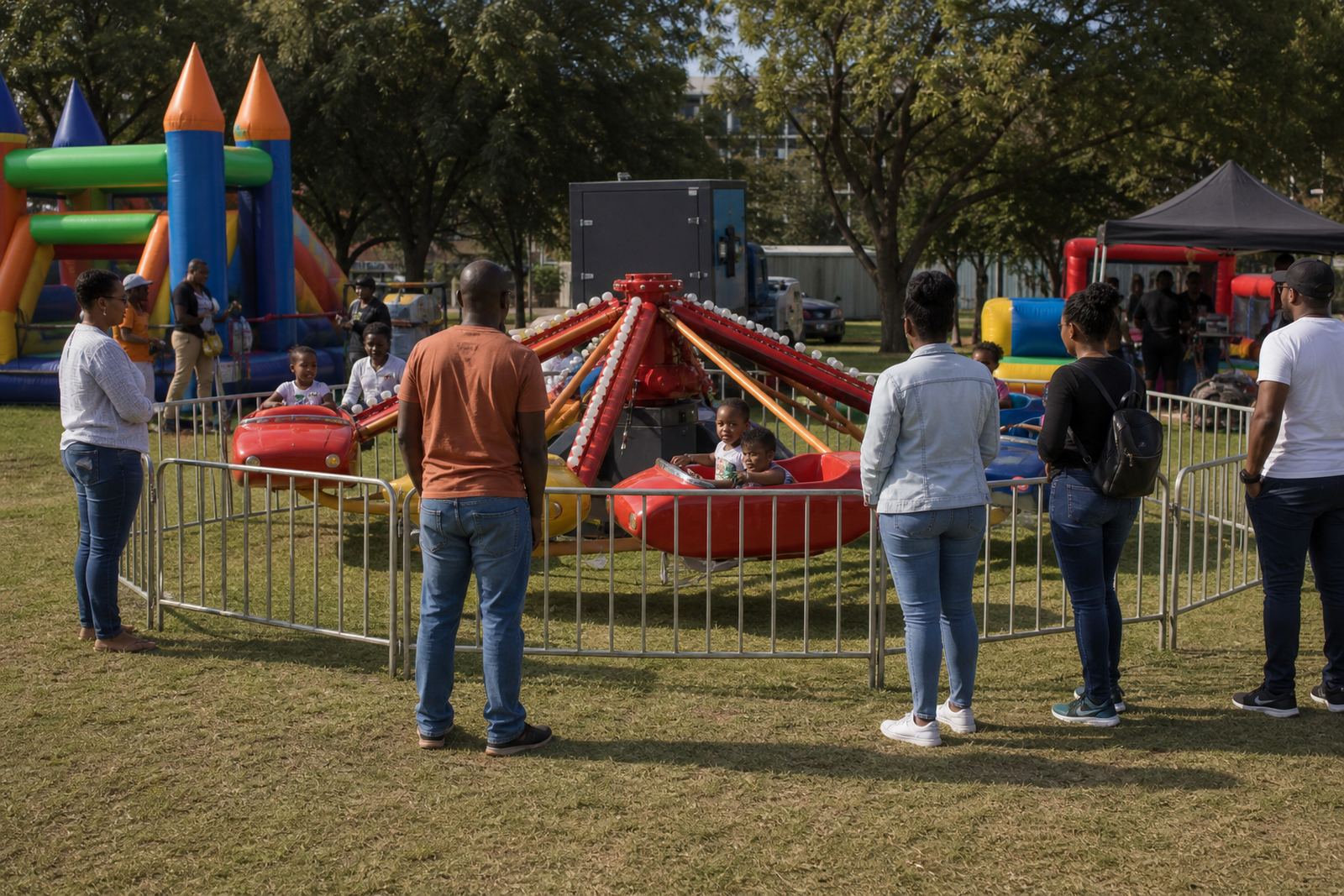
That first visit or pre-event check is where the crew works out what can fit and what must stay out. Carnival game stalls need walking space in front of them. Arcade cabinets and retro gaming machines need dry flooring and a stable line of power. Small rides need controlled entry points, especially where younger children are mixed with older ones. When the site is tight, the crew plans the layout so queues do not cut across paths or snack areas.
- Measure the area you can actually use, not the open field.
- Check surface type, access gates and delivery routes.
- Plan how guests move between games, food carts and photo spots.
- Mark any no-go zones near walls, trees, drains or glass.
Anchors, mats and blowers are not an afterthought
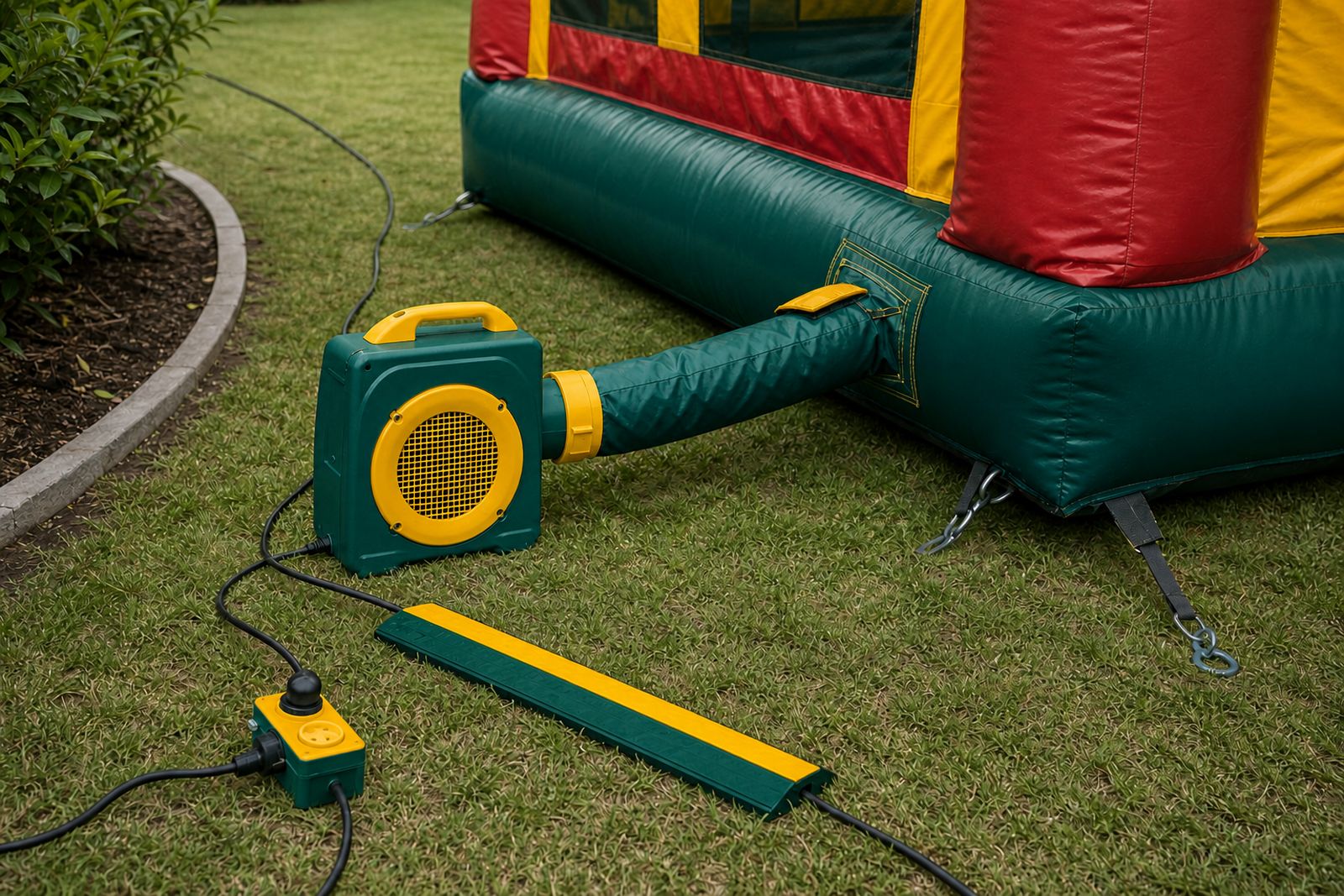
Inflatables look easy once they are up, but the setup behind them matters. Crews position the unit, lay safety mats at the entrance and exit, then secure the inflatable with stakes or weighted tie-downs depending on the surface. The blower is placed where it will stay dry and out of the traffic flow, with the hose fitted so it does not kink or pull loose during the day.
In humid coastal conditions around Durban or on a windy afternoon in Bloemfontein, this part of the job gets extra attention. A crew cannot just leave a castle standing and hope for the best. They check seams, entry points and landing areas, and they test the bounce before guests use it. When foam or bubble machines are part of the booking, the team also keeps the floor area managed so it does not turn slippery under running feet.
- Use mats where children step on and off the unit.
- Anchor inflatables according to the ground surface.
- Keep the blower clear of water, dust and trampling feet.
- Check that the inflatable holds shape before opening it.
Supervision keeps the pace steady and the queues fair
Once guests arrive, the crew shifts from setup into active site control. At a school fun day, that may mean managing age groups so smaller children are not pressed into spaces meant for bigger kids. At a corporate family day, it may be about keeping adults from stepping into the children’s play zone and making sure the queues at the candy floss cart or popcorn machine do not block the main walkway.
Supervision is practical, not theatrical. Staff watch entry counts, guide turns on the obstacle course, and keep an eye on height or age limits where a ride or game requires them. A photo booth attendant helps guests line up, move through props and clear the space for the next group. For mascots and mobile entertainment, crew members also manage movement around the crowd so the character does not get surrounded in a way that becomes awkward or unsafe.
- Separate younger children from older age groups where needed.
- Keep queue lines open and easy to read.
- Limit the number of riders or players at one time.
- Guide guests around props, cords and service tables.
Power, water and weather shape the practical plan
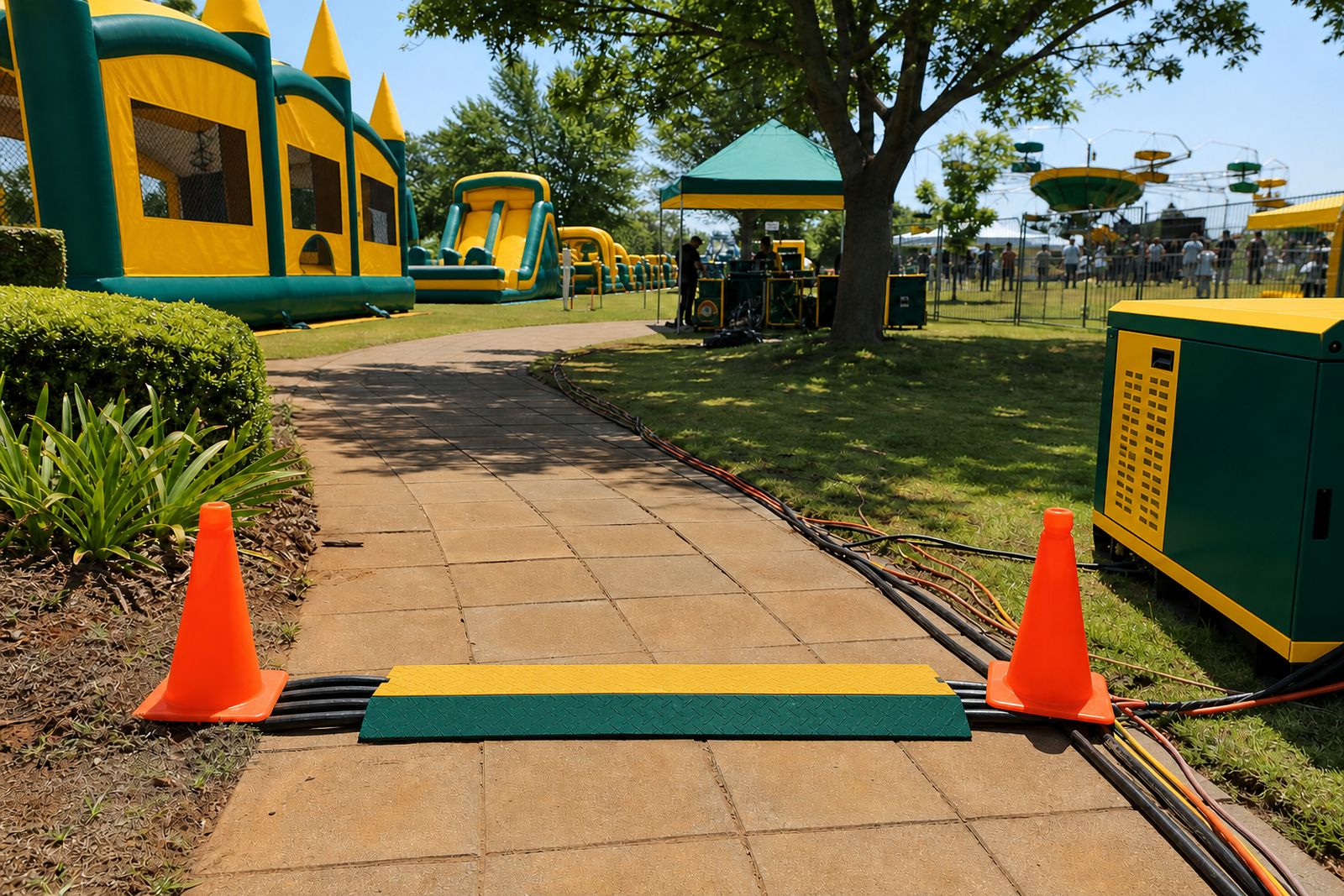
Some amusements run on air only, while others need mains power for lights, arcade cabinets, foam equipment, candy floss machines or photo booth setups. The crew checks where power is available, where cable runs will sit, and whether a generator is needed for the full service. On a large event ground in Johannesburg or a school sports field in Centurion, cable placement can decide whether a space feels orderly or cluttered.
Weather changes the plan too. Light rain, strong wind or a soft grassy surface can change how and where equipment is placed. Crews work with wet weather plans that may include moving carts under cover, pausing certain activities or adjusting the order of service. They also decide whether a field needs extra protection, or whether a paved area gives a better base for the day. That judgement saves time and keeps the site usable for the whole event.
- Confirm which items need power and which do not.
- Plan generator placement where it will not interfere with guests.
- Keep cables neat, covered where needed and out of walkways.
- Adjust the layout if wind, rain or ground conditions change.
Snack carts and photo booths need hands on the controls
Food carts and photo booths may look light compared with a ride or inflatable, yet they still need proper handling. Popcorn and candy floss service needs clean work surfaces, bagging space and a steady flow so the line does not pile up. Crews watch stock levels, refill consumables and keep the serving area tidy as the event runs. That matters at malls and family days where people drift in and out all afternoon.
Photo booth work is similar. Someone has to manage the props, help guests step in, reset the screen or printer area and keep the queue moving without rushing the group inside. At a birthday in Sandton or a school event in Midrand, the crew’s job is often to make the experience feel organised while still staying relaxed. The equipment is only part of the service, the people running it shape the whole feel of the day.
- Keep serving counters clean and easy to access.
- Watch supply levels for snacks, paper goods and print media.
- Help guests move through the booth in a smooth order.
- Stop queues from blocking nearby games or entrances.
After the last game, the site has to be stripped properly
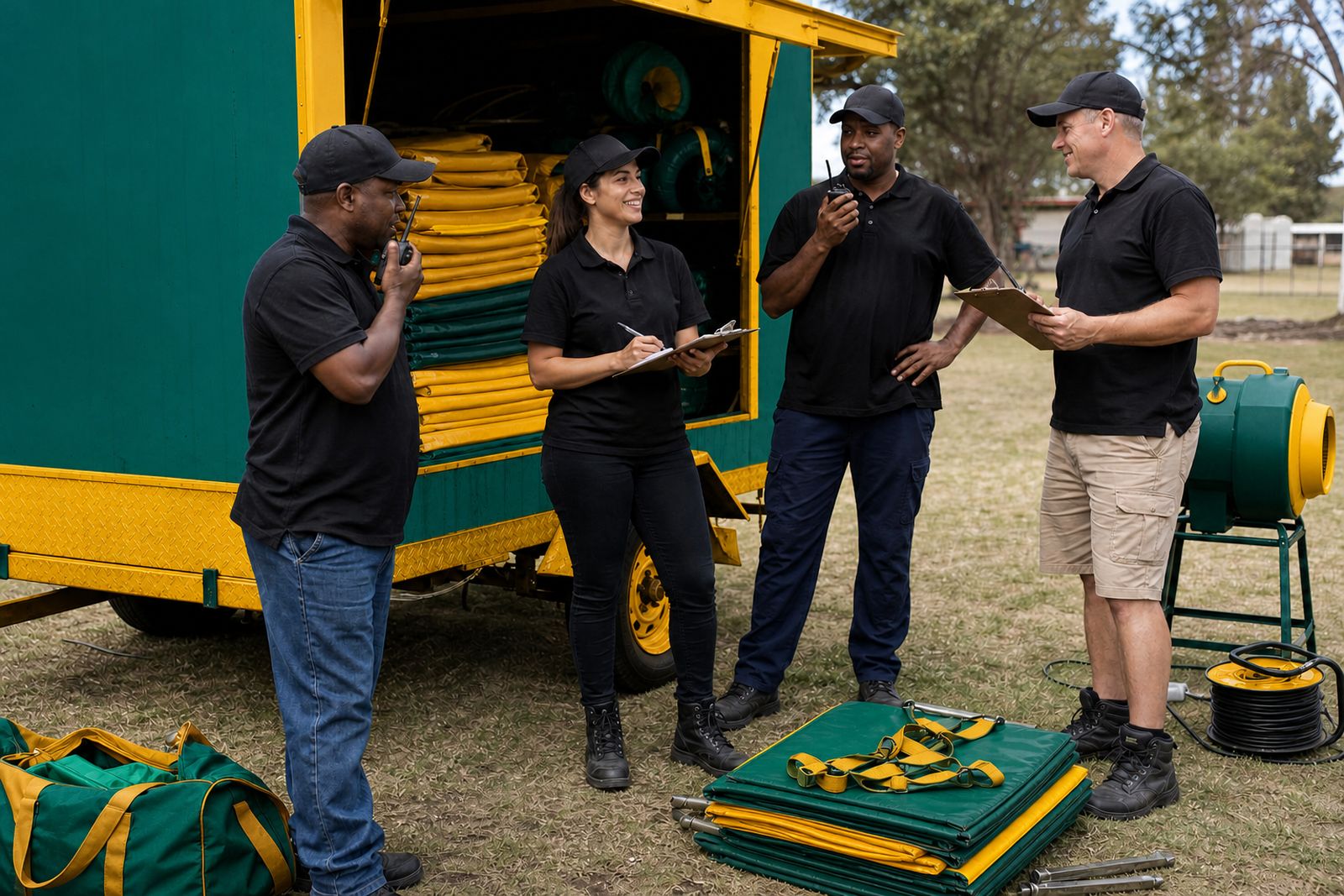
Strike and collection are not a quick sweep-through. Crews switch off power, deflate inflatables, coil hoses and cables, pack accessories and check that every mat, sign and game piece is accounted for. If the event ran outdoors, they also remove anchoring points and inspect the ground for anything left behind. A good close-out leaves the venue ready for the next user, whether that is a school in Pretoria or a corporate park in Cape Town.
The removal sequence matters because tired equipment and wet surfaces can be awkward late in the day. Teams work in the right order so nothing gets dragged across the ground or packed while still damp. For national road shows, logistics also includes loading in the correct order so the next stop can be handled without digging through mixed stock. That is where the coordination between bookings, fleet, safety and on-site staff becomes visible.
For event organisers, it is worth knowing that the practical side of amusement hire is a chain of small jobs. The crew that arrives early is the same crew that keeps the space controlled, the queues steady and the pack-up clean.
A Midrand school fair, handled in working parts
A local example helps. At a school fair in Midrand, the crew might start with an inflatable obstacle course on the sports field, a candy floss cart near the hall, and two carnival game stalls beside the main walkway. The team would check the turf, anchor the inflatable, set mats at the entry and position the snack service away from the running line. If a photo booth is part of the booking, it might sit under shade near the parent seating area so the flow stays sensible.
During the event, one crew member keeps an eye on the inflatable, another manages the queue at the games, and a third looks after the booth or snack station. At the close, everything is packed in reverse order, the area is cleared and the venue is left ready for Monday use. That is the real shape of event crew work: measured, physical and full of small decisions that keep a busy day under control.