
Start With the Walk-Up, Not the Attraction
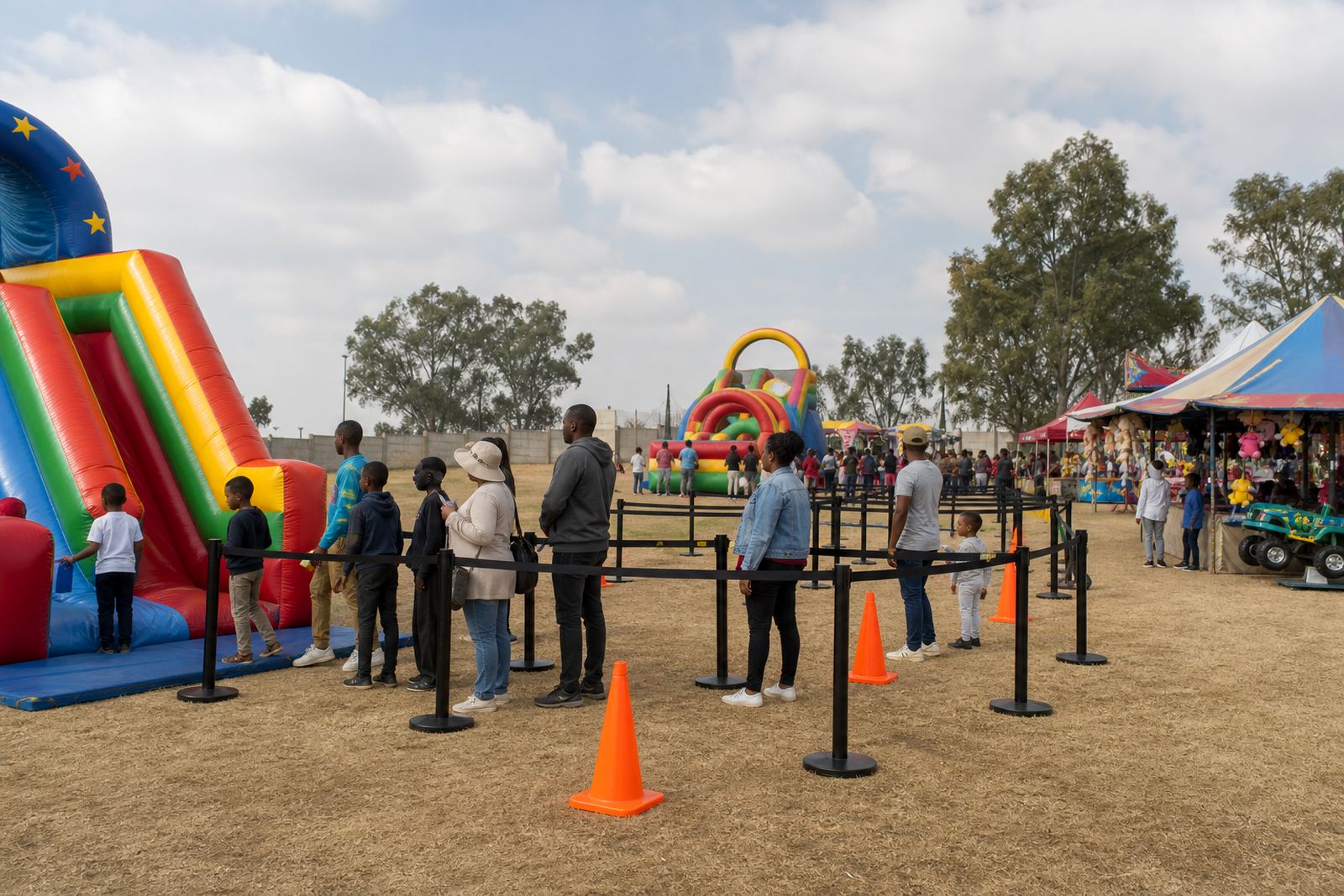
The easiest place to fix a queue is the approach to it. Leave a clear path to the front of each ride or game, then keep the waiting area beside it rather than in front of it. That small shift helps parents stand back while children can still see what is happening.
For jumping castles and inflatable obstacle courses, the entry point should not face another busy activity. If people arrive from every side, the line breaks apart and turns into a loose crowd. One marked opening, a clear exit and a visible waiting side are far easier to manage at schools, malls and birthday setups.
- Keep the front edge of the queue open for movement.
- Separate the waiting line from the exit path.
- Use one side for entry and another for leaving.
- Leave enough space for prams, bags and supervising adults.
Timed Turns Work Better Than Open-Ended Waiting
When a popular attraction is left open to everyone at once, the strongest children drift to the front and the rest hang around behind them. Timed turns make the rhythm clearer. A crew member can group children into small batches, then rotate them through in a steady pattern.
This works well for carnival games, arcade cabinets and small rides, where people tend to hover after a quick turn. Short, visible turns keep the line honest. They also help at corporate family days, where adults often want children to get a fair run before the next group steps up.
- Group riders by height or age when needed.
- Use short turn lengths for fast-moving games.
- Keep the next group close, but not touching.
- Let the crew reset the flow before the next turn starts.
At a Midrand school fair, for example, a single candy floss cart and a photo booth can create two different kinds of queues. One line moves quickly, the other stalls while families pose and collect prints. Separating those two lines keeps the whole area calmer.
Space for Strollers, Parents and the Unexpected Stop
Queue flow is not only about children. Adults step aside to tie shoes, fetch water, take photos or carry snack trays. If the line is packed tight, every small pause turns into a blockage. That is why the waiting zone needs a little breathing room at the sides and corners.
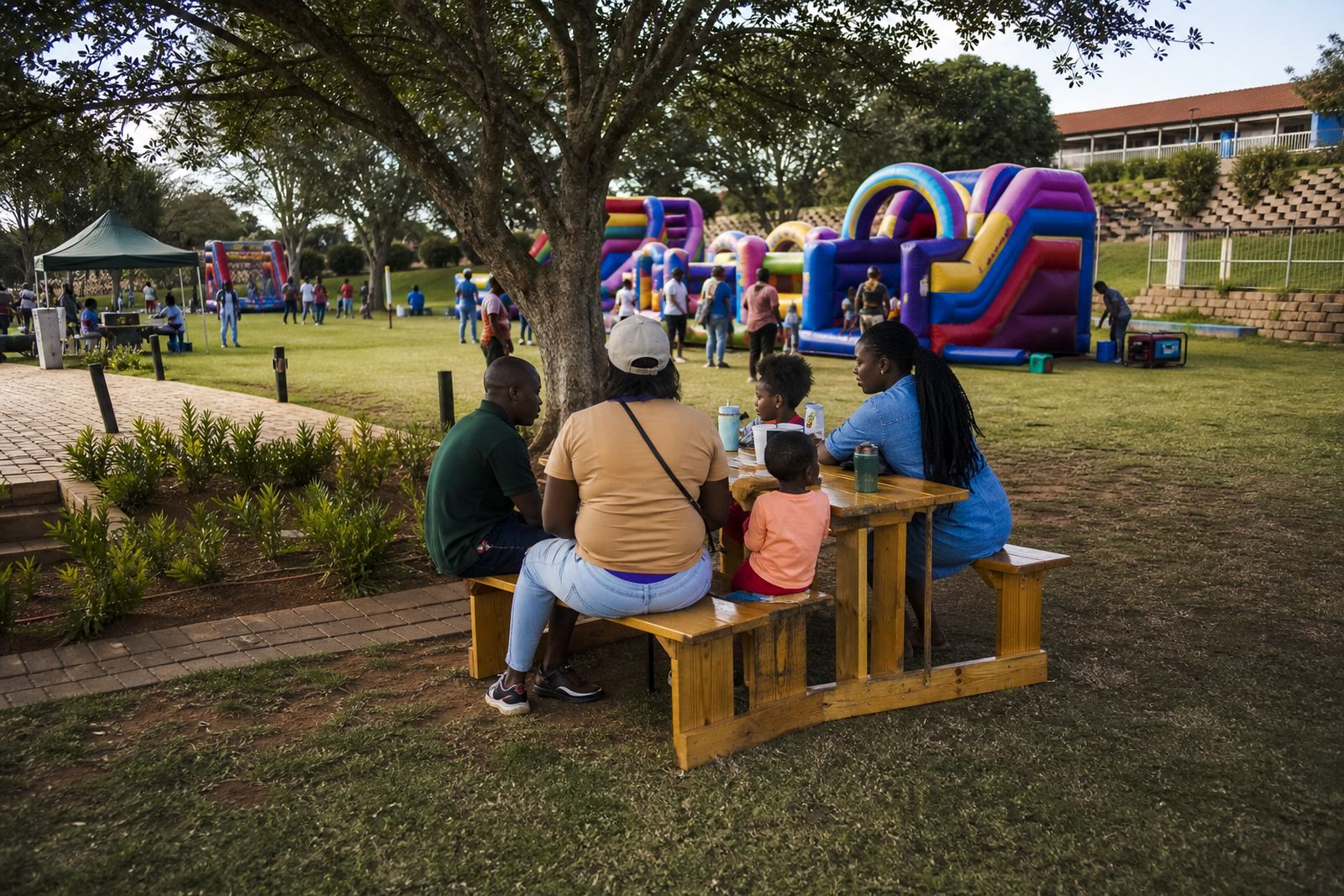
For larger events, it helps to place benches, shade and snack carts away from the direct queue path. Families then stop where they should stop instead of drifting into the attraction lane. Where a foam or bubble machine is running nearby, keep the wet area separated from the dry queue so feet do not slip and the line does not spread out awkwardly.
- Leave a turning space for prams and wheelchairs.
- Move refreshment points away from the main line.
- Keep wet play and dry waiting areas apart.
- Use visible edge markers so people know where to stand.
Make the Crew Visible Enough to Set the Pace
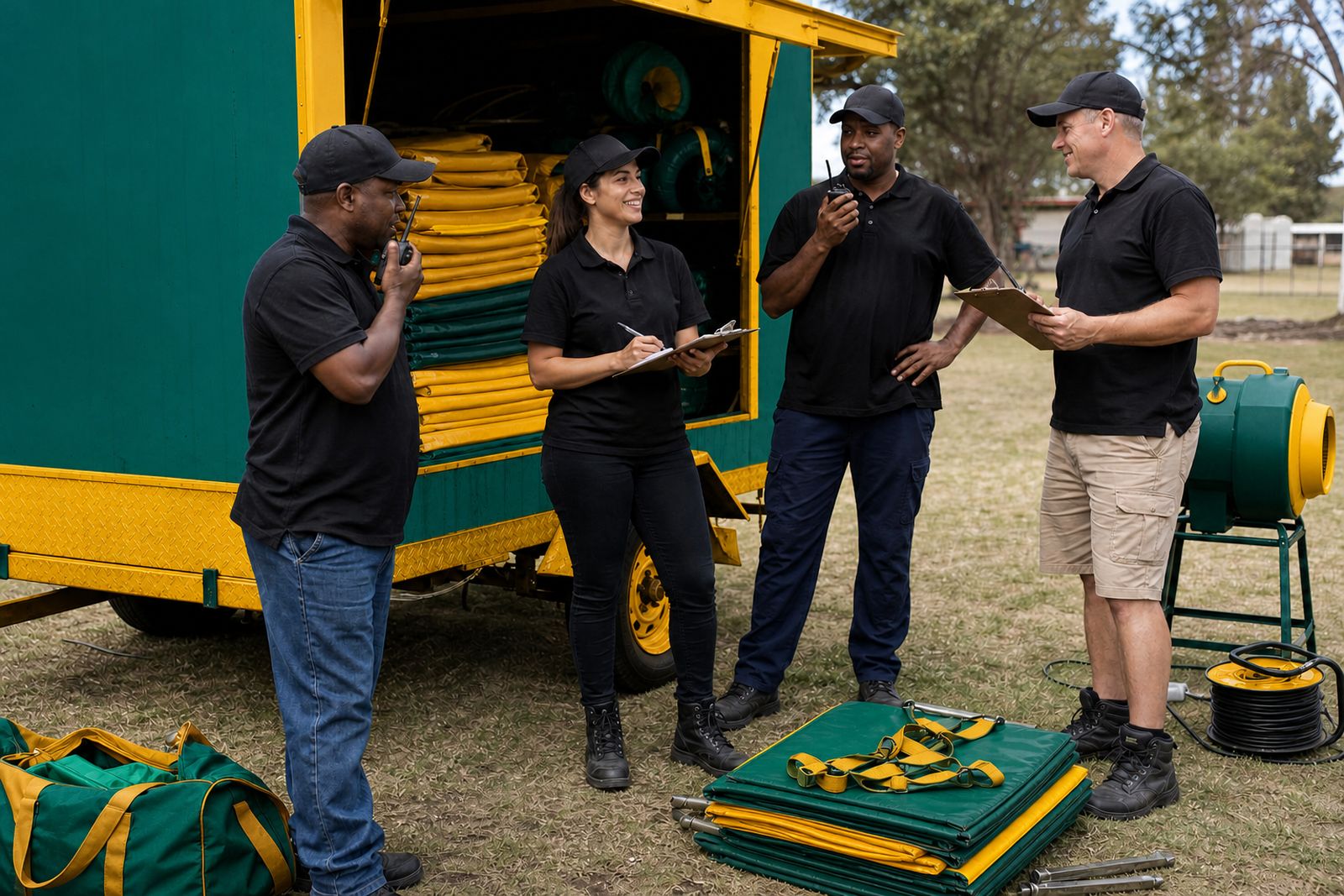
Queues behave better when people can see who is in charge. A trained crew member at the front, and another near the back for larger setups, gives the line a shape. The crew can call the next group, check heights where needed and keep younger children from wandering straight into the play area.
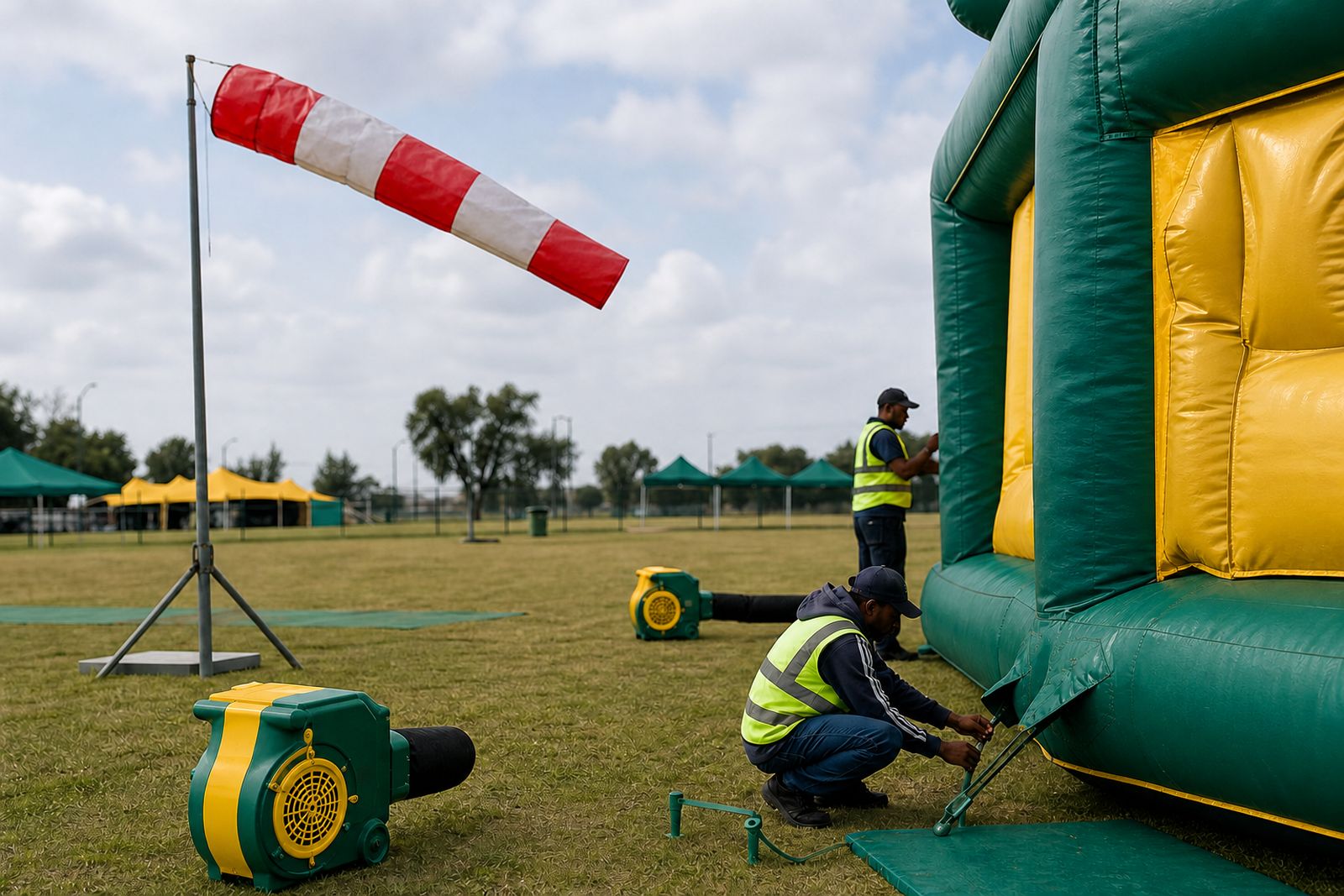
This matters more with inflatable obstacle courses and small fairground rides, because those attractions need steady movement rather than random pushing. Clear supervision also helps when a blower is running or a ride needs proper anchoring, since the public should not drift into the operating space. That little bit of control makes the whole layout feel calmer.
- Position one person where the line starts.
- Use another crew member where the queue breaks or splits.
- Keep access to power, cables and blower points clear.
- Check that mats stay flat at the entry and exit points.
Weather Changes the Queue Shape More Than People Expect
Sun, wind and rain all change how people queue. In hot weather, the line compresses under shade. In wind, lighter barriers and signs can shift. After rain, muddy shoes and damp mats slow everything down and people start shuffling into wider clusters. A good wet weather plan keeps the queue from becoming a puddle of confusion.
At outdoor events in Gauteng, it is often better to angle the line so it does not sit directly into the weather. At coastal events, salt air and damp ground call for a bit more care around electrical kit and cover. If a setup relies on mains power or a generator, the route to that equipment should stay separate from the waiting line and the snack queue.
A Local Layout That Keeps Traffic Moving
Picture a family day in Midrand with a jumping castle, a retro gaming corner, a popcorn cart and a photo booth. If all four are lined up in one row, the crowd stacks in one place and the whole event feels tighter than it should. If the castle sits at one end, the games near a shaded wall, and the food and photos off to the side, each attraction gets its own pocket of movement.
That kind of layout is useful for schools and malls too, because it gives children something to do while the adults can see the full field. Our team uses site checks, delivery setup, on site supervision and queue management together so the line shape matches the equipment on the ground. It is a small planning step, but it changes how the whole day moves.