
Where a generator earns its place
Not every party hire needs its own power source, but plenty of event layouts do. A jumping castle with one blower, a popcorn cart, a candy floss cart and a photo booth can pull power from different points, and the cable runs are not always friendly to a school field or a mall forecourt. A generator becomes useful when the venue’s supply sits too far away, the available sockets are already spoken for, or the site is outdoors and spread over a wide area.
On a Midrand school sports day or a corporate family day in Pretoria, the layout often changes the power plan more than the guest count does. A small inflatable may need a dedicated blower running for the whole session, while a food cart or arcade cabinet needs steady supply for the duration. If the setup includes bubble machines, foam equipment or a small ride, the load grows in a way that is easy to underestimate.
Remote farm venues, temporary marquees and road show stops outside the main cities also make generator hire practical. When the site is far from a reliable socket, or the event team needs power in a specific spot, the generator becomes part of the working plan rather than an extra item at the edge of it.
Inflatables, blowers and the space around them
Inflatables need more than floor space. They need clear access for setup, enough air around the blower, and anchoring that suits grass, paving or hard ground. A generator can sit near the inflatable area if the cable run is planned properly and the unit is kept where staff can monitor it without blocking guests. Safety mats at the entry and exit points help when children are moving on and off the unit, especially on busy school days.
- A compact jumping castle usually needs a clear flat area, with room for the blower and safe access.
- Larger obstacle courses need more space for the footprint, the run-in, and the crowd movement around it.
- Anchoring changes with surface type, so grass, asphalt and indoor flooring all need different handling.
- Weather matters too, since wind and rain can change how the inflatable is used and supervised.
For these setups, a generator is less about convenience and more about keeping the inflatable service stable when the venue cannot provide what is needed at the point of use. The crew still has to manage mats, tie-downs, and queue flow, because power alone does not make an inflatable safe.
Carts, games and machines that draw steady power
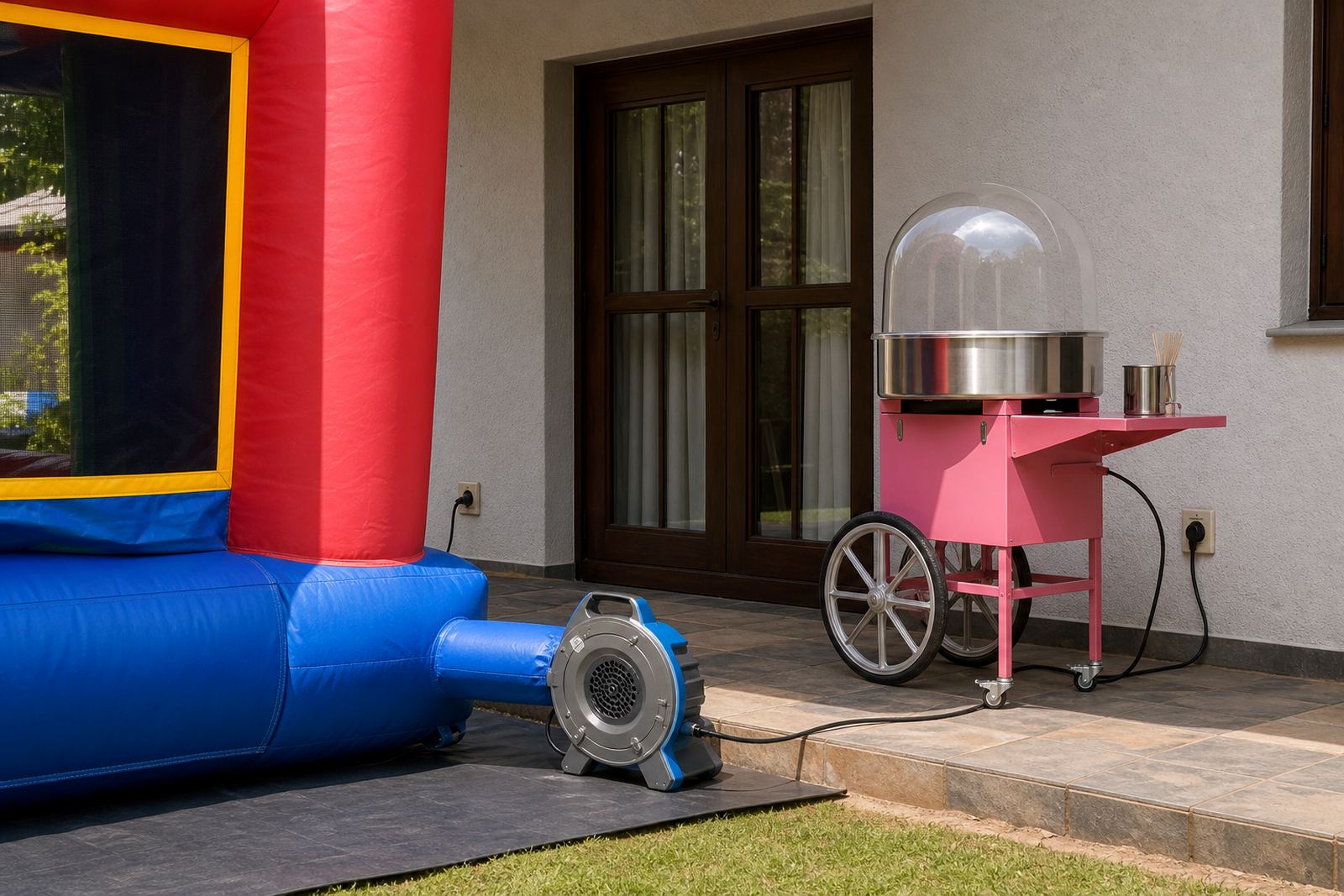
Snack carts and entertainment machines can be sensitive to poor power quality. Popcorn carts, candy floss machines and similar catering units may need steady supply for heating elements and motors. Arcade cabinets and retro gaming machines can also be fussy if the power dips, and photo booths need a clean setup with enough power for lighting, printing and camera equipment. That is where generator planning starts to matter more than people expect.
At a mall activation or a birthday in a private garden, the generator may sit behind the service area while the crew keeps the front of house tidy. The point is not to flood the space with machinery. The point is to keep each unit working in its proper place, without overloading the site or running long leads across walkways.
A practical power plan also helps with queue management. If the cotton candy cart, game stall and photo booth all sit in one corner, the crew can keep traffic moving and keep the cables away from feet and strollers. That saves a lot of sorting later.
What the event crew checks before the unit is switched on
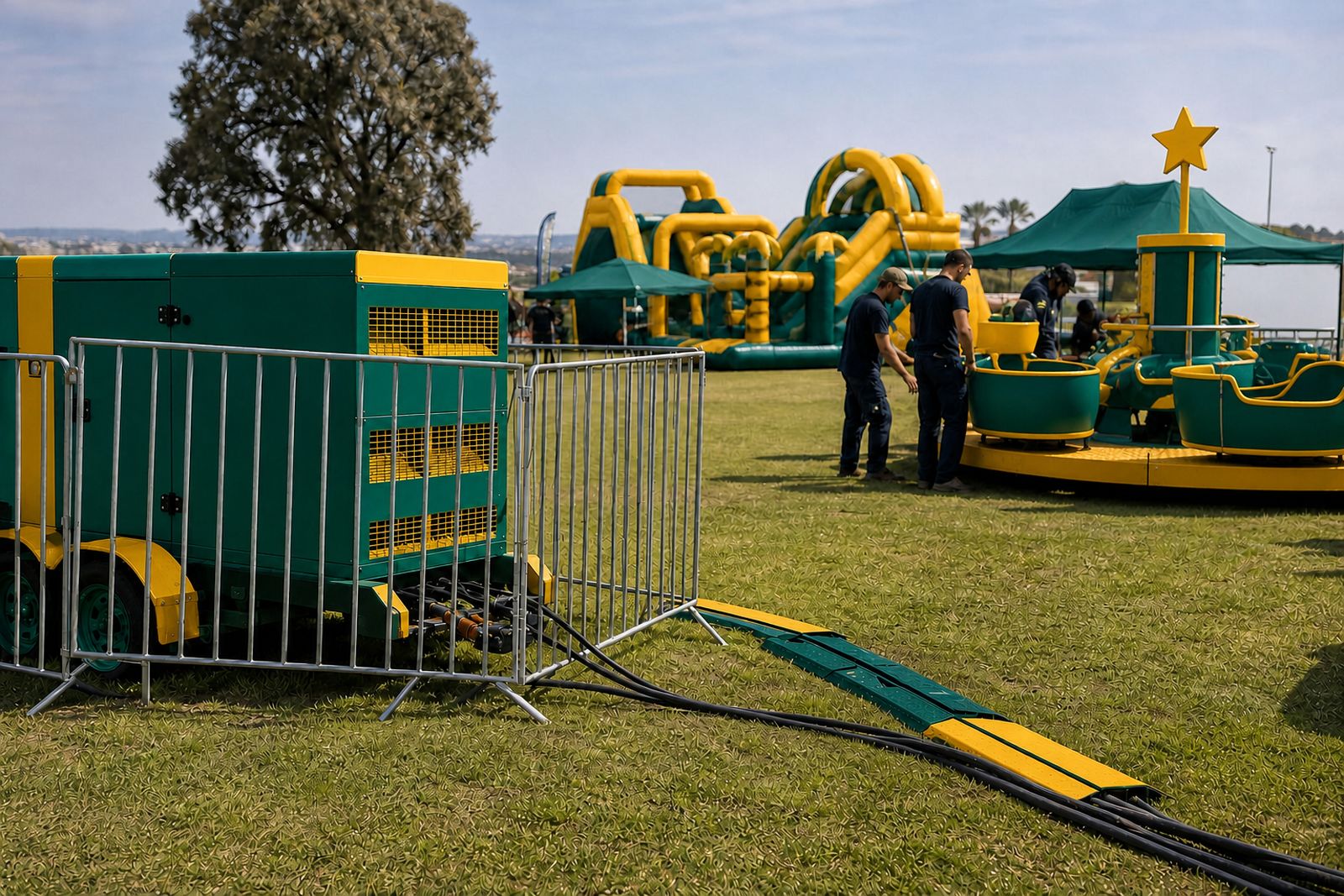
Good generator use starts before anyone presses a button. The crew checks where the unit will sit, how the cable will travel, whether the ground is level, and whether the sound or exhaust will interfere with guests. A generator that is too close to a play area or too far from the load can create unnecessary trouble. At a school or mall, the route for people, equipment and staff needs to be clear from the start.
- Load needs are matched to the inflatables, carts or machines on site.
- Cable runs are kept short enough for safe use, without crossing busy paths.
- The unit is placed with ventilation, access and supervision in mind.
- Fuel planning is built into the event run sheet, especially for longer sessions.
- Backup arrangements are considered when the site is remote or the layout is complex.
Generator supply is not just about power output. It is about where the unit stands, how it fits into the rest of the setup, and whether the crew can strike it cleanly after the event without disturbing guests or damaging the lawn, paving or venue access points.
Wet weather, remote sites and the Midrand kind of week
Midrand often sits between city venues and outlying locations, which means the event team may handle a school field in Gauteng one day and a road show stop further out the next. Some sites have neat service points, others have very little. On a remote site, a generator can keep the event moving even when power is unavailable or too far from the action. In wet weather, the crew may also need to change the plan so the cable paths, flooring and equipment stay drier and safer.
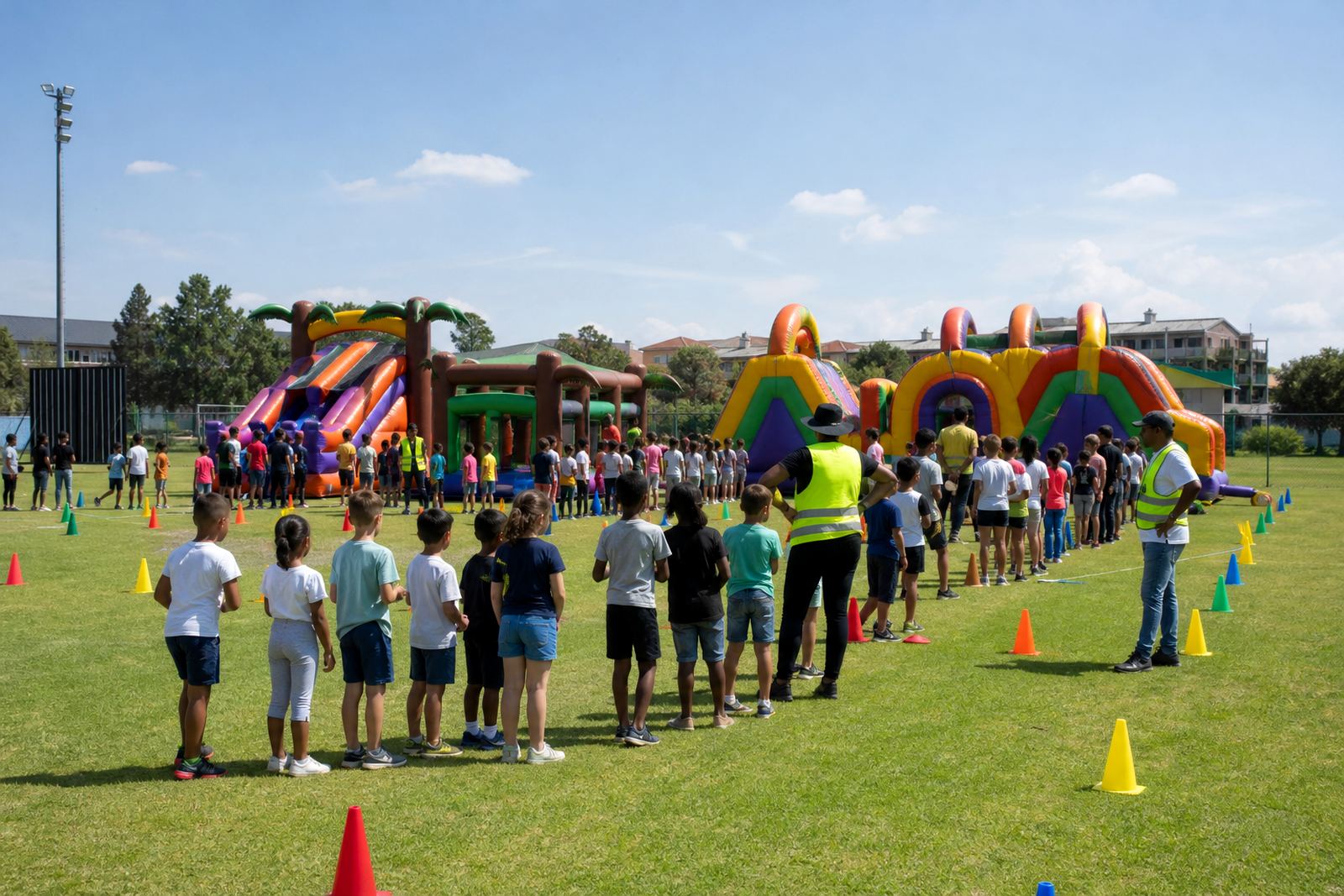
A simple local example is a family day on a large school field near Midrand with a jumping castle, a small obstacle course and a snack cart. The castle needs blower power, the cart needs steady current, and the organisers want the guest area separated from the service area. A generator placed with care solves the supply problem without forcing the whole layout to shift around the nearest wall socket. That kind of planning saves the event from awkward compromises.
For outdoor jobs in Johannesburg, Durban, Cape Town or Bloemfontein, the same thinking applies. Site conditions change, but the need is the same: keep the equipment powered, keep the crew in control, and keep the guests moving through the space without confusion.
Booking steps and the details worth sending through
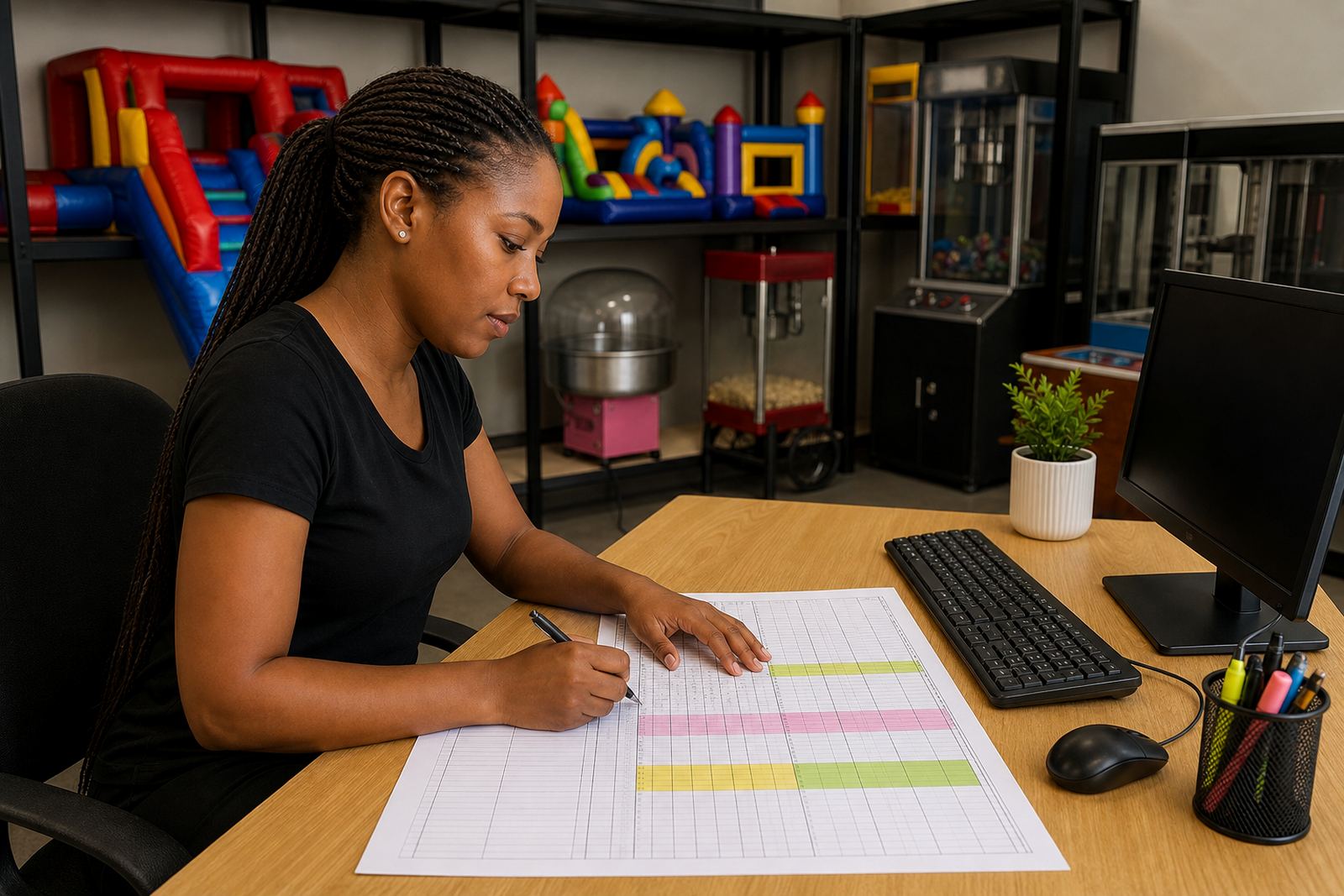
When a generator is needed, the booking note should include the event type, venue area, date, approximate guest flow and the equipment list. A school fete with two inflatables is different from a mall activation with arcade cabinets and a photo booth. The more detail the crew has about the site, the easier it is to match the generator size and the cable plan to the job.
Deposits and confirmation steps are usually tied to the event schedule and the stock being held for that day. If the site has restrictions, such as limited access hours, noise controls or fixed delivery windows, those details matter early. The same is true for service points, wet grass, long cable runs and any need for supervision around the power area.
Amused handles generator planning as part of wider event hire work, alongside delivery, setup, on site supervision, anchoring and mats, and strike and collection. For an event team that already has enough to watch, getting the power plan sorted is one less thing to chase on the day.