
Match the stall to the crowd, not the wish list
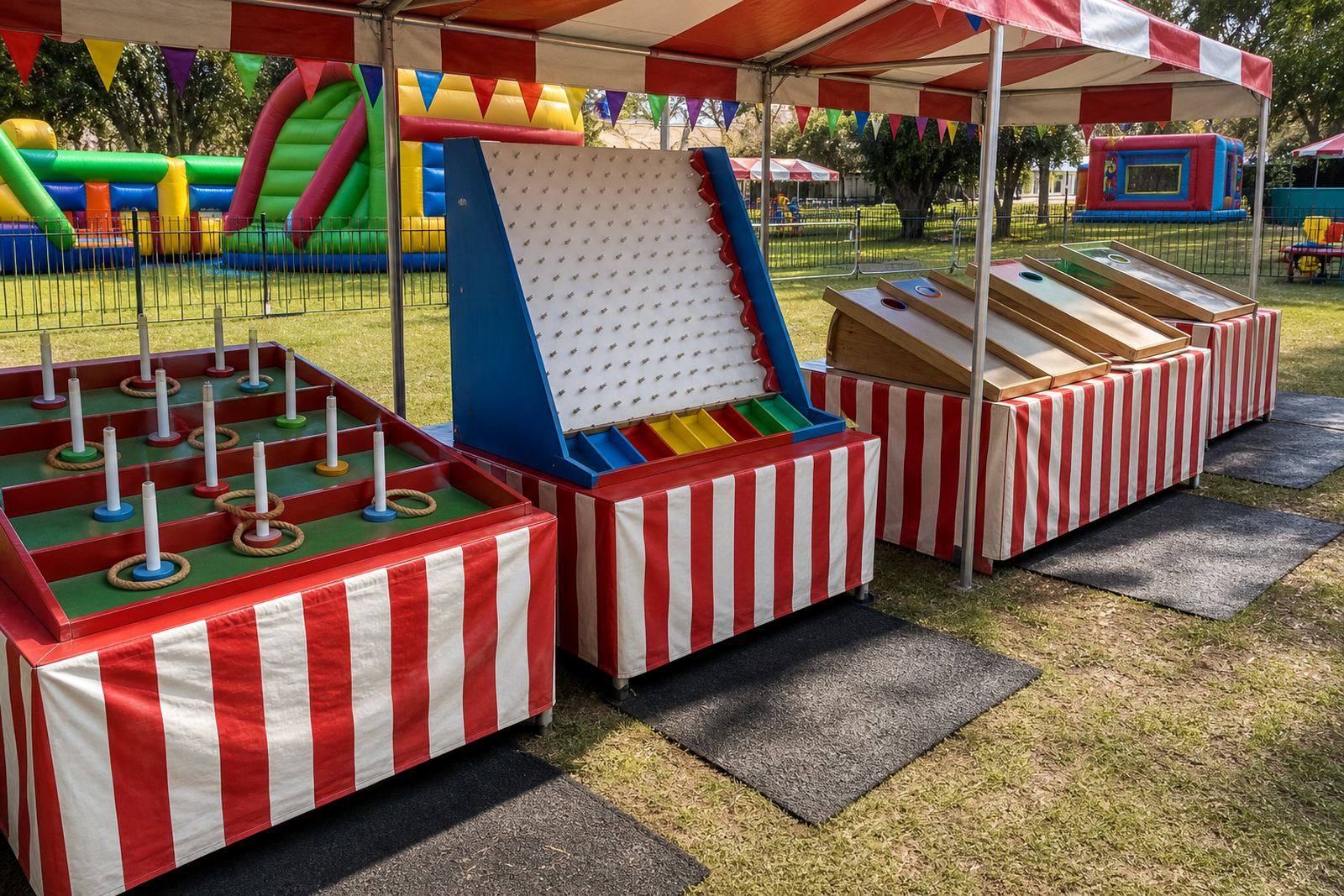
A good line-up starts with the people standing in front of it. A Grade R crowd needs simple toss games, ring throws and knockdown targets with short instructions and quick turns, while older children and adults can handle faster scoring games, reaction challenges and two-player contests. If the event is mixed age, choose stalls that work in layers so a younger child can still play without slowing older players.
At school fetes and mall activations, quick-play games work best because they keep the queue moving. One turn should feel complete in under a minute where possible, with easy reset and clear scoring. If the game needs a marshal to explain every round, it will hold the line up. A stall that can be understood from a few steps away is usually the safer bet.
- For younger children, use oversized targets, soft balls and simple throw lanes.
- For teens and adults, choose timed challenges or skill-based scores.
- For mixed crowds, combine one easy stall with one slightly harder stall nearby.
Space, anchoring and the ground underfoot
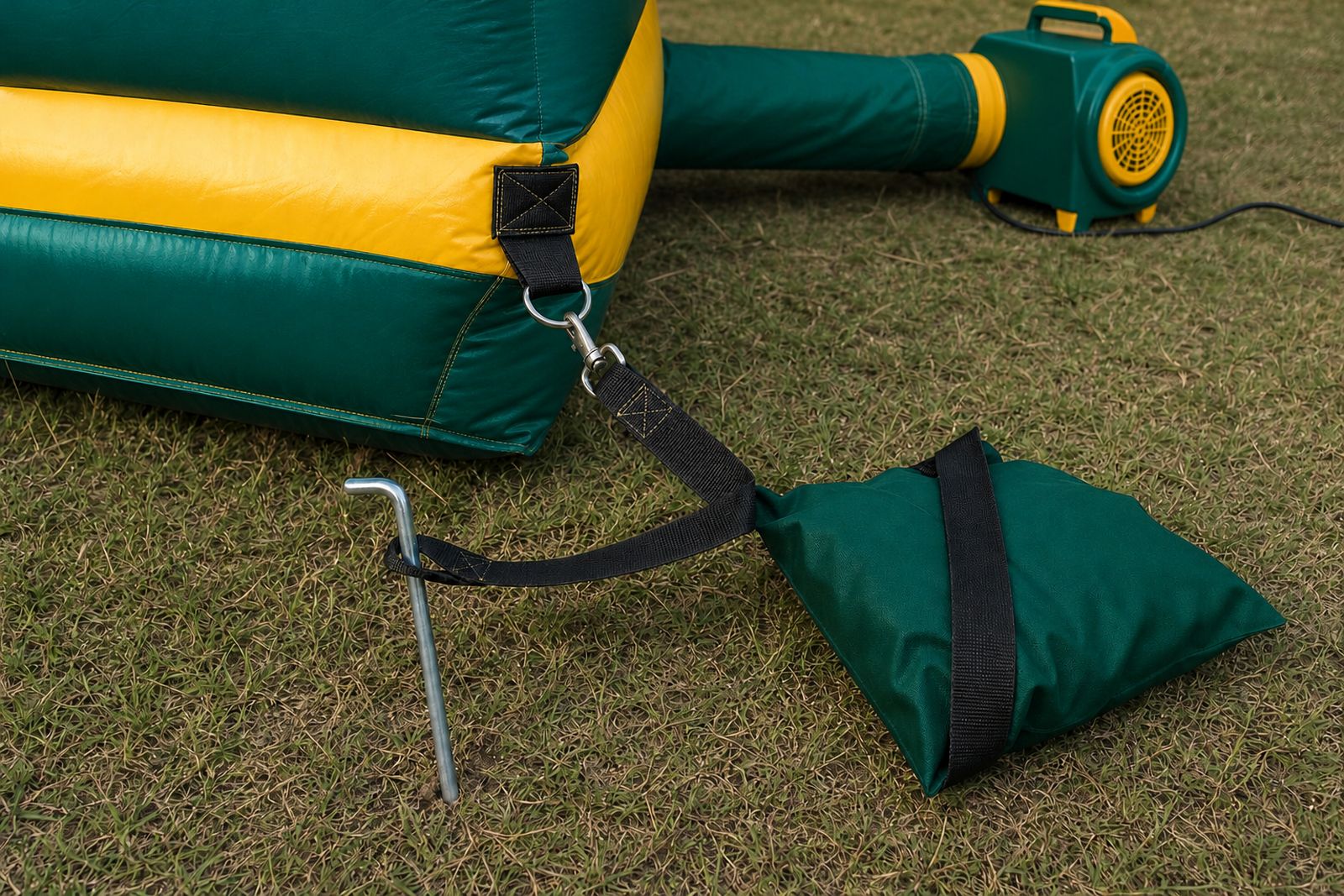
Carnival games take less room than inflatables, but they still need proper spacing. A single stall needs room for the frame, the player, the marshal and a queue that does not spill into a walkway. On paved mall courts, level ground helps table games stay steady. On grass at a school field or corporate venue, anchoring matters so the stall does not shift if children lean on it.
Safety mats are useful where feet might shuffle around the base, especially if the ground is uneven or dusty. If the venue is windy, lighter props need stronger anchoring and some stalls may need to face away from open corners. It is also worth leaving space for bins, prize stock and a clear path for a crew member to reset the game without walking through the crowd.
- Leave enough room for a queue line and a clear exit path.
- Use mats on rough paving, wet grass or loose gravel where needed.
- Check for shade, wind exposure and nearby foot traffic before placement.
Quick-play stalls and the length of the queue
Queue length is often the real test. A game that is popular but slow can frustrate a crowd, especially in a mall or during a birthday where children keep arriving in bursts. The trick is to balance one headline stall with a few faster options beside it. That way the queue feels active instead of stuck. When a stall is too slow, the line grows even if the game itself is good.
For bigger crowds, split the flow across more than one activity. Pair a classic throw game with a second stall that needs less scoring time. If the audience is spread across a few age groups, place the quickest games near the front and the more skill-based ones further in. This keeps younger children engaged while older players wait their turn.
- Fast reset games are better for high footfall events.
- One slow game is fine if two quicker games sit beside it.
- Use two-player or team games when you want the queue to move in bursts.
Power, sound and crew support behind the fun
Some carnival stalls are purely mechanical, while others need mains power for lights, score displays or small appliances. Arcade cabinets, candy floss carts, popcorn machines, photo booths and foam or bubble units each have different setup needs, so it helps to map out power points before the event starts. If a generator is required, it should be sized for the full mix of equipment and placed where noise does not disturb the crowd.
Trained crews make a real difference at busy events. They handle setup, monitor turn taking, keep the queue fair and help with safe use. For photo booths and snack carts, an attendant also keeps the flow steady when groups arrive all at once. On national road shows, that support matters even more because the timing between delivery, setup and strike can shape the whole day.
- Check power needs for each stall before finalising the line-up.
- Keep cables covered and routed away from foot traffic.
- Use attendants where prize handling, scoring or serving is involved.
Weather shifts and wet-day choices
Outdoor events around Gauteng can change quickly, and coastal humidity in Durban or Cape Town can affect equipment and surfaces too. A wet-weather plan should decide in advance which stalls can move under cover and which ones need a dry surface. Paper-based score sheets, loose prizes and snack items should also stay protected if the wind picks up or drizzle starts.
For a school event on a grass field, covered walkways or a hall entrance can work well for smaller games. At a mall, indoor courts are easier if the weather turns. The important thing is not to treat the wet plan as an afterthought. It should be part of the booking, together with anchoring, matting and the route for load-in and strike.
A Midrand booking example with the right mix
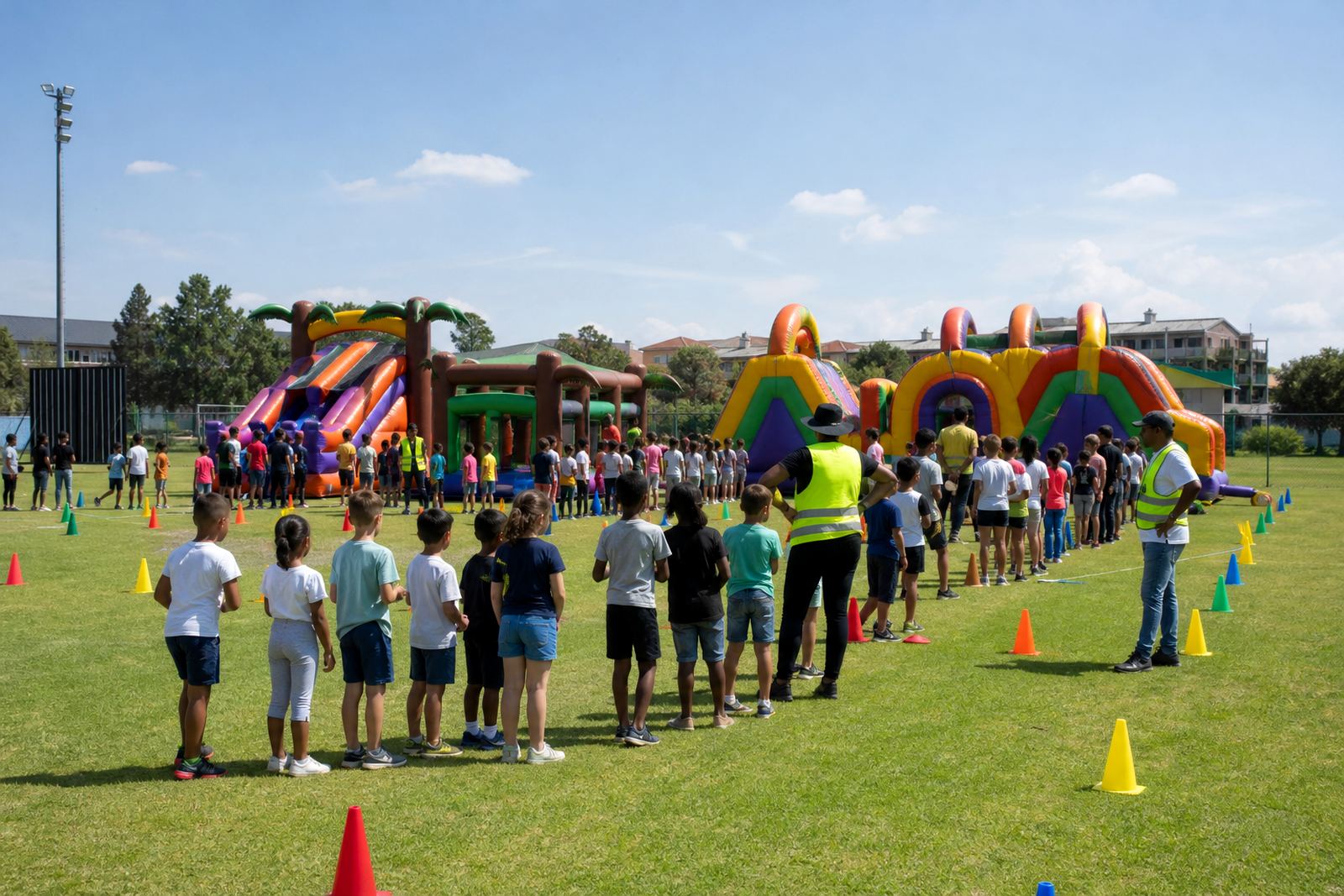
A Midrand school fun day with junior and senior learners might need three very different types of stalls. One simple toss game keeps younger children active, a second skill game suits older children, and a snack cart or photo booth gives parents something to enjoy while they wait. If the crowd is larger, a small ride or inflatable add-on can spread attention across the site instead of building one long line at a single game.
For a corporate family day, the layout may lean toward quick-play stalls that work in bursts, plus arcade cabinets or retro gaming for older children and adults. The main point is to match stall speed with crowd behaviour. At a birthday, that same line-up would usually shrink to fewer pieces with shorter queues and less need for crowd control.
- Schools usually need clear age splits and steady supervision.
- Malls need short turns and tidy queue lanes.
- Family days often work best with a mix of games, snacks and one photo stop.
Booking steps that keep the day tidy
When you are deciding on carnival games, start with the audience size, venue type and available space. Add the age range, power access and whether the event is indoors or outdoors. After that, a clear site check can confirm where the stalls sit, how the queue moves and whether extra mats, generator supply or a marshal are needed. Deposits, collection timing and wet weather planning are usually settled during the booking stage so nothing is guessed on the day.
Amused works from Midrand and serves Gauteng and national road shows, including Johannesburg, Pretoria, Durban, Cape Town and Bloemfontein. The team is led by Thabo Jantjies with support from Anele Ebrahim, Johan Hlongwane, Naledi Seabi, Yusuf Masilela and Candice Zungu. For schools, malls, corporate family days and birthdays, the cleanest carnival game setup is usually the one that respects the queue, fits the site and keeps the crowd moving without fuss.