
Start with the household load, not the décor
A home party looks calm on the lawn, yet the power draw can climb fast once the cooler boxes become fridges, the tea urn comes out and a photo booth or popcorn cart joins the line-up. In Midrand and other Gauteng suburbs, many houses have enough supply for a modest gathering but the trouble starts when too many plug points share one circuit.
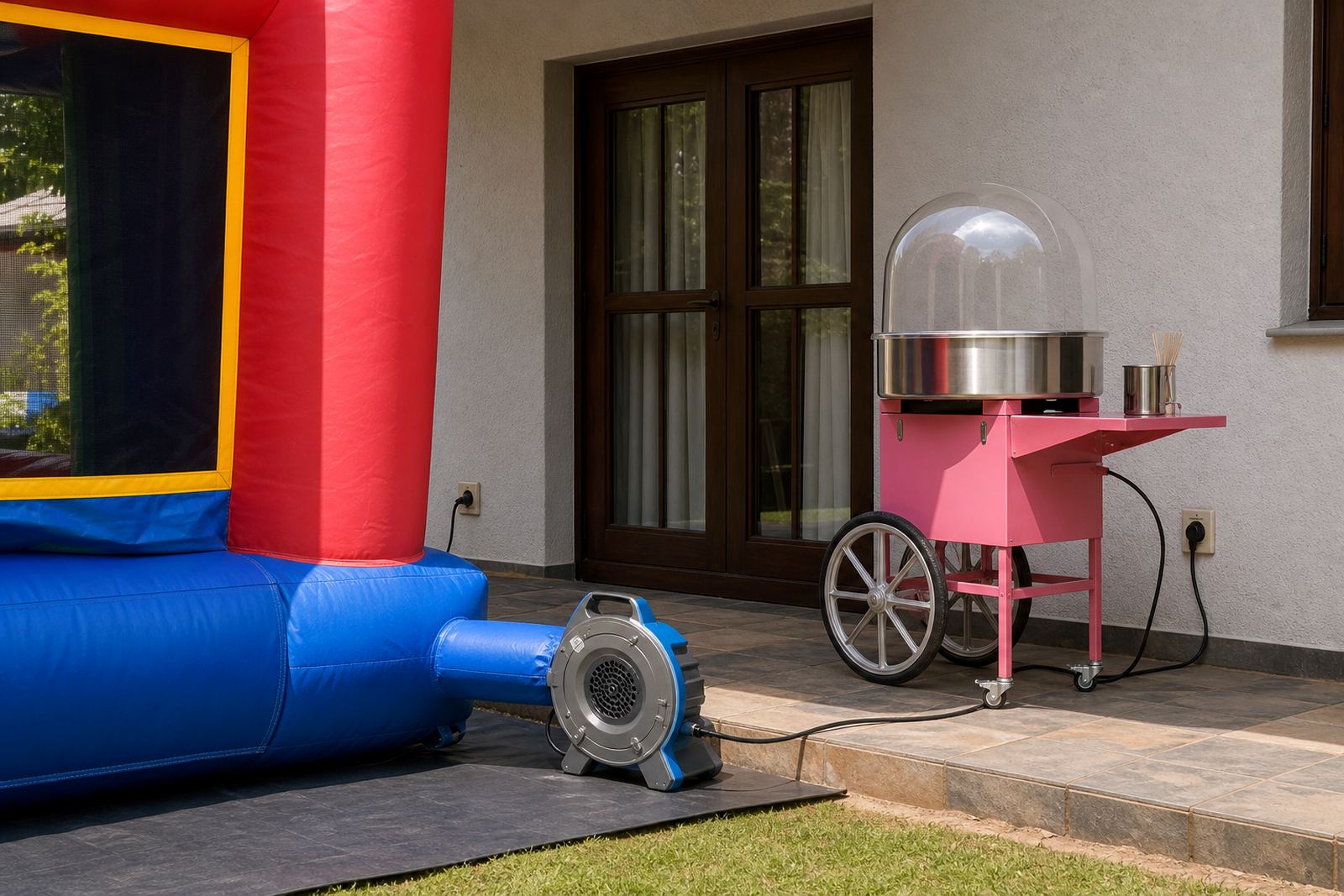
Think in zones. One zone for food and drink, one for sound and lighting, and a separate zone for any hired equipment that needs mains power. A jumping castle blower, a foam machine and a freezer all on the same circuit is asking for a nuisance trip. At a family party in a cul-de-sac in Centurion, that sort of load can leave the music off while the cake is waiting.
What typically needs power at a backyard party
Not every amusement needs electricity, but several common items do. Candy floss and popcorn machines usually need stable power and a level table. Photo booths need a clear indoor or shaded spot with enough space for a small queue. Some arcade cabinets and retro gaming machines are plug-in units, while a small fairground ride may need more careful planning and a heavier supply.
- Kettles and urns should sit on their own circuit where possible.
- Fridges and freezers need a steady socket, not an overloaded extension lead.
- Inflatable blowers must stay on throughout the hire period.
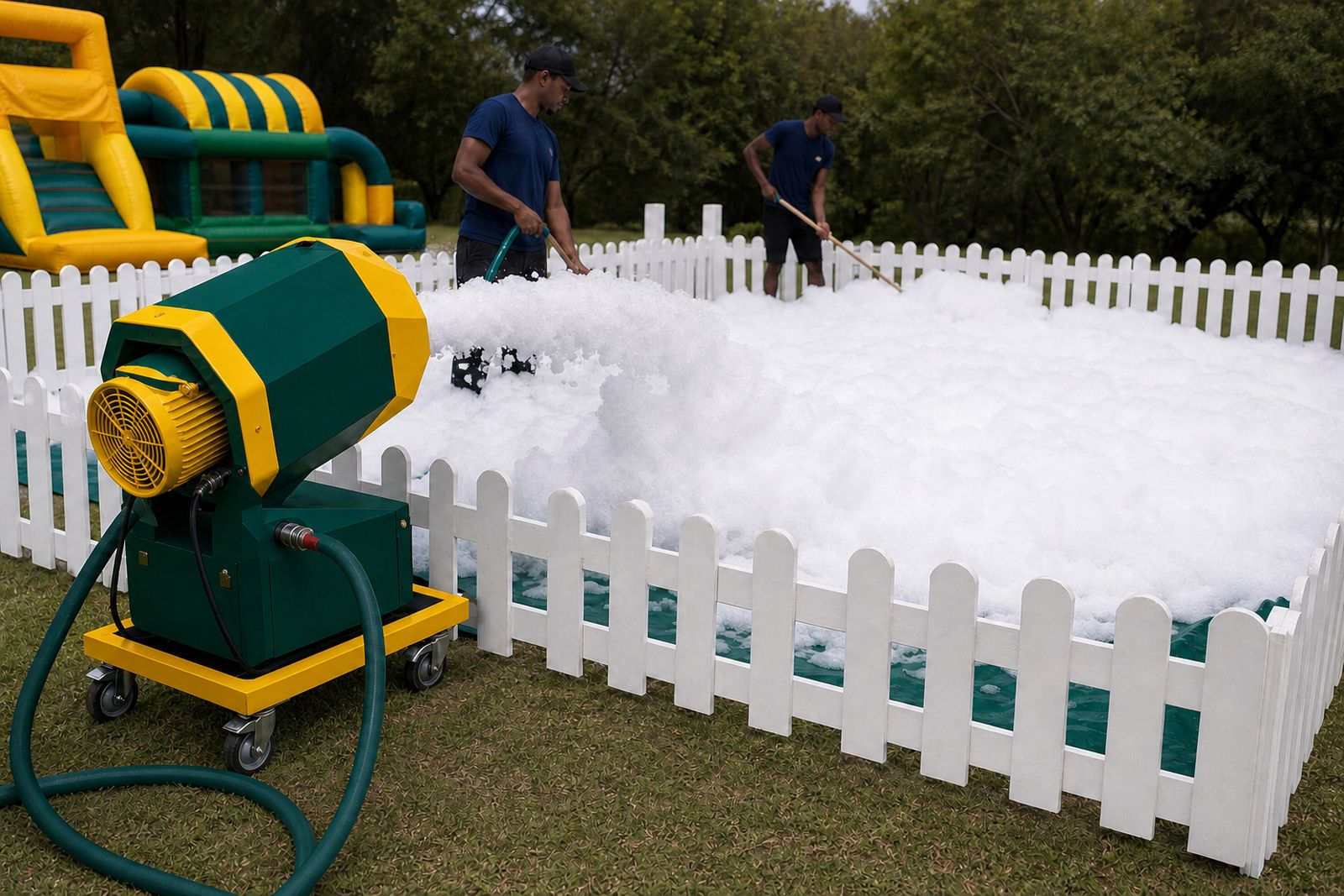
- Foam and bubble machines need dry, secure placement and safe cable runs.
- Sound systems and lights are best kept separate from food prep equipment.
Extension leads help, but they should be the right length and rating for the job. Loose joins, wet grass and crossed cables are poor companions at a busy home party.
Space, anchoring and safe movement around the yard
Power is only part of the plan. A jumping castle or inflatable obstacle course needs enough clear ground for the unit, the blower, the mats and a safe run-off area. On grass, anchoring points must hold properly. On paved areas, weights and careful positioning matter more, especially where children move in and out in groups. Safety mats should cover hard edges and any step up into the unit.
Height limits and age ranges matter too. A small castle for toddlers is not the same as a long obstacle course for older children. The crew should know who is allowed on the unit, how many children can play at once and where parents can stand without blocking access. At a birthday in Midrand, it helps to keep the castle away from braai smoke, pet areas and low tree branches.
- Leave a clear path for the crew to carry equipment in and out.
- Keep hoses, washing lines and loose furniture away from play areas.
- Do not crowd the blower behind bins or a parked car.
- Set snacks and drinks away from cable routes and wet patches.
When a generator makes sense at home
Some home venues have enough supply for a few lights and a kettle, but not for a full party load. If the event includes multiple amusements, a popcorn cart, a photo booth and music gear, generator planning becomes part of the booking. The size of the generator depends on the equipment list, the run time and whether the machines start together or in stages.
A trained crew will usually check which items can share supply and which ones need their own source. That matters at homes with older wiring or where outside sockets are limited. A generator also helps where the party runs into the evening and the garden takes more lighting than the house can comfortably support. Good cable routing keeps the machine away from guests while still giving the crew access for topping up fuel and checking the load.
For a busy family day in Sandton or Pretoria, the safer option is often a split plan: some household sockets for fridges and tea, and dedicated supply for the hired equipment. That keeps the kitchen usable and reduces the chance of everyone standing in one dark corner when a circuit trips.
Wet weather changes the whole setup
Rain changes more than the mood. Wet grass affects anchoring, cable safety and the grip under queues. Foam and bubble machines need extra care because they create slippery patches. If a party is booked for a season where afternoon showers are common, a covered plan is worth discussing before the first table goes out.
Weather planning usually covers three things: where the equipment can move if the garden turns muddy, what can stay under cover, and which pieces should pause if the wind picks up. Some amusements can work well under a patio or a carport, but only if there is enough height and space for the crew to manage them properly. A wet-weather setup is less about drama and more about practical choices that keep children safe and the event moving.
- Use non-slip mats where guests step onto hard floors.
- Keep electric equipment under shelter where possible.
- Move food carts away from puddles and dripping eaves.
- Leave a dry route for collection at the end of the event.
Booking details that save trouble on the day
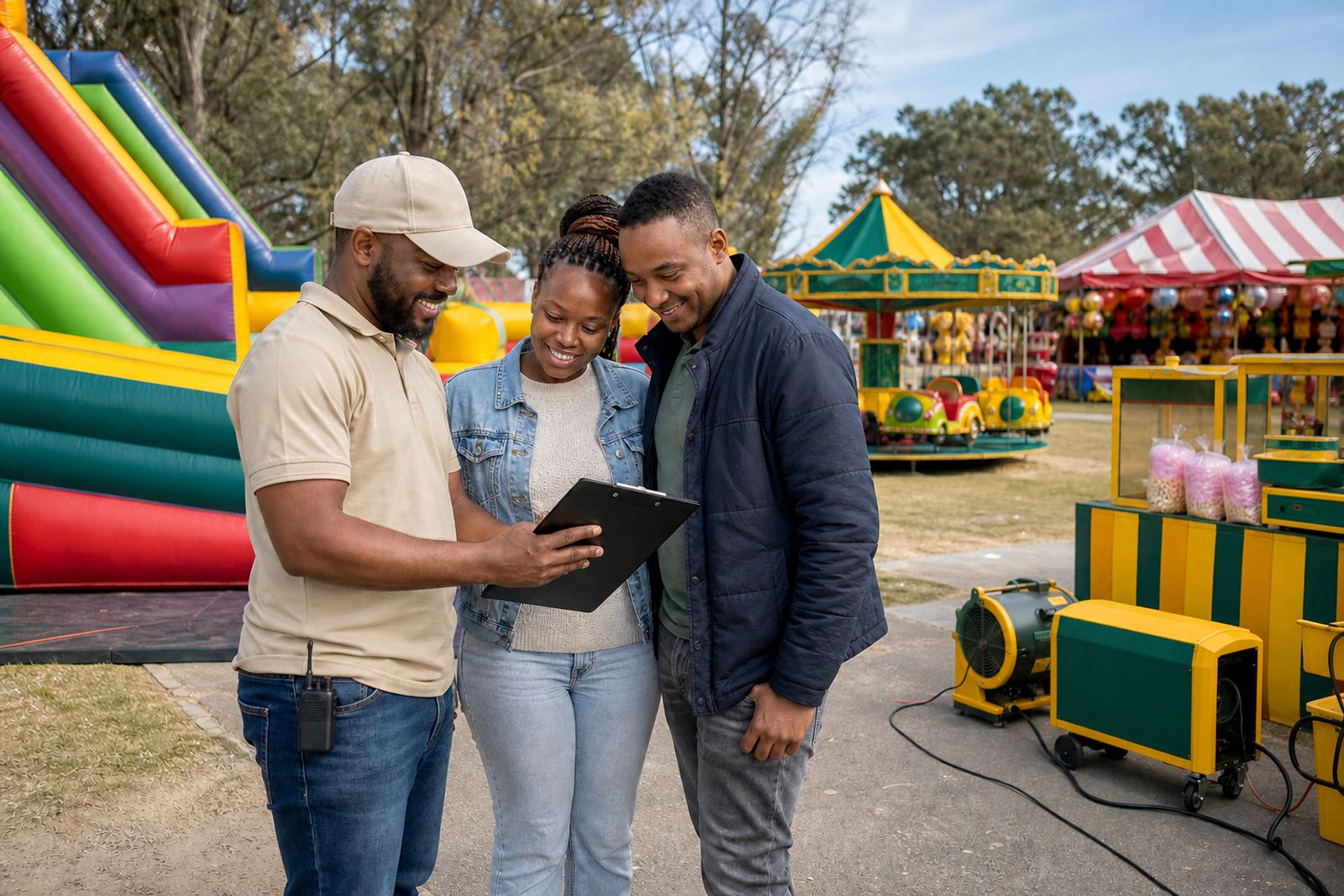
A clear booking beats a long one. The host should know the yard size, the surface type, the closest plug points and whether the party is daytime or after dark. It also helps to mention gates, stairs, pets and any narrow side passages. Those details guide the crew on delivery, setup time and the order in which equipment is placed.
Deposits are often part of the booking process, and final confirmation usually depends on the equipment list, delivery address and event timing. If the party includes a mascot, snack cart service or queue management, those roles should be included early so the crew arrives with the right people and the right gear. For national road shows or events that move between Johannesburg, Durban, Cape Town and Bloemfontein, logistics matter just as much as the equipment itself.
A brief note with the venue, guest age range and power points available makes the rest much easier to plan.
A Midrand backyard example that keeps things tidy
Picture a Saturday party in Midrand for a child turning eight. The lawn has one outdoor socket near the patio, a kitchen fridge inside, a kettle for tea and a hired castle for the children. The family also wants popcorn, a photo booth and music. That setup works best when the castle blower has its own supply, the food cart sits close to the kitchen door and the photo booth stays in shade but not in the pathway to the gate.
The crew arrives, sets the inflatable on the cleared grass, anchors it, lays mats at the entry point and tests the blower. The snack cart is placed where guests queue without crossing the cable route. The photo booth sits against a plain wall or screen, with enough room for people to step in and out. A small generator may be added if the house sockets cannot carry the full load. At collection, the site is checked for loose tape, wet patches and any items left behind.
That is the kind of home party planning that keeps things orderly without turning the garden into a worksite. It is practical, direct and well suited to South African homes where space, sockets and weather all have a say.